The emergence of social hierarchies in Tokyo sharehouses represents one of the most fascinating yet often overlooked aspects of international co-living experiences. These informal power structures develop organically through daily interactions, cultural exchanges, and the natural human tendency to organize social groups according to perceived status, influence, and compatibility. Understanding how these hierarchies form provides valuable insights into navigating sharehouse dynamics and optimizing your position within the community structure.
The complexity of sharehouse social dynamics extends far beyond simple roommate relationships, encompassing intricate webs of cultural authority, practical influence, social connectivity, and emotional leadership that collectively determine each resident’s position within the informal community structure. These hierarchies significantly impact daily living experiences, from decision-making processes and conflict resolution to social activities and long-term friendship formation.
The Foundation of Natural Social Organization
Social hierarchies in sharehouses emerge through fundamental human behavioral patterns that transcend cultural boundaries while simultaneously being shaped by specific cultural contexts unique to Japanese living environments. The process begins immediately upon move-in, as residents unconsciously assess each other’s social signals, communication styles, cultural competencies, and practical contributions to the shared living environment.
Japanese sharehouse rules every foreigner should know often serve as the initial framework within which social positioning begins to crystallize. Residents who demonstrate early mastery of cultural expectations, house protocols, and social etiquette typically establish themselves in favorable positions within the developing hierarchy structure.
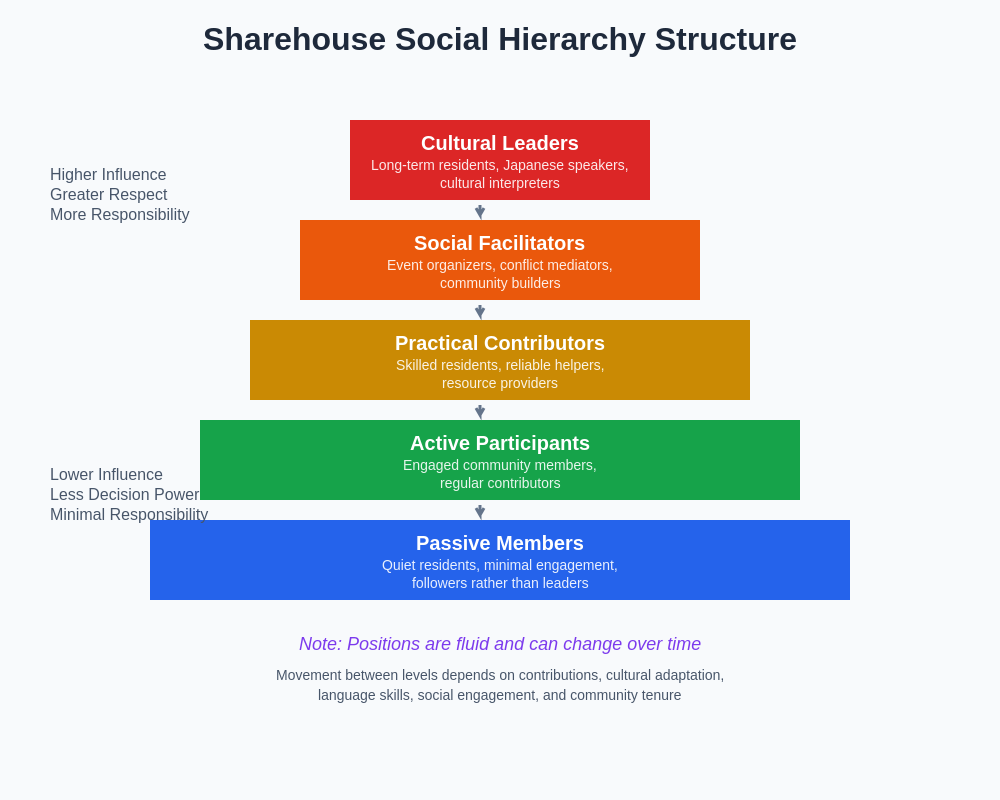
The intersection of personality traits, cultural backgrounds, language abilities, and practical skills creates multiple dimensions along which social ranking occurs. Unlike rigid institutional hierarchies, sharehouse social structures remain fluid and responsive to changing circumstances, resident turnover, and evolving group dynamics that continuously reshape the community landscape.
Cultural Authority and Knowledge Hierarchies
Japanese cultural competency often becomes a primary determinant of social positioning within Tokyo sharehouses, particularly in mixed communities where international residents seek guidance navigating local customs, legal requirements, and social expectations. Residents who possess deep understanding of Japanese society, language proficiency, and cultural sensitivity frequently assume informal advisory roles that elevate their social standing.
Living with Japanese roommates in Tokyo sharehouses reveals how native Japanese residents or culturally assimilated internationals often occupy elevated positions due to their ability to interpret complex social situations, mediate cultural conflicts, and provide practical assistance with bureaucratic processes.
The knowledge hierarchy extends beyond cultural understanding to encompass practical expertise in areas such as Tokyo navigation, housing regulations, visa procedures, and local service providers. Residents who become reliable sources of information and assistance naturally attract social influence and respect from community members who depend on their guidance and support.
Long-term residents typically accumulate cultural capital over time, developing networks of local contacts, understanding neighborhood dynamics, and mastering the subtle art of Japanese social interaction that newer residents find challenging to navigate independently.
Language Dynamics and Communication Hierarchies
Language proficiency creates powerful but often invisible hierarchies that significantly influence social dynamics and power distribution within international sharehouse communities. How language barriers prevent deep friendships demonstrates how communication abilities directly impact social positioning and relationship formation opportunities.
Japanese language skills frequently determine access to information, participation in decision-making processes, and integration into local social networks that extend beyond the sharehouse environment. Residents with strong Japanese abilities often become unofficial translators and cultural interpreters, roles that naturally elevate their importance and influence within the community structure.
English proficiency creates another layer of linguistic hierarchy, particularly in internationally diverse sharehouses where English serves as the common communication medium. Native English speakers or highly proficient non-natives often assume leadership roles in group discussions, conflict mediation, and external communications with property managers or service providers.
The emergence of language-based social circles can create fragmented community structures where different linguistic groups develop separate hierarchies and social dynamics, sometimes leading to exclusion patterns that reinforce existing power imbalances and limit cross-cultural integration opportunities.
Practical Contribution and Resource Hierarchies
Daily practical contributions to sharehouse maintenance, organization, and problem-solving create merit-based hierarchies that reflect each resident’s value to the community’s functional operation. Kitchen politics actually work in Japanese sharehouses illustrates how domestic responsibilities and resource management directly influence social positioning and respect levels.
Residents who consistently handle challenging tasks such as utility bill management, maintenance coordination, cleaning schedule organization, or conflict resolution earn elevated status through demonstrated reliability and community service. These practical contributions often carry more social weight than personality traits or cultural background in determining long-term hierarchy positions.
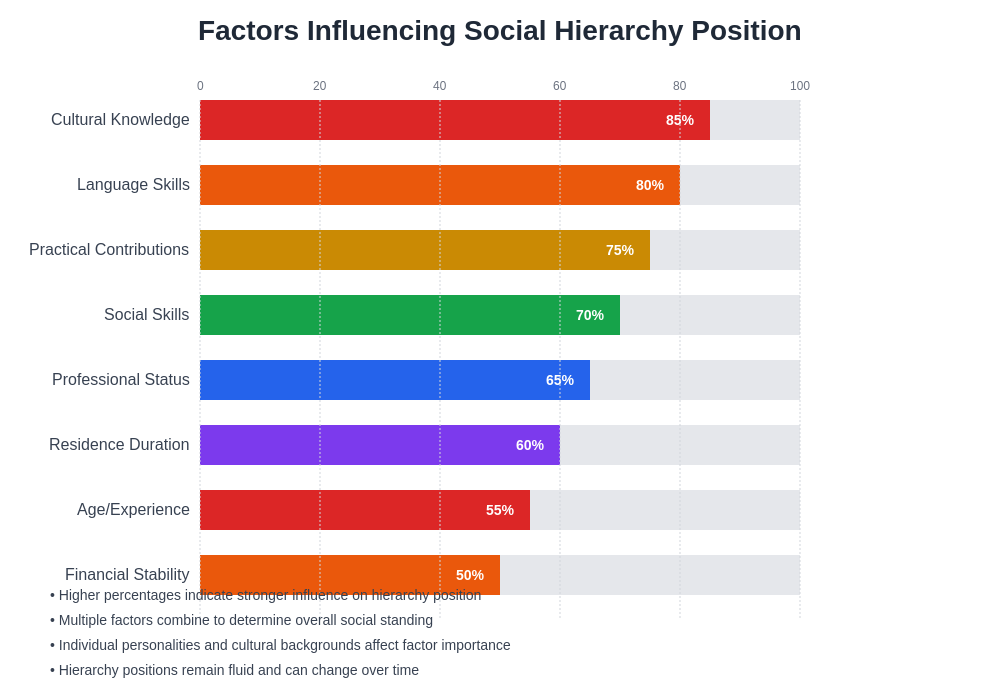
Financial stability and spending patterns also influence social hierarchies, as residents with higher incomes may assume leadership roles in group activities, shared purchases, or entertainment decisions. How much Tokyo sharehouses really cost per month affects not only individual budgets but also social dynamics related to lifestyle choices and group participation levels.
Access to resources such as transportation, technology, professional networks, or local connections can create informal influence hierarchies where well-connected residents become gatekeepers for opportunities and social experiences that benefit the broader community.
Personality-Based Social Leadership
Charismatic leadership naturally emerges in sharehouse environments through residents who possess strong social skills, emotional intelligence, and the ability to facilitate positive group dynamics. These informal leaders often occupy central positions in social networks regardless of their cultural background, language abilities, or practical contributions to household management.
Extroverted personalities who initiate social activities, organize group events, and maintain positive community atmosphere typically attract social influence and respect from residents who prefer more passive participation in community life. Making friends through Tokyo sharehouse communities highlights how social facilitators become crucial community assets who enhance everyone’s living experience.
Conflict resolution abilities create another dimension of personality-based hierarchy, as residents skilled in mediation, compromise, and diplomatic communication often assume unofficial leadership roles during disputes or tension periods. Their ability to maintain harmony and find mutually acceptable solutions elevates their status and increases their influence over group decisions.
Emotional stability and supportiveness also contribute to social positioning, as residents who provide comfort, encouragement, and psychological support during difficult periods earn deep respect and lasting influence within the community structure.
Age and Experience Hierarchies
Age-related hierarchies in sharehouses reflect both universal human tendencies toward respecting elders and specific cultural values prevalent in Japanese society. How age differences impact sharehouse compatibility explores how generational gaps create natural authority structures and influence distribution patterns.
Older residents often assume advisory roles and decision-making influence based on perceived life experience, professional achievement, and emotional maturity that younger community members respect and seek guidance from. However, these age-based hierarchies can be complicated by cultural differences in authority recognition and intergenerational communication styles.
Professional seniority and career achievement create additional layers of experience-based hierarchy, as residents with established careers, advanced education, or specialized expertise naturally attract deference and consultation from community members navigating similar professional development challenges.
The intersection of age and cultural experience creates complex hierarchy dynamics where younger but culturally experienced residents may hold more practical influence than older newcomers to Japanese society, leading to nuanced social positioning that reflects multiple competency dimensions.
Gender Dynamics and Social Positioning
Gender plays a significant role in sharehouse hierarchy formation, influenced by cultural expectations, traditional role assignments, and individual personality expressions that vary considerably across different cultural backgrounds represented in international communities. Dating while living in Tokyo sharehouses reveals how romantic dynamics can complicate social hierarchies and power structures.
Traditional gender roles may influence task assignment, leadership expectations, and social interaction patterns, particularly in communities where residents from more conservative cultural backgrounds interact with those from more egalitarian societies. These differences can create tension or misunderstanding that affects hierarchy formation and stability.
Female residents may face unique challenges in establishing authority and influence, particularly in culturally diverse environments where gender expectations vary significantly. However, many women successfully leverage emotional intelligence, cultural sensitivity, and organizational skills to achieve prominent positions within community hierarchies.
The presence of romantic relationships within sharehouses can significantly disrupt existing hierarchies, creating couple-based power blocks, jealousy dynamics, or exclusion patterns that reshape community social structures and influence distribution.
Economic and Professional Hierarchies
Economic disparities among residents create subtle but persistent hierarchies that influence social dynamics, activity participation, and lifestyle compatibility within sharehouse communities. Living costs in Tokyo sharehouses explained affects not only individual experiences but also group social stratification patterns.
Professional status and career trajectory differences contribute to hierarchy formation, as residents in prestigious positions, successful careers, or promising professional development often earn respect and influence that extends beyond their direct contributions to household management or community life.
Educational background and intellectual capabilities create additional layers of social stratification, particularly in communities with significant diversity in academic achievement, professional specialization, and intellectual interests that affect conversation dynamics and social compatibility.
The ability to afford lifestyle enhancements, travel opportunities, or social activities can create inclusion and exclusion patterns that reinforce economic hierarchies and potentially limit cross-class relationship formation within the community structure.
Temporal Hierarchies and Tenure Effects
Length of residency creates powerful hierarchy dimensions based on accumulated community knowledge, established relationships, and perceived ownership of shared spaces and traditions. Student sharehouses near top Tokyo universities often exhibit strong temporal hierarchies where senior students guide newcomers through academic and social integration processes.
Long-term residents typically assume informal authority over house rules interpretation, newcomer orientation, and community tradition maintenance, creating veteran-novice dynamics that can either facilitate smooth integration or create exclusionary barriers for new community members.
Seasonal resident turnover patterns affect hierarchy stability, as departures of influential community members can create power vacuums and reorganization periods that allow previously lower-ranked residents to assume greater influence and leadership responsibilities.
The anticipation of future departure dates can also influence current hierarchy positioning, as residents planning short-term stays may find themselves excluded from long-term planning discussions or leadership roles that require sustained community commitment.
Cultural Integration and Adaptation Hierarchies
Success in Japanese cultural integration creates respected positions within sharehouse hierarchies, as residents who demonstrate cultural sensitivity, language improvement, and social adaptation inspire admiration and serve as role models for community members facing similar challenges.
How cultural adaptation happens gradually illustrates how residents at different integration stages naturally organize into mentor-mentee relationships that create informal teaching hierarchies and support networks within the community structure.
Religious and cultural practice accommodation can influence social positioning, as residents who successfully navigate cultural differences while maintaining their identity often earn respect for their diplomatic skills and cultural bridge-building abilities.
The willingness to participate in Japanese cultural activities, festivals, and social customs can elevate social standing within communities that value cultural exploration and integration as important community values and shared experiences.
Technology and Innovation Hierarchies
Digital competency and technological expertise create modern hierarchy dimensions particularly relevant in sharehouses with strong international and professional demographics. Residents skilled in technology troubleshooting, internet optimization, or digital communication tools often assume technical leadership roles that increase their practical value and social influence.
Social media savvy and online community building abilities can elevate residents who successfully create and maintain digital spaces for house communication, event organization, and external community connections that enhance everyone’s social experience and networking opportunities.
Innovation in household efficiency, cost-saving strategies, or lifestyle optimization can create respect and influence for residents who consistently contribute practical improvements to community life through creative problem-solving and resourceful thinking.
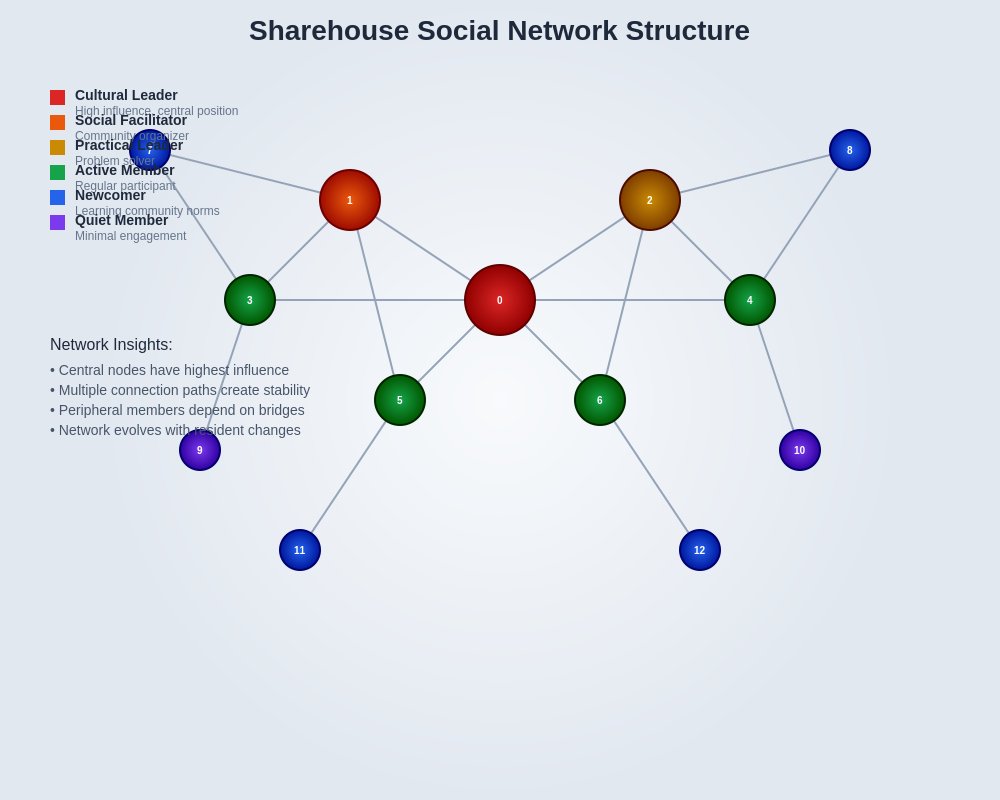
This network visualization demonstrates how different resident types form interconnected communities within sharehouses, with central figures serving as crucial connection points that facilitate information flow and social cohesion across the entire community structure.
Navigation Strategies for Social Hierarchies
Understanding and navigating sharehouse social hierarchies requires strategic awareness of multiple influence dimensions while maintaining authentic personality expression and cultural integrity. Successful navigation involves identifying your natural strengths, contributing meaningfully to community life, and building positive relationships across different hierarchy levels.
Developing cultural competency, language skills, and practical contributions creates multiple pathways for earning respect and influence without compromising personal values or cultural identity. The key lies in finding authentic ways to add value to the community while respecting existing social dynamics and cultural expectations.
Building alliances with residents at different hierarchy levels provides social stability and support networks that can help navigate conflicts, transitions, and community changes that inevitably occur in shared living environments.
The organic nature of sharehouse social hierarchies means that positions remain fluid and responsive to personal growth, changing circumstances, and community evolution. Understanding this fluidity allows residents to view their current position as temporary and improvable through consistent positive contributions and relationship building efforts that benefit the entire community structure over time.
Disclaimer
This article is for informational purposes only and does not constitute professional advice on social psychology or interpersonal relationships. Social dynamics in sharehouses vary significantly based on individual personalities, cultural backgrounds, and specific community contexts. Readers should approach social hierarchy navigation with sensitivity, respect, and awareness of cultural differences. The observations presented reflect general patterns and may not apply to all sharehouse situations or communities.