The distinction between subletting regulations in sharehouses and traditional apartment rentals represents one of the most misunderstood aspects of Japanese housing law, creating confusion for international residents who often assume similar rules apply across all rental arrangements. Understanding these fundamental differences becomes crucial for anyone considering temporary housing arrangements, extended travel, or flexible living situations that might require transferring occupancy rights to another person during their tenancy period.
The complexity of Japanese rental law creates distinct frameworks for different types of housing arrangements, with subletting provisions varying significantly based on property type, contract structure, and management policies. These differences extend beyond simple procedural variations to encompass fundamental legal protections, financial responsibilities, and enforcement mechanisms that can dramatically affect your rights and obligations as a tenant seeking flexible housing solutions.
Understanding Japanese Subletting Legal Framework
Japanese rental law establishes specific parameters around subletting arrangements that differ substantially between traditional apartment leases and sharehouse accommodations, creating distinct legal environments that govern tenant rights, landlord obligations, and third-party responsibilities. The foundation of these differences lies in how contracts are structured, what constitutes legitimate occupancy transfer, and which legal protections apply to various rental relationship types.
Traditional apartment leases in Japan typically operate under standard residential lease agreements that explicitly address subletting permissions, requiring formal landlord consent and establishing clear procedures for occupancy transfer. Japanese sharehouse rules every foreigner should know provides context for how these regulations integrate with broader housing policies, though the specific legal mechanisms for subletting create additional complexity layers that require separate analysis.
Sharehouse arrangements often utilize different contract types that may classify residents as licensees rather than traditional tenants, fundamentally altering the legal basis for occupancy rights and subletting permissions. This distinction affects everything from notice requirements and deposit handling to dispute resolution mechanisms and eviction procedures, creating significantly different experiences for residents seeking temporary housing transfers.
The enforcement of subletting regulations varies considerably between property types, with traditional apartments subject to more rigorous legal oversight while sharehouses may operate under more flexible but potentially less protective arrangements. Understanding these enforcement differences helps residents make informed decisions about their housing flexibility and legal exposure when considering subletting options.
Contract Structure Differences and Legal Implications
The fundamental structure of rental contracts creates the primary distinction between subletting possibilities in apartments versus sharehouses, with traditional leases offering more standardized protections while sharehouse agreements may provide greater flexibility at the cost of reduced legal certainty. These structural differences affect every aspect of the subletting process, from initial permission requirements to final responsibility allocation between original tenants and replacement occupants.
Standard apartment leases in Japan typically include specific clauses addressing subletting permissions, requiring written landlord consent and establishing clear procedures for tenant screening, deposit transfer, and liability assignment. How to spot financial red flags in sharehouse contracts offers insights into contract evaluation techniques that apply equally to understanding subletting provisions and identifying potential complications in various rental arrangements.
Sharehouse contracts may utilize license agreements or specialized rental structures that treat residents more as temporary occupants than traditional tenants, creating different legal foundations for occupancy transfer and subletting permissions. These arrangements often emphasize management company control over resident selection and room assignment, potentially simplifying subletting procedures while reducing tenant autonomy in choosing replacement occupants.
The liability distribution between original tenants, replacement occupants, and property owners varies significantly based on contract type, with traditional apartment subletting typically maintaining original tenant responsibility while sharehouse arrangements may transfer obligations more completely to new residents. Understanding these liability differences becomes crucial for assessing financial risk and legal exposure associated with different subletting arrangements.
Permission Requirements and Approval Processes
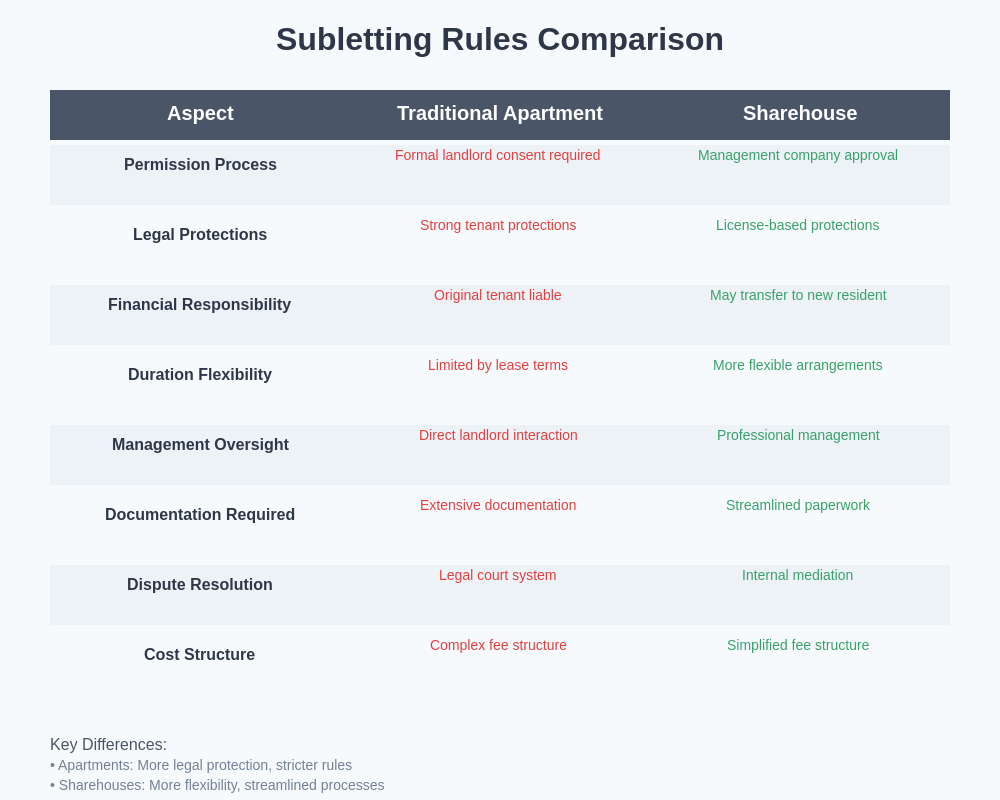
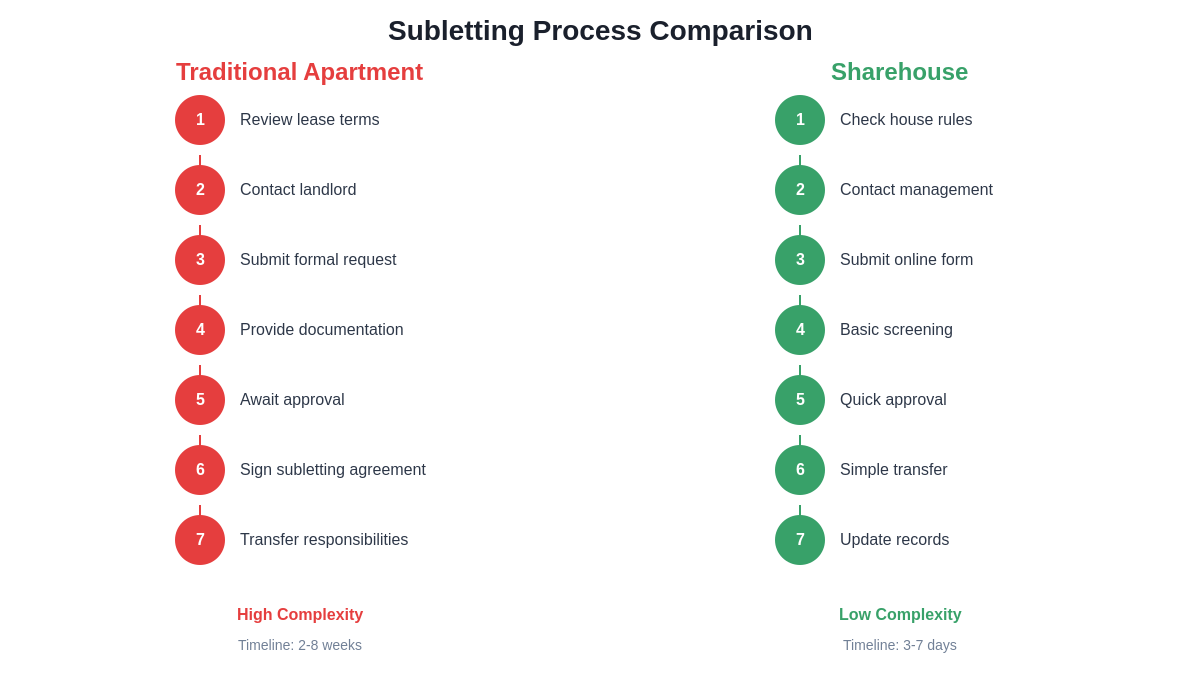
The process for obtaining subletting permission demonstrates stark differences between apartment and sharehouse environments, with apartments requiring formal landlord consent through established legal procedures while sharehouses may operate under more streamlined but potentially restrictive management policies. These procedural differences affect timeline expectations, approval likelihood, and the complexity of documentation required for successful subletting arrangements.
Traditional apartment subletting requires explicit written permission from property owners, typically involving detailed documentation about proposed replacement tenants, subletting duration, and financial arrangements. What documents you need for Tokyo sharehouse applications provides relevant insights into documentation standards that often apply to subletting approval processes, though apartment requirements may be more stringent and legally formalized.
Sharehouse subletting approval often operates through management company policies rather than direct landlord interaction, potentially creating faster approval processes but also introducing additional layers of administrative requirements and fees. These management-mediated processes may prioritize operational convenience over tenant preference, limiting choice in replacement occupants while simplifying administrative procedures.
The timeline for subletting approval varies dramatically between property types, with apartments potentially requiring weeks or months for landlord consent while sharehouses may process requests within days through established management protocols. Understanding these timeline differences helps residents plan temporary relocations and avoid conflicts with travel schedules or work obligations that necessitate flexible housing arrangements.
Financial Responsibility and Deposit Handling
The financial mechanics of subletting create some of the most significant practical differences between apartment and sharehouse arrangements, affecting how deposits are transferred, who bears responsibility for damages, and how ongoing rental obligations are managed throughout the subletting period. These financial structures directly impact the cost and risk associated with different subletting options, influencing resident decisions about temporary housing arrangements.
Traditional apartment subletting typically maintains original tenant financial responsibility for rent payments and property damages, with subletting arrangements creating secondary payment obligations rather than transferring primary liability to replacement occupants. Understanding utility bills in Japanese sharehouses demonstrates how complex financial arrangements can become in shared living situations, with subletting adding additional complexity layers to already intricate payment structures.
Sharehouse subletting may allow for more complete financial transfer to replacement residents, with management companies facilitating deposit transfers and payment responsibility changes that reduce ongoing obligations for original tenants. These streamlined financial transitions can provide greater flexibility but may also create complications if replacement residents encounter payment difficulties or property damage issues.
Deposit handling represents one of the most complex aspects of subletting financial arrangements, with apartments typically requiring original tenants to maintain deposit responsibility while sharehouses may allow deposit transfer to replacement occupants. How to actually get your deposit back provides relevant guidance for navigating deposit complexities that become magnified in subletting situations where multiple parties may have financial interests in property condition and damage assessment.
The distribution of ongoing costs such as utilities, internet, and maintenance fees varies significantly between subletting arrangements, with apartments often requiring complex cost-sharing agreements while sharehouses may integrate these expenses into simplified monthly payments that transfer completely to replacement residents.
Duration Limitations and Flexibility Restrictions
Subletting duration limitations create practical constraints that differ substantially between apartment and sharehouse arrangements, affecting how long temporary housing transfers can last and what renewal options exist for extended subletting periods. These duration restrictions often reflect broader legal frameworks around occupancy rights and property management policies that prioritize different stakeholder interests in various housing contexts.
Traditional apartment subletting may face legal restrictions on subletting duration, with some arrangements limited to specific timeframes or requiring periodic renewal approval from property owners. Short-term sharehouse options in Japan explores how temporary housing needs intersect with legal requirements, though apartment subletting faces additional complexity due to formal lease obligations and landlord relationship management.
Sharehouse subletting often operates under more flexible duration policies that align with the temporary nature of many sharehouse arrangements, allowing for shorter-term transfers that accommodate travel, work assignments, or personal circumstances requiring temporary relocation. These flexible policies may provide practical advantages but can also create uncertainty about long-term housing stability and renewal possibilities.
The renewal and extension processes for subletting arrangements vary considerably, with apartments requiring formal lease modification procedures while sharehouses may handle extensions through simplified administrative processes. Understanding these renewal mechanisms helps residents plan for extended absences and avoid complications when initial subletting periods prove insufficient for their needs.
Legal Protections and Dispute Resolution Mechanisms
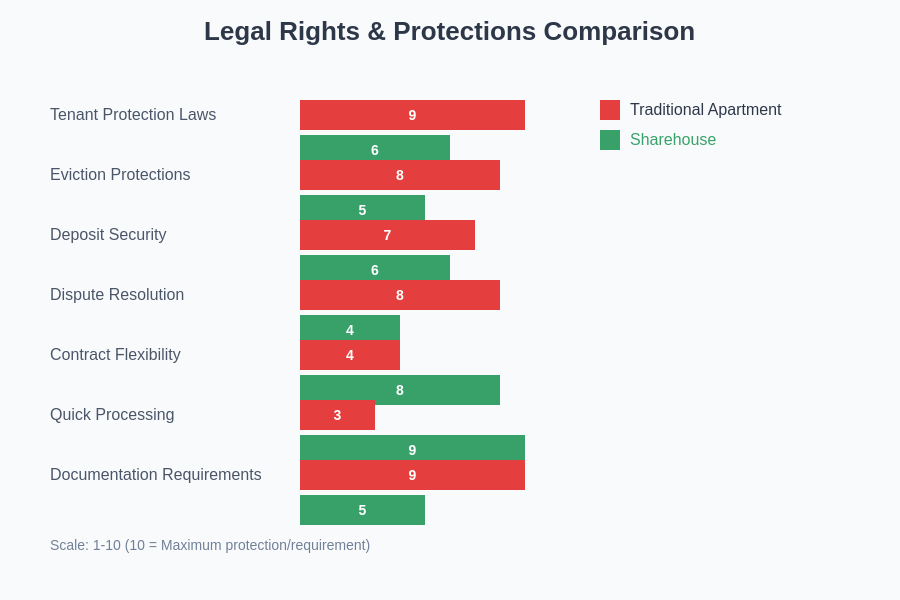
The legal protections available to parties involved in subletting arrangements demonstrate significant variations between apartment and sharehouse contexts, affecting remedy options when conflicts arise and influencing the enforceability of subletting agreements. These protection differences can substantially impact resident security and recourse options when subletting arrangements encounter problems or disputes.
Traditional apartment subletting benefits from established tenant protection laws that govern residential lease relationships, providing formal dispute resolution mechanisms and legal remedies when conflicts arise between original tenants, replacement occupants, or property owners. How to handle roommate conflicts without moving out offers conflict resolution strategies that complement formal legal protections in addressing subletting-related disputes.
Sharehouse subletting may operate under less comprehensive legal protections due to the license-based nature of many sharehouse arrangements, potentially requiring residents to rely more heavily on management company policies and informal resolution mechanisms. These reduced protections can create vulnerability for both original residents and replacement occupants when disagreements or problems arise during subletting periods.
The enforcement mechanisms for subletting agreements vary significantly, with apartment arrangements typically subject to formal legal procedures while sharehouse disputes may be resolved through management company mediation or administrative decisions. Understanding these enforcement differences helps residents assess their legal security and make informed decisions about subletting risk tolerance.
Practical Implementation and Management Oversight
The day-to-day management of subletting arrangements reveals substantial operational differences between apartment and sharehouse environments, affecting everything from key transfer procedures to ongoing communication requirements and problem resolution protocols. These operational differences often determine the practical feasibility and convenience of subletting arrangements more than formal legal structures.
Apartment subletting typically requires direct coordination between original tenants, replacement occupants, and property owners, creating complex communication chains that can complicate problem resolution and routine management tasks. Living with Japanese roommates in Tokyo sharehouses demonstrates how cultural communication differences can affect housing relationships, with subletting adding additional complexity to already challenging cross-cultural interactions.
Sharehouse subletting often benefits from professional management company oversight that streamlines key transfer, resident orientation, and ongoing support services for replacement occupants. These management services can significantly improve subletting experiences but may also introduce additional fees and administrative requirements that affect overall arrangement costs and flexibility.
The integration of replacement occupants into existing community structures varies dramatically between property types, with apartments typically involving minimal community integration while sharehouses may require more extensive orientation and community adjustment processes. Understanding these integration requirements helps both original residents and replacement occupants prepare for successful subletting transitions.
Technology Integration and Modern Subletting Platforms
Modern technology platforms have begun to influence subletting arrangements in ways that differentiate apartment and sharehouse options, with digital tools potentially streamlining some aspects of subletting while creating new complexities around verification, payment processing, and legal compliance. These technological developments affect the practical accessibility and security of different subletting arrangements.
Digital platforms facilitating subletting may face different regulatory requirements and liability structures depending on whether they focus on traditional apartment arrangements or specialized sharehouse accommodations. How to find perfect sharehouse tokyo explores how technology affects housing search processes, with similar digital innovations beginning to impact subletting accessibility and management.
The integration of payment processing, background verification, and communication tools varies between apartment and sharehouse subletting platforms, with different property types requiring different technological solutions and compliance measures. These technological differences can affect user experience, security, and overall subletting arrangement success rates.
Verification and security measures implemented by subletting platforms may vary based on property type and target market, with apartment-focused platforms potentially requiring more extensive documentation while sharehouse platforms may emphasize community fit and flexibility over comprehensive background verification.
International Resident Considerations and Visa Implications
International residents face unique considerations when navigating subletting arrangements, with visa status, residency documentation, and legal standing affecting subletting eligibility and compliance requirements in ways that vary between apartment and sharehouse contexts. These international resident factors can significantly complicate subletting arrangements and require specialized attention to legal compliance and documentation requirements.
Visa status implications for subletting arrangements may differ between property types, with apartments potentially requiring more formal documentation of occupancy changes while sharehouses may operate under more flexible arrangements that accommodate temporary resident status changes. How visa status affects your sharehouse application provides relevant context for understanding how immigration status intersects with housing arrangements, though subletting creates additional complexity layers requiring separate consideration.
Residency registration requirements may create different obligations for subletting arrangements depending on property type and duration, with apartments potentially requiring formal address change procedures while sharehouses may handle short-term occupancy changes through simplified administrative processes. Understanding these registration requirements helps international residents maintain legal compliance while pursuing flexible housing arrangements.
The interaction between subletting arrangements and long-term visa stability requires careful consideration, as housing changes can affect visa renewal processes and residency documentation in ways that vary between different property types and subletting structures. International residents must balance housing flexibility needs with visa compliance requirements that may favor housing stability and documentation consistency.
Financial Planning and Cost Analysis for Different Subletting Types
The total cost implications of subletting arrangements extend beyond basic rent transfer to include fees, deposits, insurance, and administrative costs that vary significantly between apartment and sharehouse options. Understanding these comprehensive cost structures helps residents make informed financial decisions about subletting arrangements and budget appropriately for temporary housing flexibility.
Administrative fees associated with subletting approval and management may differ substantially between property types, with apartments potentially charging formal lease modification fees while sharehouses may implement service charges or management fees for facilitating resident changes. How much tokyo sharehouses really cost per month provides cost analysis frameworks that apply to evaluating subletting expenses across different property types.
Insurance implications for subletting arrangements create additional financial considerations that vary between apartment and sharehouse contexts, with different property types requiring different coverage types and liability allocations. These insurance considerations can affect overall subletting costs and risk exposure for all parties involved in temporary housing arrangements.
The long-term financial implications of subletting history may affect future housing applications and rental prospects in ways that differ between apartment and sharehouse markets, with different property types placing varying emphasis on subletting experience when evaluating prospective tenants.
Understanding the intricate differences between subletting rules in apartments versus sharehouses empowers residents to make informed decisions about temporary housing arrangements that align with their legal risk tolerance, financial constraints, and flexibility requirements. These regulatory distinctions reflect broader differences in Japanese housing law and property management practices that continue to evolve as housing markets adapt to changing resident needs and international population growth.
The choice between apartment and sharehouse subletting ultimately depends on individual priorities regarding legal protection, administrative convenience, cost considerations, and community integration preferences. By thoroughly understanding these differences, residents can navigate subletting arrangements more effectively while maintaining compliance with applicable regulations and maximizing the benefits of flexible housing solutions in Japan’s complex rental market.
Disclaimer
This article is for informational purposes only and does not constitute legal advice. Subletting regulations and housing law in Japan are complex and subject to change. Readers should consult with qualified legal professionals and carefully review their specific rental agreements before engaging in any subletting arrangements. The effectiveness of different subletting approaches may vary depending on individual circumstances, property specifics, and local regulations.