The digital age has transformed how sharehouse residents approach entertainment and productivity, with subscription services becoming an increasingly complex web of shared financial responsibilities that can either strengthen community bonds or create unexpected tensions. In Tokyo’s competitive housing market, the ability to split costs on streaming platforms, productivity apps, and digital services has evolved from a casual arrangement into a sophisticated system that requires careful navigation, clear communication, and established protocols to prevent misunderstandings and financial disputes.
The proliferation of subscription-based services across entertainment, productivity, education, and lifestyle categories has created opportunities for significant cost savings when properly managed among sharehouse residents. However, the informal nature of many sharing arrangements, combined with varying usage patterns, different financial capabilities, and the temporary nature of sharehouse living, creates a complex landscape that requires understanding and preparation to navigate successfully.
The Economics of Subscription Sharing
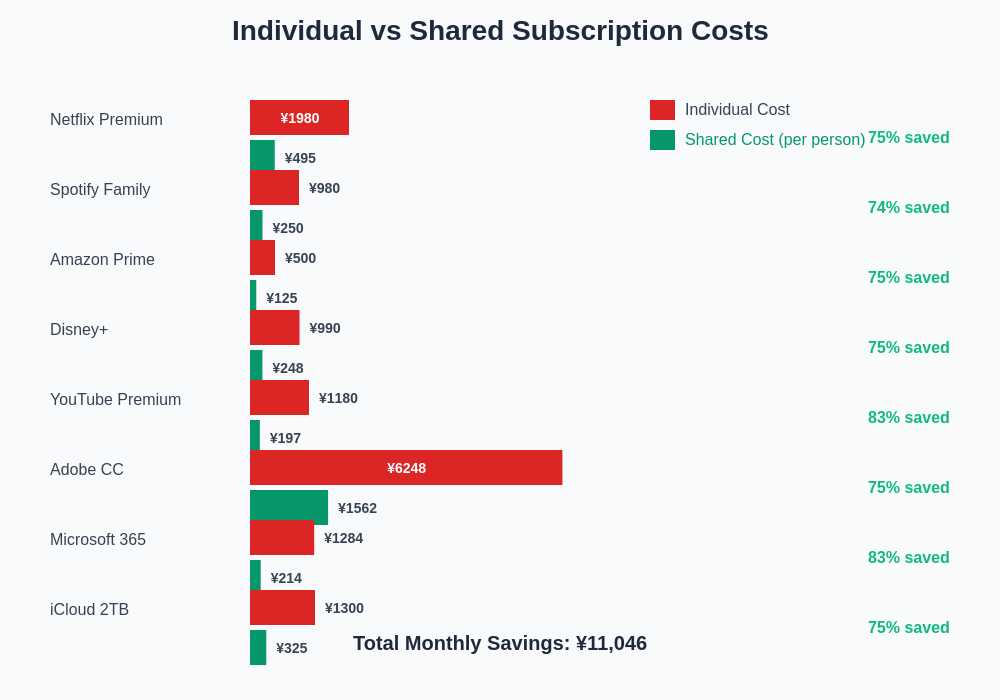
Modern subscription services have deliberately designed their pricing structures to encourage family and group sharing, recognizing that higher-tier plans with multiple user access often provide better value than individual subscriptions. This economic reality makes sharing arrangements particularly attractive for sharehouse residents who can achieve premium access to services at fraction of individual costs while building stronger community connections through shared entertainment experiences.
The financial mathematics of subscription sharing become compelling when considering that popular streaming services like Netflix, Amazon Prime, Disney+, and Spotify offer family plans that cost significantly less per person than individual subscriptions. Understanding how much Tokyo sharehouses really cost per month becomes crucial for residents trying to optimize their entertainment and productivity budgets within tight living expense constraints.
International residents face additional complexity as subscription availability, content libraries, and pricing structures vary significantly between regions, creating situations where residents from different countries may have access to different services or pay different rates for identical offerings. Currency exchange fluctuations and international payment processing fees can further complicate cost-splitting arrangements, particularly for residents whose income arrives in different currencies.
The subscription economy’s rapid evolution means new services constantly emerge while others merge, discontinue, or change their pricing models, requiring ongoing communication and adjustment among sharehouse residents to maintain optimal arrangements and avoid paying for services that no longer provide value or have been replaced by better alternatives.
Popular Subscription Categories in Sharehouses
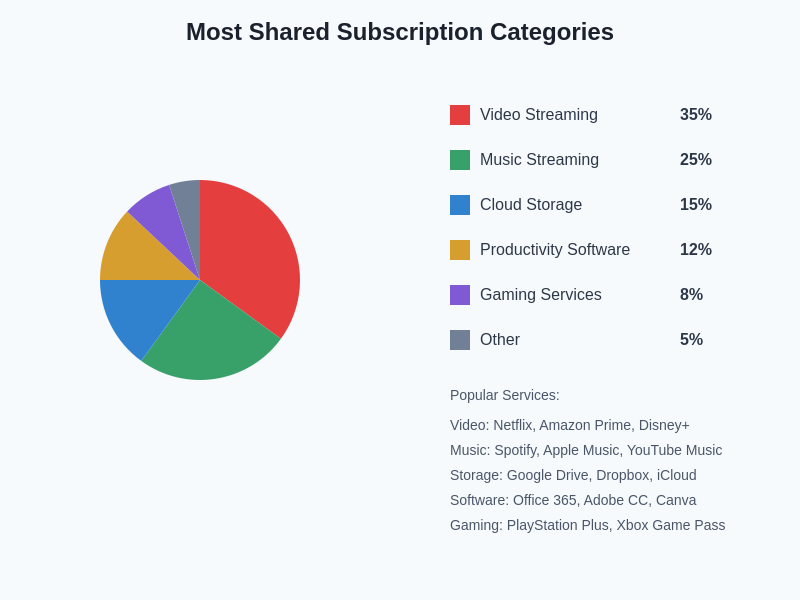
Entertainment streaming services represent the most common shared subscription category, with platforms like Netflix, Amazon Prime Video, Hulu, Disney+, and regional services like AbemaTV creating extensive libraries that benefit from diverse user preferences. Making friends through Tokyo sharehouse communities often begins with casual conversations about favorite shows and movies that lead to natural subscription sharing arrangements.
Music streaming services including Spotify, Apple Music, YouTube Music, and Amazon Music provide family plan options that allow multiple users to maintain individual playlists and preferences while sharing the subscription cost. The personal nature of music preferences makes these services particularly valuable for maintaining individual identity within shared living arrangements.
Productivity and education subscriptions encompass cloud storage services like Google Drive, Dropbox, and iCloud, as well as software suites including Microsoft Office, Adobe Creative Cloud, and language learning platforms like Duolingo Plus or Rosetta Stone. Living costs in Tokyo sharehouses explained demonstrates how these professional tools can represent significant monthly expenses when purchased individually.
Gaming subscriptions including PlayStation Plus, Xbox Game Pass, Nintendo Switch Online, and mobile gaming services create opportunities for shared entertainment experiences while reducing individual costs. The social aspects of gaming align naturally with sharehouse community building, though equipment sharing and time scheduling can create additional complexity.
Establishing Fair Cost-Splitting Systems
Creating equitable cost-splitting arrangements requires consideration of usage patterns, financial capabilities, service value perception, and administrative responsibilities that go beyond simple mathematical division. Different residents may derive vastly different value from the same service, with some using streaming platforms daily while others access them occasionally, creating potential resentment if costs are split equally regardless of usage intensity.
The administrative burden of managing subscription accounts, handling payments, and coordinating with service providers typically falls on one resident who serves as the account holder, creating additional responsibility that should be acknowledged through reduced cost-sharing or other compensation. How to handle roommate conflicts without moving out provides strategies for addressing disputes that arise from unequal administrative responsibilities.
Payment timing and method coordination becomes crucial as most subscriptions require monthly charges that must be collected from multiple residents and forwarded to service providers. Late payments, forgotten contributions, or residents who move out mid-cycle can create financial stress for account holders who remain responsible for full subscription costs regardless of collection success.
Seasonal usage variations, such as increased streaming during winter months or reduced service usage during vacation periods, can affect perceived value and willingness to contribute equally throughout the year. Establishing whether cost-splitting remains fixed or adjusts based on usage patterns prevents future disagreements and ensures sustainable arrangements.
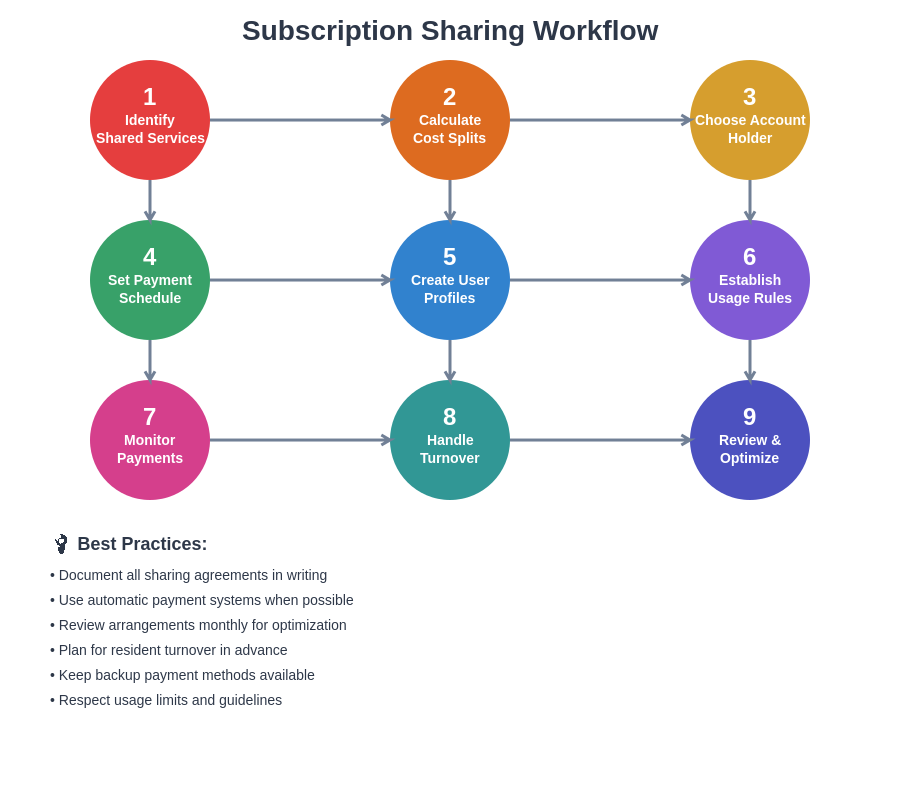
This systematic approach ensures all residents understand the process from initial service selection through ongoing management and optimization, creating transparency and accountability that prevents common disputes and misunderstandings.
Managing Multiple User Accounts and Access
Technical management of shared subscriptions involves coordinating user profiles, managing account security, and ensuring fair access distribution among residents while maintaining service provider compliance with terms of service that may restrict sharing arrangements. Many platforms limit simultaneous streaming sessions or device registrations, requiring coordination to prevent access conflicts during peak usage periods.
Password management and account security become shared responsibilities that require trust and communication among residents, particularly when account holders provide login credentials to multiple users who may have varying levels of technical sophistication or security awareness. Living with Japanese roommates in Tokyo sharehouses often involves navigating different approaches to digital privacy and security that can affect subscription sharing comfort levels.
Profile personalization and recommendation algorithms can become confused when multiple users with diverse preferences access the same account, potentially reducing service quality for all users. Some platforms offer individual profiles within shared accounts, while others require separate accounts that complicate cost-splitting and administrative management.
Device management involves coordinating which devices have downloaded content, which accounts are logged in where, and how to handle device limits imposed by service providers. Residents who frequently travel or change devices may unknowingly consume device slots or create access conflicts for other users.
Handling Resident Turnover and Transitions
The temporary nature of sharehouse living creates unique challenges for subscription management as residents frequently move out, requiring adjustments to cost-splitting arrangements, account access, and payment responsibilities. What moving out really costs in Tokyo sharehouses should include consideration of subscription obligations and transitions that may extend beyond physical departure dates.
New resident integration requires evaluation of existing subscription arrangements, assessment of their service preferences and financial capacity, and negotiation of revised cost-splitting agreements that accommodate additional users without disrupting established arrangements. Some services may require account upgrades to accommodate additional users, while others may already include sufficient capacity.
Account ownership transitions become necessary when the primary account holder moves out, requiring coordination with service providers to transfer billing information, update payment methods, and maintain service continuity. Some platforms make these transitions difficult or impossible, forcing complete account cancellation and recreation that disrupts user histories and preferences.
Partial month billing adjustments require pro-rating subscription costs based on resident occupancy periods, particularly for expensive services or when multiple residents change during the same billing cycle. Clear agreements about how these transitions are handled prevent disputes and ensure fair financial responsibility distribution.
Communication Protocols and Conflict Resolution
Establishing clear communication channels for subscription-related discussions prevents misunderstandings and ensures all residents remain informed about changes, issues, or opportunities that affect shared arrangements. Japanese sharehouse rules every foreigner should know often include guidelines for financial discussions and conflict resolution that apply to subscription sharing.
Regular review meetings allow residents to evaluate existing subscriptions, discuss new service opportunities, address usage conflicts, and adjust arrangements based on changing needs or preferences. These discussions should include assessment of whether shared services continue providing value and whether alternative arrangements might better serve resident needs.
Conflict resolution protocols become essential when disputes arise over service access, cost-splitting fairness, usage limitations, or administrative responsibilities. Having established procedures for addressing these issues prevents minor disagreements from escalating into major conflicts that affect overall house harmony and resident satisfaction.
Documentation of agreements, including service details, cost-splitting arrangements, payment responsibilities, and access protocols, provides reference points for resolving disputes and ensures new residents understand existing arrangements. Written agreements also help prevent memory conflicts and provide accountability for established commitments.
Financial Management and Payment Systems
Modern payment coordination tools and apps can simplify subscription cost collection and distribution, with platforms like Venmo, PayPal, bank transfer apps, or specialized expense-splitting applications providing transparent tracking of contributions and payments. How shared expense apps create new problems explores both benefits and complications that can arise from digitizing financial coordination.
Automatic payment systems can reduce administrative burden by establishing recurring transfers from each resident to the account holder, though these systems require careful coordination to ensure sufficient funds are available and payment timing aligns with subscription billing cycles. Bank account coordination may be necessary for residents without compatible payment applications.
Budgeting integration involves incorporating subscription costs into overall sharehouse expense planning and individual resident budget management, ensuring these recurring costs are properly accounted for alongside rent, utilities, and other shared expenses. Subscription costs can represent significant portions of entertainment and productivity budgets when multiple services are shared.
Emergency payment protocols address situations where regular payment collection fails due to resident absence, financial difficulties, or technical issues with payment systems. Having backup plans ensures service continuity while protecting account holders from unexpected financial responsibility for the full subscription cost.
Legal and Terms of Service Considerations
Subscription service terms of service often include restrictions on account sharing that may technically prohibit arrangements common in sharehouses, creating potential legal exposure for account holders and users. Understanding these limitations helps residents make informed decisions about which services to share and how to structure arrangements to minimize risk.
International usage restrictions may prevent residents from different countries from accessing shared services, particularly for content that is geo-restricted or requires local payment methods. English-speaking sharehouses in Tokyo for foreigners often develop creative solutions for managing international subscription access challenges.
Account suspension or termination risks increase when service providers detect unusual usage patterns that suggest unauthorized sharing, potentially resulting in loss of access for all users and forfeiture of prepaid subscription fees. Understanding provider policies and usage monitoring helps residents avoid activities that trigger security concerns.
Liability considerations include responsibility for content accessed by other users, payment obligations if sharing arrangements fail, and potential consequences if terms of service violations result in legal action. Clear agreements among residents can help distribute these risks appropriately.
Technology Infrastructure and Compatibility
Internet bandwidth and quality requirements for streaming services can strain sharehouse network infrastructure, particularly when multiple residents simultaneously access high-definition content or when overall internet capacity is limited. How internet data limits affect your monthly usage becomes crucial for houses with restricted broadband plans.
Device compatibility variations among residents’ electronics can affect subscription accessibility and user experience, with some residents using older devices that may not support newer streaming platforms or may provide degraded performance. Ensuring shared subscriptions work across diverse device ecosystems prevents exclusion and maximizes value for all users.
Network security considerations include protecting shared account credentials, managing device access to house wifi networks, and ensuring that subscription account information remains secure despite multiple users and devices accessing services. Poor security practices by any resident can compromise shared accounts and personal information.
Streaming quality optimization may require coordination of usage patterns to prevent network congestion during peak periods, particularly for houses with limited bandwidth or residents who work from home and require stable internet connections for professional activities. Balancing entertainment and productivity needs requires communication and compromise.
Cultural and Preference Differences
International sharehouses often include residents with dramatically different entertainment preferences, language requirements, and cultural content interests that can complicate subscription selection and usage coordination. Services that provide excellent value for some residents may be completely irrelevant for others, requiring careful evaluation of shared benefit distribution.
Language support variations mean that streaming services may offer different content libraries, subtitle options, or interface languages based on account settings or geographic location, potentially limiting accessibility for residents who require specific language support for full service enjoyment.
Content sensitivity differences among residents from various cultural backgrounds can create conflicts over shared recommendations, viewing histories, or algorithm training that affects everyone’s user experience. Some residents may prefer to keep their viewing habits private or may be uncomfortable with content that appears in shared recommendation feeds.
Time zone coordination becomes relevant for services that offer live content, limited-time offerings, or social viewing features that require simultaneous access. Residents with different schedules or sleep patterns may compete for prime viewing times or may miss out on time-sensitive content opportunities.
Maximizing Value and Optimizing Arrangements
Strategic subscription portfolio management involves regularly evaluating the full range of available services, identifying redundancies, discovering new opportunities, and optimizing the combination of shared and individual subscriptions to maximize value while minimizing costs. How to budget realistically for sharehouse living includes strategies for incorporating entertainment and productivity subscriptions into comprehensive expense planning.
Bundle identification can reveal opportunities to combine multiple services through provider packages that offer better value than individual subscriptions, though these arrangements may require coordination among residents with different service priorities and usage patterns.
Free trial coordination allows residents to systematically test new services without long-term commitments, though this requires careful scheduling to avoid automatic billing and ensure trials provide adequate evaluation time for all interested users.
Alternative service exploration includes investigating free or lower-cost alternatives that may provide similar functionality while reducing shared expenses, though residents must balance cost savings against feature limitations and user experience compromises.
The evolution of subscription sharing in sharehouses reflects broader changes in how people consume digital content and services while adapting to shared living arrangements that require cooperation, communication, and compromise. Success in managing these arrangements depends on establishing clear expectations, maintaining open communication, and regularly evaluating whether shared subscriptions continue serving the community’s evolving needs and preferences.
Understanding the complexities of subscription sharing empowers sharehouse residents to build arrangements that enhance their living experience while managing costs effectively, creating opportunities for community building through shared entertainment while avoiding the conflicts and complications that can arise from poorly planned or inadequately managed subscription sharing systems.
Disclaimer
This article is for informational purposes only and does not constitute legal or financial advice. Subscription service terms and conditions vary by provider and may change without notice. Readers should review specific terms of service and consult with relevant professionals regarding legal compliance and financial planning. The effectiveness of subscription sharing arrangements may vary depending on individual circumstances, house dynamics, and specific service requirements.