Living sustainably in Tokyo sharehouses creates an ongoing tension between environmental consciousness and the convenience-driven lifestyle that defines modern urban living. This fundamental conflict manifests daily in countless small decisions, from choosing between plastic-wrapped convenience store meals and time-consuming home cooking to selecting transportation methods that balance environmental impact with schedule demands. Understanding these tensions and developing practical strategies to navigate them becomes essential for residents who wish to maintain eco-friendly principles while thriving in one of the world’s most convenience-oriented cities.
The sharehouse environment amplifies these sustainability challenges because individual choices affect multiple residents, creating complex dynamics where personal environmental values intersect with communal living practicalities. How to find the perfect sharehouse in Tokyo becomes more complicated when residents must consider environmental compatibility alongside traditional factors like location and budget.
The Convenience Culture Reality in Tokyo
Tokyo’s infrastructure revolves around convenience, with vending machines on every corner, 24-hour convenience stores, and packaging systems designed for immediate consumption rather than environmental sustainability. This convenience culture deeply influences daily life patterns and creates systematic barriers to sustainable living practices that require more time, planning, and effort from residents.
The convenience store ecosystem exemplifies this challenge perfectly. These ubiquitous establishments offer immediate solutions for meals, household items, and daily necessities, but almost everything comes wrapped in multiple layers of plastic packaging that generates significant waste. Why some residents prefer expensive convenience over sustainable alternatives reflects how time constraints and lifestyle pressures override environmental concerns for many sharehouse residents.
Transportation systems in Tokyo present similar dilemmas. While public transportation is relatively environmentally friendly compared to private vehicles, the extensive network encourages frequent travel and consumption patterns that increase overall environmental impact. The convenience of reaching any destination quickly often overrides considerations about travel necessity or alternative communication methods that could reduce environmental footprint.
The time-poverty phenomenon affects sharehouse residents particularly acutely, as many international residents work long hours while adapting to new cultural environments. This creates strong incentives to prioritize convenience over sustainability, even among environmentally conscious individuals who might make different choices under less demanding circumstances.
Daily Decision Points and Trade-offs
Every day presents dozens of micro-decisions where convenience and sustainability compete for priority. Morning routines alone involve multiple choices: disposable coffee cups versus reusable containers, pre-packaged breakfast items versus home preparation, and transportation timing that balances environmental impact with schedule requirements.
Shopping decisions represent perhaps the most frequent sustainability-convenience conflicts. How bulk shopping changes in shared living illustrates how sustainable purchasing practices become complicated in sharehouse environments where storage space limitations and resident turnover make bulk buying challenging despite its environmental benefits.
Food preparation choices showcase this tension daily. Cooking from scratch reduces packaging waste and allows for better ingredient sourcing, but requires significant time investment, kitchen space coordination with other residents, and cooking skills that many international residents may lack. Why some residents avoid cooking entirely often stems from these practical constraints rather than lack of environmental awareness.
Cleaning and maintenance activities present ongoing sustainability challenges. Eco-friendly cleaning products often require more time and effort to achieve similar results compared to conventional alternatives, while sustainable maintenance practices like air-drying clothes instead of using dryers require weather consideration and space management that convenience-focused alternatives avoid.
Energy consumption decisions occur constantly throughout the day, from heating and cooling choices that balance comfort with environmental impact to electronic device usage patterns that reflect convenience priorities over energy conservation goals.
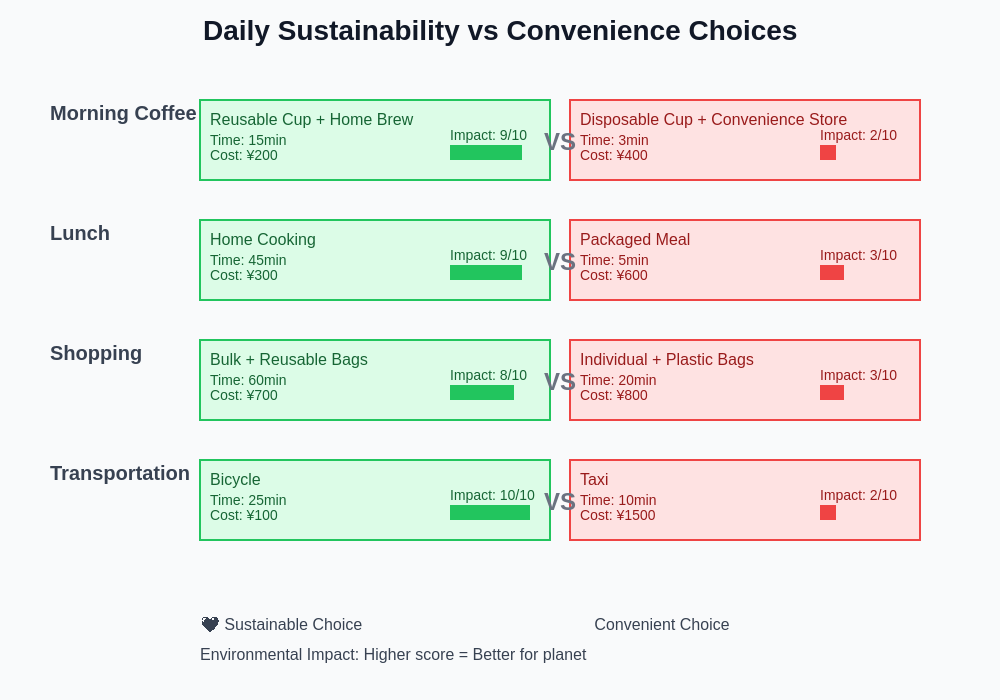
These daily micro-decisions accumulate into significant environmental and lifestyle impacts over time. Understanding the true time and cost implications of each choice helps residents make more informed decisions that align with their personal values and practical constraints.
Kitchen Politics and Sustainable Food Practices
The shared kitchen environment creates unique challenges for sustainable food practices, as individual environmental choices directly impact other residents through space usage, equipment access, and waste generation patterns. Kitchen politics actually work in Japanese sharehouses becomes more complex when residents have varying levels of environmental consciousness and willingness to invest time in sustainable practices.
Refrigerator space allocation often determines food purchasing and consumption patterns. Residents committed to sustainable eating may prefer fresh, unpackaged ingredients that require more storage space and faster consumption timelines, while convenience-oriented residents gravitate toward processed foods with longer shelf lives and more compact packaging. These different approaches create ongoing negotiation and potential conflict over shared refrigerator space.
Cooking equipment sharing presents similar challenges. Sustainable cooking often requires specific tools and longer preparation times that can monopolize kitchen resources during peak usage periods. Why some residents monopolize cooking times frequently relates to the additional time requirements of sustainable food preparation methods.
Food waste management becomes a community issue when residents have different approaches to sustainability. Some residents may invest effort in composting, creative leftover usage, and careful meal planning, while others prioritize convenience and generate more food waste. Why food waste increases in shared kitchens often results from these conflicting approaches rather than simple carelessness.
Group meal coordination attempts to address sustainability while maintaining convenience often fail due to scheduling conflicts, dietary restrictions, and varying environmental commitment levels among residents. The coordination effort required for sustainable group cooking frequently exceeds residents’ available time and energy resources.
Waste Management and Recycling Complexities
Tokyo’s intricate waste separation and recycling systems create daily friction between convenience and environmental responsibility. Recycling rules vary by Tokyo ward adds complexity that many residents find overwhelming, leading to convenience-driven decisions that undermine recycling efforts.
The time investment required for proper waste sorting conflicts with busy schedules and immediate disposal needs. Many residents resort to throwing mixed waste in general bins rather than investing the time needed for proper separation, particularly when dealing with complex packaging that requires multiple separation steps.
Storage of recyclable materials creates ongoing space and cleanliness challenges in sharehouses. Proper recycling often requires accumulating materials for appropriate disposal days, but limited personal and common space makes this storage problematic. Why some residents hoard toiletries reflects similar storage pressures that affect sustainable waste management practices.
Community enforcement of recycling practices becomes necessary but creates social tensions. Residents committed to environmental practices may feel compelled to correct others’ waste disposal errors, creating conflict between environmental responsibility and social harmony within the sharehouse community.
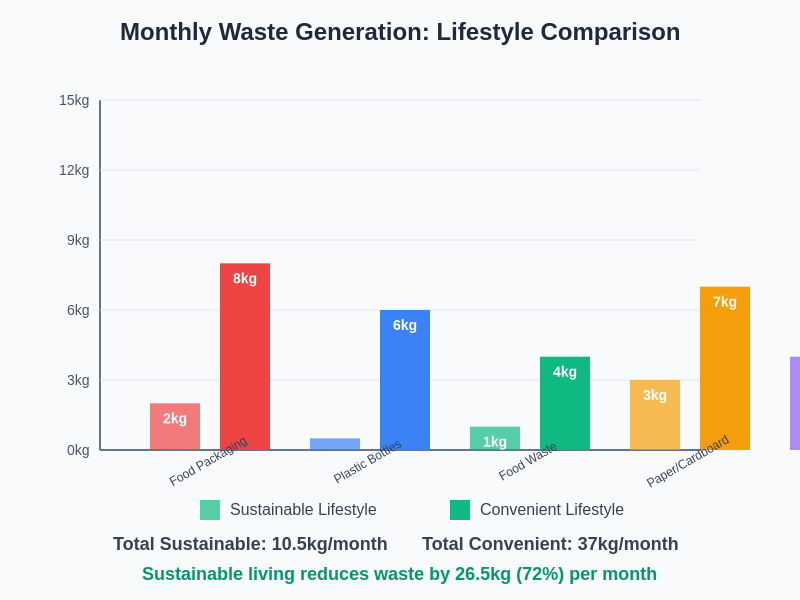
The stark difference in waste generation between sustainable and convenient lifestyle choices demonstrates the cumulative impact of daily decisions on environmental outcomes.
Transportation and Environmental Impact
Daily transportation decisions in Tokyo constantly balance environmental considerations with time efficiency, cost factors, and comfort preferences. While Tokyo’s public transportation system offers relatively sustainable options compared to private vehicle usage, the convenience and speed of various transportation modes create ongoing decision points that test environmental commitment.
Walking and cycling represent the most environmentally friendly transportation options but require significant time investments and physical effort that may conflict with work schedules, weather conditions, and cultural expectations about professional appearance. Why bicycle ownership affects daily routines illustrates how sustainable transportation choices create ripple effects throughout daily life patterns.
Public transportation timing and route optimization present constant choices between environmental efficiency and personal convenience. Taking direct routes that minimize transfer time often means using less efficient transportation modes, while environmentally optimal routing may require additional time and planning that conflicts with schedule pressures.
Late-night transportation needs particularly challenge sustainable living commitments. Late-night transportation limits social life often forces residents to choose between environmental principles and social participation, as taxi usage becomes the most practical option for returning home after public transportation stops running.
Business travel and vacation transportation decisions create larger-scale sustainability challenges. How business travel affects long-term community building often involves air travel that generates significant environmental impact, creating tension between career advancement and environmental values.
Social Dynamics and Peer Pressure
Environmental consciousness in sharehouses becomes socially complicated when residents have varying levels of commitment to sustainable practices. Peer pressure can work both directions, with environmentally conscious residents feeling isolated when their practices seem excessive to others, while convenience-oriented residents may feel judged for their lifestyle choices.
The social signaling aspects of sustainable behavior create additional complexity. Some residents adopt visible sustainable practices like reusable water bottles and canvas shopping bags partly for social approval, while maintaining less visible unsustainable habits. This performative environmentalism can create tension when residents discover inconsistencies between public environmental stances and private behaviors.
Group activities often force collective decisions about sustainability versus convenience. How group travel planning becomes complicated frequently involves navigating different environmental priorities among residents, with convenience usually winning due to coordination difficulties and lowest-common-denominator decision-making.
Social events and celebrations present ongoing sustainability challenges. Why celebration styles differ by culture includes varying approaches to environmental responsibility during festivities, from decoration choices to food preparation methods and waste generation patterns.
Economic Factors and Sustainable Choices
The financial implications of sustainable living create ongoing tension with convenience-driven alternatives that often provide better immediate economic value. How to calculate your true living costs becomes more complex when factoring in the long-term environmental and health costs of convenience-oriented lifestyle choices.
Sustainable products frequently carry higher upfront costs while providing long-term savings that may not be apparent or accessible to residents with limited budgets or uncertain housing tenure. This creates systematic bias toward convenient but environmentally harmful alternatives, particularly for students and temporary residents who prioritize immediate affordability.
Energy-efficient appliances and sustainable technology often require larger initial investments that sharehouses may be reluctant to make, especially in rental properties where landlords bear the costs while tenants receive the benefits. Why some buildings lack environmental features reflects these misaligned financial incentives that favor convenient but unsustainable choices.
Bulk purchasing for sustainability requires upfront capital investment and storage capabilities that many sharehouse residents lack. Why bulk buying creates storage problems illustrates how economic and practical constraints undermine environmentally beneficial purchasing patterns.
Finding Practical Balance and Compromise
Successful navigation of sustainability-convenience tensions requires realistic assessment of personal priorities, practical constraints, and community dynamics rather than rigid adherence to ideological positions that may prove unsustainable under real-world pressures.
Identifying high-impact, low-effort sustainable practices helps residents maintain environmental consciousness without overwhelming their convenience needs. Simple changes like using reusable water bottles, reducing plastic bag usage, and consolidating errands can provide environmental benefits without major lifestyle disruption.
Community-based sustainability initiatives can leverage shared resources and coordination to reduce individual convenience costs while maintaining environmental benefits. How group buying power reduces individual costs demonstrates how collective action can align sustainability with convenience and economic efficiency.
Technology solutions can help bridge the gap between sustainable intentions and practical implementation. Apps for waste sorting guidance, sustainable restaurant identification, and transportation optimization can reduce the time and effort required for environmentally conscious decisions.
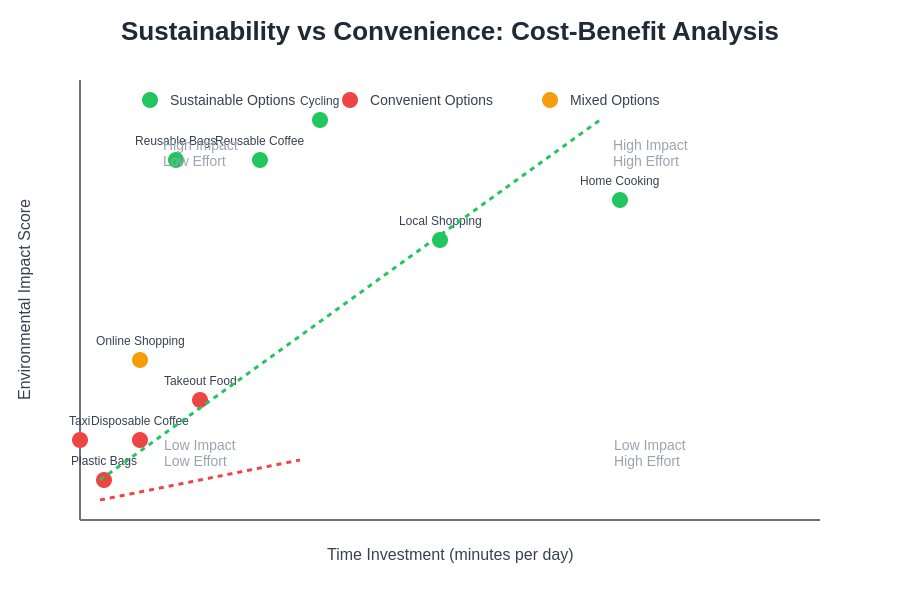
This analysis reveals the sweet spot where sustainable practices offer maximum environmental benefit with minimal time investment, helping residents prioritize their efforts effectively.
Seasonal and gradual implementation of sustainable practices allows residents to adapt slowly rather than attempting immediate lifestyle overhauls that often prove unsustainable. Building sustainable habits incrementally creates lasting behavior change that withstands convenience pressures during stressful periods.
Long-term Perspective and Systemic Solutions
Understanding sustainability-convenience tensions within broader systemic contexts helps residents make informed decisions about where to focus their environmental efforts for maximum impact while maintaining realistic lifestyle expectations.
Policy and infrastructure changes ultimately determine the convenience level of sustainable choices. Supporting businesses and political initiatives that make environmental options more convenient creates systemic change that reduces individual decision-making burden while improving environmental outcomes.
Education and skill development can reduce the convenience gap between sustainable and conventional practices. Learning efficient cooking techniques, waste reduction strategies, and resource optimization methods makes sustainable choices more practical and less time-consuming over time.
Community building around shared environmental values creates social support systems that make sustainable practices more convenient through resource sharing, knowledge exchange, and mutual accountability. Making friends through Tokyo sharehouse communities can include environmental compatibility as a friendship criterion.
The evolution of sustainable convenience solutions continues to reduce the trade-offs between environmental responsibility and practical lifestyle needs. Staying informed about emerging options and remaining flexible in approach allows residents to adopt more sustainable practices as they become available and practical.
Ultimately, the tension between sustainability and convenience reflects broader questions about values, priorities, and the kind of society we wish to create. Individual choices within sharehouses contribute to larger cultural shifts that can make sustainable living more convenient for future residents while demonstrating that environmental responsibility remains compatible with fulfilling urban lifestyles when approached thoughtfully and realistically.
Disclaimer
This article is for informational purposes only and does not constitute professional environmental or lifestyle advice. Sustainability practices and their effectiveness may vary based on individual circumstances, local regulations, and available infrastructure. Readers should research local guidelines and consider their personal situations when implementing sustainable living practices. The environmental impact of various choices may differ based on specific products, services, and regional factors.