Navigating tax obligations while living in a Japanese sharehouse presents unique challenges and opportunities that many international residents discover only after settling into their new living arrangements. The intersection of shared living spaces, rental agreements, and Japanese tax law creates a complex landscape where traditional tax guidance often falls short of addressing the specific circumstances that sharehouse residents encounter on a daily basis.
Understanding how sharehouse living affects your tax status, deductible expenses, and filing requirements becomes essential for maintaining compliance with Japanese tax authorities while optimizing your financial position. The unique nature of sharehouse arrangements, where residents may share utilities, internet connections, and common amenities, requires careful consideration of how these shared expenses interact with tax regulations and what documentation becomes necessary for proper record-keeping.
Fundamental Tax Status Changes for Sharehouse Residents
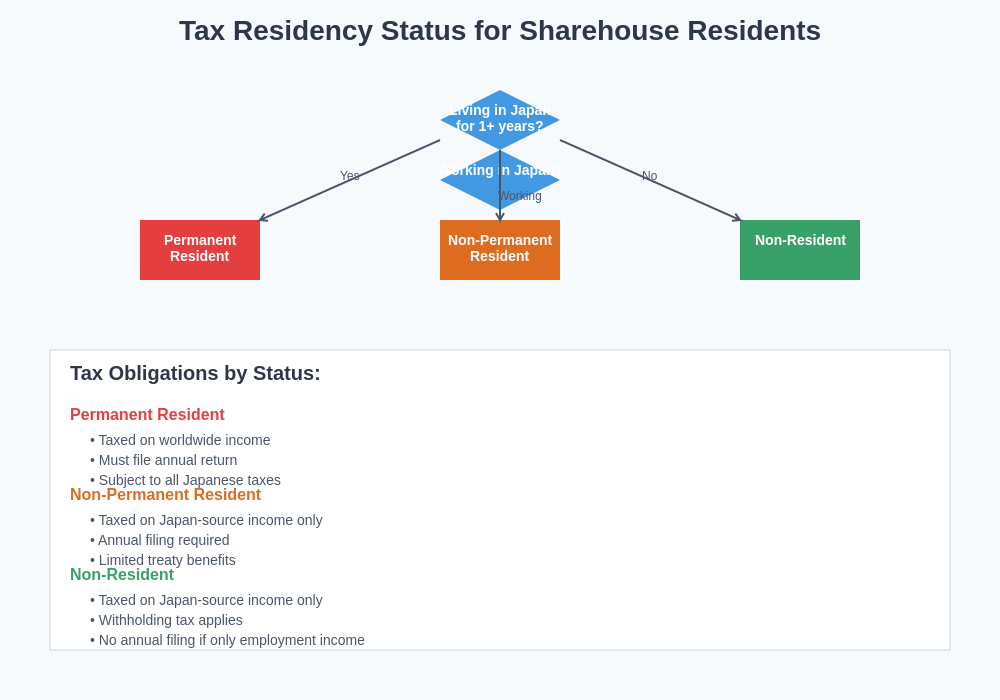
Living in a sharehouse fundamentally alters your relationship with Japanese tax authorities in ways that extend beyond simple address changes. Your tax residency status, which determines your obligations to the Japanese tax system, becomes intrinsically linked to your sharehouse registration and the permanence of your living arrangement. Understanding how living in sharehouses affects your taxes provides the foundation for comprehending these complex relationships.
The concept of tax residency in Japan hinges on your intention to remain in the country and the permanence of your address, factors that sharehouse living can complicate due to the temporary nature that many residents initially perceive their arrangements to have. However, the reality of sharehouse living often involves longer-term commitments than initially planned, which can shift your tax obligations from those of a temporary visitor to those of a permanent resident.
Your visa status interacts with your sharehouse living arrangement to determine not only your tax obligations but also your eligibility for certain deductions and tax benefits that can significantly impact your annual tax burden. Working holiday visa holders, student visa residents, and those on employment visas each face different tax implications when living in sharehouses, requiring tailored approaches to tax planning and compliance.
Resident Registration and Address Documentation Requirements
The resident registration process, known as jumin touroku, takes on additional complexity when your address is a sharehouse rather than a traditional apartment or family residence. How immigration status changes affect your lease demonstrates how documentation requirements can shift based on your living arrangement and legal status within Japan.
Sharehouse addresses may require additional documentation to satisfy municipal registration requirements, particularly when the building houses multiple residents who are not family members. Some municipalities have specific procedures for registering residents in shared living facilities, and failure to properly complete this registration can result in complications with tax filing, banking, and other essential services.
The timing of your resident registration affects your tax obligations for the entire tax year, making it crucial to understand when your obligations begin and how retroactive requirements may apply. Changes in your sharehouse address during the tax year require prompt notification to tax authorities and can trigger additional filing requirements that differ from simple address changes in traditional housing arrangements.
Deductible Expenses and Sharehouse-Specific Considerations
The shared nature of sharehouse living creates unique opportunities and challenges for claiming legitimate tax deductions that can substantially reduce your annual tax burden. How to calculate your true living costs becomes essential for understanding which expenses qualify for deductions and how to properly document shared costs.
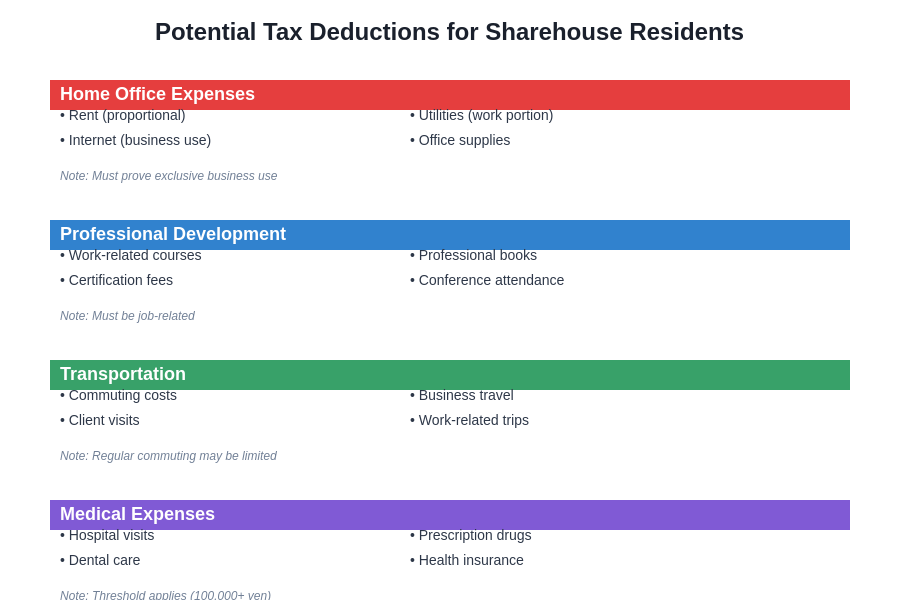
Home office deductions present particular complexity for sharehouse residents, as the traditional calculation methods for office space percentage may not apply directly to shared living arrangements. When your work-from-home setup exists within a sharehouse environment, determining the deductible portion of rent, utilities, and internet costs requires careful calculation that accounts for both private and shared spaces.
Utility expenses in sharehouses often involve shared responsibility arrangements that complicate the documentation and allocation necessary for tax deductions. Whether utilities are included in rent, split among residents, or paid through collective arrangements affects how these expenses can be claimed and what supporting documentation becomes necessary for tax authorities.
Internet and telecommunications expenses frequently fall into gray areas for sharehouse residents, particularly when these services are shared among multiple users or included as part of the overall rent structure. Understanding how to properly allocate and document these expenses for tax purposes requires knowledge of both the specific sharing arrangements and the relevant tax regulations.
Employment Income and Withholding Considerations
Employment income taxation for sharehouse residents involves the same basic principles as other residents, but the documentation and verification processes can become more complex due to address verification requirements and the temporary perception that employers may have of sharehouse arrangements. How employment status impacts sharehouse approval illustrates how these factors interconnect.
Withholding tax calculations remain standard regardless of your living arrangement, but the year-end adjustment process may require additional documentation to verify your address and living situation. Some employers may request additional verification for sharehouse addresses, particularly for tax-related documentation and year-end tax certificate delivery.
Multiple income sources, which are common among international residents in sharehouses, create additional filing requirements and potential tax obligations that extend beyond standard employment withholding. Side jobs, freelance work, and part-time employment must all be properly reported, and the documentation requirements for these various income streams can become more complex when your official address is a sharehouse.
Self-Employment and Freelance Income Implications
Self-employed individuals and freelancers living in sharehouses face unique challenges in documenting business expenses and maintaining the separation between personal and business costs that tax authorities require. How remote work equipment affects space usage provides insights into how shared living spaces complicate traditional business expense calculations.
Business expense deductions for home office use require careful documentation of the space exclusively used for business purposes, which can be challenging in sharehouse environments where common areas may serve multiple functions and private rooms may need to accommodate both living and working needs.
Equipment and supply purchases for business use must be properly documented and allocated when purchased with personal funds or when business equipment is stored in shared spaces. The commingling of personal and business items in sharehouse environments requires meticulous record-keeping to satisfy tax authority requirements for business expense deductions.
Banking and Financial Documentation Challenges
Banking relationships can become complicated for sharehouse residents, particularly when financial institutions require address verification and proof of residence that may differ from traditional housing arrangements. How banking fees add up for foreign residents explores how these complications can create additional costs and administrative burdens.
Tax document delivery and financial statement management require stable address arrangements that some sharehouse situations may not provide, particularly when residents frequently change rooms or when sharehouse management changes affect mail delivery and document receipt. Ensuring reliable receipt of tax documents, bank statements, and other financial communications becomes crucial for maintaining compliance and avoiding penalties.
International money transfers and foreign account reporting requirements may be affected by your sharehouse address, particularly when financial institutions or tax authorities require additional verification of your living situation. The temporary appearance of sharehouse arrangements can trigger additional scrutiny or documentation requirements for international financial transactions.
Record-Keeping and Documentation Best Practices
Effective record-keeping for tax purposes while living in a sharehouse requires systems that account for shared expenses, variable living arrangements, and the documentation needs specific to your visa status and employment situation. How receipt management becomes important for taxes provides practical strategies for maintaining the detailed records necessary for accurate tax filing.
Shared expense documentation requires clear systems for tracking your portion of utilities, internet, cleaning supplies, and other costs that may be split among residents. Maintaining receipts, payment confirmations, and agreements about expense sharing becomes essential for both tax compliance and potential dispute resolution with housemates or management.
Digital record-keeping solutions become particularly valuable for sharehouse residents who may need to access their financial records from various locations or who may move between different sharehouses during the tax year. Cloud-based systems and digital receipt management help ensure continuity of records regardless of changes in living situations.
Municipal Tax and Local Obligations
Municipal tax obligations, including resident tax and other local fees, take on additional complexity for sharehouse residents due to the relationship between your registered address and the specific municipal jurisdiction that governs your tax obligations. Why some areas require resident registration first explains how local requirements can vary significantly between different areas of Tokyo and other cities.
Local tax calculations may be affected by the length of time you maintain residence in a particular municipality, which can be complicated by sharehouse moves or changes in living arrangements during the tax year. Understanding how municipal boundaries and registration timing affect your local tax obligations helps prevent unexpected tax bills or compliance issues.
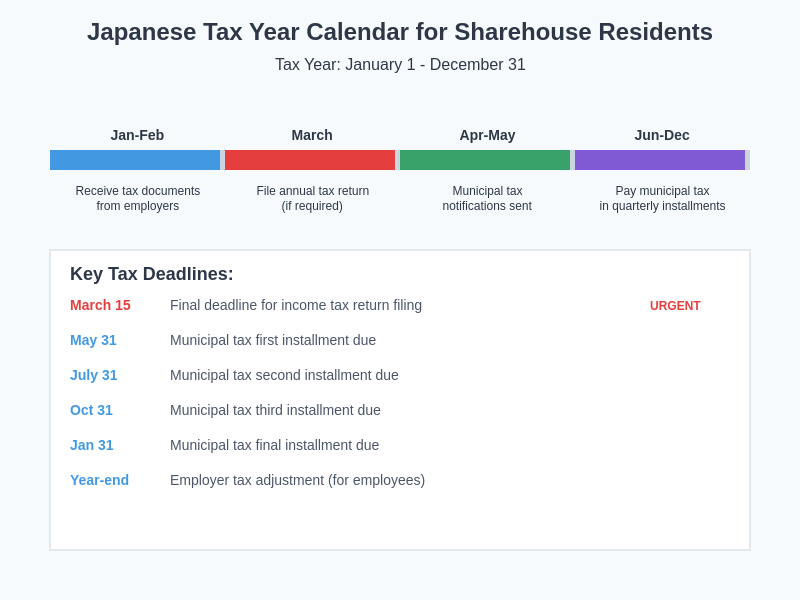
This annual tax calendar helps sharehouse residents stay organized and compliant with all Japanese tax obligations throughout the year.
Property tax implications for sharehouse residents typically involve indirect effects through rent payments, but understanding how property taxes affect your overall housing costs and potential pass-through to residents can help with budgeting and expense planning.
International Tax Treaty Benefits and Considerations
Tax treaty benefits available to residents of certain countries can provide significant savings for sharehouse residents, but accessing these benefits requires proper documentation and understanding of how sharehouse living affects treaty eligibility requirements. How currency exchange affects monthly payments touches on how international financial relationships complicate tax planning.
Double taxation prevention mechanisms become particularly important for residents who maintain financial ties to their home countries while living in Japanese sharehouses. Understanding how to properly claim treaty benefits while maintaining compliance with both Japanese tax authorities and home country requirements requires careful navigation of complex international tax regulations.
Foreign tax credit calculations may be affected by your Japanese residence status and the permanence of your sharehouse arrangement, making it essential to understand how your living situation affects your ability to claim credits for taxes paid to other countries.
Common Mistakes and Compliance Pitfalls
Frequent mistakes made by sharehouse residents include improper documentation of shared expenses, failure to properly register address changes, and misunderstanding of deduction eligibility based on shared living arrangements. How to spot financial red flags in sharehouse contracts helps identify situations that may create tax complications.
Address verification issues can create cascading problems with tax filing, banking, and employment verification that extend far beyond simple administrative inconvenience. Understanding the importance of maintaining proper address documentation and ensuring all relevant parties have current information prevents costly complications during tax season.
Underreporting income or overclaiming deductions based on misunderstanding of sharehouse-specific tax rules can result in penalties, interest charges, and additional scrutiny from tax authorities that can affect your immigration status and future tax obligations.
Planning Strategies for Different Visa Categories
Student visa holders living in sharehouses face specific limitations on work income and deduction eligibility that require careful planning to maximize tax benefits while maintaining visa compliance. How academic deadlines affect house mood illustrates how academic life intersects with practical considerations like tax planning.
Working holiday visa residents often have temporary tax obligations that can be optimized through proper planning and understanding of departure procedures and tax refund eligibility. The temporary nature of working holiday arrangements requires different strategies than those appropriate for longer-term residents.
Employment visa holders may have access to additional deductions and benefits that require stable address documentation and proper employer coordination for withholding and year-end adjustment procedures.
Technology and Digital Solutions for Tax Management
Modern tax management tools and applications can significantly simplify the record-keeping and filing requirements for sharehouse residents, particularly those dealing with multiple income sources, shared expenses, and complex documentation requirements. How translation apps help daily interactions demonstrates how digital tools can bridge language and cultural gaps in practical situations.
Expense tracking applications designed for shared living situations can automate much of the calculation and documentation necessary for proper tax filing while ensuring that all residents maintain accurate records of their contributions to shared costs.
Digital receipt management and cloud-based document storage provide security and accessibility benefits that are particularly valuable for sharehouse residents who may need to access their tax records from various locations or during moves between different living arrangements.
Long-Term Tax Planning and Sharehouse Living
Long-term residents who plan to remain in sharehouses for multiple years need tax strategies that account for the cumulative effects of shared living arrangements on their overall financial picture. How to budget realistically for sharehouse living provides frameworks for understanding the total cost implications of extended sharehouse residence.
Building relationships with tax professionals who understand the unique aspects of sharehouse living can provide valuable guidance for complex situations and help ensure compliance while optimizing tax benefits. The investment in professional tax advice often pays for itself through improved compliance and optimized deductions.
Estate planning and financial goal setting require consideration of how sharehouse living affects your long-term financial picture, including the implications for savings, investment, and eventual housing transitions that may affect your tax obligations and financial planning strategies.
Understanding how tax obligations change with sharehouse living requires attention to detail, proper documentation, and awareness of the unique intersection between shared living arrangements and Japanese tax law. With proper planning and compliance strategies, sharehouse residents can navigate these obligations successfully while optimizing their financial position and maintaining full compliance with all relevant tax authorities.
Disclaimer
This article provides general information about tax obligations and does not constitute professional tax or legal advice. Tax laws and regulations are subject to change, and individual circumstances vary significantly. Readers should consult qualified tax professionals familiar with Japanese tax law and international resident obligations before making tax-related decisions. The author and publisher assume no responsibility for actions taken based on the information provided in this article.