Getting your security deposit back from a Tokyo sharehouse often feels like navigating a complex maze designed to separate you from your money. The reality is that many international residents lose significant portions of their deposits to questionable charges, unclear contract terms, and cultural misunderstandings about what constitutes normal wear and tear versus tenant damage. This comprehensive guide reveals the specific strategies, legal protections, and documentation methods that actually work to ensure you recover your full deposit when moving out of your sharehouse.
Understanding the deposit recovery process requires recognizing that Japanese rental law provides substantial tenant protections, but these rights are only effective when you know how to invoke them properly and have maintained appropriate documentation throughout your tenancy. The key to successful deposit recovery lies not in hoping for fair treatment at move-out, but in establishing a protective framework from the moment you sign your lease agreement that makes unfair deductions legally and practically difficult for property managers to impose.
Understanding Japanese Deposit Law and Tenant Rights
Japanese rental law establishes clear distinctions between landlord and tenant responsibilities regarding property maintenance and damage assessment, but these legal protections remain largely unknown to international residents who often accept whatever charges property managers present without question. Understanding utility bills in Japanese sharehouses provides context for how various charges and fees typically operate in Japanese rental arrangements.
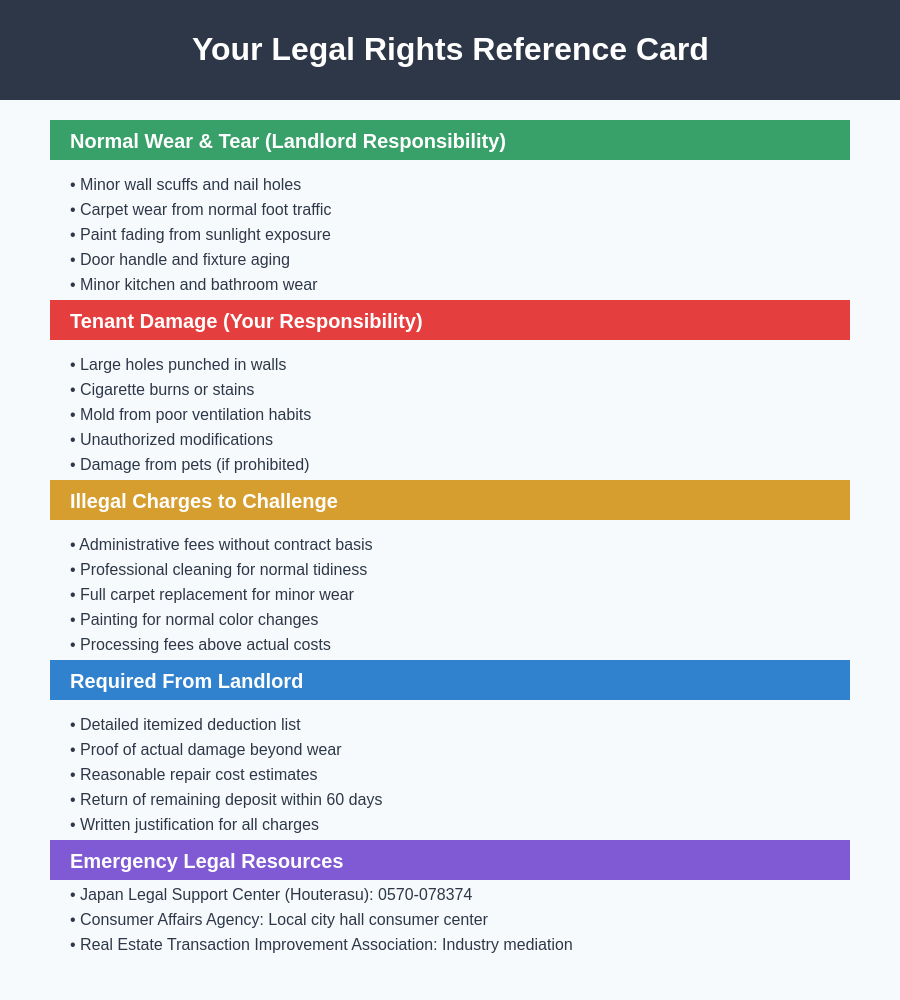
The fundamental principle underlying Japanese deposit law centers on the concept of normal wear and tear, which encompasses the inevitable deterioration that occurs through ordinary use of living spaces over time. This includes minor wall scuffs, carpet wear patterns from furniture placement, small nail holes from hanging pictures, and the gradual fading of materials due to sunlight exposure. Property managers cannot legally charge tenants for these normal aging processes, yet they frequently attempt to do so when dealing with foreign residents who may not understand their rights.
Tenant damage liability extends only to issues that result from negligence, intentional damage, or failure to maintain basic cleanliness standards that prevent more serious problems from developing. Examples of legitimate tenant charges include large holes punched in walls, cigarette burns on floors or furniture, mold growth resulting from failure to ventilate properly, and damage caused by unauthorized modifications to the living space.
The burden of proof for damage claims rests with the property owner, meaning they must demonstrate that specific damage exceeds normal wear and tear and provide reasonable cost estimates for necessary repairs. This legal framework strongly favors tenants who maintain proper documentation and understand how to challenge unreasonable charges through appropriate channels.
Essential Documentation Strategies from Day One
Successful deposit recovery begins with comprehensive documentation on your move-in date, creating an irrefutable record of the property’s condition that serves as your primary defense against false damage claims at move-out. What documents you need for Tokyo sharehouse applications covers initial paperwork, but ongoing documentation proves equally critical for protecting your financial interests.
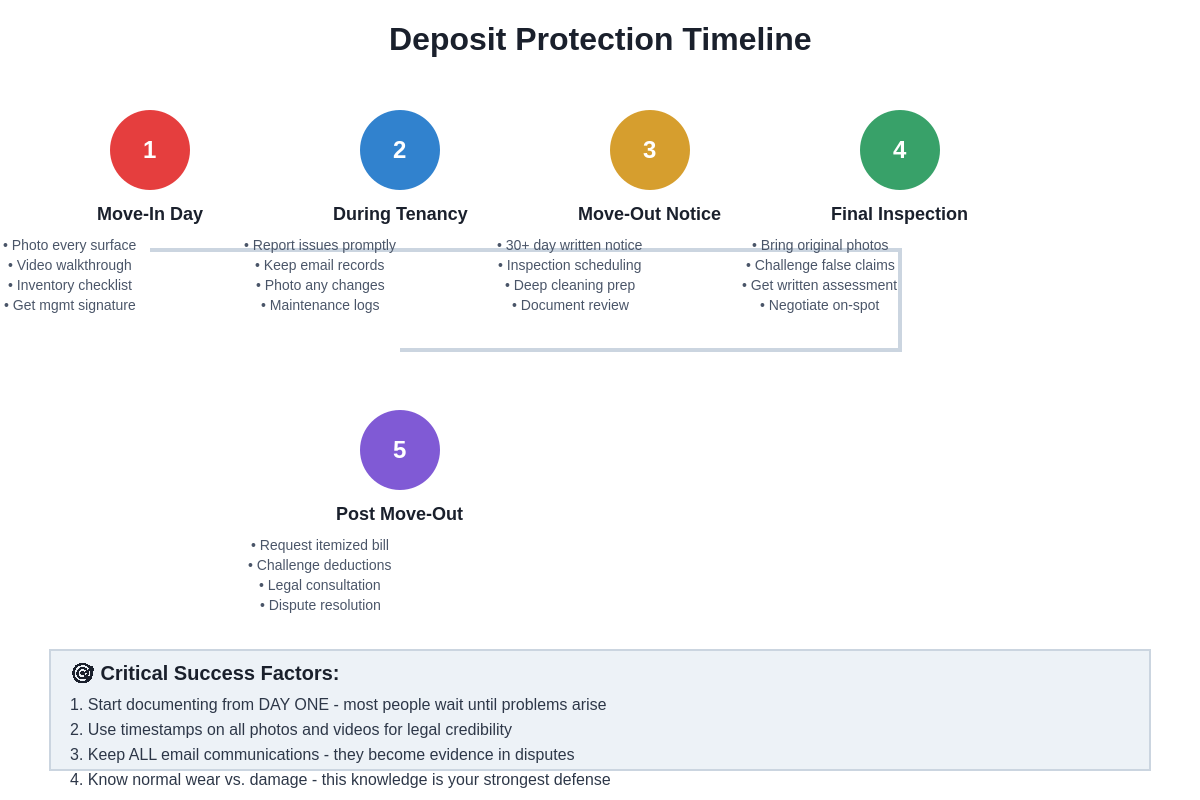
Photographic documentation should capture every surface, fixture, and potential problem area in your room and shared spaces, with particular attention to existing damage, wear patterns, stains, and cosmetic issues that might later be attributed to your occupancy. Take multiple angles of walls, floors, windows, bathroom fixtures, kitchen appliances, and furniture, ensuring timestamps are enabled on your camera to establish clear dates for all images.
Video walkthroughs provide additional documentation that demonstrates the overall condition and functionality of various systems and appliances, creating a comprehensive record that static photographs cannot fully capture. Narrate your video to identify specific issues, note pre-existing problems, and establish your awareness of any deficiencies that existed before your occupancy began.
Written inventory lists should detail every item provided with your room and common areas, noting the condition, functionality, and any existing damage or wear. Have property management sign and date copies of these inventories, or send detailed emails describing conditions and requesting confirmation to create documented acknowledgment of pre-existing issues.
Strategic Communication and Relationship Management
Maintaining positive relationships with property management while protecting your legal interests requires diplomatic communication that demonstrates cooperation without compromising your rights or accepting responsibility for issues beyond your control. Living with Japanese roommates in Tokyo sharehouses offers insights into cultural communication styles that apply to management relationships as well.
Regular communication about maintenance issues serves dual purposes of demonstrating responsible tenancy while creating documented records of your efforts to prevent property deterioration. Report problems promptly through written channels such as email or formal maintenance request systems, keeping copies of all correspondence and noting response times and resolution quality.
Proactive maintenance discussions help establish your commitment to property care while identifying issues that require professional attention rather than tenant responsibility. When problems arise that could potentially cause damage if left unaddressed, immediately notify management in writing and request professional assessment to prevent minor issues from becoming major damage claims.
Relationship building with on-site staff and management personnel creates goodwill that can prove valuable during move-out negotiations, but should never involve accepting blame for issues beyond your control or agreeing to charges that violate your legal protections. Maintain friendly professionalism while keeping detailed records of all interactions and agreements.
Preparing for Move-Out Inspection Success
The move-out inspection represents your final opportunity to influence deposit deductions and challenge questionable charges before they become formal billing disputes. What moving out really costs in Tokyo sharehouses provides context for typical expenses associated with sharehouse departures.
Pre-inspection preparation should include thorough cleaning that exceeds normal expectations, demonstrating your commitment to property care while eliminating any cleaning-related charges that property managers might attempt to impose. Focus particularly on areas that accumulate grime over time, such as bathroom fixtures, kitchen appliances, window tracks, and corners where dust typically collects.
Professional cleaning services may provide cost-effective protection against cleaning charges while ensuring that property condition meets or exceeds typical tenant obligations. The cost of professional cleaning often proves less than the cleaning fees that property managers attempt to charge, while providing superior results that eliminate justification for additional charges.
Documentation during the inspection process requires bringing your move-in photos and videos for direct comparison with current conditions, enabling real-time demonstration of normal wear versus actual damage. Have property management acknowledge pre-existing conditions that you documented initially, creating immediate accountability for any charges that relate to issues present before your occupancy.
Common Deduction Tactics and Counter-Strategies
Property managers employ predictable tactics to maximize deposit retention, but understanding these strategies enables targeted responses that protect your financial interests while maintaining legal compliance. Why contract terms are more important than advertised prices explains how contract language affects your rights and obligations.
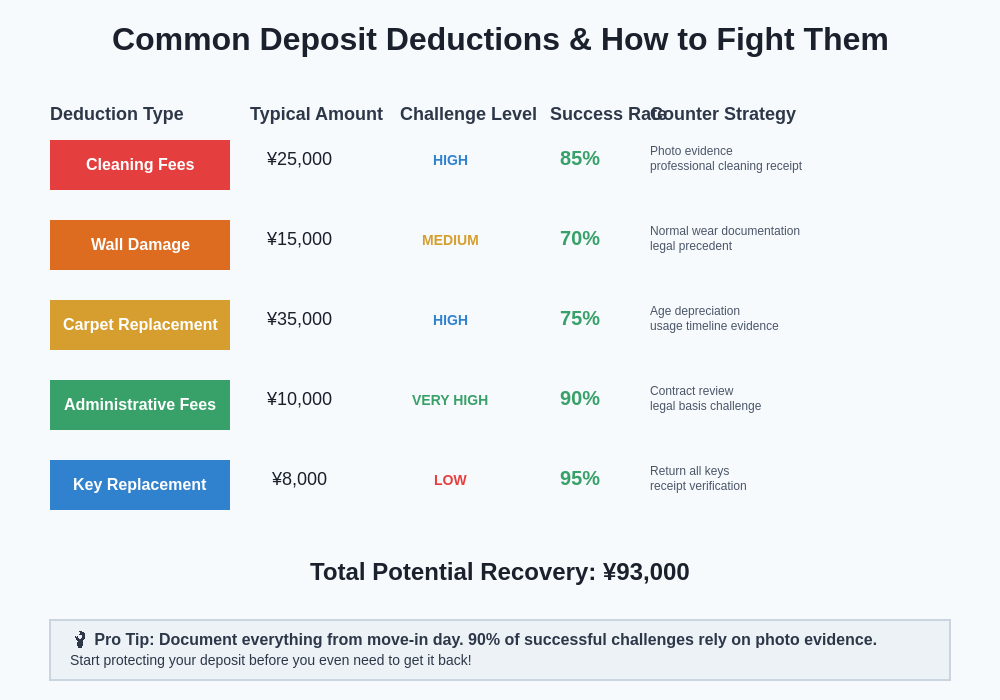
Cleaning fee impositions represent the most common questionable charge, often applied regardless of actual property condition with standardized amounts that suggest policy rather than assessment-based pricing. Counter these charges by demonstrating through photos that you left the property in excellent condition, referencing your lease terms regarding cleaning obligations, and requesting detailed justification for specific cleaning needs that warrant professional service.
Repair charges for normal wear items frequently target international residents who may not understand the distinction between tenant damage and natural deterioration. Challenge these charges by providing legal definitions of normal wear and tear, demonstrating through your move-in documentation that issues existed previously, and requesting detailed repair estimates from licensed contractors rather than accepting inflated in-house pricing.
Administrative fees and processing charges often appear as line items designed to recover costs unrelated to actual property damage or tenant obligations. These charges typically violate Japanese rental law when applied without specific contract authorization and legitimate justification related to tenant actions that created additional administrative burden beyond normal move-out procedures.
Effective Negotiation and Dispute Resolution
Successful deposit negotiations require understanding the legal framework while maintaining professional communication that demonstrates your knowledge of tenant rights without creating adversarial relationships that might complicate resolution efforts. How to handle roommate conflicts without moving out provides communication strategies applicable to property management disputes.
Initial responses to deposit deduction notices should acknowledge receipt while requesting detailed justification for each charge, including specific legal basis, detailed repair estimates, and photographic evidence of claimed damage. This response demonstrates your seriousness while providing opportunity for property management to reconsider questionable charges before formal dispute procedures become necessary.
Legal reference citations strengthen your position by demonstrating knowledge of relevant tenant protection laws and court precedents that support your objections to specific charges. Reference specific articles of Japanese rental law, cite consumer protection guidelines, and mention precedent cases that establish standards for reasonable charges and tenant liability limitations.
Escalation procedures through local housing authorities, consumer protection agencies, and legal aid organizations provide formal channels for dispute resolution when direct negotiation fails to achieve fair outcomes. These agencies often provide mediation services that create pressure for reasonable resolution while avoiding the expense and complexity of formal legal proceedings.
Professional Support and Legal Resources
Legal consultation provides valuable support for complex disputes or situations involving significant financial stakes, but understanding when professional help becomes cost-effective versus when self-advocacy suffices helps optimize your resource allocation. Japanese sharehouse rules every foreigner should know covers basic legal framework relevant to tenant rights.
Consumer protection agencies offer free consultation services that help evaluate the validity of charges and provide guidance on effective response strategies without requiring expensive legal representation. These agencies understand common property management tactics and can provide template responses and negotiation strategies tailored to your specific situation.
Legal aid organizations specifically serve international residents and provide English-language support for housing disputes, offering both consultation and representation services at reduced costs compared to private legal practice. Many universities and international organizations maintain relationships with these resources and can provide referrals for residents facing deposit disputes.
Professional property inspection services provide independent assessment of property conditions and repair needs, offering objective evaluation that counters inflated or inappropriate charges from property management. These services prove particularly valuable for disputes involving significant repair claims where independent verification can prevent substantial financial losses.
Prevention Through Proactive Lease Management
Long-term deposit protection requires viewing your lease as an active document that governs ongoing rights and responsibilities rather than a one-time agreement that you file away and forget. How to find the perfect sharehouse in Tokyo discusses contract evaluation strategies that apply throughout your tenancy period.
Regular lease review ensures you understand all provisions related to maintenance responsibilities, damage liability, and deposit recovery procedures, enabling proactive compliance that prevents issues from developing into legitimate charges. Schedule quarterly reviews of your lease terms and maintain updated understanding of any policy changes or amendments that affect your obligations.
Maintenance compliance documentation creates ongoing records of your adherence to lease requirements while identifying areas where property management responsibilities apply rather than tenant obligations. Keep detailed logs of maintenance requests, response times, and resolution quality to demonstrate your diligence in preventing property deterioration.
Communication records establish patterns of responsible tenancy and cooperative relationship management that support your credibility during deposit recovery negotiations. Maintain organized files of all property-related correspondence, including maintenance requests, policy notifications, and management responses that demonstrate your engagement and compliance throughout your tenancy.
Timing and Administrative Considerations
Deposit recovery timelines in Japan follow specific legal requirements that property managers must observe, but understanding these timeframes enables you to enforce prompt resolution while preventing indefinite delays that might pressure you into accepting unfair charges. Living costs in Tokyo sharehouses explained provides context for typical deposit amounts and recovery expectations.
Move-out notice requirements establish the foundation for deposit recovery timelines, with proper notice protecting your rights while improper notice potentially creating justification for additional charges or delays. Follow your lease requirements precisely regarding notice period, written notification, and any specific procedures that your contract mandates for lease termination.
Inspection scheduling should prioritize your availability and convenience while ensuring adequate time for thorough property assessment and discussion of any potential issues. Avoid rushed inspections that prevent proper evaluation or create pressure to accept immediate resolution without adequate consideration of your rights and options.
Payment processing timelines typically allow property managers 30-60 days for deposit return, but this period should involve active communication about assessment progress rather than silence followed by unexpected charges. Request regular updates on deposit processing status and timeline estimates for final resolution.
Building Long-Term Financial Protection
Successful deposit recovery represents just one aspect of comprehensive financial protection that extends throughout your sharehouse experience and into future housing arrangements. Best Tokyo neighborhoods for sharehouse living discusses location factors that affect overall housing costs and tenant protection levels.
Financial planning for housing transitions should account for potential deposit delays and partial recoveries, maintaining adequate reserves to cover new housing deposits and moving expenses without relying entirely on previous deposit returns. This planning prevents financial pressure that might force acceptance of unfair charges when you need funds for immediate housing needs.
Documentation systems developed for deposit protection serve equally valuable purposes for insurance claims, tax deductions, and future rental applications that require demonstration of responsible tenancy history. Maintain organized records throughout your housing experience to support various financial and legal needs that extend beyond deposit recovery.
Knowledge building about Japanese rental law and tenant rights creates lasting value that benefits all future housing arrangements while enabling you to help other international residents avoid common pitfalls and exploitation. Share your experience and knowledge with community networks to build collective understanding and protection against predatory practices.
Understanding how to actually get your deposit back requires recognizing that protection begins with your lease signature and continues through every day of your tenancy until final payment processing. Success depends not on hoping for fair treatment, but on establishing documentation, maintaining communication, and understanding legal rights that create accountability for property managers and protection for your financial interests. With proper preparation and knowledge of effective strategies, deposit recovery becomes a manageable process that protects your money while maintaining positive relationships throughout your sharehouse experience.
Disclaimer
This article is for informational purposes only and does not constitute professional legal advice. Japanese rental law can be complex and may vary by locality and specific circumstances. Readers should consult with qualified legal professionals for advice specific to their situations. The effectiveness of strategies mentioned may vary depending on individual circumstances, property management practices, and specific contract terms.