The melting pot atmosphere of Tokyo sharehouses creates fascinating cultural exchanges, but nowhere are these interactions more complex and potentially volatile than in the shared kitchen space. Traditional cooking methods from different cultures often collide in unexpected ways, creating tensions that can transform the heart of communal living into a battlefield of conflicting culinary philosophies, equipment needs, and deeply ingrained food preparation habits that residents have practiced for decades.
Understanding these clashes becomes essential for anyone planning to live in an international sharehouse environment, where the simple act of preparing a meal can become a complex negotiation between competing cultural practices, time requirements, and space limitations that affect everyone’s daily routines and stress levels.
The Fundamental Philosophy Divide
Cultural approaches to cooking extend far beyond ingredient choices and recipe variations, encompassing fundamentally different philosophies about food preparation timing, kitchen organization, and the social significance of meal preparation that can create profound misunderstandings among sharehouse residents from diverse backgrounds.
Japanese cooking traditions emphasize precision, minimalism, and respectful use of shared spaces, with careful attention to cleanliness and efficient workflow that prioritizes group harmony over individual convenience. Japanese sharehouse rules every foreigner should know often reflect these cultural values in kitchen usage policies and expectations.
Western cooking approaches typically involve more spontaneous preparation methods, larger equipment requirements, and extended cooking sessions that can monopolize kitchen facilities for hours while creating substantial cleanup obligations. The individualistic nature of Western food culture often conflicts with the collective responsibility expectations common in Japanese living situations.
Asian cooking traditions from countries like India, Thailand, and China frequently require intense heat, strong aromatics, and specialized preparation techniques that can overwhelm shared ventilation systems while creating lingering odors that affect the entire living environment for days after meal preparation.
Equipment Competition and Incompatibility
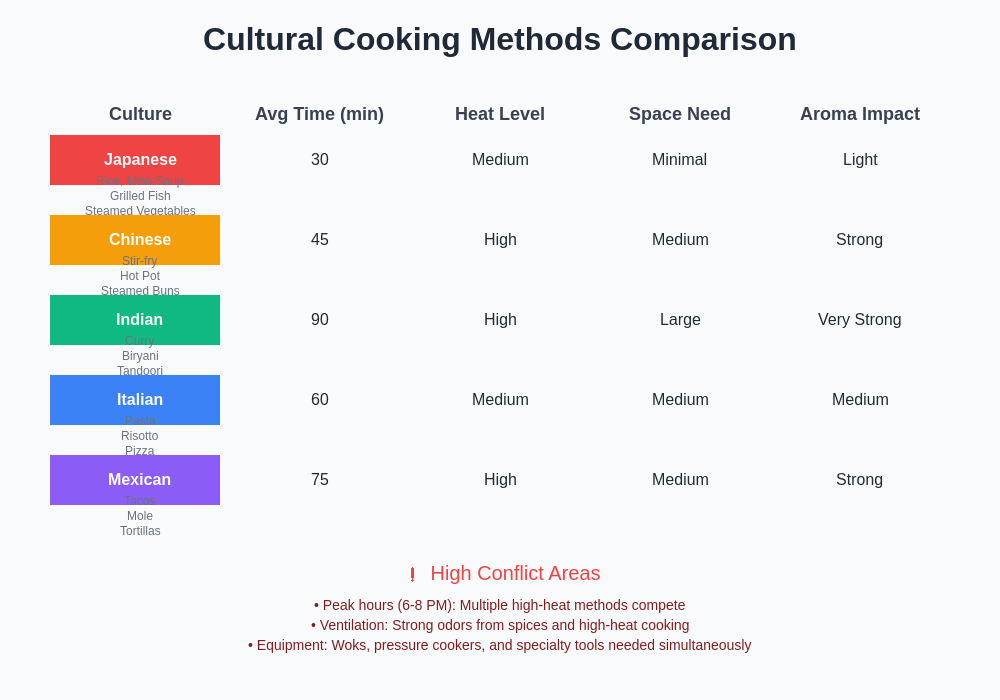
The diverse equipment needs of different cooking traditions create persistent friction in sharehouse kitchens where limited space and shared resources must accommodate conflicting requirements for successful meal preparation. Traditional cooking methods often demand specific tools, heating techniques, and preparation surfaces that may be incompatible with standard Japanese kitchen equipment or other residents’ needs.
Rice cookers represent a perfect example of equipment philosophy conflicts, where Japanese residents expect dedicated rice preparation appliances while international residents may view these devices as unnecessary space consumers that could be replaced by more versatile cooking equipment suitable for diverse grain preparation methods.
Wok cooking requires intense, concentrated heat that most sharehouse gas burners cannot provide adequately, while the high-heat requirements and oil splatter patterns associated with stir-frying can damage kitchen surfaces and create cleaning challenges that affect subsequent users’ ability to prepare their own meals effectively.
Pressure cookers, tagines, and other specialized cooking vessels demanded by various traditional methods create storage challenges and scheduling conflicts when multiple residents require extended cooking times using equipment that cannot be shared simultaneously or cleaned quickly between uses.
Aromatic Warfare in Confined Spaces
The intensity and persistence of cooking aromas from different cultural traditions can transform shared living spaces into olfactory battlegrounds where residents struggle to coexist comfortably while pursuing their authentic culinary practices. How cooking odors create cultural conflicts explores the specific challenges that arise when strong spices and cooking techniques meet inadequate ventilation systems.
Curry preparations, fermented ingredients, and fish-based sauces common in many Asian cooking traditions can create persistent odors that penetrate clothing, bedding, and personal belongings of other residents who may find these smells overwhelming or culturally unfamiliar, leading to complaints and house rule violations.
Garlic, onion, and spice-heavy cooking methods favored in Mediterranean and Middle Eastern cuisines can dominate shared air circulation systems for hours after cooking, affecting residents with sensitivities or those preparing their own meals in the same timeframe.
Smoking, grilling, and high-temperature cooking techniques produce not only strong odors but also smoke and steam that can trigger fire safety systems, create humidity problems, and leave residues on surfaces that require intensive cleaning efforts from subsequent kitchen users.
Time Management and Scheduling Conflicts
Traditional cooking methods from different cultures operate on vastly different timescales and scheduling requirements that can create impossible logistical challenges in sharehouses where multiple residents need kitchen access during peak meal preparation periods. The collision of these temporal demands often results in frustrated residents, delayed meals, and escalating tensions over fair access to shared cooking facilities.
Slow-cooking traditions that require hours of preparation, monitoring, and gradual ingredient additions conflict directly with quick-preparation methods favored by busy professionals or students who need rapid access to cooking facilities during limited time windows between work and sleep schedules.
Multi-course meal preparation common in many European and formal dining traditions requires extended kitchen occupation and multiple cooking surfaces operating simultaneously, creating bottlenecks that prevent other residents from accessing basic cooking facilities during prime dinner preparation hours.
Bread making, fermentation processes, and other time-sensitive traditional methods demand precise timing and temperature control that may conflict with other residents’ cooking schedules while requiring monitoring and intervention at inconvenient hours that affect house quiet time policies.
How meal timing affects kitchen access becomes particularly relevant when residents from cultures with different traditional dining schedules attempt to coordinate shared facility usage during overlapping peak demand periods.
Cleanliness Standards and Cultural Expectations
Different cultural approaches to kitchen cleanliness and food safety create ongoing tensions in sharehouse environments where residents must share cooking surfaces, utensils, and storage areas while maintaining standards that satisfy everyone’s health and cultural requirements. These differences often reflect deeply ingrained values about food handling, cross-contamination prevention, and shared responsibility that can be difficult to negotiate or compromise.
Halal and kosher dietary restrictions require strict separation of cooking surfaces, utensils, and storage areas that can be challenging to maintain in shared kitchen environments where other residents may not understand or respect these religious requirements, leading to unintentional violations that create serious cultural and spiritual conflicts.
Vegetarian and vegan residents often require dedicated preparation areas and cooking equipment to avoid cross-contamination from meat products, creating additional complexity in kitchen organization and usage protocols that must accommodate multiple dietary restriction systems simultaneously.
Japanese cleanliness standards typically exceed international norms, with expectations for immediate cleanup, surface sanitization, and organized storage that may conflict with more casual approaches to kitchen maintenance common in other cultural traditions.
Traditional cooking methods that involve raw meat preparation, fermentation processes, or preserved ingredients require specialized cleaning protocols that may not align with standard sharehouse kitchen maintenance procedures or other residents’ comfort levels with food safety practices.
Storage Space Wars and Food Preservation Conflicts
Limited refrigerator and pantry space in typical Tokyo sharehouses becomes a contentious resource when residents from different cultural backgrounds attempt to store ingredients and prepared foods according to their traditional preservation methods and storage requirements. How food storage rules impact your eating habits explores how these limitations affect residents’ ability to maintain their preferred dietary practices.
Bulk ingredient purchasing common in many traditional cooking approaches conflicts with limited storage capacity and rapid turnover expectations in sharehouse environments where shared refrigerator space must accommodate multiple residents’ food storage needs without creating waste or hygiene problems.
Fermented foods, aged ingredients, and traditional preservation methods require specific temperature, humidity, and ventilation conditions that may not be compatible with standard refrigeration systems or may create odors and conditions that affect other residents’ stored food items.
Large-scale meal preparation and batch cooking traditions popular in many cultures require substantial storage capacity for prepared foods, ingredients, and cooking equipment that exceeds typical sharehouse allocation systems designed for individual portion preparation and consumption.
Traditional seasonal food preservation methods such as pickling, curing, and drying require dedicated space and time that may not be compatible with shared living arrangements where storage areas must remain accessible and neutral for all residents.
Cooking Schedule Negotiations and Peak Hour Pressures
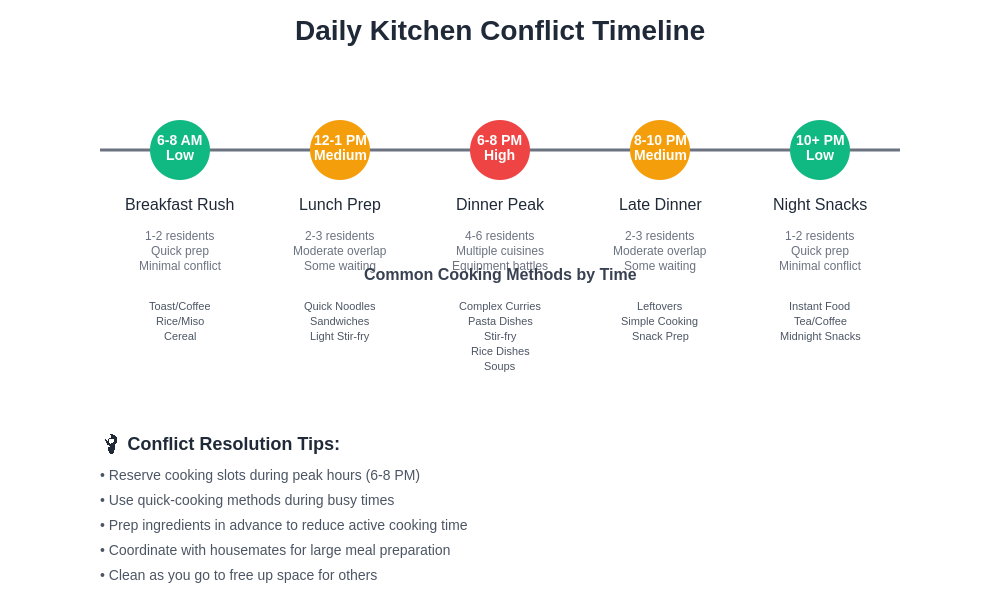
The intersection of diverse work schedules, cultural meal timing preferences, and limited kitchen capacity creates complex logistical challenges that require ongoing negotiation and compromise among sharehouse residents. Peak cooking hours become particularly stressful when multiple traditional cooking methods compete for the same facilities during overlapping dinner preparation periods.
Cultural differences in meal timing create unexpected conflicts when residents from Mediterranean cultures prefer late evening cooking sessions that overlap with early morning breakfast preparation by residents from other time zone adapted schedules or work requirements.
Weekend cooking marathons common in many cultural traditions where residents prepare multiple meals or complex dishes conflict with other residents’ needs for kitchen access during their limited free time for meal preparation and social cooking activities.
How commute times impact work performance often affects residents’ available cooking windows, creating additional pressure on kitchen scheduling when traditional cooking methods require extended preparation times that cannot be easily compressed or rescheduled.
Religious and cultural fasting periods, special occasion cooking requirements, and holiday food preparation demands create periodic intense pressure on kitchen resources that requires advance planning and coordination to avoid conflicts with residents’ regular cooking needs.
Ingredient Sourcing and Shopping Coordination Challenges
Traditional cooking methods often require specialized ingredients that may be expensive, difficult to source, or available only in specific quantities that exceed individual consumption capacity. These sourcing challenges create opportunities for cooperation but also potential conflicts over purchasing decisions, storage allocation, and cost sharing arrangements.
Ethnic grocery shopping coordination becomes complex when residents need access to different specialized markets, bulk purchasing arrangements, and ingredient sharing agreements that must account for dietary restrictions, quality preferences, and cost distribution among participants with varying financial resources.
Seasonal ingredient availability affects traditional cooking practices differently across cultures, creating competition for limited seasonal items while some residents may need to modify their traditional recipes based on local ingredient availability and cost considerations.
How group buying power reduces individual costs offers strategies for coordinating ingredient purchases, but cultural differences in quality expectations, brand preferences, and preparation timing can complicate these cooperative arrangements.
Perishable ingredient management becomes challenging when traditional recipes require fresh ingredients that must be used within specific timeframes, creating pressure for coordinated cooking schedules and potential waste when residents cannot align their meal preparation timing effectively.
Conflict Resolution and Adaptation Strategies
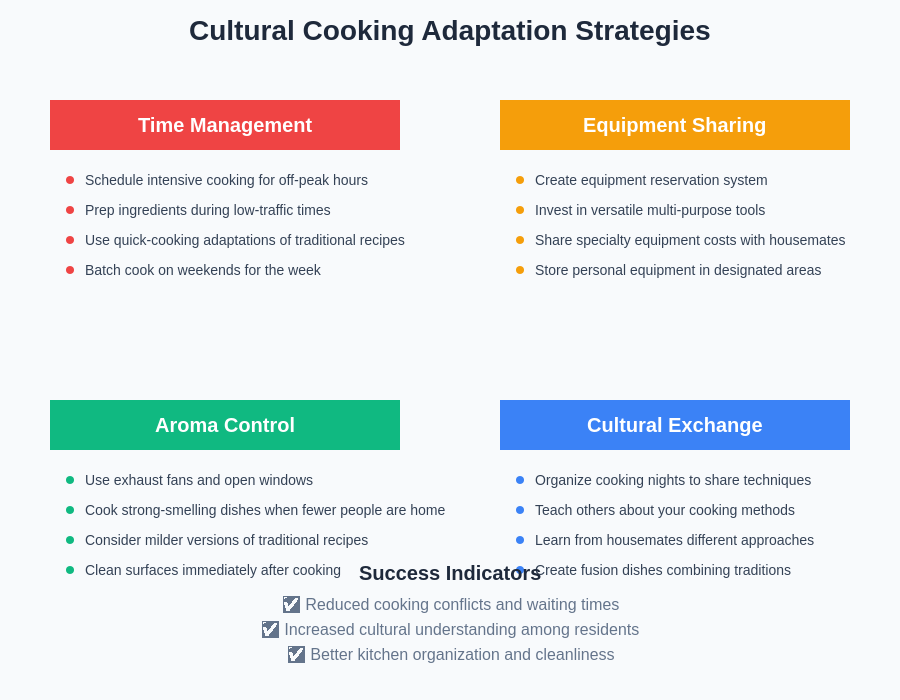
Successfully managing cooking method conflicts requires proactive communication, cultural education, and flexible adaptation strategies that allow residents to maintain their culinary traditions while respecting shared living space limitations and other residents’ needs and preferences.
Establishing clear kitchen usage schedules, equipment reservations, and cleaning protocols can help minimize conflicts by providing predictable access to shared facilities while ensuring that intensive traditional cooking methods do not monopolize resources during peak demand periods.
Cultural cooking exchanges and educational sessions can transform potential conflicts into learning opportunities where residents share techniques, ingredients, and cultural knowledge while developing appreciation for different approaches to food preparation and presentation.
How to handle roommate conflicts without moving out provides strategies for addressing cooking-related tensions before they escalate into serious relationship problems that affect overall house harmony and resident satisfaction.
Creating designated spaces, equipment sharing agreements, and compromise solutions such as alternating cooking schedules or collaborative meal preparation can help residents maintain their traditional practices while building community connections through shared culinary experiences.
Building Bridges Through Food Culture Exchange
Despite the potential for conflict, diverse cooking traditions in sharehouses also create unique opportunities for cultural exchange, skill development, and community building that can transform initial tensions into lasting friendships and expanded culinary horizons for all residents involved.
Organized cooking nights, recipe sharing, and collaborative meal preparation events can help residents learn about different cultural approaches to food while building understanding and appreciation for the complexity and significance of various traditional cooking methods.
Making friends through Tokyo sharehouse communities often happens through shared food experiences where residents discover common ground despite different cooking approaches and cultural backgrounds.
Teaching and learning exchanges where residents share cooking techniques, ingredient knowledge, and cultural food stories can create bonds that transcend initial conflicts while expanding everyone’s culinary skills and cultural understanding in meaningful ways.
Celebrating cultural food holidays and special occasions together allows residents to experience authentic traditional cooking in context while building appreciation for the time, effort, and cultural significance involved in maintaining these practices in a foreign country.
The clash of traditional cooking methods in Tokyo sharehouses represents a microcosm of broader cultural integration challenges, but with patience, understanding, and creative problem-solving, these conflicts can evolve into rich opportunities for personal growth, cultural learning, and community building that enhance the sharehouse experience for everyone involved.
Disclaimer
This article is for informational purposes only and reflects general observations about cultural differences in cooking practices within shared living environments. Individual experiences may vary significantly based on specific house rules, resident backgrounds, and local cultural dynamics. Readers should approach cultural differences with respect and open communication to foster positive living environments.