The complex world of utility billing in Tokyo sharehouses conceals numerous opportunities for unscrupulous operators to manipulate costs and extract additional profits from unsuspecting residents. Understanding these deceptive practices becomes essential for protecting your financial interests and making informed housing decisions that prevent costly surprises throughout your tenancy. The intricate nature of Japanese utility systems, combined with language barriers and cultural unfamiliarity, creates an environment where manipulative billing practices can flourish unchecked.
Utility bill manipulation in sharehouses represents a systematic problem that affects thousands of international residents annually, with financial impacts extending far beyond simple overcharges to include damaged credit, security deposit losses, and unexpected termination fees. The sophistication of these schemes often makes detection difficult until residents have already suffered significant financial harm, making preventive knowledge and vigilance crucial for anyone considering sharehouse living in Japan.
Understanding Standard Utility Billing Systems
Legitimate utility billing in Japanese sharehouses typically follows transparent calculation methods that distribute actual costs proportionally among residents based on measurable consumption patterns or standardized per-person allocations. Understanding utility bills in Japanese sharehouses provides foundational knowledge about proper billing structures, though many operators deviate significantly from these standards through various manipulative techniques.
The basic components of honest utility billing include electricity consumption measured through individual room meters or house-wide distribution, gas usage for heating and cooking facilities, water consumption including sewage processing fees, and internet connectivity charges that reflect actual service costs. Each component should be clearly itemized with transparent calculation methods that residents can verify independently through direct communication with utility providers.
Seasonal variations in utility costs create legitimate fluctuations that honest operators explain clearly to residents, providing historical data and consumption comparisons that justify billing changes throughout different weather periods. The transparency of these explanations often serves as the primary indicator distinguishing legitimate operators from those employing manipulative practices designed to obscure excessive charges.
Common Manipulation Techniques and Red Flags
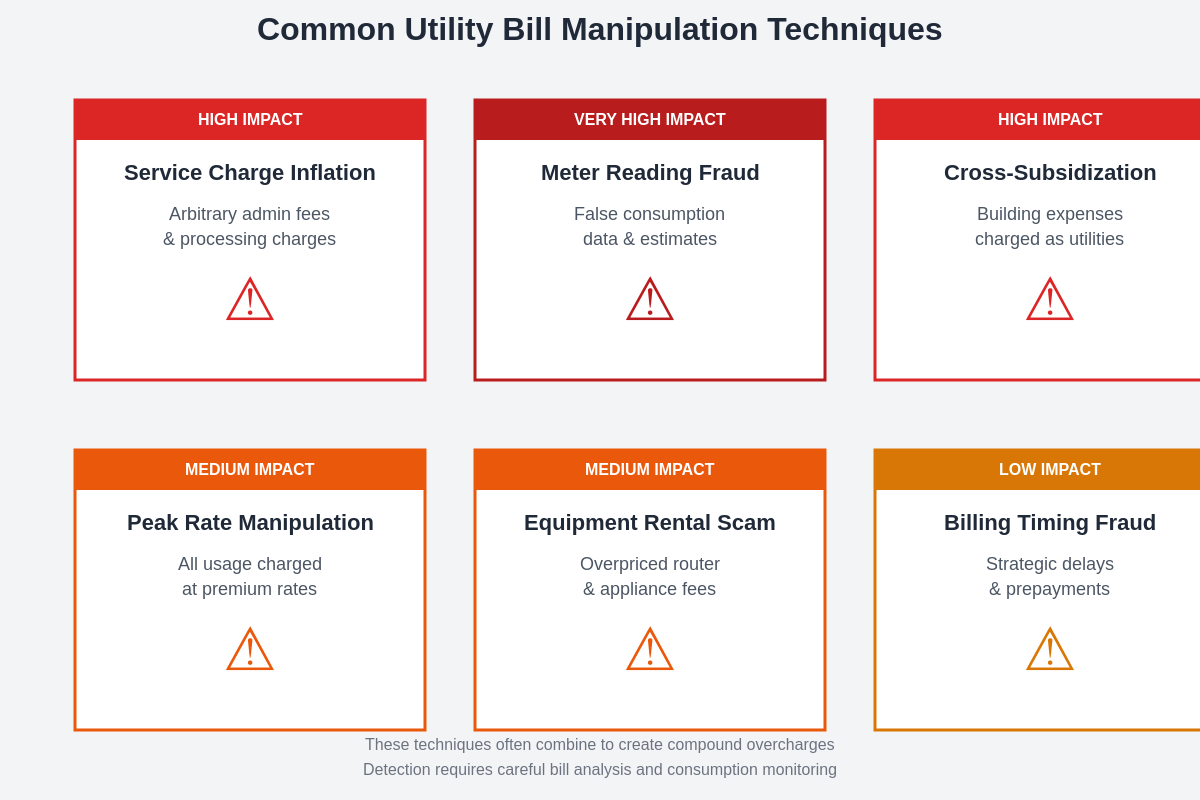
Service charge inflation represents one of the most prevalent manipulation methods, where operators add arbitrary percentages or fixed fees labeled as administrative costs, processing charges, or maintenance contributions that bear no relationship to actual expenses incurred. These charges often appear reasonable individually but compound significantly over time, creating substantial additional revenue streams that residents unknowingly subsidize through inflated utility payments.
Consumption calculation distortions involve manipulating actual usage data through various methods including false meter readings, estimated consumption that consistently exceeds actual usage, and averaging schemes that penalize efficient users by forcing them to subsidize excessive consumption by other residents. The complexity of Japanese utility billing makes these distortions particularly difficult for international residents to detect without specialized knowledge and persistent investigation.
Cross-subsidization schemes involve using utility payments to cover unrelated building expenses such as property maintenance, management salaries, or facility upgrades that should be handled through separate transparent fee structures. What additional fees really mean in practice explores how legitimate fees become disguised within utility billing to avoid scrutiny and resistance from cost-conscious residents.
Billing timing manipulation involves strategic delays or accelerations in billing cycles that create cash flow advantages for operators while disadvantaging residents through forced prepayments or retroactive charges that accumulate interest and penalties. These timing schemes often coincide with move-out periods when residents are least likely to contest charges due to relocation pressures and deposit recovery concerns.
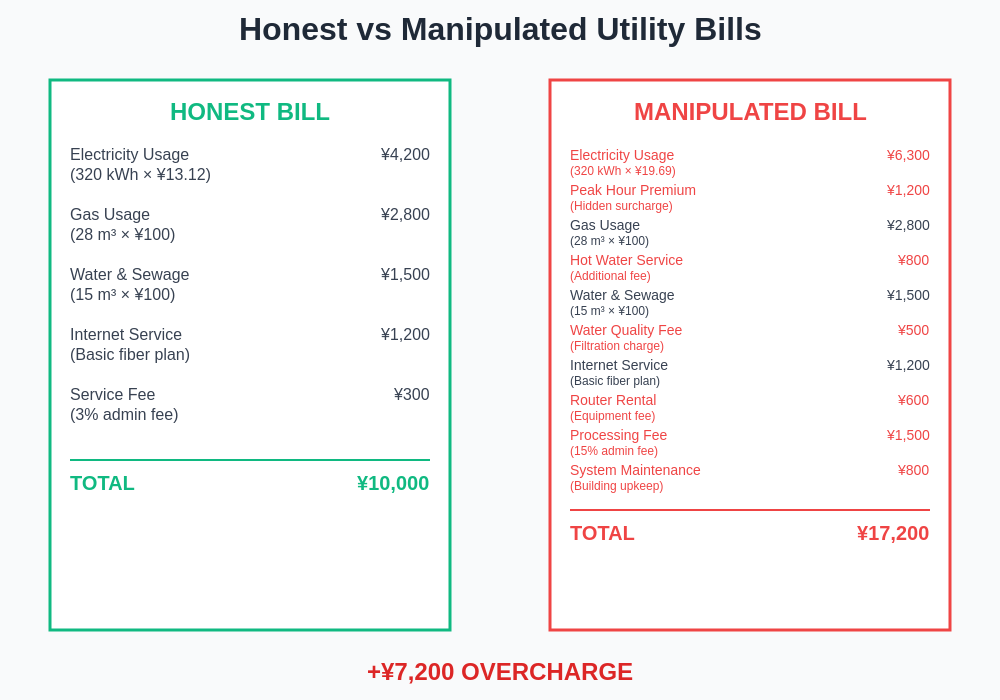
This side-by-side comparison reveals how manipulation techniques compound to create substantial overcharges that can increase monthly utility costs by 50% or more through various deceptive practices.
Electricity Billing Manipulation Schemes
Individual room metering fraud occurs when operators install submeters that record consumption inaccurately or apply rate multipliers that exceed actual utility company charges, creating artificial inflation that generates profit margins disguised as legitimate pass-through costs. The technical complexity of electrical metering systems makes verification challenging for most residents, particularly those without engineering backgrounds or access to independent testing equipment.
Common area allocation manipulation involves disproportionate assignment of shared electricity costs such as hallway lighting, security systems, and building maintenance equipment to individual residents rather than distributing these expenses fairly across all occupants. How-much Tokyo sharehouses really cost per month discusses how these hidden allocations significantly impact total living expenses beyond advertised room rates.
Peak hour rate manipulation exploits Tokyo’s tiered electricity pricing structure by falsely claiming all consumption occurs during expensive peak periods or applying commercial rates to residential consumption, creating substantial overcharges that residents cannot easily verify without detailed knowledge of utility company rate structures and billing cycles.
Air conditioning surcharge schemes involve separate fees for climate control usage that exceed actual consumption costs, sometimes including charges for units that residents don’t use or premium rates for basic temperature control that should be included in standard utility calculations. These schemes particularly target international residents unfamiliar with typical Japanese air conditioning usage patterns and costs.
Gas and Water Billing Irregularities
Hot water heating manipulation involves inflated charges for shared water heating systems that may include fuel surcharges, maintenance fees, or efficiency penalties that don’t reflect actual operational costs or consumption patterns. The communal nature of most sharehouse water heating creates opportunities for operators to obscure individual usage attribution while inflating overall system costs through various fee structures.
Sewage processing fee inflation exploits the complexity of Japanese wastewater billing by adding administrative charges, processing fees, or environmental contributions that exceed municipal requirements. These fees often appear legitimate due to environmental consciousness trends but represent pure profit generation rather than actual regulatory compliance costs that residents should bear.
Gas appliance rental charges sometimes appear within utility billing as equipment fees, maintenance contributions, or safety inspection costs that duplicate expenses already covered through room rental agreements or represent inflated pricing for basic appliances that should be provided at cost. Living costs in Tokyo sharehouses explained examines how appliance-related fees contribute to total housing expenses.
Water quality improvement fees represent another manipulation avenue where operators charge for filtration systems, mineral enhancement, or purification services that may not exist or provide minimal benefit while generating significant additional revenue through mandatory participation in unnecessary upgrade programs.
Internet and Communication Service Overcharges
Bandwidth allocation manipulation involves charging premium rates for basic internet service while providing substandard connectivity that doesn’t justify the imposed fees. Operators may advertise high-speed internet as included in utility costs while actually providing limited bandwidth that requires additional payments for adequate performance levels needed for work or study activities.
Equipment rental schemes within internet billing include charges for routers, modems, or wireless access points at rates that far exceed retail purchase prices, sometimes continuing indefinitely even after equipment costs have been fully recovered. These schemes exploit residents’ assumptions that internet equipment costs are reasonably priced and temporary rather than ongoing profit centers.
Service upgrade pressure tactics involve deliberately providing inadequate basic internet service while offering expensive upgrade options that should represent standard connectivity levels. Residents find themselves forced to pay additional fees for internet performance that competitive providers offer as baseline service at significantly lower total costs.
Data usage penalties and overage charges may apply even to unlimited service plans through complex fair use policies that trigger expensive additional fees when residents exceed arbitrary consumption limits that weren’t clearly disclosed during the initial rental agreement process.
Detection Methods and Warning Signs
Bill comparison analysis involves requesting detailed itemization of all utility charges and comparing these figures with direct utility company rates, neighboring property costs, and online rate calculators that reveal discrepancies between claimed costs and actual market pricing. This analysis requires persistent effort but provides concrete evidence of manipulation when significant variances appear consistently across multiple billing periods.
Consumption pattern investigation includes monitoring personal usage habits and comparing these patterns with billed consumption to identify unrealistic charges that don’t align with actual behavior. Residents can track appliance usage, document conservation efforts, and maintain consumption logs that reveal billing inconsistencies when compared with official charges.
Cross-verification with municipal services involves contacting utility providers directly to understand actual rate structures, average consumption for similar properties, and legitimate fee categories that should appear on residential bills. Japanese sharehouse rules every foreigner should know includes guidance on communication strategies for dealing with utility companies and understanding billing rights.
Seasonal analysis reveals manipulation through comparison of weather-adjusted consumption patterns across different months, identifying charges that don’t correlate appropriately with seasonal usage variations that should naturally occur in heating, cooling, and lighting consumption throughout the year.
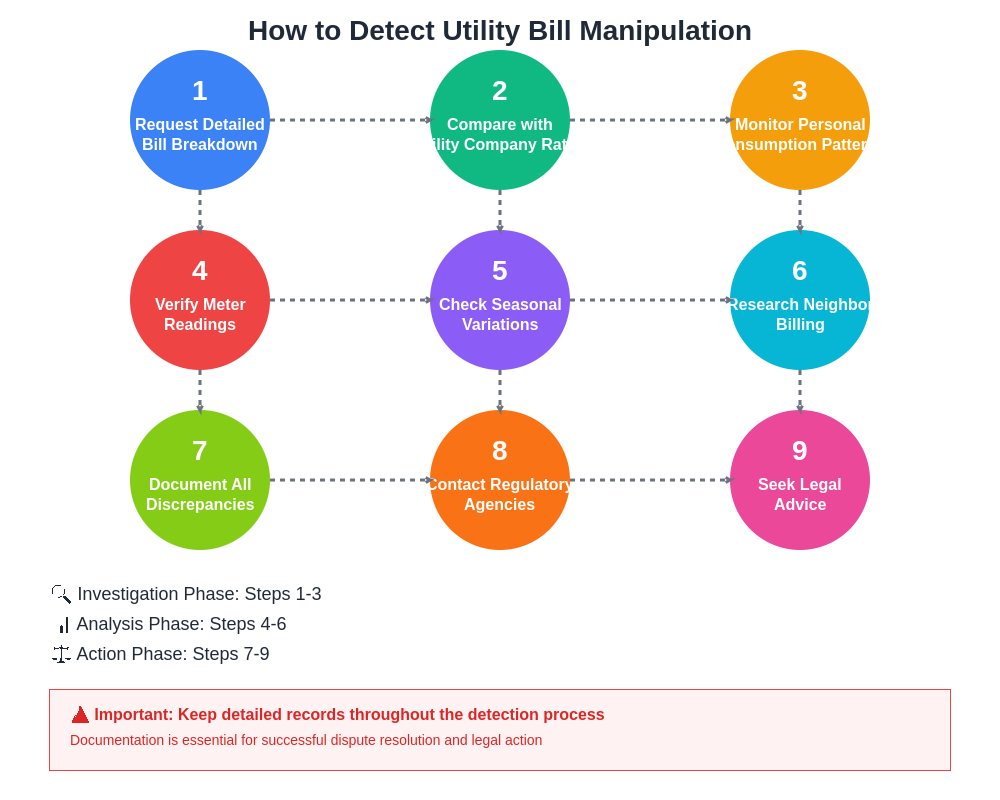
This systematic approach provides residents with a comprehensive framework for identifying and documenting utility bill manipulation, creating evidence necessary for successful dispute resolution and legal action.
Legal Framework and Resident Protection Rights
Japanese consumer protection laws provide specific remedies for utility billing fraud and manipulation, including dispute resolution procedures, refund mechanisms, and penalty structures that operators must follow when overcharges are proven. Understanding these legal protections requires navigation of complex regulatory frameworks but provides powerful tools for residents who document manipulation effectively.
Lease agreement analysis often reveals contractual obligations that operators violate through manipulative billing practices, creating grounds for legal action or early termination without penalty when residents can demonstrate systematic overcharging or deceptive practices. How to spot financial red flags in sharehouse contracts provides guidance on identifying problematic contract terms related to utility billing.
Documentation requirements for legal protection include maintaining detailed records of all utility communications, payment receipts, consumption patterns, and correspondence with operators regarding billing disputes. This documentation becomes essential for successful resolution through official channels when manipulation is discovered and contested.
Regulatory agency involvement may become necessary when operators refuse to address documented manipulation, with specific government departments responsible for investigating utility billing fraud and enforcing consumer protection standards within the residential rental market.
Financial Impact Assessment and Recovery Strategies
Overcharge calculation methods help residents quantify the total financial impact of manipulative billing practices by comparing actual consumption costs with inflated charges over the entire tenancy period. These calculations provide foundation for restitution demands and legal action when manipulation is proven through detailed analysis and documentation.
Recovery procedure strategies include direct negotiation with operators, formal dispute filing with regulatory agencies, and legal action through small claims procedures that provide accessible remedies for financial harm caused by billing manipulation. What security deposits actually cover in sharehouses explains how utility overcharges often get deducted from deposits without proper justification.
Future protection measures involve implementing monitoring systems, establishing documentation protocols, and creating verification procedures that prevent ongoing manipulation while providing early warning systems for detecting new schemes that operators may introduce over time.
Budget adjustment strategies help residents accommodate potential utility cost variations while maintaining financial stability despite uncertainty created by manipulative billing environments that make accurate expense planning difficult.
Prevention Strategies for New Residents
Pre-rental investigation techniques include researching operator reputation, requesting sample utility bills from current residents, and analyzing billing structures before committing to rental agreements. How to find the perfect sharehouse in Tokyo includes utility billing evaluation as part of comprehensive property assessment procedures.
Contract negotiation strategies focus on establishing clear utility billing terms, specifying calculation methods, and creating dispute resolution mechanisms that protect residents from manipulation while providing recourse when problems arise. These negotiations require understanding both legal rights and practical enforcement challenges within the sharehouse market.
Monitoring system establishment involves creating personal tracking methods for consumption patterns, bill verification procedures, and documentation systems that provide ongoing protection against manipulation attempts throughout the rental period.
Community coordination with other residents creates collective bargaining power and shared resources for investigating billing practices, documenting manipulation attempts, and pursuing resolution through group action that amplifies individual efforts and reduces personal risk.
Alternative Housing Considerations
Manipulation prevalence varies significantly between different types of sharehouses, with corporate operators, independent landlords, and specialized international housing providers demonstrating different risk levels for utility billing fraud. Best Tokyo neighborhoods for sharehouse living discusses how neighborhood characteristics influence operator behavior and manipulation opportunities.
Direct utility account alternatives may provide better protection through individual billing arrangements that eliminate operator involvement in utility cost distribution, though these arrangements require higher deposits and greater administrative responsibility from residents who must manage multiple utility relationships independently.
Traditional apartment options become more attractive when sharehouse utility manipulation creates total housing costs that exceed private rental alternatives, particularly when manipulation combines with other hidden fees to eliminate the cost advantages that initially motivate sharehouse selection.
Operator reputation research reveals patterns of billing behavior across multiple properties that help residents identify trustworthy management companies while avoiding those with established records of manipulative practices within the Tokyo sharehouse market.
Long-term Market Impact and Industry Response
Consumer awareness campaigns and resident education initiatives gradually reduce the effectiveness of utility billing manipulation as more international residents learn to identify and resist deceptive practices. This awareness creates market pressure for operators to adopt more transparent billing methods or risk losing residents to honest competitors.
Regulatory enforcement trends show increasing government attention to billing manipulation within the sharehouse market, with new oversight mechanisms and penalty structures that raise the risks and costs associated with deceptive utility billing practices.
Industry standardization efforts aim to establish consistent billing practices and transparency requirements that reduce manipulation opportunities while creating competitive advantages for operators who adopt honest billing methods voluntarily before regulatory requirements mandate compliance.
Technology solutions including smart meters, automated billing verification, and online transparency tools provide residents with better monitoring capabilities while reducing opportunities for operators to manipulate consumption data and billing calculations.
The evolution of utility billing manipulation reflects broader challenges within Japan’s rapidly expanding international housing market, where regulatory frameworks struggle to keep pace with innovative exploitation methods that target vulnerable foreign residents unfamiliar with local systems and rights. Understanding these manipulation techniques empowers residents to protect their financial interests while contributing to market improvements that benefit all participants in the sharehouse community.
Effective protection against utility billing manipulation requires combination of preventive knowledge, ongoing monitoring, and decisive action when problems arise. Residents who develop these capabilities not only protect themselves from financial harm but also contribute to market transparency that benefits the entire international community living in Japanese sharehouses.
Disclaimer
This article is for informational purposes only and does not constitute legal advice. Utility billing practices and regulations may vary by location and change over time. Residents experiencing billing disputes should consult with qualified legal professionals and relevant regulatory agencies. The examples provided represent general patterns rather than specific accusations against particular operators or properties.