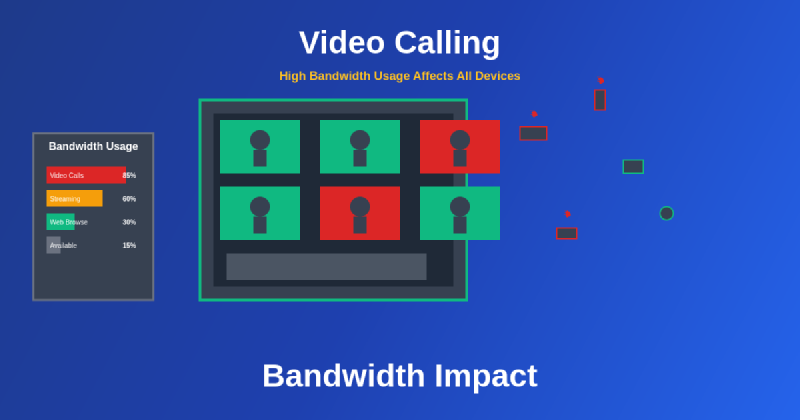
Video calling applications in Japanese sharehouses consume substantial portions of available bandwidth through their intensive data requirements for real-time audio and video transmission, creating significant impacts on shared internet performance that affect all residents attempting to use network resources simultaneously. The bandwidth demands of modern video conferencing platforms including Zoom, Microsoft Teams, Google Meet, and Skype can overwhelm residential internet connections when multiple residents engage in concurrent video calls for work, education, or personal communication.
The technical requirements for maintaining stable video call quality create ongoing competition for network resources that can degrade internet performance for non-video applications including web browsing, file downloads, streaming services, and other digital activities that residents rely upon for daily productivity and entertainment. Understanding these bandwidth dynamics enables better coordination and network management strategies that balance video calling needs with overall community internet access quality.
Bandwidth Requirements for Different Video Call Types
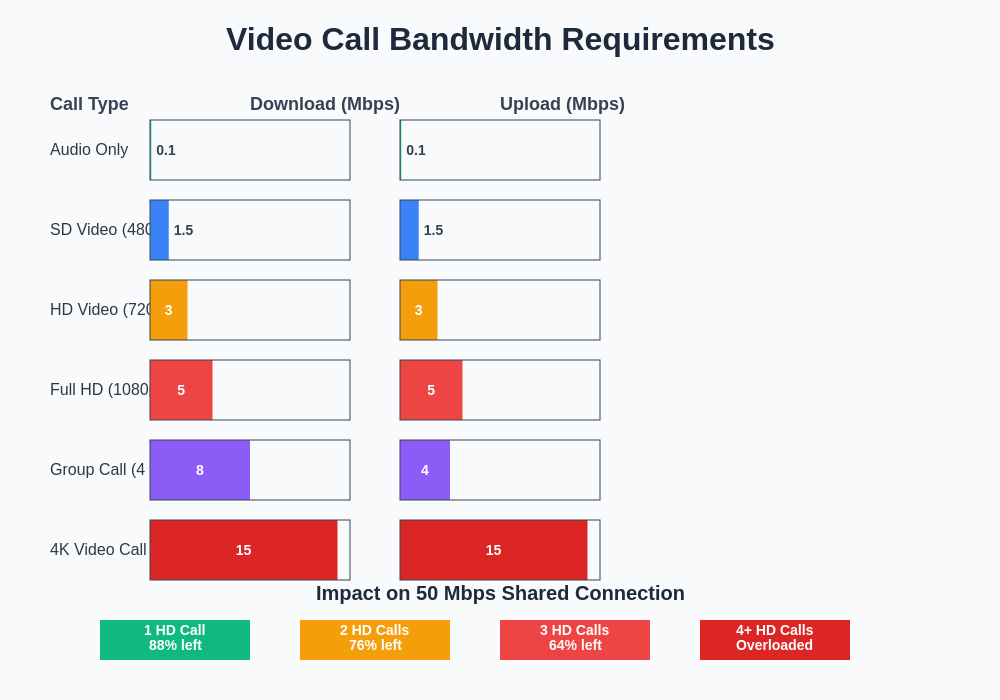
Standard definition video calls typically require between one to three megabits per second of both upload and download bandwidth per participant, with higher quality video conferences demanding significantly more capacity for features including high-definition video, screen sharing, and multiple participant displays that can quickly consume available network resources in residential internet environments.
High-definition video conferencing applications including 1080p video calls can consume five to eight megabits per second per user for optimal performance, while newer 4K video calling capabilities require fifteen to twenty-five megabits per second that exceeds the total bandwidth capacity of many residential internet plans when multiple residents attempt simultaneous high-quality video communications.
Group video calls exponentially increase bandwidth requirements when residents participate in multi-participant conferences, webinars, or online meetings where each additional participant creates incremental bandwidth demand that can overwhelm shared internet connections designed for typical residential usage patterns rather than concurrent business-level video conferencing activities.
Screen sharing and presentation features within video calling applications create additional bandwidth overhead that can double or triple the data requirements for calls involving collaborative work, educational presentations, or technical demonstrations that require real-time transmission of detailed visual information alongside standard audio and video streams.
Upload Bandwidth Limitations and Asymmetric Connections
Residential internet service plans typically provide asymmetric bandwidth allocation with significantly lower upload speeds compared to download capacity, creating particular challenges for video calling applications that require substantial upstream data transmission for sending video and audio to other call participants while simultaneously receiving incoming data streams.
Upload bandwidth bottlenecks become particularly problematic in sharehouses when multiple residents attempt simultaneous video calls, as the limited upstream capacity becomes divided among active users in ways that can cause video quality degradation, audio dropouts, or complete call failures when demand exceeds available upload capacity for the shared internet connection.
Quality degradation prioritization in video calling applications automatically reduces video resolution, frame rates, and audio quality when insufficient bandwidth is detected, though these adaptive measures may not provide adequate performance for professional video conferences or important personal communications that require consistent high-quality transmission throughout call duration.
Buffering and latency issues increase dramatically when upload bandwidth becomes saturated, creating delays between spoken words and their transmission to other call participants that can make natural conversation difficult and reduce the effectiveness of video calls for both professional and personal communication purposes.
Network Congestion and Quality of Service Impact
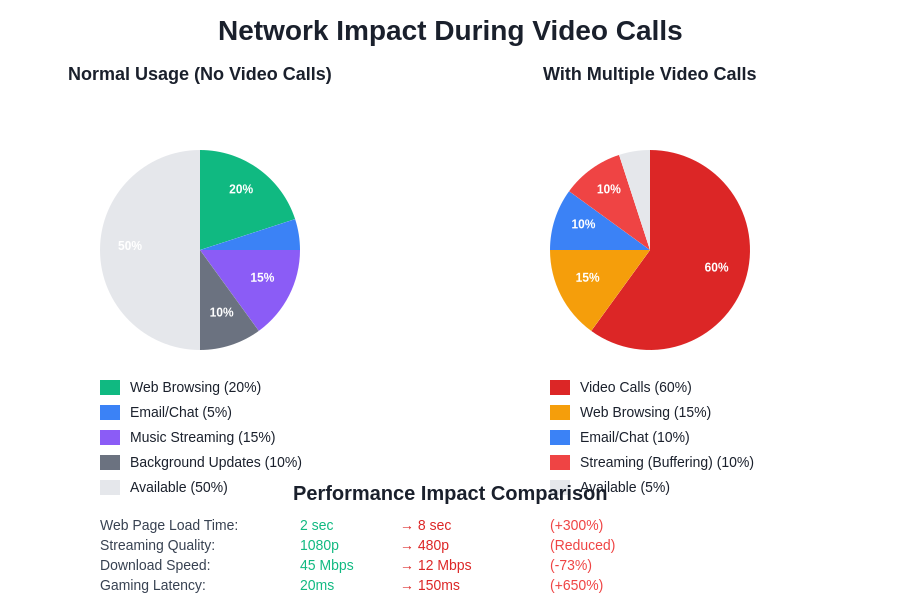
Peak usage periods in sharehouses often coincide with video calling demands when residents simultaneously engage in work meetings, online classes, and personal video communications during morning, lunch, and evening hours that create cumulative bandwidth demands exceeding available network capacity and causing performance degradation for all internet users.
Background application interference occurs when automatic software updates, cloud backup services, streaming applications, and other bandwidth-intensive activities run concurrently with video calls, creating competition for network resources that can cause intermittent call quality issues even when sufficient bandwidth appears available for video conferencing alone.
Network prioritization challenges arise when residential routers lack sophisticated quality of service capabilities to prioritize video calling traffic over less time-sensitive applications, resulting in equal bandwidth distribution that may allocate critical video call resources to background downloads or streaming services that could be delayed without significant impact.
Why device limits cause internet connection issues becomes more pronounced when video calling applications must compete with numerous connected devices for both bandwidth and network processing resources that affect overall call stability and quality.
Impact on Professional and Work Activities
Remote work productivity suffers significantly when shared bandwidth limitations affect video conferencing quality during important business meetings, client presentations, or team collaboration sessions that require reliable audio and video transmission for professional effectiveness and career advancement opportunities that depend on consistent communication quality.
Video conference reliability becomes critical for international residents whose professional responsibilities include regular video meetings with colleagues, clients, or supervisors in different time zones, with poor call quality potentially affecting professional reputation, project coordination, and career development opportunities that rely on effective remote communication capabilities.
Online education disruption affects students participating in virtual classrooms, language learning sessions, or professional development courses that require stable video connections for interactive learning experiences including real-time discussion, visual presentations, and collaborative activities that become ineffective when bandwidth limitations compromise participation quality.
Client interaction quality can be severely compromised when professionals conducting business through video calls experience audio delays, video freezing, or connection drops that create negative impressions and may affect business relationships, sales opportunities, or service delivery quality that depends on professional communication standards.
Personal Communication and Social Impact
Family video calls become particularly important for international residents maintaining relationships with family members in home countries, with bandwidth limitations potentially affecting the quality of these emotionally significant communications that provide essential social connection and emotional support for residents living far from familiar support networks.
Social interaction quality through video calling platforms affects residents’ ability to maintain friendships, participate in online social activities, and engage in cultural exchanges that contribute to mental health and social well-being, particularly important for international residents who may rely heavily on digital communication for social connection and community building.
Language learning video sessions including online tutoring, conversation practice, and educational programs require stable video connections for effective communication skill development that can be significantly impacted by bandwidth limitations affecting pronunciation clarity, visual cues, and interactive learning elements that enhance language acquisition effectiveness.
Emergency communication capabilities may be compromised when bandwidth limitations affect video calling quality during urgent situations where residents need to communicate with family members, healthcare providers, or emergency contacts, potentially affecting access to critical support during stressful or dangerous circumstances requiring reliable communication.
Technical Factors Affecting Video Call Performance
Codec efficiency and compression algorithms used by different video calling platforms create varying bandwidth requirements, with some applications optimizing for lower bandwidth environments while others prioritize video quality that may not be sustainable in shared bandwidth situations typical of sharehouse internet connections with limited capacity.
Frame rate and resolution adaptation features in video calling software automatically adjust video quality based on available bandwidth, though these adjustments may create inconsistent call experiences with frequent quality changes that can be distracting during important conversations or professional meetings requiring consistent audio and video performance.
Network latency amplification occurs when video calling applications must compensate for bandwidth limitations through increased buffering and data compression that can create noticeable delays between speakers and listeners, making natural conversation difficult and reducing the effectiveness of real-time communication for both professional and personal purposes.
Echo cancellation and audio processing features require additional computational and bandwidth resources that can contribute to overall system load and network utilization, particularly problematic in sharehouses where multiple residents may be using similar applications simultaneously and creating cumulative resource demands.
Platform-Specific Bandwidth Characteristics
Zoom video conferencing typically requires moderate bandwidth optimization with adaptive quality features that can function reasonably well in bandwidth-constrained environments, though higher participant counts and advanced features including screen sharing and recording can significantly increase resource requirements that may overwhelm shared residential internet connections.
Microsoft Teams integration with office productivity applications creates additional bandwidth overhead for file sharing, collaborative editing, and cloud service synchronization that occurs alongside video calling features, potentially creating higher total bandwidth consumption than standalone video calling applications without integrated productivity features.
Google Meet optimization for web browsers may create different performance characteristics compared to dedicated applications, with browser-based video calling potentially consuming additional system resources and bandwidth for rendering and processing that can affect overall call quality and network utilization in shared internet environments.
Skype peer-to-peer networking architecture can create unique bandwidth usage patterns that may be more or less efficient than centralized server-based video calling systems depending on network configuration and participant locations, though peer-to-peer connections may create additional complexity for network management in shared residential environments.
Bandwidth Management and Optimization Strategies
Quality of service configuration on residential routers can prioritize video calling traffic over less time-sensitive applications, though implementing effective QoS requires technical knowledge and router capabilities that may not be available in typical sharehouse network setups managed by property managers without specialized networking expertise.
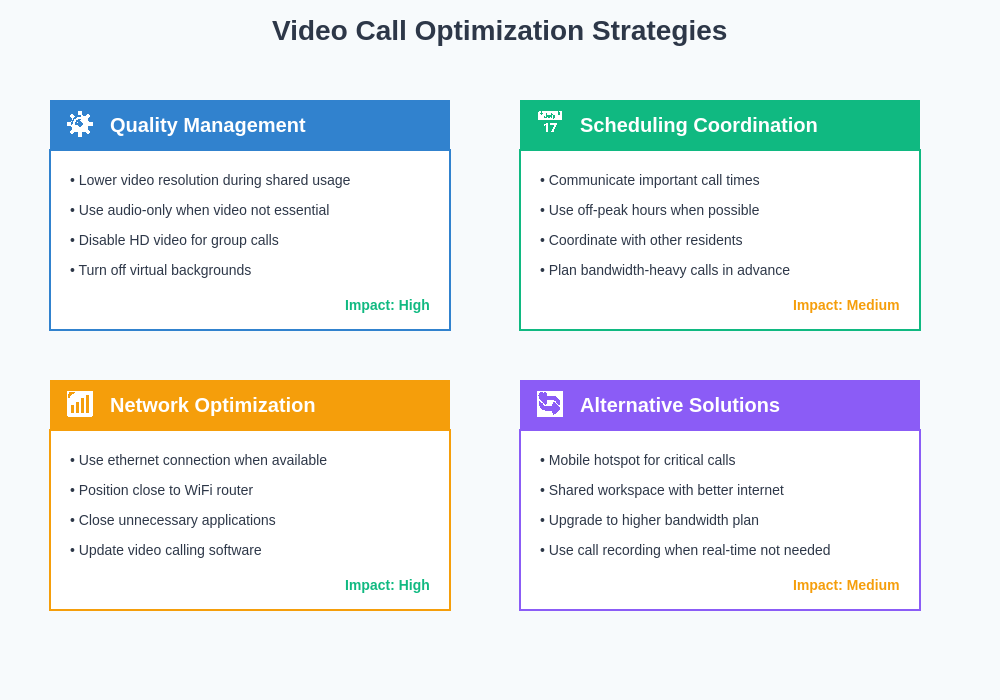
Bandwidth allocation scheduling allows residents to coordinate high-bandwidth activities including video calls during different time periods to minimize conflicts and ensure adequate network capacity for important communications, though this approach requires community cooperation and may not accommodate urgent or time-sensitive video calling needs.
Video quality adjustment during shared usage periods can help manage bandwidth consumption by voluntarily reducing video resolution, disabling video when audio-only communication is sufficient, or using lower-bandwidth calling features that maintain communication effectiveness while reducing network impact on other residents’ internet activities.
How shared streaming accounts work in practice provides insights into coordination strategies that can be adapted for managing video calling bandwidth usage through resident communication and scheduling approaches that balance individual needs with community network performance.
Network Infrastructure Considerations
Router capacity limitations affect video calling performance when wireless access points lack sufficient processing power or memory to handle multiple simultaneous video streams alongside other network traffic, creating bottlenecks that may require hardware upgrades to enterprise-grade equipment designed for higher-density network usage.
WiFi channel congestion in dense residential areas can affect video calling quality when neighboring wireless networks create interference that reduces available spectrum for video data transmission, potentially requiring professional wireless network optimization or higher-quality networking equipment to maintain adequate performance.
Internet service plan adequacy becomes critical when shared residential connections lack sufficient bandwidth capacity to support multiple concurrent video calls alongside other internet usage, potentially requiring upgrades to business-grade internet services with higher bandwidth allocation and better upstream capacity for video transmission requirements.
Network topology optimization through proper access point placement, ethernet cable connections for stationary devices, and mesh networking systems can improve video calling performance by reducing wireless congestion and providing more stable network connections for bandwidth-intensive applications.
Coordination and Community Management
Usage scheduling coordination enables residents to communicate about important video calls in advance, allowing others to minimize bandwidth-intensive activities during critical meetings or personal communications that require optimal network performance for professional or emotional reasons that affect residents’ well-being and success.
Peak hour awareness helps residents understand when network congestion is most likely to affect video calling quality, enabling better planning for important calls during off-peak periods when shared bandwidth is more readily available for high-quality video communication without significant impact from other residents’ internet activities.
Alternative communication methods including audio-only calls, text-based communication, or mobile data usage can provide backup options when shared bandwidth limitations make video calling impractical, ensuring that important communications can continue even when network congestion prevents optimal video conferencing performance.
Community guidelines for video calling can establish reasonable expectations and protocols for bandwidth usage during shared network congestion, balancing individual communication needs with community internet access quality through cooperative approaches that benefit all residents while accommodating essential video communication requirements.
Technical Solutions and Workarounds
Mobile data backup provides alternative connectivity options when shared WiFi bandwidth becomes inadequate for video calling needs, though mobile data costs and connection quality may limit the practicality of this approach for extended video conferences or regular professional video communication requirements.
Personal hotspot sharing allows residents with unlimited mobile data plans to provide temporary additional bandwidth capacity for critical video calls, creating community resource sharing opportunities that can supplement shared internet capacity during peak usage periods or network congestion situations.
Ethernet connection prioritization for residents with critical video calling needs can provide more stable and higher-quality network access compared to WiFi connections that may be more susceptible to congestion and interference from multiple users and devices competing for wireless spectrum in shared residential environments.
Network segmentation through guest networks or separate access points can isolate video calling traffic from other internet activities, potentially improving call quality by reducing competition for bandwidth and network processing resources though this approach requires technical implementation and additional networking equipment.
Long-term Infrastructure Planning
Bandwidth requirement assessment should consider current and projected video calling needs for sharehouse residents to identify appropriate internet service plans and networking equipment that can support multiple concurrent video calls without compromising overall network performance for other essential internet activities.
Technology trend adaptation requires ongoing evaluation of video calling platform requirements, resolution standards, and feature enhancements that may increase bandwidth demands over time, ensuring that sharehouse internet infrastructure remains adequate for evolving communication needs as video calling technology continues advancing.
Cost-benefit analysis of network infrastructure investments should weigh improved video calling quality against upgrade costs and resident satisfaction benefits, considering the importance of reliable video communication for professional success, educational opportunities, and personal well-being of international residents who rely heavily on digital communication.
Scalable network design enables sharehouses to accommodate changing resident demographics and communication needs through modular infrastructure that can be expanded or upgraded without complete system replacement when video calling requirements change due to resident turnover or evolving technology standards.
The successful management of video calling bandwidth impact requires understanding technical requirements, community coordination, and infrastructure planning that balances individual communication needs with shared network performance. Japanese sharehouse rules every foreigner should know often include internet usage guidelines that affect video calling practices and community approaches to managing shared bandwidth resources effectively.
Disclaimer
This article provides general information about video calling bandwidth requirements and network management for educational purposes and does not constitute technical advice. Bandwidth requirements, network performance, and optimization solutions vary significantly based on internet service plans, networking equipment, usage patterns, and building infrastructure. Residents experiencing video calling quality issues should consult with internet service providers and network professionals for technical guidance appropriate to their specific situation and requirements.