Navigating the complex relationship between your visa status and sharehouse applications in Tokyo represents one of the most crucial yet misunderstood aspects of securing accommodation as an international resident in Japan. Your visa type, duration, and associated restrictions fundamentally shape not only which properties you can access but also the terms, conditions, and approval likelihood of your applications. Understanding these intricate connections empowers you to approach the housing market strategically while avoiding costly rejections and time-consuming delays that often plague unprepared applicants.
The Japanese housing market operates under specific legal frameworks that treat different visa categories with varying degrees of acceptance and scrutiny, creating a complex hierarchy of residential access that directly impacts your accommodation options and living arrangements. Sharehouse operators, property managers, and individual landlords each maintain distinct policies regarding international residents, with visa status serving as a primary screening criterion that influences everything from deposit requirements to lease terms and renewal possibilities.
Understanding Visa Categories and Housing Impact
Different visa types carry distinct implications for housing applications, with each category presenting unique advantages and challenges that require tailored approaches for optimal success rates. How to find the perfect sharehouse in Tokyo provides essential context for understanding the broader application landscape, while visa-specific considerations add additional layers of complexity that significantly influence your housing search strategy.
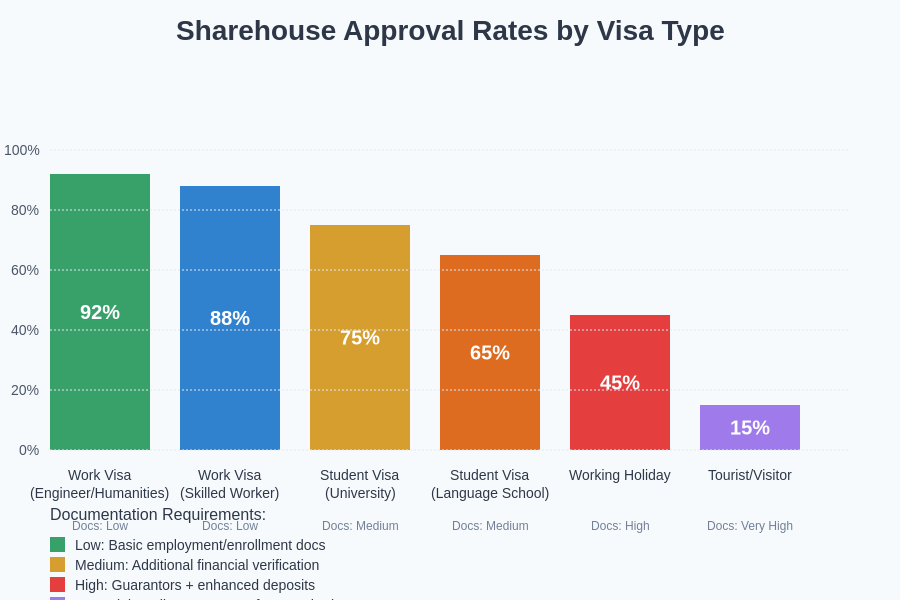
Work visas generally receive the most favorable treatment from sharehouse operators due to their association with stable employment and reliable income sources, though specific subcategories within work visa classifications can create meaningful differences in approval rates and available options. Student visas present moderate acceptance levels but often require additional documentation and guarantor arrangements that can complicate the application process. Tourist visas and short-term statuses typically face the greatest restrictions and may be entirely excluded from many sharehouse options.
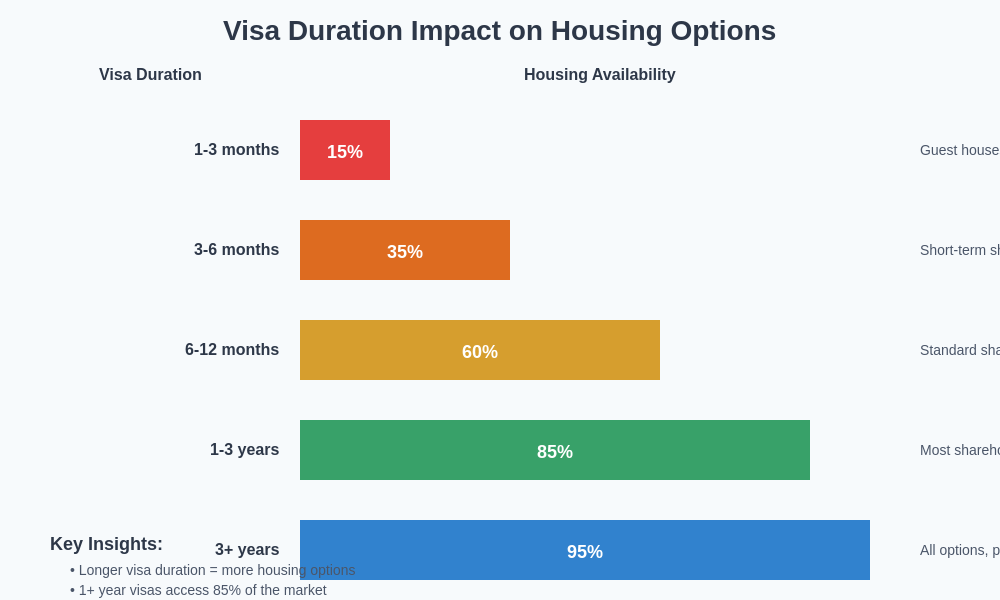
The duration and renewal characteristics of your visa status directly influence property manager risk assessments and contractual willingness, with longer-term visas providing substantial advantages in terms of available options and negotiation flexibility. Understanding how your specific visa category is perceived within the housing market enables strategic timing and targeting that maximizes application success while minimizing wasted effort on incompatible properties.
Work Visa Advantages and Application Strategies
Holders of work visas enjoy significant advantages in the Tokyo sharehouse market due to perceived stability, income reliability, and long-term residence intentions that align with property manager preferences for consistent, trouble-free tenants. Living costs in Tokyo sharehouses explained becomes particularly relevant for work visa holders who often have more flexible budget options and can consider premium properties that may be financially inaccessible to other visa categories.
Engineer and humanities work visas typically receive the most favorable treatment due to their association with established employment relationships and professional income levels that provide confidence in payment reliability and tenant quality. Skilled worker visas and specialized professional categories often qualify for expedited processing and reduced documentation requirements that streamline the application process significantly.
Corporate sponsorship and established employment relationships provide additional credibility that can override potential concerns about international status or cultural adaptation, making work visa holders attractive candidates for higher-quality sharehouses and premium locations. Business district sharehouses near Tokyo Station often prioritize working professionals and may offer specialized services or amenities designed specifically for employed international residents.
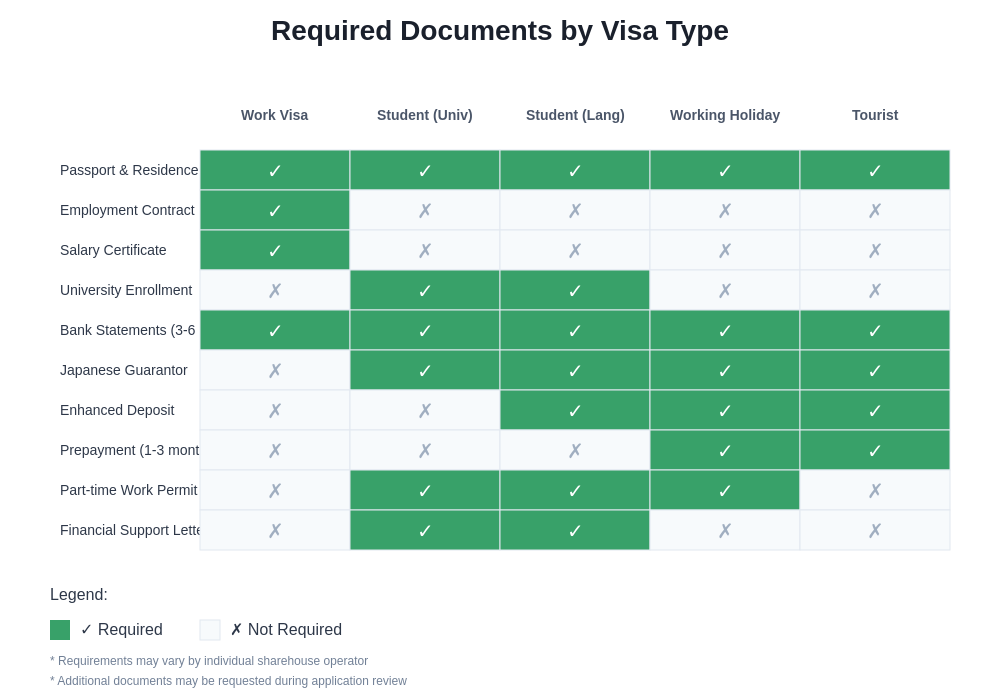
Documentation requirements for work visa holders typically include employment contracts, salary certificates, and company registration information that demonstrate financial stability and residence intentions, but these requirements are generally straightforward for applicants with established employment relationships. The ability to provide corporate guarantors or employment-based references significantly enhances application strength and can overcome potential concerns about international status or limited Japanese credit history.
Student Visa Considerations and Challenges
Student visa holders face a more complex application landscape that balances educational legitimacy with concerns about income stability and residence duration that can create additional hurdles in securing desirable sharehouse accommodations. Student sharehouses near top Tokyo universities represents a specialized market segment that caters specifically to academic residents but often comes with unique requirements and restrictions.
University enrollment verification and academic status documentation serve as primary qualification criteria for student-focused sharehouses, while income verification through part-time employment, family support, or scholarship funding requires careful documentation to demonstrate payment capability. The legal restrictions on student employment hours and income levels create specific challenges that require strategic approaches to financial verification and guarantor arrangements.
Language school students often face additional scrutiny due to shorter program durations and less predictable academic trajectories compared to university students, requiring more comprehensive documentation and potentially higher deposits or stronger guarantor arrangements. Japanese sharehouse rules every foreigner should know becomes particularly important for student residents who may have limited experience with Japanese housing customs and legal requirements.
Academic calendar considerations affect both application timing and lease structure preferences, with many student-focused sharehouses offering flexible contracts that align with semester schedules and academic year cycles. Understanding these specialized arrangements and timing your applications to coincide with academic calendar transitions can significantly improve success rates and available options.
Working Holiday and Short-term Visa Limitations
Working holiday visa holders occupy a unique position in the sharehouse market that combines work authorization with time limitations and travel intentions that create both opportunities and restrictions depending on property manager policies and individual circumstances. The one-year duration typical of working holiday visas creates concerns about tenant turnover and lease completion that many operators prefer to avoid.
Short-term sharehouse options in Japan specifically addresses the limited but available accommodation options for temporary residents, though these typically command premium pricing and offer fewer amenities compared to long-term focused properties. Monthly contracts and flexible lease terms become essential considerations for working holiday visa holders who may need to adjust their housing arrangements based on employment opportunities or travel plans.
Income documentation for working holiday visa holders often relies on part-time employment or casual work arrangements that may not provide the stability and verification that traditional sharehouses prefer, requiring creative approaches to demonstrating financial capability and payment reliability. Bank statements, family support documentation, and prepayment arrangements can help overcome concerns about employment stability and income predictability.
The temporary nature of working holiday status often restricts access to premium sharehouses and desirable locations that prioritize long-term residents, pushing working holiday visa holders toward more transient-friendly but potentially lower-quality accommodation options. Understanding these limitations and targeting appropriate market segments prevents wasted effort and disappointment while maximizing available opportunities.
Tourist and Visitor Status Restrictions
Tourist visa holders and visitors face the most significant restrictions in the Tokyo sharehouse market, with many operators explicitly excluding short-term visitors due to legal complications, administrative burden, and incompatibility with typical lease structures. How to handle roommate conflicts without moving out becomes less relevant for tourist visa holders who lack the legal standing and time investment that make conflict resolution worthwhile for all parties.
The legal complexities surrounding tourist accommodation and residential lease distinctions create liability concerns for property managers that often result in blanket exclusions of visitor status applicants regardless of financial capability or personal qualifications. Hotel and short-term rental regulations may apply to tourist accommodations, creating additional compliance requirements that traditional sharehouses prefer to avoid.
Monthly guest house arrangements and specialized short-term accommodation services provide alternative options for tourist visa holders, though these typically operate at premium pricing levels and offer limited integration with long-term resident communities. Understanding the distinction between these specialized services and traditional sharehouses helps tourist visa holders target appropriate options and avoid incompatible applications.
Financial requirements for tourist visa holders often include full prepayment or substantial deposits that compensate for the lack of long-term commitment and limited legal recourse available to property managers. International credit cards, cash deposits, and third-party guarantor services may provide pathways for qualified tourist visa holders to access limited accommodation options.
Documentation Requirements by Visa Type
Each visa category carries specific documentation requirements that reflect the unique verification needs and risk assessments associated with different international resident statuses, requiring tailored preparation strategies for optimal application success. What documents you need for Tokyo sharehouse applications provides general guidance, while visa-specific requirements add additional layers of complexity that require careful attention and preparation.
Residence card validity and renewal timelines directly impact lease duration possibilities and renewal negotiations, with expired or near-expiration documents creating concerns about continued legal residence that can derail otherwise qualified applications. Maintaining current documentation and understanding renewal processes prevents last-minute complications that can disrupt housing arrangements.
Employment verification requirements vary significantly based on visa type, with work visa holders providing employment contracts and salary certificates while student visa holders may need enrollment verification and financial support documentation. Part-time employment documentation for students must comply with legal hour restrictions and demonstrate compliance with visa conditions that govern permitted work activities.
Financial verification standards adjust based on visa type and perceived income stability, with work visa holders often qualifying for standard income verification while student and temporary visa holders may require enhanced documentation, prepayment arrangements, or guarantor support to meet property manager requirements. Bank statements, family support letters, and scholarship documentation provide alternative verification pathways for non-traditional income sources.
Guarantor Requirements and Alternatives
Guarantor arrangements represent one of the most challenging aspects of sharehouse applications for international residents, with visa status significantly influencing both the necessity and availability of guarantor options that can make or break application success. Japanese guarantor requirements typically prefer Japanese citizens or permanent residents with established credit history and stable income, creating barriers for international applicants without local connections.
Corporate guarantor services and professional guarantor companies provide alternative pathways for international residents who lack personal guarantor options, though these services typically charge fees and may require additional documentation or deposits based on visa status and perceived risk levels. How to spot financial red flags in sharehouse contracts helps identify potential issues with guarantor arrangements and associated costs.
University sponsorship and institutional guarantor arrangements may be available for student visa holders through academic institution partnerships with local housing providers, creating specialized pathways that bypass traditional guarantor requirements while providing institutional backing for student residents. Language schools and educational institutions often maintain relationships with sharehouse operators that facilitate student housing arrangements.
Embassy services and consular guarantor programs provide limited options for certain nationalities and visa types, though these programs typically focus on emergency assistance rather than routine housing arrangements and may not be suitable for standard sharehouse applications. Understanding available diplomatic resources and their limitations helps international residents explore all potential support options.
Application Timing and Visa Renewal Considerations
Strategic timing of sharehouse applications relative to visa status and renewal schedules can significantly impact success rates and available options, with advance planning preventing gaps in legal residence that can complicate housing arrangements. How to actually get your deposit back becomes particularly relevant when visa renewals might affect lease continuation or early termination requirements.
Visa renewal uncertainty creates challenges for long-term lease commitments that require careful negotiation and contingency planning to protect both tenant and property manager interests during status transition periods. Early renewal applications and advance planning help demonstrate commitment to continued residence and legal compliance that can reassure property managers about lease completion likelihood.
Academic calendar synchronization for student visa renewals often creates opportunities for advantageous application timing when student-focused sharehouses have increased availability and may offer promotional terms or flexible arrangements to attract qualified residents during transition periods. Understanding these seasonal patterns helps optimize application timing and available options.
Work visa renewals tied to employment changes can create complications for existing housing arrangements that require advance communication with property managers and potentially modified lease terms or guarantor arrangements. Maintaining open communication about visa status changes prevents misunderstandings and legal complications that can affect housing stability.
Building Application Strength Despite Visa Limitations
International residents with challenging visa statuses can enhance application competitiveness through strategic approaches that address property manager concerns while highlighting positive qualifications and mitigating perceived risks. Comprehensive documentation, financial preparation, and cultural awareness demonstrate serious intentions and responsible tenant qualities that can overcome initial visa-related hesitations.
Cultural integration efforts and Japanese language ability provide significant advantages that can offset visa-related concerns by demonstrating commitment to successful community integration and effective communication with property managers and fellow residents. Living with Japanese roommates in Tokyo sharehouses offers insights into cultural preparation that enhance application attractiveness.
Financial over-qualification through enhanced deposits, prepayment arrangements, or income documentation that exceeds minimum requirements provides concrete reassurance about payment capability that can overcome concerns about visa duration or employment stability. Demonstrating financial responsibility and payment reliability addresses primary property manager concerns about international residents.
Professional references and character testimonials from Japanese contacts, employers, or educational institutions provide third-party validation that enhances application credibility and demonstrates successful integration within Japanese society. Building these relationships and maintaining professional networks creates valuable resources for housing applications and broader life success in Japan.
Long-term Strategy and Status Changes
Developing long-term housing strategies that account for potential visa status changes enables international residents to make informed decisions about lease commitments, property investments, and community integration that align with their immigration and career objectives. How visa status affects your sharehouse application provides foundational understanding for ongoing strategic planning.
Permanent residency pathways and their housing implications require consideration of how current housing choices might support or complicate future status change applications, with stable housing history and community integration serving as positive factors in residency applications. Understanding these connections helps optimize both immediate housing decisions and long-term residency goals.
Career advancement and visa status progression often create opportunities for improved housing options and more favorable lease terms that reward successful integration and professional development. Building relationships with property managers and maintaining excellent tenant records creates foundations for future upgrades and expanded accommodation options.
Family formation and changing life circumstances may require different housing arrangements that are more easily accessible with improved visa status, making strategic planning and gradual status improvement important considerations for long-term life planning in Japan. Understanding how visa progression affects housing options helps guide both career and personal decisions that support overall life objectives.
Your visa status fundamentally shapes your sharehouse application experience in Tokyo, influencing everything from available options to required documentation and approval likelihood. Success requires understanding these connections, preparing appropriate documentation, and developing strategies that address property manager concerns while highlighting your qualifications and commitment to responsible tenancy. With proper preparation and realistic expectations, international residents across all visa categories can secure suitable sharehouse accommodations that support their goals and contribute to successful life experiences in Japan’s dynamic capital city.
Disclaimer
This article is for informational purposes only and does not constitute legal or immigration advice. Visa requirements, housing regulations, and application procedures are subject to change, and individual circumstances may vary significantly. Readers should consult with qualified legal professionals, immigration specialists, and housing experts for advice specific to their situation. The effectiveness of strategies mentioned may depend on current immigration policies, market conditions, and individual qualifications.