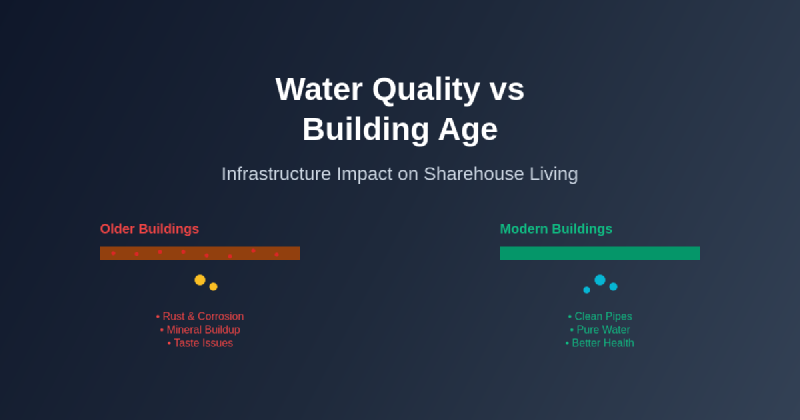
The age of a building significantly influences water quality in Tokyo sharehouses, creating substantial variations in taste, safety, and overall drinking water experience that directly impact residents’ daily lives and long-term health outcomes. Understanding these differences becomes crucial for international residents who may not be familiar with Japan’s water infrastructure evolution and the practical implications of choosing accommodations in buildings constructed during different decades.
Tokyo’s extensive urban development spans over a century, resulting in a diverse building landscape where structures from the 1960s coexist with ultra-modern constructions completed within the last few years. This temporal diversity creates a complex matrix of water quality conditions that vary dramatically between different sharehouses, often in ways that are not immediately apparent to prospective residents during initial property viewings or online research phases.
The relationship between building age and water quality extends beyond simple infrastructure considerations to encompass regulatory changes, construction material evolution, maintenance practices, and technological advancements that have transformed how water delivery systems function in modern residential buildings. How to find the perfect sharehouse in Tokyo becomes particularly important when considering these infrastructure factors that affect daily living quality.
Understanding Tokyo’s Water Infrastructure Evolution
Tokyo’s water infrastructure has undergone dramatic transformations since the post-war reconstruction period, with each decade introducing new materials, installation techniques, and quality standards that directly influence contemporary water quality outcomes. Buildings constructed before 1980 typically feature galvanized steel pipes and older joint systems that were standard during their construction periods but have since been superseded by superior materials and technologies.
The transition from traditional pipe materials to modern alternatives represents one of the most significant factors affecting water quality variations across different building ages. Older sharehouses often contain original plumbing installations that have experienced decades of mineral buildup, corrosion, and gradual deterioration that can impact water taste, clarity, and potentially introduce trace contaminants that affect overall quality and safety standards.
Buildings constructed during the 1980s and 1990s represent a transitional period where some modern materials began appearing alongside traditional systems, creating mixed infrastructure environments where water quality can vary significantly between different sections of the same building. Living costs in Tokyo sharehouses explained often fails to account for these infrastructure-related quality differences that can affect residents’ satisfaction and additional expenses.
Modern constructions completed after 2000 typically incorporate advanced materials such as cross-linked polyethylene pipes, stainless steel fixtures, and sophisticated filtration systems that maintain water quality at levels significantly superior to older buildings. These technological improvements result in noticeably better taste, reduced mineral content, and enhanced safety profiles that contribute to improved resident satisfaction and health outcomes.
Pipe Material Impact on Water Quality
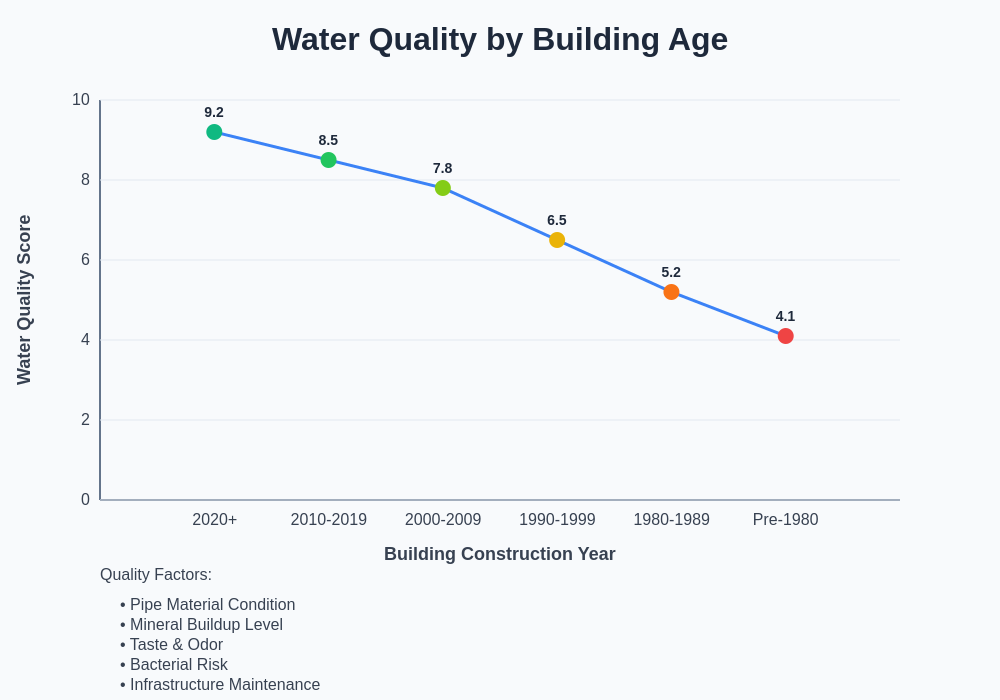
The evolution of pipe materials used in Tokyo construction represents perhaps the most direct factor influencing water quality variations between buildings of different ages. Galvanized steel pipes, commonly used in constructions prior to 1980, develop rust and mineral deposits over time that can affect water taste, create discoloration, and potentially introduce iron particles that impact both aesthetic and health considerations.
Copper piping, which became popular during the 1980s and 1990s, offers improved durability and corrosion resistance compared to galvanized steel but can still develop patina and mineral buildup that affects water taste and quality over extended periods. The interaction between copper pipes and Tokyo’s naturally soft water can create unique taste profiles that some residents find objectionable, particularly those accustomed to different water characteristics in their home countries.
Modern plastic and composite materials used in contemporary construction provide superior resistance to corrosion, mineral buildup, and taste alteration, resulting in water quality that remains consistently high throughout the building’s operational lifetime. Japanese sharehouse rules every foreigner should know often include water usage guidelines that reflect the varying infrastructure capabilities of different building types.
The transition points between different pipe materials within older buildings that have undergone partial renovations can create particularly complex water quality scenarios where different taps or floors may provide noticeably different water characteristics. Understanding these variations helps residents identify optimal water sources within their sharehouses and make informed decisions about additional filtration needs.
Age-Related Infrastructure Deterioration Patterns
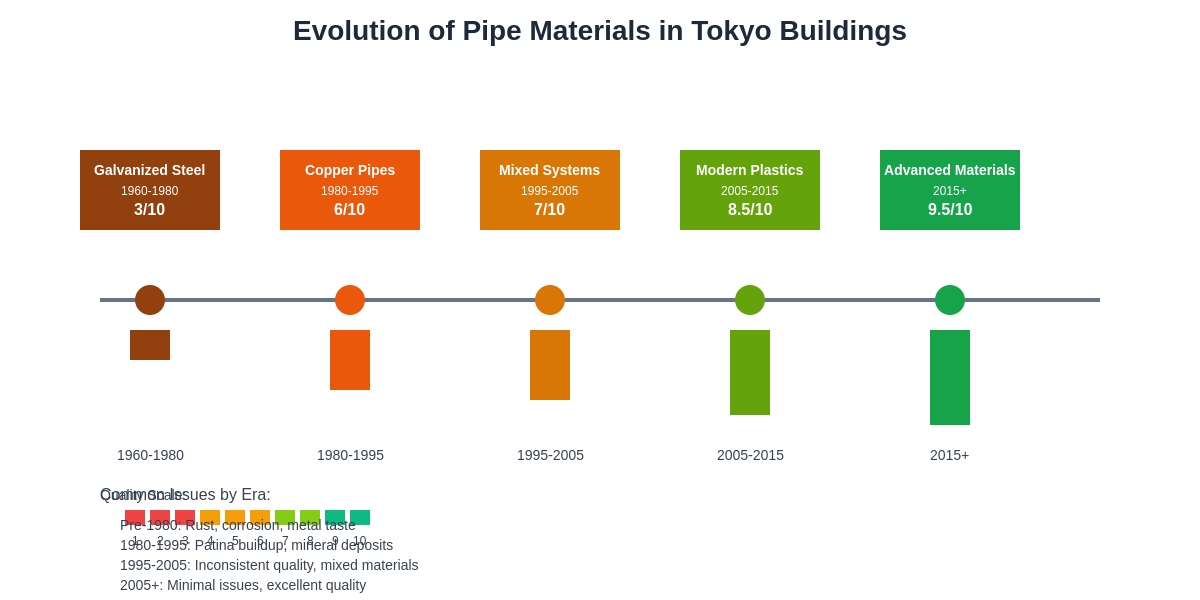
Building age correlates strongly with infrastructure deterioration patterns that progressively impact water quality through multiple mechanisms including pipe corrosion, joint degradation, tank contamination, and filter system obsolescence. Buildings constructed more than three decades ago typically exhibit measurable deterioration in their water delivery systems that manifests through reduced flow pressure, increased mineral content, and occasional taste or odor issues.
The accumulation of biofilm within older pipe systems represents a significant concern that increases with building age and can affect both water quality and safety. These bacterial colonies develop gradually over years or decades and can produce taste and odor compounds while potentially harboring pathogenic organisms that pose health risks to residents, particularly those with compromised immune systems or specific health conditions.
Older buildings often feature water storage tanks that require regular maintenance and cleaning to prevent contamination and quality degradation. How to spot financial red flags in sharehouse contracts should include provisions for regular tank maintenance and water quality testing, particularly in older buildings where these systems may not receive adequate attention from property management companies.
The cumulative effects of infrastructure aging create compounding quality issues that become more pronounced with each passing year, making regular assessment and potential upgrades essential for maintaining acceptable water quality standards in older sharehouse buildings. Understanding these deterioration patterns helps residents make informed decisions about additional filtration needs and consumption safety considerations.
Water Tank Systems and Maintenance Considerations
Tokyo’s building regulations require most multi-story residential structures to incorporate water tank systems that can significantly impact water quality depending on their age, maintenance frequency, and original construction standards. Older buildings typically feature concrete or steel tanks that were designed and installed according to historical standards that may not align with contemporary quality expectations and maintenance requirements.
The frequency and quality of tank cleaning procedures varies dramatically between different property management companies and building ages, with newer constructions often featuring more sophisticated monitoring and maintenance protocols that ensure consistent water quality. Understanding utility bills in Japanese sharehouses may not clearly indicate the quality of tank maintenance services included in monthly charges.
Sediment accumulation within older tank systems represents a persistent challenge that affects water clarity, taste, and potentially safety depending on the composition and concentration of accumulated materials. These deposits develop gradually over time and require specialized cleaning procedures that may not be performed with adequate frequency in some older buildings, particularly those with cost-conscious management approaches.
Modern buildings often incorporate advanced tank materials such as stainless steel or food-grade plastics that resist contamination and facilitate more effective cleaning procedures. These systems frequently include automated monitoring and filtration components that maintain water quality at consistently higher levels compared to older installations that rely primarily on manual inspection and maintenance procedures.
Regional Infrastructure Variations Across Tokyo
Different areas of Tokyo experienced development during distinct historical periods, creating neighborhood-level variations in building age distributions and corresponding water quality characteristics that affect sharehouse selection considerations. Best Tokyo neighborhoods for sharehouse living should account for these infrastructure age patterns that influence daily living quality.
Central Tokyo districts such as Chiyoda and Minato feature high concentrations of modern buildings with superior water infrastructure, while some suburban areas contain larger proportions of older constructions that may present water quality challenges. Understanding these geographic patterns helps narrow sharehouse searches to areas with infrastructure characteristics that align with personal quality expectations and health requirements.
The timing of major infrastructure upgrades and municipal water system improvements varies between different Tokyo wards, creating additional complexity in water quality assessment that extends beyond individual building characteristics. Cheaper sharehouse options in Tokyo suburbs often involve trade-offs between affordability and infrastructure quality that affect long-term satisfaction.
Some neighborhoods underwent concentrated redevelopment during specific periods, resulting in clusters of buildings with similar infrastructure characteristics and water quality profiles. Identifying these development patterns provides valuable insights for prospective residents who prioritize water quality as a significant factor in their accommodation selection process.
Health Implications of Water Quality Variations
The health implications of water quality variations between different building ages extend beyond immediate taste and aesthetic concerns to encompass potential long-term exposure effects that may be particularly relevant for international residents planning extended stays in Tokyo sharehouses. Older buildings with deteriorated infrastructure may introduce trace contaminants that accumulate over time and potentially affect health outcomes for sensitive individuals.
Lead contamination represents a specific concern in older buildings where traditional soldering materials or pipe joints may contain lead components that can leach into drinking water under certain conditions. While Japan’s water quality standards are generally excellent, older infrastructure may present exceptions that require additional precautions or filtration measures to ensure optimal safety standards.
Bacterial contamination risks increase with building age due to biofilm development, inadequate tank maintenance, and infrastructure deterioration that creates environments conducive to microbial growth. How bathroom cleanliness affects health extends to water quality considerations that impact overall residential health and safety profiles.
International residents with specific health conditions, compromised immune systems, or particular sensitivity to water quality variations should prioritize newer buildings with modern infrastructure or implement additional filtration measures to mitigate potential health risks associated with older water delivery systems. Understanding these health implications enables informed decision-making that protects long-term wellbeing while enjoying sharehouse living experiences.
Testing and Assessment Methods
Effective water quality assessment requires systematic testing approaches that can identify the specific quality characteristics present in different building ages and infrastructure types. Simple taste and clarity observations provide initial insights but may not reveal important quality factors such as mineral content, bacterial presence, or trace contaminant levels that affect safety and long-term health outcomes.
Professional water testing services offer comprehensive analysis capabilities that can identify specific quality issues and provide actionable recommendations for improvement or mitigation strategies. These services become particularly valuable for residents in older buildings where infrastructure age may create quality concerns that are not immediately apparent through casual observation or basic sensory evaluation.
Home testing kits provide affordable alternatives for basic quality assessment and can identify common issues such as chlorine levels, pH variations, hardness, and bacterial contamination that frequently correlate with building age and infrastructure characteristics. Real stories from Tokyo sharehouse residents often include water quality experiences that highlight the importance of proactive assessment and improvement measures.
Regular monitoring becomes essential in older buildings where water quality can fluctuate due to infrastructure variability, seasonal factors, and maintenance cycles that affect delivery system performance. Establishing baseline quality measurements and tracking changes over time enables early identification of developing problems and appropriate response strategies.
Filtration Solutions and Improvement Strategies
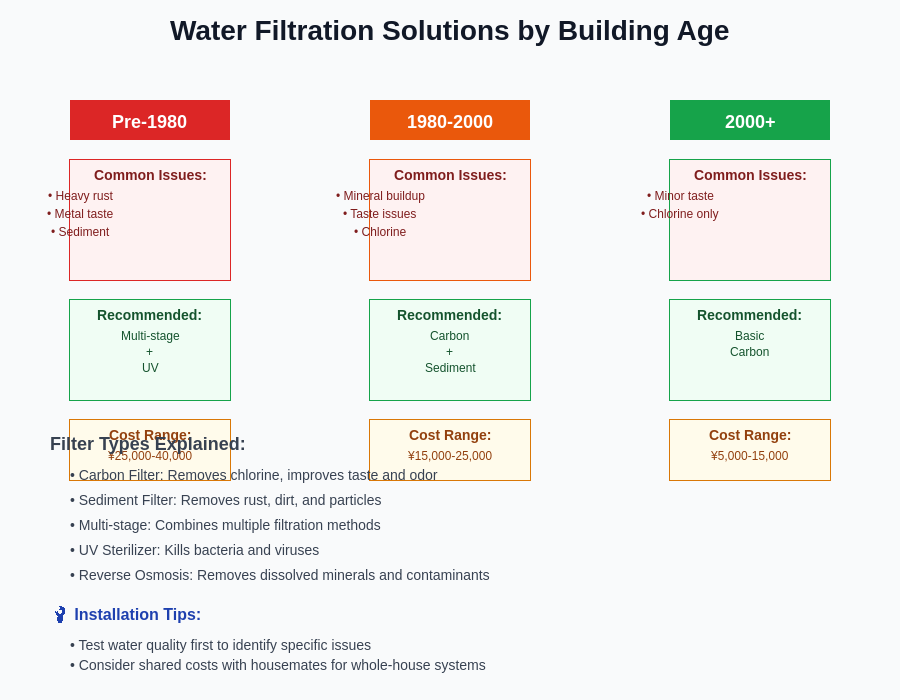
The implementation of personal filtration systems represents the most practical approach for addressing water quality concerns in older sharehouses where infrastructure limitations create persistent quality issues. Modern filtration technologies offer effective solutions for most common problems associated with building age, including taste improvement, contaminant removal, and bacterial elimination that enhance safety and satisfaction.
Point-of-use filtration systems such as faucet-mounted filters or pitcher-style units provide affordable and effective improvement for most water quality issues encountered in older Tokyo buildings. These systems typically address chlorine taste, sediment, and basic contaminant concerns while requiring minimal installation and maintenance efforts that align with typical sharehouse living arrangements.
More sophisticated filtration approaches such as under-sink systems or whole-room solutions may be appropriate for residents with specific health requirements or those planning extended stays in older buildings with significant infrastructure limitations. How to handle roommate conflicts without moving out may include negotiations about shared filtration investments that benefit all residents.
Understanding the specific quality issues present in a particular building enables targeted filtration selection that addresses actual problems rather than implementing generic solutions that may not provide optimal value or effectiveness. Professional assessment combined with appropriate filtration technology can achieve excellent water quality regardless of building age or infrastructure limitations.
Cost Implications and Budget Considerations
Water quality improvements in older sharehouses often require additional investments in filtration equipment, testing services, and ongoing maintenance that should be factored into overall living cost calculations. How much Tokyo sharehouses really cost per month may not account for these infrastructure-related expenses that affect total living costs.
The long-term financial implications of poor water quality can extend beyond immediate filtration costs to include increased bottled water purchases, health care expenses related to waterborne illnesses, and potential relocation costs if quality issues become intolerable. Understanding these potential expenses helps inform accommodation selection decisions that balance upfront costs with long-term quality and satisfaction considerations.
Shared filtration investments among sharehouse residents can provide cost-effective solutions that improve water quality for all occupants while distributing expenses across multiple users. Negotiating these arrangements requires clear agreements about installation, maintenance, and replacement responsibilities that prevent future conflicts or misunderstandings.
Some property management companies may be willing to invest in water quality improvements if residents demonstrate specific concerns and provide evidence of infrastructure-related problems. Building positive relationships with management and presenting professional assessment results can sometimes result in building-wide improvements that benefit all residents without individual expense.
Regulatory Standards and Compliance Issues
Japan maintains strict water quality standards that apply to all residential buildings regardless of age, but enforcement and compliance verification can vary between different properties and management companies. Understanding these regulatory frameworks helps residents know their rights and expectations regarding water quality while identifying appropriate channels for addressing compliance concerns.
Older buildings may grandfather certain infrastructure elements that do not meet current construction standards but remain legally compliant based on their original construction dates. These situations can create quality variations that are legally acceptable but may not meet contemporary expectations for taste, safety, or overall satisfaction standards.
Building inspection and compliance records provide valuable insights into water quality management practices and can reveal patterns of problems or improvements that affect residential quality. What documents you need for Tokyo sharehouse applications should include requests for recent water quality test results and maintenance records.
Regular municipal testing ensures that water delivered to buildings meets safety standards, but building-specific factors can affect quality between municipal delivery points and individual taps. Understanding the distinction between municipal water quality and building-specific factors helps identify appropriate improvement strategies and responsibility assignments for addressing quality concerns.
The relationship between building age and water quality represents a fundamental consideration for international residents seeking optimal living conditions in Tokyo sharehouses. While older buildings may present infrastructure challenges that affect water quality, understanding these factors enables informed decision-making and appropriate improvement strategies that ensure satisfactory living experiences regardless of building age. Modern filtration technologies and professional assessment services provide practical solutions for most quality concerns, making excellent water quality achievable in virtually any sharehouse environment through proper preparation and investment in appropriate improvement measures.
Disclaimer
This article is for informational purposes only and does not constitute professional health or safety advice. Water quality standards and building regulations may vary and change over time. Readers should conduct their own testing and consult with qualified professionals when making decisions about water quality and health safety. The effectiveness of filtration systems and improvement strategies may vary depending on specific water quality issues and individual health requirements.