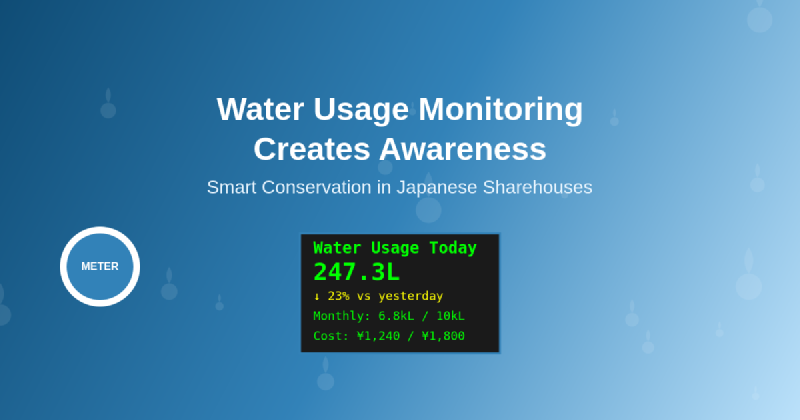
Water usage monitoring in Japanese sharehouses has emerged as a powerful catalyst for behavioral transformation, fundamentally altering how residents perceive and interact with one of our most precious natural resources. The implementation of sophisticated tracking systems creates an unprecedented level of transparency that illuminates consumption patterns previously hidden behind collective billing structures, fostering a culture of mindful resource utilization that extends far beyond the confines of shared living spaces.
The psychological impact of visibility cannot be understated when examining how monitoring systems influence daily habits and long-term behavioral shifts among international residents who may have never encountered such detailed utility tracking in their home countries. This transformation represents more than mere cost reduction; it embodies a fundamental shift toward environmental consciousness that ripples through every aspect of communal living, creating educated consumers who carry these awareness principles into future housing situations and broader life choices.
The Psychology of Visible Consumption
Understanding the psychological mechanisms behind monitoring effectiveness reveals why simple visibility of water usage data creates such profound behavioral changes among sharehouse residents. When consumption becomes quantifiable and immediate rather than abstract and delayed, residents develop an intuitive connection between their daily actions and environmental impact that transcends traditional awareness campaigns or educational initiatives.
The concept of real-time feedback taps into fundamental human psychology where immediate consequences carry significantly more weight than distant outcomes, making the monthly utility bill shock a thing of the past while replacing it with daily micro-adjustments that compound into substantial savings. Understanding utility bills in Japanese sharehouses becomes easier when residents can correlate their behavior with actual consumption data rather than mysterious collective charges.
Residents consistently report heightened awareness of seemingly insignificant actions such as leaving taps running while brushing teeth, taking extended showers during stressful periods, or failing to report leaky fixtures promptly. The monitoring systems transform these unconscious habits into conscious decisions by providing immediate numerical feedback that quantifies the environmental and financial impact of each choice.
The social dynamics of shared monitoring create additional layers of accountability as residents become aware that their individual consumption patterns contribute to collective outcomes affecting everyone’s monthly expenses. This shared responsibility often generates organic peer support systems where residents remind each other about conservation practices and collectively celebrate usage reduction achievements.
Implementation Strategies and Technology Integration
Modern water monitoring systems in Japanese sharehouses employ sophisticated sensor technology and smart meter integration that provides granular data analysis capabilities previously available only to large commercial facilities. These systems typically include individual room meters, common area tracking, and mobile applications that deliver real-time usage notifications directly to residents’ smartphones.
The installation process involves strategic placement of monitoring devices at key consumption points including individual bathrooms, shared kitchen facilities, and common areas such as laundry rooms where water usage tends to spike during peak hours. How smart thermostats reduce utility conflicts demonstrates similar technology integration principles that enhance overall resource management efficiency.
Advanced systems incorporate leak detection capabilities that automatically alert management and residents to unusual consumption patterns that may indicate plumbing issues, preventing costly damage while maintaining optimal system efficiency. These preventive measures protect both resident deposits and property infrastructure while demonstrating proactive environmental stewardship.
Integration with existing property management systems allows for seamless billing transparency where residents can access detailed breakdowns of their water consumption alongside comparative data showing house averages and individual room rankings. This gamification element introduces healthy competition that motivates conservation efforts while maintaining resident privacy through anonymized comparative displays.
Cost Reduction and Financial Awareness
The financial implications of water monitoring extend beyond simple utility bill reduction to encompass broader financial literacy development among residents who may have limited experience with resource-based budgeting. Detailed consumption tracking enables precise monthly planning that eliminates bill shock while teaching valuable lessons about resource management that apply to all aspects of adult financial responsibility.
Monthly savings typically range from twenty to forty percent compared to unmonitored consumption patterns, with individual residents often achieving even greater reductions once they understand their personal usage patterns and identify optimization opportunities. Living costs in Tokyo sharehouses explained becomes more manageable when residents can predict and control their utility contributions.
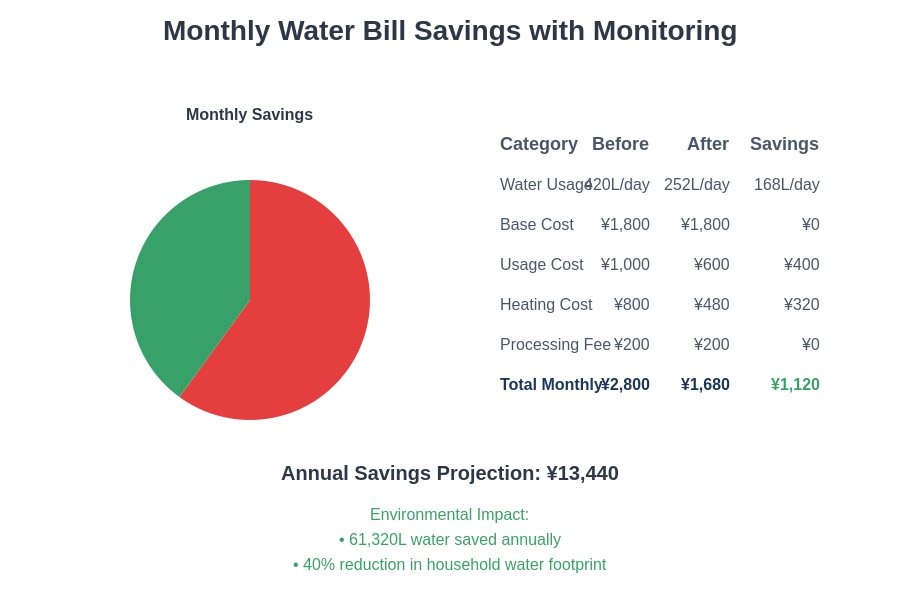
The transparency provided by monitoring systems eliminates common disputes about bill allocation fairness that frequently create tension in shared living environments. Residents appreciate knowing that their conservation efforts directly benefit their personal expenses rather than subsidizing excessive consumption by less mindful housemates.
Long-term financial education benefits include developing intuitive understanding of resource costs that influences decision-making in future housing situations, whether moving to independent apartments or different shared living arrangements. How to budget realistically for sharehouse living becomes more accurate when residents understand their actual utility consumption patterns.
Environmental Impact and Sustainability Education
Water monitoring systems serve as powerful educational tools that transform abstract environmental concepts into tangible daily experiences, creating environmentally conscious citizens who understand the direct connection between individual actions and broader ecological impact. The data visualization capabilities help residents comprehend water scarcity issues and conservation necessity in ways that traditional environmental education often fails to achieve.
Daily usage tracking reveals seasonal patterns and consumption trends that highlight the environmental implications of lifestyle choices, from longer winter showers to increased summer cooling needs that affect water consumption through climate control systems. How climate change affects building comfort becomes more relevant when residents can observe their adaptive responses through consumption data.
The educational impact extends to understanding broader water infrastructure challenges facing urban areas like Tokyo, where population density and aging infrastructure create complex resource management requirements that individual conservation efforts can meaningfully support. Residents develop appreciation for municipal water treatment processes and distribution systems that they previously took for granted.
Community sharing of conservation strategies and success stories creates organic environmental education networks where residents learn from each other’s experiences and discover innovative approaches to reducing consumption without sacrificing comfort or convenience. This peer-to-peer learning often proves more effective than formal environmental education programs.
Behavioral Modification and Habit Formation
The process of habit modification through monitoring data follows predictable psychological patterns where initial shock at consumption levels gradually evolves into automatic conservation behaviors that require minimal conscious effort to maintain. Understanding these phases helps residents and property managers optimize the monitoring implementation for maximum behavioral impact.
The first phase typically involves heightened awareness and dramatic usage reduction as residents experiment with different conservation strategies and discover which approaches feel sustainable versus those that create excessive inconvenience. How sustainable living practices clash with convenience explores this balance between environmental goals and daily practicality.
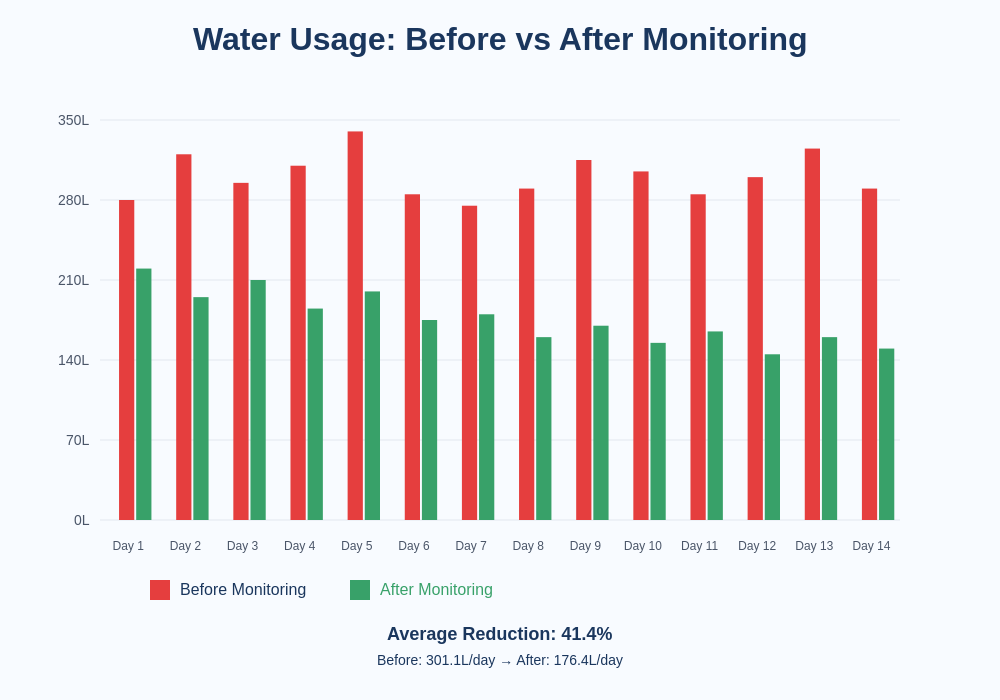
Habit formation requires approximately three to six weeks of consistent monitoring feedback before new behaviors become automatic, during which period residents benefit from regular encouragement and progress celebration to maintain motivation during challenging adjustment periods. The technology provides objective validation of progress that sustains motivation when immediate benefits feel minimal.
Long-term behavior maintenance depends on continued monitoring availability and periodic goal-setting that maintains engagement beyond the initial novelty period. How environmental consciousness varies by generation influences how different age groups respond to monitoring data and require tailored approaches for optimal effectiveness.
Social Dynamics and Community Building
Water monitoring systems create unexpected opportunities for community building as residents bond over shared conservation goals and collective environmental stewardship that transcends individual cost savings motivations. The collaborative aspect of resource management fosters deeper connections between housemates who might otherwise interact minimally in busy urban lifestyles.
Competition elements inherent in comparative usage data generate healthy rivalry that motivates conservation efforts while creating conversation topics and shared challenges that bring residents together around common goals. Making friends through Tokyo sharehouse communities benefits from these natural interaction opportunities.
The monitoring data often reveals interesting cultural differences in water usage patterns among international residents, creating educational exchanges about conservation practices from different countries and regions that enrich the multicultural learning experience. These discussions frequently extend to broader environmental topics and sustainable living practices.
Collective problem-solving around conservation challenges develops collaborative skills and community leadership as residents work together to identify optimization opportunities and implement house-wide efficiency improvements. How conflict resolution abilities improve through constructive engagement around shared resource management.
Technology Integration and User Experience
Modern monitoring systems prioritize user-friendly interfaces that make consumption data accessible and actionable for residents with varying levels of technical sophistication and environmental awareness. Mobile applications provide intuitive dashboards that translate complex usage patterns into understandable insights and practical recommendations.
The gamification elements built into monitoring platforms include achievement badges, conservation challenges, and progress tracking that maintain long-term engagement beyond initial curiosity phases. These features appeal to different personality types and motivation styles, ensuring broad adoption across diverse resident populations.
Data privacy considerations ensure that individual consumption information remains confidential while still enabling valuable comparative analysis and community engagement features. How personal information gets compromised remains a concern that monitoring systems address through careful privacy protection protocols.
Integration with smart home ecosystems allows for automated conservation features such as flow restriction during peak usage periods or alerts when consumption exceeds predetermined thresholds. These technological conveniences reduce the mental burden of conservation while maximizing environmental benefits.
Challenges and Implementation Considerations
Successful monitoring implementation requires careful attention to resident education and onboarding processes that ensure all users understand system capabilities and conservation opportunities. Initial resistance from residents accustomed to unlimited resource access necessitates thoughtful communication about benefits and gradual implementation phases.
Technical maintenance requirements include regular calibration, software updates, and hardware replacement cycles that property managers must budget for alongside installation costs. What security deposits actually cover in sharehouses may include monitoring system maintenance responsibilities.
Cultural sensitivity considerations ensure that conservation expectations align with diverse international residents’ comfort standards and lifestyle requirements without creating undue hardship or cultural misunderstandings. How cultural differences affect friendship building influences how monitoring systems should be introduced and managed.
The balance between conservation encouragement and resident autonomy requires careful calibration to avoid creating oppressive monitoring environments that prioritize cost reduction over livability and resident satisfaction. Successful programs maintain focus on education and empowerment rather than restriction and control.
Long-term Benefits and Future Implications
The environmental awareness developed through sharehouse water monitoring creates lifelong conservation habits that residents carry into future housing situations, multiplying the positive impact far beyond the initial monitoring period. This educational investment yields ongoing environmental benefits as residents become conservation advocates in their communities.
Property values benefit from reduced utility costs and enhanced environmental credentials that appeal to increasingly eco-conscious rental markets seeking sustainable living options. Why sharehouses are better than apartments in Tokyo includes environmental features as significant advantages.
The data collection capabilities enable ongoing optimization of building systems and infrastructure investments that further enhance efficiency and reduce environmental impact over time. This continuous improvement approach maximizes the long-term return on monitoring system investments.
Future integration possibilities include coordination with municipal water management systems that could provide broader community benefits through aggregated consumption data and conservation program participation. These partnerships expand the impact of individual conservation efforts to support city-wide sustainability goals.
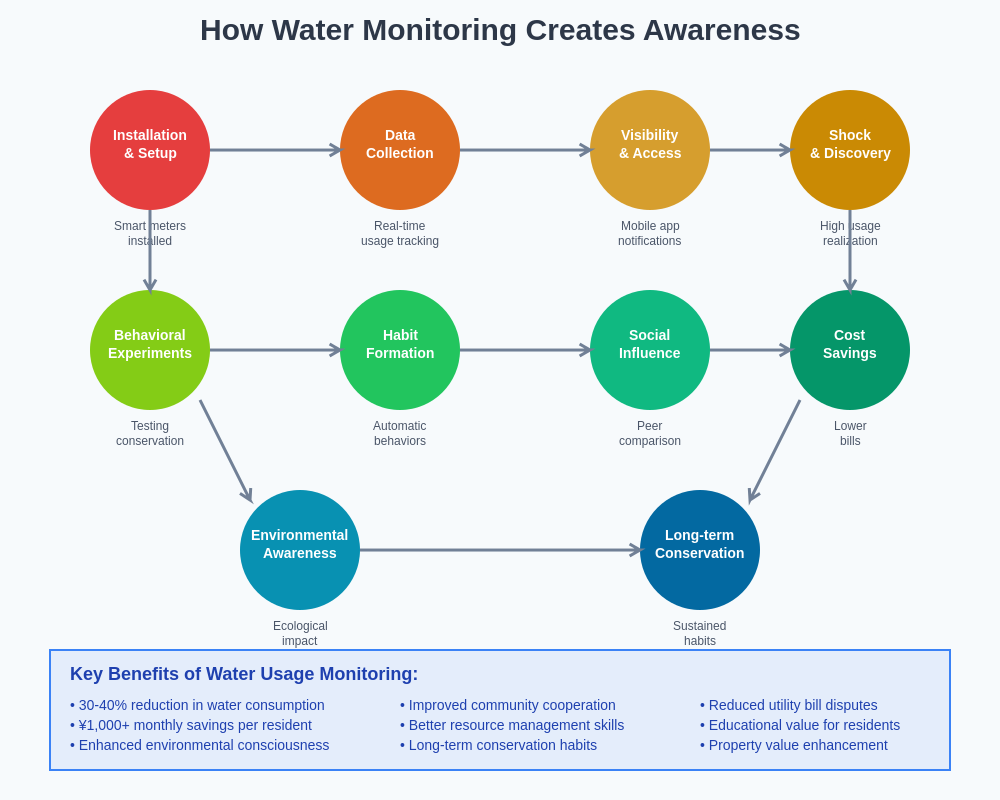
The transformative power of water usage monitoring lies not merely in its ability to reduce consumption and costs, but in its capacity to create environmentally conscious global citizens who understand the intrinsic connection between individual choices and collective environmental responsibility. Through the simple act of making consumption visible, these systems catalyze awareness that extends far beyond utility bills to encompass broader values about resource stewardship and sustainable living practices that define responsible global citizenship in an era of increasing environmental challenges.
Disclaimer
This article is for informational purposes only and does not constitute professional advice regarding utility management or environmental practices. Water monitoring systems and their effectiveness may vary depending on specific property configurations, resident populations, and local regulations. Readers should consult with property managers and relevant professionals when considering monitoring system implementation. Individual results and conservation achievements may differ based on personal habits, building infrastructure, and local utility pricing structures.