The seemingly straightforward world of written house rules in Tokyo sharehouses conceals a complex web of cultural assumptions, linguistic ambiguities, and unspoken expectations that frequently lead to misunderstandings among international residents. Despite property managers’ best intentions to create clear guidelines for harmonious living, the gap between written rules and practical implementation often becomes a source of ongoing tension and conflict within diverse sharehouse communities.
The challenge extends beyond simple language barriers to encompass fundamental differences in cultural interpretations of authority, personal responsibility, and community living standards. What appears as a straightforward instruction to one resident may carry entirely different implications for another, creating scenarios where well-meaning individuals inadvertently violate house rules while believing they are in full compliance with established guidelines.
The Language Barrier Beyond Translation
While most Tokyo sharehouses provide house rules in multiple languages, the translation process often strips away crucial contextual information that Japanese readers would naturally understand through cultural familiarity. Japanese sharehouse rules every foreigner should know highlights some of these fundamental differences, but the subtleties of interpretation go much deeper than basic rule comprehension.
Direct translations frequently fail to convey the relative importance or flexibility of different rules, leading international residents to treat all regulations with equal weight when Japanese culture often operates on implicit hierarchies of rule significance. A rule about shoe placement might be culturally critical while appearing trivial in translation, whereas a seemingly strict regulation about guest visits might have built-in flexibility that isn’t explicitly stated.
The temporal aspects of rule enforcement also get lost in translation, as Japanese communication often includes implicit understanding about when rules apply strictly versus when they can be interpreted more flexibly based on circumstances. International residents may apply Western binary thinking to rules that Japanese culture treats as contextual guidelines requiring situational judgment.
Cultural Context and Unspoken Assumptions
Japanese house rules operate within a framework of cultural assumptions that are rarely made explicit in written documents, creating significant interpretation challenges for residents from different cultural backgrounds. The concept of reading the atmosphere and understanding implicit expectations plays a crucial role in rule compliance that written guidelines cannot adequately capture.
Living with Japanese roommates in Tokyo sharehouses reveals how cultural communication styles affect rule interpretation, but the implications extend to every aspect of daily living. Rules about cleanliness, noise levels, and shared space usage carry different weight and meaning across cultures, leading to situations where residents believe they are following rules while actually violating cultural expectations.
The hierarchical nature of Japanese social structures also influences how rules are interpreted and enforced, with seniority, age, and cultural background affecting both the application of rules and the consequences for violations. International residents may find themselves held to different standards or experiencing inconsistent rule enforcement without understanding the underlying cultural logic driving these variations.
Common Misinterpretation Scenarios
Kitchen usage rules represent one of the most frequent sources of misunderstanding in international sharehouses, with seemingly clear guidelines about cleaning, storage, and cooking times being interpreted vastly differently by residents from various cultural backgrounds. How kitchen politics actually work in Japanese sharehouses explores these dynamics, but the written rules themselves often fail to address the complexity of shared cooking space management.
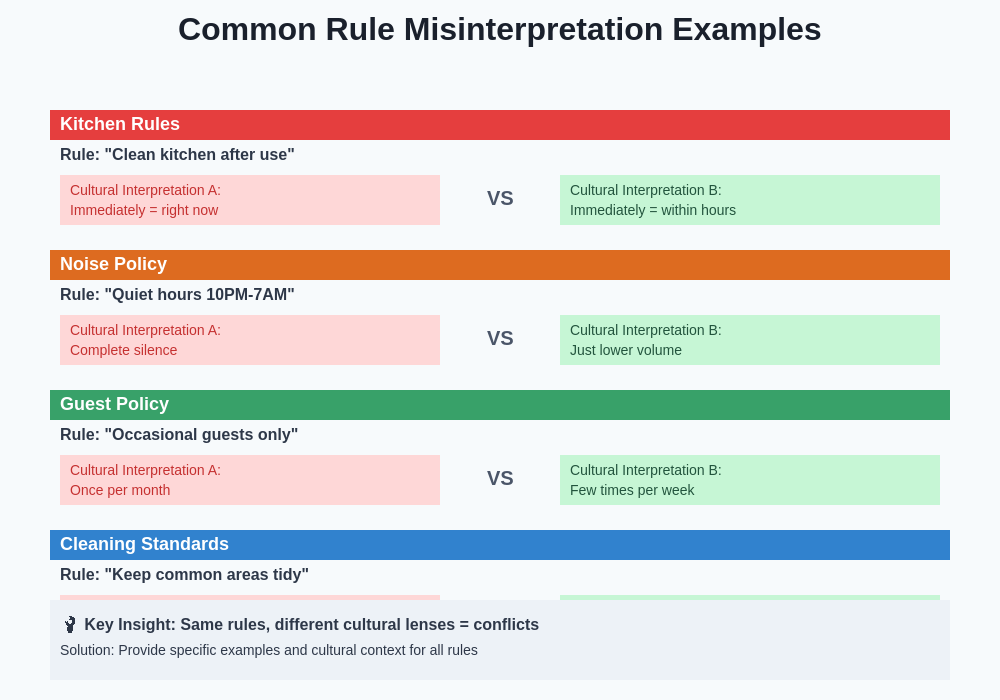
The phrase “clean up immediately after use” might mean different things to residents from cultures where immediate can range from right now to within a few hours, creating conflicts when some residents expect instant cleaning while others operate on more flexible timelines. Storage rules about refrigerator space, shelf allocation, and ingredient sharing often lack specific guidance about duration, labeling requirements, and consequences for violations.
Noise regulations present another common area of misinterpretation, with terms like “quiet hours,” “reasonable volume,” and “consideration for others” carrying dramatically different meanings across cultures and individual sensitivities. How noise pollution affects sleep quality addresses the health impacts, but the rule interpretation issues create ongoing community tension.
Guest Policy Complexities
Guest policies in sharehouse rules often appear straightforward but contain numerous interpretation pitfalls that create ongoing conflicts among residents with different cultural expectations about hospitality, privacy, and social interaction. Written rules about guest frequency, duration, and notification requirements frequently lack specificity that would prevent misunderstandings.
The definition of “occasional guests” varies dramatically across cultures, with some residents interpreting this as monthly visits while others see weekly or even daily guests as reasonable. How guest policies affect your social life explores the social implications, but the rule interpretation issues often center on cultural differences in hospitality norms and personal space concepts.
Overnight guest policies create particular confusion when rules use vague language about “short-term stays” or “temporary visitors” without defining specific timeframes or approval processes. International residents may unknowingly violate rules by hosting guests for what they consider brief visits while other residents feel their living environment has been disrupted by unauthorized long-term guests.
Cleaning and Maintenance Expectations
Cleaning rules in sharehouses often suffer from vague language that allows for multiple interpretations of standards, frequency, and responsibility distribution. Terms like “maintain cleanliness,” “regular cleaning,” and “thorough cleaning” lack the specificity needed for residents from different cultural backgrounds to understand exact expectations.
How bathroom cleanliness affects health highlights the importance of sanitation standards, but written rules rarely provide detailed guidance about cleaning products, techniques, or schedules that would eliminate interpretation ambiguity. Different cultural standards for cleanliness can lead to situations where some residents feel others are not maintaining adequate standards while those residents believe they are following rules appropriately.
The rotation of cleaning responsibilities often breaks down due to unclear written guidelines about task distribution, quality standards, and consequences for inadequate performance. How cleaning responsibilities create house drama explores the social dynamics, but the root issues often stem from poorly written or culturally biased rule interpretations.
Personal Space and Privacy Boundaries
Written rules about personal space, room access, and privacy boundaries often fail to account for significant cultural differences in concepts of private versus shared areas, personal belongings, and appropriate social interaction within living spaces. International residents may inadvertently cross boundaries that seem clearly established in rules but are interpreted differently across cultures.
Storage rules about personal items in common areas, refrigerator space allocation, and shared utility usage frequently create conflicts when residents have different cultural understandings of ownership, sharing, and personal responsibility. What one culture considers reasonable temporary use of common space might be viewed as inappropriate long-term occupation by others.
How personal space needs vary dramatically addresses individual differences, but the rule interpretation challenges often center on cultural variations in privacy expectations and social boundaries that written guidelines cannot adequately address.
Communication Style Mismatches
The way house rules are written and communicated reflects specific cultural communication patterns that may not translate effectively across international communities. Direct communication styles common in some cultures may be perceived as rude or aggressive, while indirect communication patterns from other cultures may be seen as unclear or evasive.
Rule enforcement conversations often become complicated when residents from different cultural backgrounds interpret the severity, urgency, and implications of rule violations differently. How conflict resolution styles differ by culture explores these dynamics, but written rules rarely provide guidance about appropriate communication methods for addressing violations.
The hierarchical versus egalitarian approaches to rule enforcement create additional complications when residents have different expectations about who has authority to address rule violations and how those conversations should be conducted. Some cultures expect peer-to-peer resolution while others prefer management intervention, leading to communication breakdowns.
Enforcement Inconsistencies
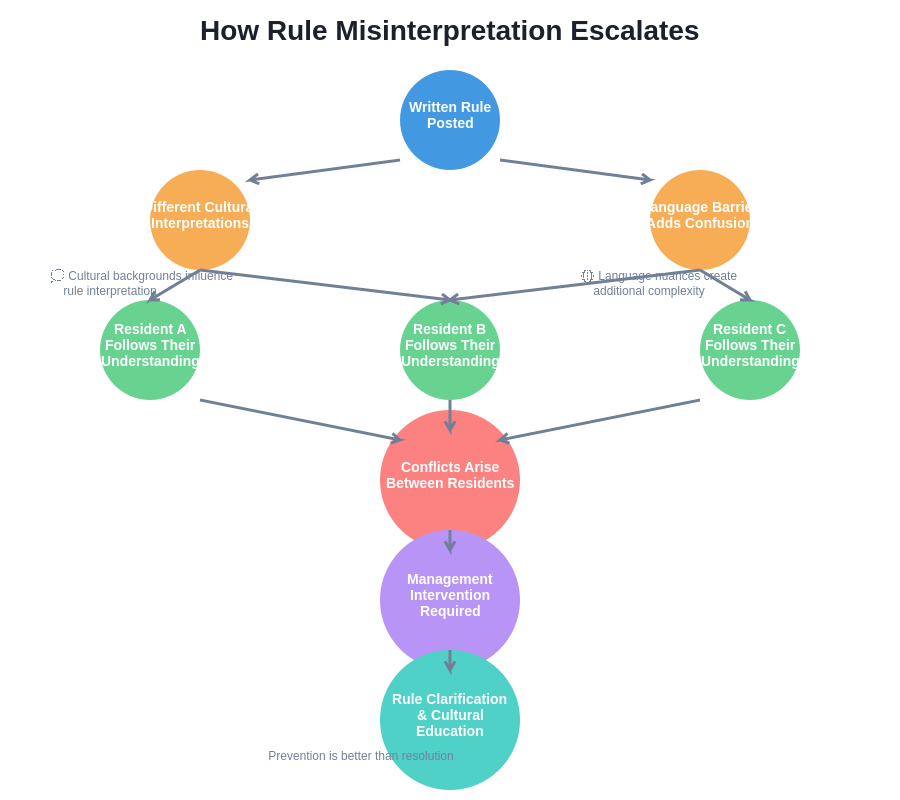
Written house rules often fail to provide clear guidance about enforcement mechanisms, consequences for violations, and appeal processes, creating situations where rule violations are addressed inconsistently depending on cultural backgrounds, personal relationships, and management availability. This inconsistency undermines the authority of written rules and creates resentment among residents.
How to handle roommate conflicts without moving out provides conflict resolution strategies, but the underlying issues often stem from unclear written guidelines about how rules should be enforced and what consequences residents can expect for various violations.
The cultural background of property managers and house leaders also influences rule interpretation and enforcement, with some violations being overlooked for certain residents while being strictly enforced for others. This perceived unfairness often stems from cultural differences in rule flexibility rather than intentional discrimination, but the impact on community harmony remains significant.
Technology and Modern Living Challenges
Traditional house rules often struggle to address modern living challenges related to technology use, remote work requirements, and digital privacy concerns that weren’t anticipated when many sharehouses established their rule frameworks. Internet usage policies, video calling etiquette, and shared device protocols create new areas for misinterpretation.
How remote work equipment affects space usage explores space allocation challenges, but written rules often lack specific guidance about technology setup, noise considerations from video calls, and shared workspace etiquette that remote work requires.
Social media policies, photography restrictions, and digital privacy boundaries represent emerging areas where written rules lag behind resident needs and cultural expectations. International residents may have different comfort levels with digital sharing and privacy that written rules don’t adequately address.
Solutions and Best Practices
Effective house rule interpretation requires ongoing dialogue between residents and property managers to clarify ambiguities, address cultural differences, and adapt guidelines to reflect the diverse needs of international communities. Regular house meetings that focus specifically on rule clarification can prevent many common misinterpretations before they create conflicts.
Creating supplementary documentation that provides specific examples, cultural context, and situational guidance can help bridge the gap between written rules and practical application. Visual aids, scenario-based examples, and culturally diverse perspectives can enhance rule comprehension across international communities.
Establishing clear escalation procedures for rule interpretation questions and disputes provides residents with appropriate channels for addressing concerns before they become major conflicts. Making friends through Tokyo sharehouse communities shows how positive relationships can prevent rule conflicts, but formal procedures ensure fair resolution when informal approaches fail.
Building Cultural Understanding
The most effective approach to preventing house rule misinterpretation involves building cultural understanding and communication skills among all residents rather than simply relying on written documentation. Cultural orientation sessions, cross-cultural communication workshops, and regular community building activities can create foundation for better rule comprehension and compliance.
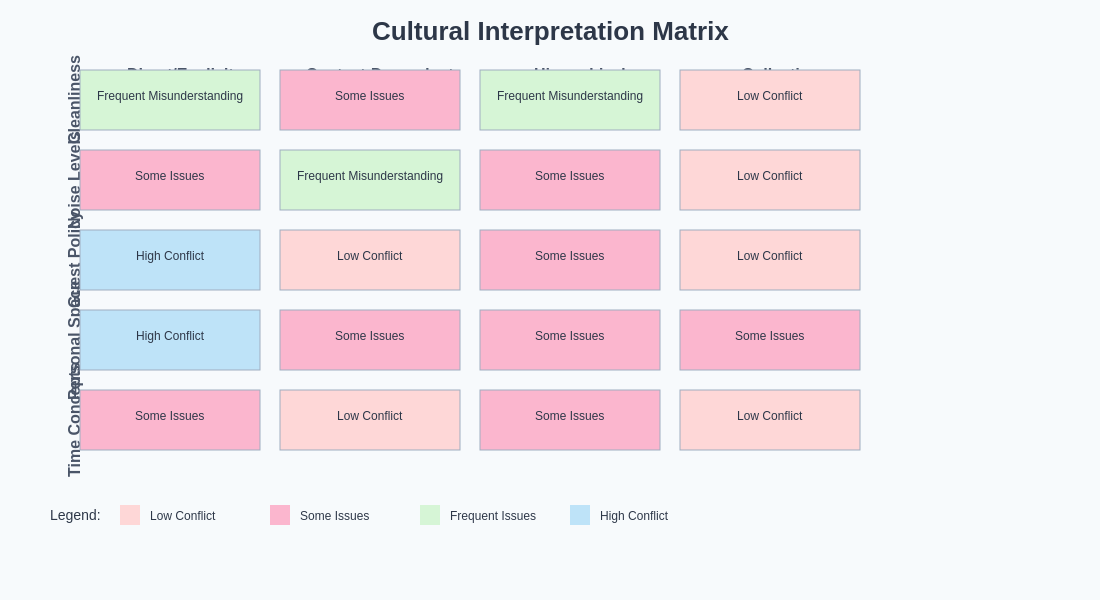
This matrix illustrates how different cultural backgrounds approach rule interpretation across various categories, highlighting areas where misunderstandings are most likely to occur and require additional clarification or cultural sensitivity training.
Encouraging residents to ask questions about rule interpretation and providing safe spaces for cultural exchange can prevent many misunderstandings from escalating into serious conflicts. When residents understand the cultural context behind rules, they are more likely to comply with both the letter and spirit of community guidelines.
The goal should be creating communities where written rules serve as starting points for ongoing dialogue rather than rigid frameworks that ignore cultural diversity and individual needs. Successful sharehouses often develop their own informal systems for rule interpretation that complement written guidelines while respecting cultural differences.
Written house rules in Tokyo sharehouses will continue to face interpretation challenges as international communities become increasingly diverse and cultural expectations continue to evolve. The key to successful rule implementation lies not in creating perfect written documents but in fostering communities where cultural differences are acknowledged, communication is encouraged, and rule interpretation becomes a collaborative process that benefits all residents.
Disclaimer
This article is for informational purposes only and does not constitute legal or professional advice. House rules and their interpretation may vary significantly between different sharehouses and management companies. Residents should always consult with property managers or seek appropriate guidance when questions arise about rule compliance or enforcement. Cultural generalizations presented are for educational purposes and may not apply to all individuals from any particular background.