Living in a Japanese sharehouse presents unique cultural challenges that extend far beyond language barriers, requiring deep understanding of unwritten social rules and behavioral expectations that govern harmonious coexistence in shared spaces. These cultural norms, deeply rooted in Japanese society’s emphasis on group harmony and consideration for others, can seem overwhelming or even contradictory to international residents accustomed to different social frameworks and individual expression patterns.
The importance of understanding and respecting Japanese sharehouse rules cannot be overstated, as violations of these cultural expectations can lead to social isolation, conflicts with housemates, and even termination of housing agreements. Success in Japanese sharehouse living requires more than simple rule compliance; it demands genuine appreciation for the cultural values underlying these practices and willingness to adapt personal behaviors to support community well-being and mutual respect.
Understanding the Foundation of Japanese Shared Living Culture
Japanese sharehouse rules emerge from centuries-old cultural principles that prioritize collective harmony over individual convenience, creating living environments where consideration for others guides every daily decision and interaction. The concept of “wa” or harmony permeates all aspects of shared living, influencing everything from noise levels and cleaning responsibilities to social interactions and personal space boundaries that may feel restrictive to newcomers.
The hierarchical nature of Japanese society also influences sharehouse dynamics, with subtle power structures based on factors such as age, length of residence, Japanese language proficiency, and cultural understanding that can affect decision-making processes and social positioning within the house community. Understanding how cultural differences impact holiday celebrations provides insights into how these hierarchies manifest during special occasions and group activities.
Traditional Japanese concepts of inside and outside spaces create specific behavioral expectations that govern how residents interact within private rooms versus common areas, with different levels of formality and consideration required in each setting. These spatial boundaries extend beyond physical locations to encompass emotional and social territories that require careful navigation to maintain positive relationships with Japanese roommates and avoid unintentional cultural offenses.
Essential Cleanliness and Hygiene Standards
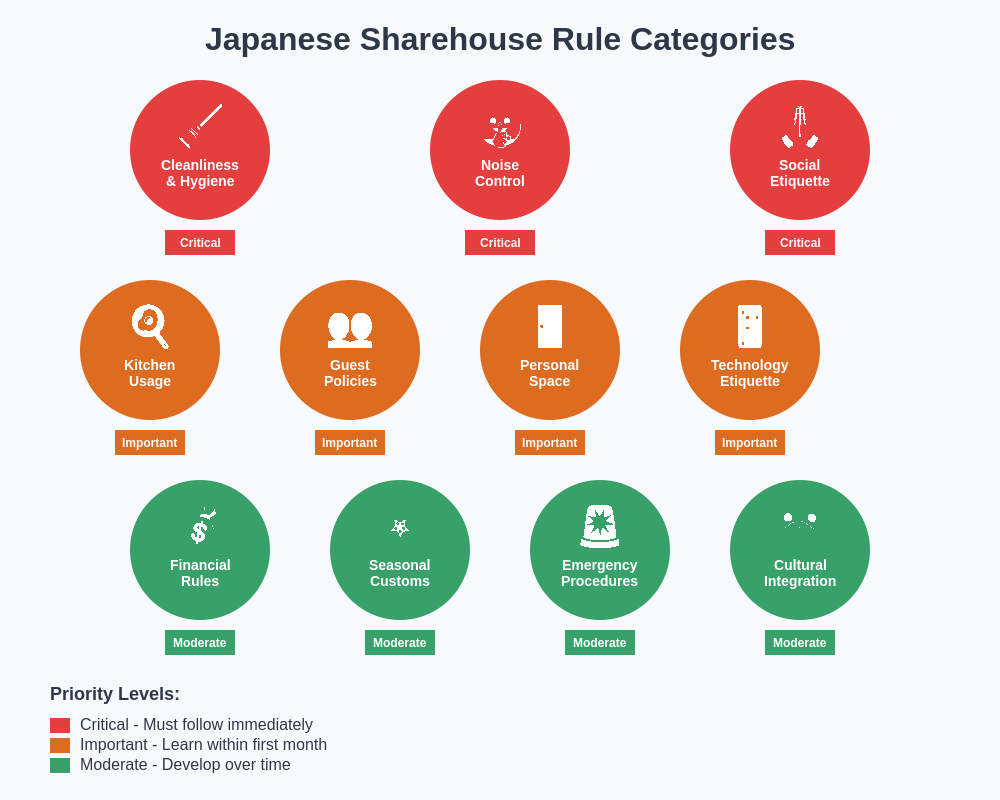
Japanese cleanliness standards in sharehouses often exceed international norms, requiring meticulous attention to personal hygiene, shared space maintenance, and environmental cleanliness that reflects respect for community living and consideration for others’ comfort and health. How bathroom cleanliness affects health explores the connection between strict hygiene practices and community well-being in Japanese shared living environments.
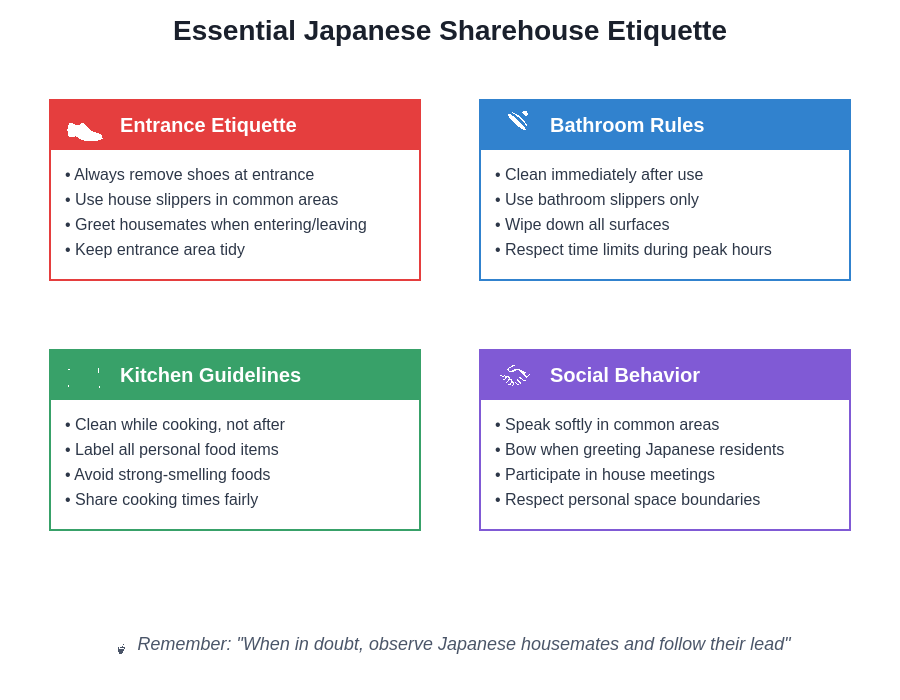
Daily cleaning routines in Japanese sharehouses typically involve immediate cleanup after any use of shared facilities, with expectations that surfaces, floors, and equipment are left in pristine condition for the next user. This includes wiping down shower areas after bathing, cleaning kitchen surfaces after cooking, and ensuring that common areas remain spotless throughout the day rather than relying on designated cleaning times or rotating responsibilities.
Personal hygiene practices such as bathing frequency, oral care, and clothing cleanliness carry significant social implications in Japanese sharehouses, where failure to maintain expected standards can result in subtle social exclusion or direct confrontation from concerned housemates. Understanding these expectations helps prevent misunderstandings and demonstrates respect for Japanese cultural values around cleanliness and social consideration.
Garbage separation and disposal procedures in Japanese sharehouses require complex understanding of recycling categories, collection schedules, and proper preparation methods that vary by municipality and building regulations. Understanding how recycling rules vary by Tokyo ward provides detailed guidance on navigating these intricate waste management systems that are essential for maintaining good relationships with both housemates and local communities.
Kitchen Etiquette and Food-Related Customs
Japanese kitchen etiquette in sharehouses encompasses detailed protocols for food storage, cooking schedules, equipment usage, and cleanup procedures that reflect deep cultural values around shared resources and community consideration. How cooking odors create cultural conflicts examines how different cooking styles and ingredients can create tensions in multicultural sharehouse environments.
Refrigerator organization and food labeling systems require careful attention to space allocation, expiration date management, and clear identification of personal items versus shared resources. Japanese housemates often expect detailed labeling with names, purchase dates, and intended use periods that help prevent accidental consumption of others’ food while maintaining orderly shared storage spaces.
Cooking time coordination and equipment sharing protocols help prevent conflicts over popular meal preparation periods and ensure equitable access to limited kitchen resources. Understanding peak usage times, reservation systems, and priority arrangements helps international residents integrate smoothly into established kitchen routines without disrupting existing harmony among Japanese roommates.
Strong-smelling foods and cooking methods that may be acceptable in other cultures can create significant discomfort for Japanese housemates who prioritize subtle flavors and minimal odor retention in shared spaces. Learning to modify cooking techniques, ingredient choices, and ventilation practices demonstrates cultural sensitivity and helps maintain positive relationships within the sharehouse community.
Noise Control and Quiet Hours
Japanese expectations around noise control in sharehouses extend far beyond designated quiet hours to encompass constant awareness of sound levels and their potential impact on housemates’ comfort, study, work, and sleep patterns. How noise pollution affects sleep quality explores the serious health and social implications of noise-related conflicts in shared living environments.
Phone conversation etiquette requires particular attention to volume levels, location choices, and language considerations that demonstrate respect for housemates who may find foreign language conversations distracting or exclude them from shared social spaces. Moving phone calls to private rooms or outdoor areas shows cultural sensitivity and helps maintain inclusive common area atmospheres.
Music and entertainment volume guidelines typically require headphone usage during most hours, with shared audio entertainment requiring explicit consent from all present housemates and careful attention to content appropriateness for mixed cultural audiences. Understanding these limitations helps prevent conflicts while finding acceptable ways to enjoy personal entertainment preferences.
Walking patterns and movement sounds within the house require conscious effort to minimize impact, particularly during early morning and late evening hours when sound transmission through typical Japanese construction can significantly disturb sleeping residents. Learning to move quietly, close doors gently, and use stairs carefully demonstrates consideration for community well-being and respect for shared living spaces.
Social Interaction Guidelines and Communication Protocols
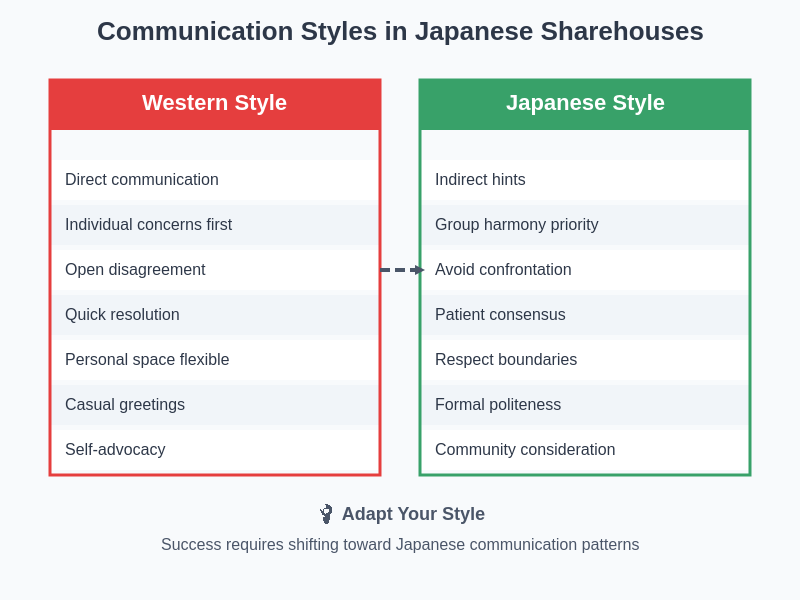
Japanese social interaction patterns in sharehouses involve complex balance between maintaining friendly relationships and respecting personal boundaries that may differ significantly from international norms around friendliness, privacy, and social engagement. How cultural communication styles create misunderstandings provides insights into navigating these delicate social dynamics.
Greeting customs and daily acknowledgments follow specific patterns that demonstrate respect for housemates while maintaining appropriate social distance and formality levels. Understanding when to bow, how to express gratitude, and which level of Japanese politeness to use in different situations helps create positive first impressions and ongoing relationships with Japanese roommates.
Conflict resolution approaches in Japanese sharehouses typically favor indirect communication, subtle hints, and gradual escalation processes that avoid direct confrontation while addressing behavioral concerns through intermediaries or house meetings. How conflict resolution styles differ by culture explores effective strategies for addressing issues without violating cultural norms around harmony and face-saving.
Personal space boundaries and privacy expectations require careful balance between social engagement and individual autonomy, with Japanese housemates often preferring predictable interaction patterns and clear signals about availability for conversation or social activities. Understanding these subtle cues helps international residents gauge appropriate levels of social engagement without overstepping cultural boundaries.
Guest Policies and Visitor Regulations
Japanese sharehouse guest policies typically involve strict advance notification requirements, time limitations, and behavioral expectations that reflect concerns about security, noise control, and community disruption from unfamiliar visitors. How guest policies affect your social life examines how these restrictions impact international residents’ ability to maintain social connections and host friends.
Overnight guest procedures often require multiple levels of approval, detailed registration information, and specific time limitations that may seem excessive to international residents but reflect Japanese concerns about safety, legal responsibility, and community harmony. Understanding these requirements and planning accordingly helps avoid conflicts and demonstrates respect for house rules and roommate comfort.
Gender-specific considerations in guest policies may include restrictions on opposite-gender visitors, particularly overnight stays, that reflect traditional Japanese values around propriety and social appropriateness in shared living environments. These policies require careful navigation and clear understanding to avoid violating community standards and cultural expectations.
Visitor behavior supervision and responsibility systems place accountability on hosting residents for their guests’ actions, noise levels, and adherence to house rules throughout their visit. This responsibility extends beyond simple introduction to include ongoing monitoring and intervention if guest behavior becomes disruptive or inappropriate for the sharehouse environment.
Personal Space and Property Boundaries
Japanese concepts of personal space and property boundaries in sharehouses involve nuanced understanding of physical territories, emotional boundaries, and shared resource access that require constant awareness and respect for others’ comfort and privacy needs. Individual room sanctity remains paramount even in shared living situations, with strict expectations about seeking permission before entering others’ spaces or handling personal belongings.
Common area usage protocols involve complex negotiations around timing, activities, and space allocation that require sensitivity to others’ needs and preferences while maintaining access to shared facilities for personal use. Understanding peak usage times, informal reservation systems, and priority arrangements helps prevent conflicts while ensuring equitable access to limited shared resources.
Storage space allocation and organization systems often involve detailed agreements about personal item placement, shared equipment usage, and temporary storage needs that require ongoing communication and flexibility to accommodate changing needs and seasonal variations. How limited storage forces you to live minimally explores strategies for managing personal belongings within constrained shared space environments.
Shared equipment and appliance protocols require understanding of maintenance responsibilities, usage schedules, and replacement procedures that ensure continued functionality while distributing costs and responsibilities fairly among all residents. These arrangements often involve detailed tracking systems and regular maintenance schedules that require active participation from all community members.
Technology and Digital Etiquette
Internet usage policies and bandwidth management in Japanese sharehouses often involve specific restrictions on high-bandwidth activities, download limitations, and shared network protocols that ensure equitable access for all residents while maintaining connection stability for essential activities. How device limits cause internet connection issues explores technical challenges and management strategies for shared internet resources.
Streaming and entertainment consumption guidelines require consideration for shared bandwidth, noise control, and content appropriateness that demonstrates respect for housemates with different cultural backgrounds and entertainment preferences. Understanding these limitations helps prevent conflicts while finding acceptable ways to enjoy digital entertainment within community living constraints.
Security camera and privacy considerations in modern sharehouses involve complex balance between safety measures and personal privacy that require clear understanding of recording areas, data usage, and consent requirements for digital monitoring systems. How security cameras affect privacy expectations examines the evolving landscape of surveillance technology in shared living environments.
Social media and documentation policies around house activities, resident photos, and community events require careful attention to consent, privacy preferences, and cultural sensitivities around digital representation and online sharing of personal information or living situations.
Seasonal Adaptations and Cultural Observances
Japanese seasonal customs and observances in sharehouses create opportunities for cultural learning and community building while requiring understanding of traditional practices, gift-giving expectations, and participation protocols that demonstrate respect for cultural heritage and community values. Traditional holiday observances often involve specific preparations, decorations, and behavioral modifications that require coordination among residents with different cultural backgrounds.
Climate control and seasonal adaptation practices in Japanese sharehouses involve complex negotiations around heating and cooling preferences, clothing expectations, and environmental modifications that accommodate different comfort levels while managing utility costs and energy consumption. How climate control preferences create conflicts explores strategies for managing these seasonal challenges.
Seasonal cleaning and maintenance activities often follow traditional Japanese schedules and methods that require community participation and specific techniques for deep cleaning, equipment maintenance, and environmental preparation for changing weather conditions. Understanding these cycles helps international residents contribute meaningfully to house maintenance while learning valuable cultural practices.
Gift-giving customs and seasonal exchanges follow specific protocols around timing, appropriateness, and reciprocity that require cultural understanding and financial planning to participate meaningfully without violating cultural norms or creating awkward social situations. How gift-giving customs create awkwardness provides guidance on navigating these complex social obligations.
Emergency Procedures and Safety Protocols
Japanese emergency preparedness in sharehouses involves detailed understanding of evacuation procedures, communication protocols, and responsibility assignments that ensure community safety while accommodating residents with different language abilities and cultural familiarity with Japanese emergency systems. How earthquake drills expose building weaknesses examines the importance of comprehensive emergency planning in shared living environments.
Medical emergency response procedures require understanding of Japanese healthcare systems, insurance requirements, and communication protocols that ensure appropriate care while managing language barriers and cultural differences in medical treatment approaches. How emergency medical situations are handled provides guidance on navigating these critical situations.
Fire safety and prevention measures involve specific equipment knowledge, maintenance responsibilities, and response procedures that require regular practice and community coordination to ensure effective emergency response. Understanding building-specific evacuation routes, equipment locations, and communication systems helps protect community safety while demonstrating responsibility for shared living environments.
Security breach and theft prevention protocols involve understanding building access systems, visitor monitoring procedures, and reporting mechanisms that help maintain community safety while balancing security needs with social accessibility and cultural hospitality expectations.
Financial Responsibilities and Payment Protocols
Japanese financial systems and payment expectations in sharehouses involve complex understanding of banking procedures, cash handling customs, and group expense management that may differ significantly from international norms around money management and financial transparency. How utility bill calculations can be manipulated explores potential financial challenges and protection strategies for international residents.
Shared expense calculation and distribution systems often involve detailed tracking of utilities, supplies, and maintenance costs that require active participation in record-keeping and decision-making processes around household spending priorities and cost allocation methods. Understanding these systems helps ensure fair treatment while contributing appropriately to community financial responsibilities.
Deposit and fee structure comprehension requires careful attention to contract terms, refund procedures, and additional charge possibilities that protect financial interests while understanding landlord and management company policies around damage assessment and fee calculation. What security deposits actually cover in sharehouses provides essential guidance on financial protection strategies.
Group purchasing and bulk buying coordination systems often involve complex logistics around product selection, cost sharing, and distribution management that require communication skills and cultural understanding to participate effectively while managing individual preferences and dietary restrictions within group decision-making processes.
Long-term Integration and Cultural Adaptation
Successful long-term integration into Japanese sharehouse communities requires ongoing commitment to cultural learning, behavioral adaptation, and relationship building that extends far beyond initial rule compliance to encompass genuine appreciation for Japanese values and social systems. How cultural adaptation happens gradually explores the extended process of developing cultural competency and community acceptance.
Language learning expectations and communication improvement demonstrate respect for Japanese culture while enhancing daily interactions and relationship building opportunities within the sharehouse community. Understanding appropriate language levels, politeness expressions, and cultural context helps create meaningful connections while avoiding unintentional offense or misunderstanding.
Community leadership and responsibility progression opportunities allow international residents to contribute meaningfully to house operations while developing valuable cultural skills and demonstrating commitment to community well-being. Participating in house meetings, maintenance coordination, and conflict resolution processes builds trust and respect within the Japanese sharehouse community.
Cultural mentorship and knowledge sharing relationships with Japanese housemates create valuable learning opportunities while contributing international perspectives that enrich community diversity and cross-cultural understanding. Building these reciprocal relationships requires patience, humility, and genuine interest in cultural exchange and mutual learning experiences.
Understanding and implementing these essential Japanese sharehouse rules creates foundation for successful integration into Japanese society while building meaningful international relationships and developing valuable cultural competencies that extend far beyond housing situations. The investment in cultural learning and behavioral adaptation required for harmonious sharehouse living provides invaluable preparation for broader success in Japanese social and professional environments, making this cultural education an essential component of any extended stay in Japan.
Disclaimer
This article is for informational purposes only and does not constitute professional legal or cultural advice. Sharehouse rules and cultural expectations may vary significantly between different properties, regions, and communities. Readers should research specific house rules and seek guidance from current residents or management when questions arise. Cultural norms continue to evolve, and individual experiences may vary depending on specific circumstances and cultural backgrounds.