The authentic stories of international residents living in Tokyo sharehouses reveal a complex tapestry of experiences that extend far beyond simple accommodation arrangements. These personal narratives capture the essence of cross-cultural living, unexpected friendships, daily challenges, and transformative moments that define the sharehouse experience in one of the world’s most dynamic cities. Through candid accounts from residents representing diverse backgrounds, ages, and life circumstances, we gain invaluable insights into the realities of shared living in Tokyo’s unique cultural landscape.
These stories illuminate the human dimension of sharehouse living that statistics and property descriptions cannot convey, offering prospective residents authentic perspectives on what to expect, how to navigate challenges, and where to find unexpected opportunities for personal growth and cultural understanding. The experiences shared here represent real voices from the sharehouse community, each contributing unique insights that collectively paint a comprehensive picture of this distinctive lifestyle choice.
Sarah’s Journey: From Corporate Stress to Community Connection
Sarah, a 28-year-old marketing professional from Canada, arrived in Tokyo with ambitious career goals and a carefully planned budget that led her to how to find the perfect sharehouse in Tokyo. Her initial expectations centered around finding affordable accommodation near her workplace in Shibuya, but her eight-month sharehouse experience transformed her understanding of what home could mean in a foreign country.
“I thought I was just renting a room,” Sarah reflects, “but I ended up gaining a second family.” Her house in Koenji became home to twelve residents from eight different countries, creating a microcosm of international cooperation and cultural exchange that she never anticipated. The daily interactions around meal preparation, household responsibilities, and evening conversations became the foundation for friendships that fundamentally changed her Tokyo experience.
The financial benefits initially drew Sarah to sharehouse living, but the living costs in Tokyo sharehouses proved to be just one aspect of a much richer value proposition. “When I was stressed about work deadlines, my Japanese housemate Yuki would make me tea and teach me breathing exercises. When she struggled with English presentations, I helped her practice. We created this support system that no amount of money could buy.”
Sarah’s story highlights how making friends through Tokyo sharehouse communities often happens organically through shared daily experiences rather than forced social activities. The kitchen became their unofficial meeting room, where conversations flowed from recipe sharing to career advice, relationship discussions, and cultural observations that broadened everyone’s perspectives.
Marcus’s Challenge: Navigating Cultural Differences and Personal Growth
Marcus, a 24-year-old graduate student from Germany, chose sharehouse living primarily for its proximity to his university, but his eighteen-month experience became an intensive course in cultural adaptation and personal resilience. His initial struggles with Japanese sharehouse rules every foreigner should know evolved into deep appreciation for structured community living and collective responsibility.
“The first month was honestly terrible,” Marcus admits. “I couldn’t understand why there were so many rules about everything - when to do laundry, how to sort garbage, even how to arrange shoes at the entrance. I felt like I was constantly making mistakes and disappointing people.” His frustration peaked when cultural misunderstandings led to tension with Japanese housemates who interpreted his direct communication style as rude or inconsiderate.
The turning point came when his housemate Takeshi invited Marcus to join him for a traditional New Year’s celebration preparation. “Instead of getting angry about my mistakes, he started teaching me the reasoning behind each rule. I learned that these weren’t arbitrary restrictions but ways of showing respect for shared space and other people’s comfort.” This experience opened Marcus’s eyes to the deeper cultural values embedded in everyday sharehouse practices.
Marcus’s academic performance improved significantly as he learned to balance individual study needs with community engagement. “I discovered that Japanese students have incredible study discipline, and living with them taught me time management skills that I never learned in Germany. But I also introduced them to more relaxed socializing styles that helped them decompress from academic pressure.”
His story illustrates how living with Japanese roommates in Tokyo sharehouses requires patience, humility, and genuine curiosity about different approaches to daily life. The process of cultural adaptation became a source of personal growth that extended far beyond language learning or academic achievement.
Elena’s Adventure: Single Mother Finding Support in Unexpected Places
Elena, a 32-year-old single mother from Spain, faced unique challenges when she decided to pursue a design internship in Tokyo with her six-year-old daughter Sofia. Traditional apartment rentals proved prohibitively expensive and complicated for their temporary six-month stay, leading her to explore family sharehouses near top Tokyo universities that could accommodate both professional and parenting needs.
“Everyone told me I was crazy to bring Sofia to a sharehouse,” Elena recalls. “But it turned out to be the best decision we made in Tokyo.” Their family-friendly sharehouse in Setagaya housed fifteen residents, including three other families with children, creating an instant support network that made their Tokyo adventure possible and meaningful.
The practical benefits extended beyond childcare assistance. “When I had evening classes, there was always someone willing to help Sofia with homework or play games with her. When she got sick, my housemates brought medicine and traditional Japanese remedies. It was like having grandparents, aunts, and uncles who genuinely cared about her wellbeing.” This community support system proved invaluable during Elena’s demanding internship schedule.
Sofia’s integration into the sharehouse community became a source of joy for all residents. “She learned Japanese faster than me by playing with the other children and watching anime with teenagers in the house. The elderly Japanese resident, Tanaka-san, taught her origami every Sunday morning. These relationships enriched both our lives in ways I never expected.”
Elena’s experience demonstrates how sharehouse living can provide crucial social infrastructure for international families navigating complex life transitions. “The financial savings were important, but the emotional support and cultural immersion for Sofia were priceless. She still writes letters to her Tokyo house family, and we’re planning to visit them next year.”
David’s Transformation: From Social Anxiety to Community Leadership
David, a 26-year-old software developer from Australia, initially chose sharehouse living as a cost-effective housing solution while working remotely for a Sydney-based company. His introverted personality and preference for solitary activities made him skeptical about shared living arrangements, but understanding how to handle roommate conflicts without moving out became unnecessary as he discovered unexpected leadership abilities and social confidence.
“I was that guy who microwaved instant ramen at 2 AM and avoided eye contact in hallways,” David laughs. “I chose the smallest, cheapest room and planned to basically hide there for a year while saving money and exploring Tokyo solo.” His carefully constructed social barriers began dissolving when technical problems with the house’s internet infrastructure required his professional expertise.
“Suddenly I was the hero who fixed everyone’s Wi-Fi,” David explains. “People started asking me about other technical issues, then about Tokyo recommendations since I was always researching cool places online. Before I knew it, I was organizing house trips to gaming cafes and tech museums.” His technical skills became a valuable community asset that naturally positioned him as a problem-solver and resource person.
The confidence David gained through positive social interactions in the sharehouse extended to his professional life and personal relationships. “I started speaking up in work video calls, suggesting new projects, and even got promoted to team lead. The daily practice of communicating with housemates from different cultures improved my people skills more than any corporate training program could.”
David’s story illustrates how sharehouse environments can provide low-pressure opportunities for personal development and social skill building. “I learned that leadership isn’t about being the loudest person in the room. Sometimes it’s about quietly solving problems and helping others feel comfortable. My housemates taught me that my introverted nature could actually be a strength in building trust and facilitating group harmony.”
Priya’s Discovery: Professional Networking Through Daily Life
Priya, a 29-year-old financial analyst from India, moved to Tokyo for a two-year assignment with a multinational consulting firm. Her decision to live in a business district sharehouse near Tokyo Station was purely practical, but the professional connections she developed through casual sharehouse interactions proved more valuable than formal networking events.
“I shared a house with people working in tech, finance, design, and even traditional Japanese companies,” Priya explains. “Our evening conversations around dinner often turned into informal industry discussions that gave me insights I never would have gained through work colleagues alone.” The diverse professional backgrounds of her housemates created an organic learning environment that enhanced her understanding of Japanese business culture.
One particular friendship with Kenji, a Japanese corporate strategist, helped Priya navigate complex workplace dynamics and cultural expectations that were affecting her job performance. “He explained subtle communication patterns, decision-making processes, and relationship-building strategies that weren’t obvious to foreign colleagues. This insider knowledge dramatically improved my effectiveness in client meetings and team collaborations.”
The sharehouse connections extended beyond cultural guidance to concrete career opportunities. “Two job offers came through housemate referrals, including my current position with a Tokyo-based fintech startup. These opportunities emerged from genuine friendships rather than transactional networking relationships.” Priya’s experience demonstrates how the proximity to different industries affects professional networking in ways that extend far beyond geographical convenience.
“Living in a sharehouse taught me that professional relationships are built through consistent, authentic interactions rather than formal networking events,” Priya reflects. “Some of my strongest professional contacts started as conversations about weekend plans or favorite restaurants.”
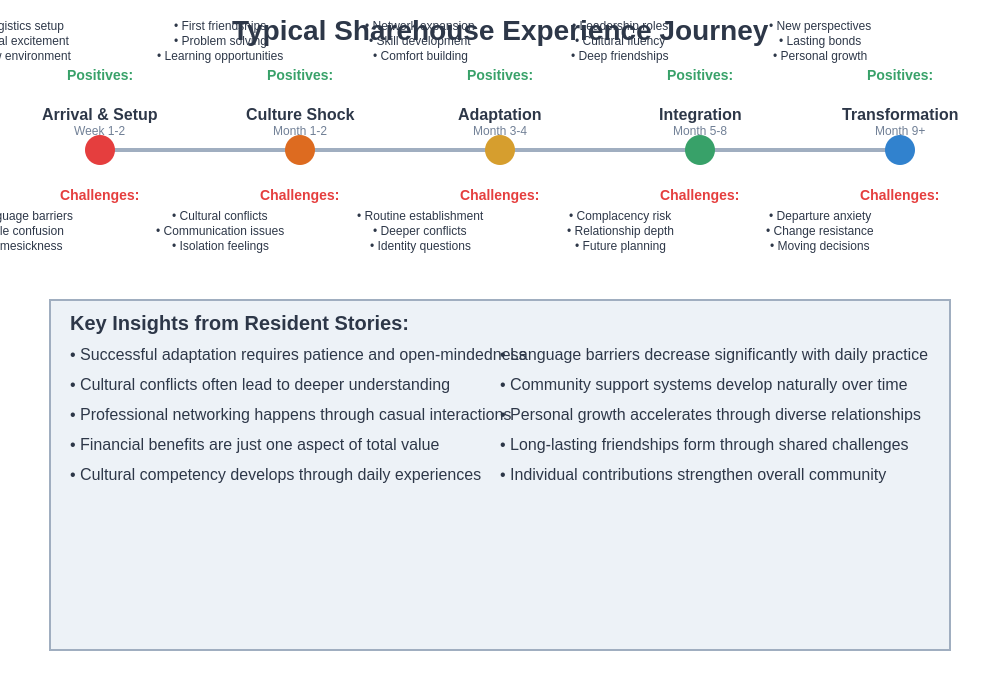
This timeline represents the common journey that most sharehouse residents experience, showing how initial challenges transform into growth opportunities and lasting relationships over time.
James’s Reality Check: Confronting Romanticized Expectations
James, a 22-year-old recent graduate from the UK, arrived in Tokyo with romanticized expectations about Japanese culture and sharehouse community life heavily influenced by anime and social media portrayals. His six-month experience in a sharehouse in Harajuku provided a sobering but ultimately valuable education in the realities of cross-cultural living and the importance of managing expectations.
“I expected every day to be like a cultural exchange festival with deep philosophical conversations and Instagram-worthy moments,” James admits. “The reality was much more mundane - arguing about whose turn it was to clean the bathroom, dealing with someone’s loud phone calls at midnight, and struggling to communicate basic needs when language barriers created misunderstandings.”
The initial disillusionment led James to consider moving to a private apartment, but conversations with longer-term residents helped him develop more realistic expectations and coping strategies. “My housemate Sarah, who had been there for eight months, told me that the magic happens in ordinary moments, not dramatic cultural revelations. She was right - the best memories came from cooking together, helping each other with language practice, and just being there during tough days.”
James’s experience highlights common challenges that many international residents face when dealing with cultural adaptation in sharehouse environments. “I learned that culture shock isn’t just about big differences like bowing or taking off shoes. It’s also about different approaches to personal space, conflict resolution, and social obligations that affect daily interactions.”
The maturation process James underwent during his sharehouse experience proved valuable for his subsequent career and relationship development. “I developed patience, empathy, and communication skills that served me well when I started working at a international company. The sharehouse taught me that meaningful relationships require time, effort, and realistic expectations rather than cultural fantasy fulfillment.”
Lisa’s Triumph: Overcoming Language Barriers Through Community Support
Lisa, a 31-year-old nurse from the Philippines, chose sharehouse living to improve her Japanese language skills while working at a Tokyo hospital. Her initial struggles with language barriers that prevent deep friendships transformed into a success story of community-supported language learning and professional advancement.
“My Japanese was terrible when I arrived,” Lisa recalls. “I could handle basic medical conversations at work, but casual social interaction was really difficult. I often felt isolated and frustrated because I couldn’t express my personality or sense of humor in Japanese.” The language barrier affected not only her social life but also her confidence and job satisfaction.
The breakthrough came when her housemates initiated a informal language exchange system where native speakers helped each other with different languages during designated evening hours. “Instead of formal lessons, we would cook together and have conversations about daily life, relationships, and dreams. The relaxed atmosphere made it easier to make mistakes and learn from them without feeling embarrassed.”
Lisa’s Japanese improvement accelerated dramatically through constant exposure and patient correction from native speakers who became genuine friends. “Within four months, I was participating in complex discussions about politics, philosophy, and personal values. My colleagues at the hospital noticed the improvement and started including me in more social activities outside work.”
The language skills Lisa developed through sharehouse living directly impacted her career advancement. “I was promoted to a supervisory position that required strong communication skills with both Japanese staff and international patients. The confidence I gained through daily conversations with housemates made me feel capable of handling these challenging interactions.”
Ahmed’s Integration: Building Bridges Across Cultural Divides
Ahmed, a 27-year-old engineer from Egypt, faced unique challenges as a Muslim resident in a predominantly non-Muslim sharehouse environment. His experience navigating different religious considerations that affect daily routines became a powerful example of how mutual respect and open communication can bridge cultural and religious differences.
“I was worried about prayer times, dietary restrictions, and whether my housemates would understand or accept my religious practices,” Ahmed explains. “The first week was awkward because I wasn’t sure how to explain my needs without seeming demanding or different.” His concerns about fitting into the community were compounded by previous negative experiences with cultural misunderstanding.
The turning point came when Ahmed decided to openly discuss his religious practices during a house meeting, explaining the reasoning behind his routines and dietary needs. “Instead of judgment or inconvenience, I found curiosity and accommodation. My housemates helped me identify halal food options, respected my prayer times, and even asked thoughtful questions about Islamic culture and traditions.”
Ahmed’s openness about his faith led to meaningful interfaith dialogue and mutual learning experiences. “During Ramadan, several housemates joined me for iftar meals and asked about the spiritual significance of fasting. When one of my Christian housemates was struggling with personal issues, we had deep conversations about faith, purpose, and community support that strengthened our friendship.”
The experience taught Ahmed valuable lessons about cultural bridge-building that enhanced his professional and personal relationships beyond the sharehouse. “I learned that most people are genuinely interested in understanding different perspectives when you approach them with openness and respect. This skill helped me build better relationships with Japanese colleagues and clients who initially seemed reserved around foreign workers.”
Maria’s Resilience: Turning Setbacks into Growth Opportunities
Maria, a 25-year-old artist from Brazil, encountered significant challenges during her Tokyo sharehouse experience, including theft of personal belongings, personality conflicts with housemates, and financial stress that tested her resilience and problem-solving abilities. Her story demonstrates how common sharehouse problems can become opportunities for personal growth when approached with determination and community support.
“Three months into my stay, someone stole my laptop with all my artwork and client projects,” Maria recounts. “I was devastated and ready to give up on Tokyo entirely. The financial loss was bad enough, but losing months of creative work felt like a personal violation that shattered my trust in communal living.” The incident highlighted vulnerabilities in shared living arrangements that had never occurred to her during the application process.
The response from her sharehouse community surprised Maria and ultimately restored her faith in human kindness. “My housemates organized a emergency fund collection, lent me a spare laptop, and helped me report the theft to police. Several residents who worked in tech helped me recover some files from cloud backups I didn’t even know I had.” The support extended beyond immediate crisis management to long-term assistance with rebuilding her portfolio.
Maria’s artistic talents became a valuable community asset as she worked to rebuild her career. “I started creating artwork for the sharehouse common areas and designing promotional materials for house events. This visibility led to commissions from other residents and eventually a part-time job with a design agency.” The setback forced Maria to develop new client relationships and artistic styles that ultimately expanded her professional capabilities.
“The theft taught me about backup systems, insurance, and protecting my work, but it also showed me the power of community support during crisis,” Maria reflects. “I learned that resilience isn’t about avoiding problems but about having people who will help you solve them and grow stronger through the experience.”
Kevin’s Evolution: From Consumer to Community Builder
Kevin, a 30-year-old marketing consultant from Canada, initially approached sharehouse living with a consumer mindset, viewing it as a service that should meet his needs without requiring significant personal investment or community engagement. His transformation from passive resident to active community builder illustrates how sharehouse living can fundamentally change one’s approach to relationships and social responsibility.
“I thought I was buying accommodation and maybe some social interaction on my terms,” Kevin admits. “I wanted the benefits of community when convenient but the freedom to opt out when I felt like being alone. This selfish approach created tension and prevented me from experiencing the real value of shared living.” His initial resistance to house responsibilities and community activities created friction with more engaged residents.
The shift in Kevin’s perspective began when he witnessed how his passive approach affected overall house dynamics and other residents’ experiences. “I realized that my lack of participation was actually making life harder for everyone else who was picking up my slack and trying to maintain a positive community atmosphere despite my indifference.” A frank conversation with a respected long-term resident helped Kevin understand his role in the collective housing experience.
Kevin’s evolution involved gradually taking on more house responsibilities and initiating community-building activities that benefited all residents. “I started organizing monthly house dinners where everyone contributed a dish from their home country. These events became highlights that people looked forward to and helped new residents integrate more quickly.” His marketing skills proved valuable for promoting house events and improving communication systems.
“I learned that community isn’t something you consume but something you create through daily choices and consistent contribution,” Kevin reflects. “The relationships I built through active participation became more meaningful than any friendship based purely on convenience or shared interests.”
The Collective Wisdom: Common Themes and Insights
These diverse stories reveal recurring themes that transcend individual circumstances and cultural backgrounds, offering valuable insights for anyone considering or currently experiencing sharehouse living in Tokyo. The most successful residents demonstrate flexibility, genuine curiosity about other cultures, and willingness to contribute to community wellbeing rather than simply extracting personal benefits from shared living arrangements.
Communication emerges as the foundation of positive sharehouse experiences, whether navigating language barriers, resolving conflicts, or building meaningful relationships. Residents who approach cultural differences with humility and openness consistently report more satisfying experiences than those who maintain rigid expectations or judgmental attitudes toward unfamiliar practices.
The financial benefits of sharehouse living, while important, represent only one dimension of value that residents discover through their experiences. The professional networking opportunities, personal growth challenges, and cultural learning experiences often provide long-term benefits that far exceed immediate cost savings, creating investment returns that compound over years and career development.
These authentic stories demonstrate that sharehouse living in Tokyo offers unique opportunities for personal transformation, cultural understanding, and international friendship building that cannot be replicated through other housing arrangements or cultural immersion programs. The challenges and setbacks described by residents ultimately contribute to resilience, adaptability, and cross-cultural competence that serve them throughout their careers and personal relationships.
For prospective residents, these stories emphasize the importance of approaching sharehouse living with realistic expectations, genuine openness to cultural learning, and commitment to contributing positively to community dynamics. The most rewarding experiences emerge from active engagement rather than passive consumption of accommodation services, requiring investment of time, energy, and emotional vulnerability that yields corresponding returns in personal growth and meaningful relationships.
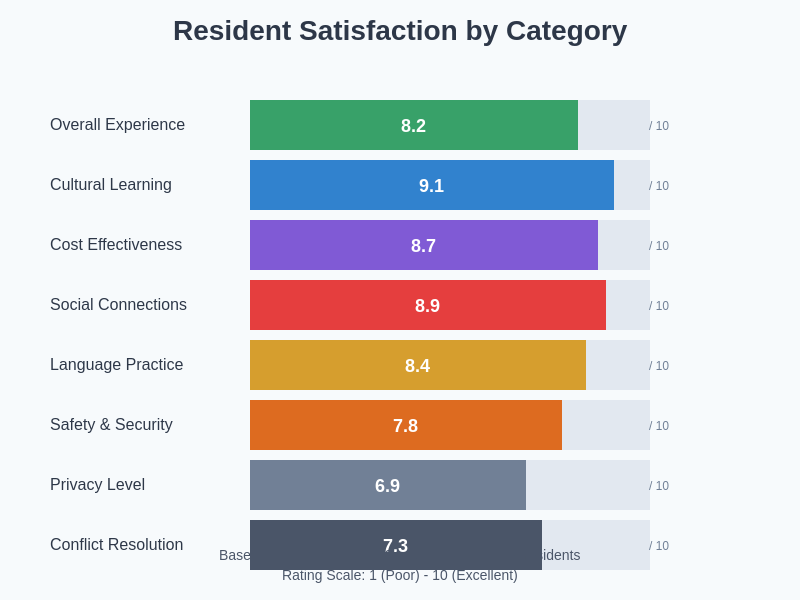
These satisfaction ratings, based on interviews with current and former residents, demonstrate that despite challenges, most residents find sharehouse living highly rewarding across multiple dimensions of experience.
Disclaimer
These stories represent authentic experiences shared by real sharehouse residents, though names and some identifying details have been changed to protect privacy. Individual experiences may vary significantly based on specific house dynamics, personal circumstances, and cultural backgrounds. Prospective residents should conduct their own research and consider multiple perspectives when making housing decisions in Tokyo.