The intersection of educational requirements and housing decisions creates one of the most complex challenges facing international families seeking sharehouse accommodation in Tokyo. School proximity fundamentally shapes family sharehouse options through transportation considerations, district boundaries, educational quality variations, and the unique social dynamics that emerge when families with children share living spaces. Understanding these interconnected factors enables families to make informed decisions that balance educational priorities with housing affordability and community benefits.
The significance of school proximity extends beyond simple convenience considerations to encompass daily scheduling constraints, child safety concerns, extracurricular activity participation opportunities, and the broader educational ecosystem that influences long-term academic and social development. Families navigating Tokyo’s complex educational landscape while seeking shared housing solutions must consider multiple variables that traditional apartment hunting rarely encounters.
Educational Landscape and Sharehouse Availability
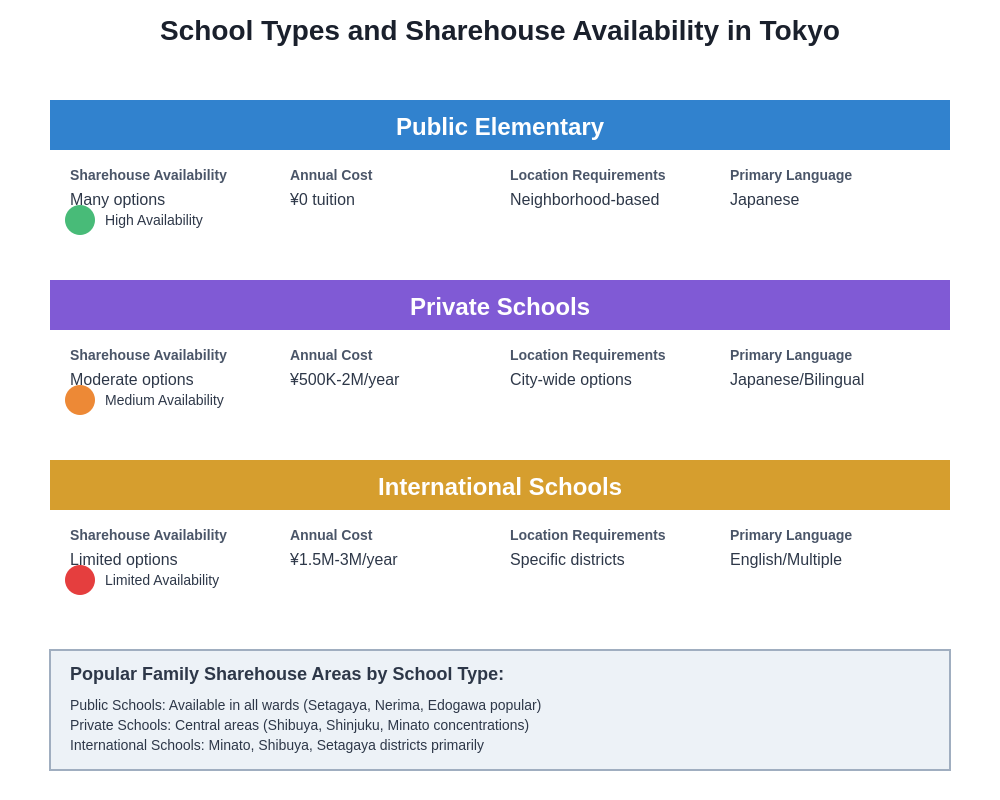
Tokyo’s educational system presents a diverse array of options including public elementary and middle schools, private institutions, international schools, and specialized educational programs that cater to different linguistic and cultural needs. The geographical distribution of these educational facilities significantly influences where family-friendly sharehouses are located and how they are priced relative to market demand from families with school-age children.
Best Tokyo neighborhoods for sharehouse living becomes particularly relevant for families because educational quality and accessibility vary dramatically across different districts. Areas with highly regarded schools often experience increased demand for family housing, which directly impacts sharehouse availability and pricing structures for multi-bedroom accommodations suitable for families with children.
The concentration of international schools in specific Tokyo districts creates micro-markets where family sharehouses command premium pricing due to limited supply and high demand from expatriate families seeking proximity to English-language education. These dynamics affect not only rental costs but also the types of amenities and services that sharehouse operators provide to attract and retain family residents.
Public school district boundaries impose additional constraints on housing choices because Japanese public education requires enrollment based on residential address. Families seeking access to specific public schools must locate housing within designated catchment areas, which can significantly limit sharehouse options and influence long-term housing decisions based on educational continuity requirements.
Transportation Infrastructure and Daily Logistics
School proximity affects family sharehouse selection through complex transportation considerations that extend beyond simple distance measurements to encompass safety, reliability, cost, and time efficiency factors that influence daily family routines. The Tokyo metropolitan transportation system, while extensive and efficient, presents unique challenges for families with children who require predictable and safe travel options for educational activities.
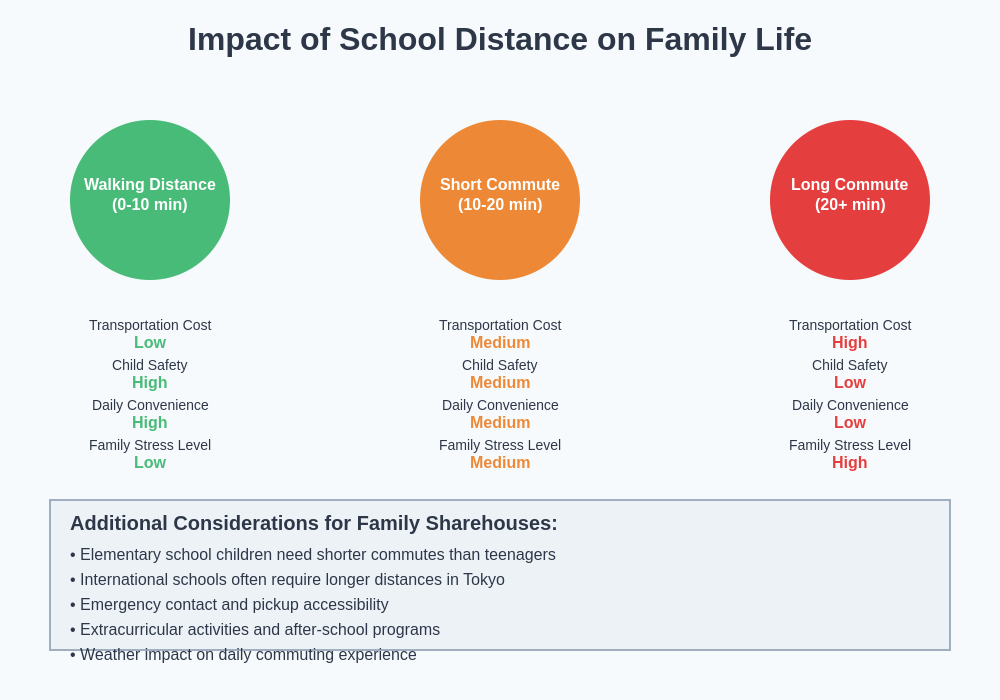
Walking distance to schools represents the most convenient option for families, eliminating transportation costs and providing children with independence and physical activity benefits. However, family sharehouses within walking distance of desirable schools are often limited in availability and command premium pricing that may exceed budget constraints for many international families seeking affordable housing solutions.
Student sharehouses near top Tokyo universities provides insights into how educational proximity influences housing markets, though family needs differ significantly from university students in terms of space requirements, community dynamics, and long-term stability considerations that affect sharehouse selection criteria.
Train and subway access becomes crucial for families choosing sharehouses beyond walking distance from schools, requiring careful evaluation of route complexity, transfer requirements, peak hour crowding, and reliability factors that affect children’s daily commuting experiences. The cost of monthly transportation passes for children can represent significant ongoing expenses that must be factored into overall housing budget calculations.
Age-Specific Educational Considerations
Elementary school proximity carries particular weight for families with young children because safety concerns, supervision requirements, and developmental considerations make long commutes impractical and potentially harmful to children’s well-being and academic performance. The availability of family sharehouses near quality elementary schools directly impacts housing options for families with children under twelve years old.
Middle and high school students possess greater independence and transportation capabilities, allowing families more flexibility in sharehouse location selection while maintaining access to quality educational opportunities. However, extracurricular activities, after-school programs, and social connections still benefit from reasonable proximity that enables participation without excessive travel burdens.
How to find perfect sharehouse tokyo becomes more complex for families because educational requirements add layers of criteria that individual residents or couples without children rarely need to consider. The timeline for family housing decisions must account for school enrollment periods, application deadlines, and the limited flexibility to change schools mid-academic year.
International school considerations present additional complexities because these institutions often have specific admission requirements, higher tuition costs, and limited availability that influences both housing timeline and location decisions. Families seeking access to particular international schools must prioritize proximity while balancing other housing factors such as cost, community, and long-term flexibility.
Community Dynamics in Family Sharehouses
School proximity influences the social composition of family sharehouses by attracting residents with similar educational priorities and child-rearing approaches that can create supportive community environments or potential conflicts depending on compatibility factors. Families sharing housing often develop informal support networks that include childcare assistance, educational resource sharing, and collaborative approaches to managing children’s activities and supervision.
The presence of multiple families with school-age children in sharehouses can create beneficial economies of scale for educational expenses, transportation coordination, and childcare arrangements that reduce individual family burdens while strengthening community bonds. However, these same dynamics can also generate conflicts over space usage, noise levels, and differing parenting philosophies that require careful management and clear communication.
Living with japanese roommates in tokyo sharehouses becomes particularly relevant for international families because cultural differences in educational expectations, child discipline approaches, and family privacy boundaries can significantly impact daily living experiences and long-term housing satisfaction.
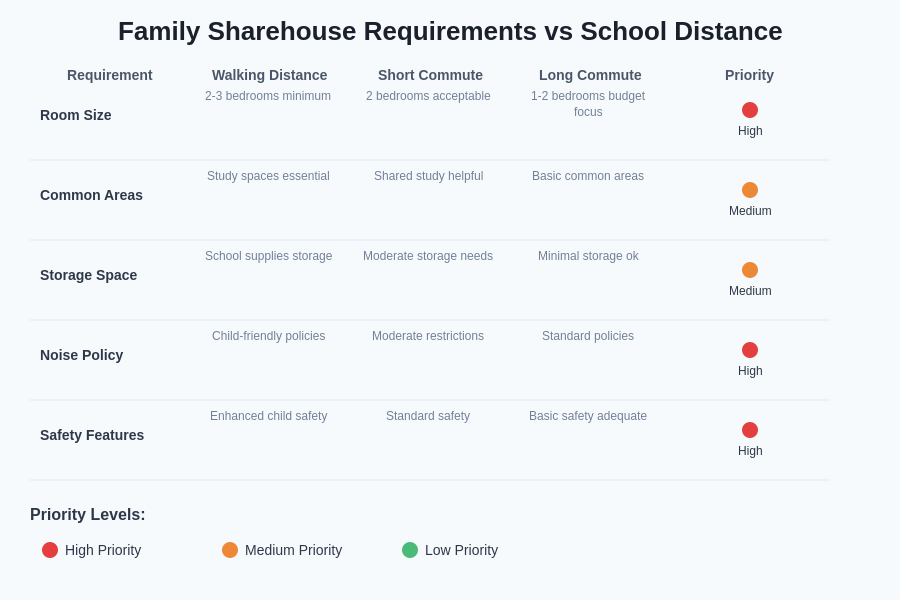
Shared resources such as study spaces, educational materials, and technology access become more important in family sharehouses where multiple children need quiet environments for homework completion and academic activities. The design and management of common areas must accommodate diverse educational needs while maintaining harmony among residents with different schedules and requirements.
Financial Implications and Budget Planning
School proximity affects family sharehouse costs through multiple channels including base rental prices, transportation expenses, educational fees, and opportunity costs associated with limited housing options in desirable school districts. Living costs tokyo sharehouses explained provides foundational information that families must expand to include education-related expenses that significantly impact monthly budgets.
Transportation costs vary dramatically based on distance from schools, with families living within walking distance avoiding monthly pass expenses that can exceed 10,000 yen per child for longer commutes involving multiple train lines. These savings can partially offset higher rental costs for sharehouses located closer to schools, though the break-even analysis depends on specific circumstances and family size.
Private and international school tuition costs often represent the largest educational expense for families, but proximity can influence related costs such as transportation, meal programs, and extracurricular activities that may be more accessible and affordable when schools are located nearby. The total cost of education including all ancillary expenses must be considered when evaluating sharehouse options and their relationship to educational choices.
How much tokyo sharehouses really cost per month becomes more complex for families because space requirements, utility usage, and community facility needs differ significantly from individual or couple arrangements. Family sharehouses typically require larger rooms, more storage space, and access to family-friendly amenities that influence pricing structures.
Safety and Security Considerations
School proximity directly impacts child safety through reduced exposure to traffic, crime risks, and environmental hazards associated with longer commutes and unfamiliar neighborhoods. Families prioritizing child safety often accept higher housing costs or reduced space in exchange for walkable distances to schools and reduced reliance on public transportation for young children.
The route between sharehouse and school becomes a critical safety consideration requiring evaluation of traffic patterns, pedestrian infrastructure, crossing safety, and neighborhood crime statistics that influence daily risk exposure for children traveling independently or with minimal supervision. Japanese sharehouse rules every foreigner should know often include safety protocols that become more important when children are present in shared living environments.
Emergency response capabilities and communication systems between schools, families, and sharehouse management become important considerations for families living in shared housing arrangements where multiple parties may need to be contacted or involved in child-related emergencies or routine communication regarding school activities and schedule changes.
Shared living environments require additional safety considerations when multiple families with children share common spaces, requiring clear protocols for child supervision, visitor access, and emergency procedures that protect all residents while maintaining appropriate privacy and independence for individual families.
Long-term Educational Planning
School proximity decisions in sharehouse selection often have long-term implications that extend beyond immediate convenience to influence educational continuity, social relationship development, and future housing flexibility as children progress through different educational levels. Families must consider whether their chosen sharehouse location will continue to meet educational needs as children advance to higher grade levels or different types of schools.
The stability of sharehouse arrangements affects educational planning because frequent moves can disrupt children’s academic progress, social relationships, and extracurricular activities that contribute to overall development and well-being. Families seeking educational continuity must evaluate sharehouse contracts, renewal options, and community stability when making housing decisions that impact school choice.
Real stories from tokyo sharehouse residents often include accounts from families navigating the challenges of balancing housing affordability with educational requirements, providing insights into successful strategies and common pitfalls that affect family satisfaction with shared living arrangements.
Planning for educational transitions such as elementary to middle school or middle school to high school requires consideration of how current sharehouse locations will accommodate changing educational needs and whether families will need to relocate to maintain access to appropriate educational opportunities as children mature and requirements evolve.
Special Educational Needs and Accessibility
Families with children requiring special educational services face additional complexity when selecting sharehouses because specialized programs and support services are often concentrated in specific areas of Tokyo, further limiting housing options and increasing the importance of proximity considerations for families with unique educational requirements.
Language support services for international families often influence school choice and housing decisions because children requiring English as a Second Language support or native language maintenance programs may need access to specialized educational resources that are geographically concentrated in certain Tokyo districts.
English speaking sharehouses in tokyo for foreigners becomes particularly relevant for families seeking community support for language development and cultural adaptation challenges that affect both children’s educational experiences and family integration into Japanese society.
Accessibility considerations for children with physical disabilities or mobility challenges require evaluation of both school facilities and sharehouse accommodations, as well as the accessibility of transportation routes between housing and educational facilities that may limit options for families with specific accessibility requirements.
Cultural Integration and Educational Support
School proximity affects cultural integration opportunities for international families because closer relationships with local schools often facilitate better understanding of Japanese educational culture, parent participation expectations, and community involvement opportunities that enhance the overall family experience while living in Tokyo.
The language demands of school participation including parent-teacher conferences, school events, and administrative communications create additional considerations for families choosing sharehouses near Japanese public schools where English language support may be limited compared to international school environments.
Making friends through tokyo sharehouse communities takes on special significance for families because children’s social connections often extend to family relationships with other parents, creating opportunities for mutual support and cultural exchange that can enhance the sharehouse living experience for all residents.
Community resources such as libraries, tutoring services, and educational enrichment programs available near schools can influence the overall educational value proposition of different sharehouse locations, providing families with access to supplementary educational opportunities that support children’s academic development and cultural adaptation.
Technology and Educational Infrastructure
Modern educational requirements including reliable internet connectivity, adequate study spaces, and access to educational technology become more important in family sharehouses where multiple children may need simultaneous access to online learning platforms, video conferencing for international curriculum programs, and digital educational resources.
The availability of quiet study environments in sharehouse common areas or family accommodations directly impacts children’s ability to complete homework, participate in online learning activities, and maintain academic performance standards that may be different from their previous educational experiences in other countries.
How internet data limits affect your monthly usage becomes particularly relevant for families with school-age children because educational technology demands, online research requirements, and digital communication with schools can significantly increase household internet usage beyond typical sharehouse resident patterns.
Printer access, computer availability, and educational software compatibility require consideration in family sharehouse environments where multiple children may have simultaneous technology needs for educational projects, research assignments, and communication with teachers and classmates that affect shared resource allocation and household technology planning.
Seasonal and Schedule Considerations
Japanese school calendars and scheduling patterns influence family sharehouse selection through considerations of vacation periods, entrance examination seasons, and cultural events that affect daily routines and community dynamics in shared living environments with multiple families managing similar educational schedules and requirements.
After-school program availability and extracurricular activity options near schools can significantly impact family daily schedules and the importance of proximity for children’s participation in sports, arts, and cultural activities that contribute to overall educational experience and social development opportunities.
Dating while living in tokyo sharehouses becomes more complex for single parents who must balance personal relationship development with parenting responsibilities and children’s educational needs while living in shared housing environments that require consideration of multiple family dynamics and community harmony.
Weather considerations and seasonal changes affect the practical implications of school proximity because walking distances that are comfortable during mild weather may become challenging during Tokyo’s hot, humid summers or cold winter periods that influence daily commuting experiences for children and families.
The complex interplay between educational requirements and family sharehouse selection demands careful evaluation of multiple factors that extend far beyond simple distance calculations to encompass safety, community, cost, and long-term planning considerations that affect both children’s educational success and family satisfaction with shared living arrangements. Understanding these dynamics enables families to make informed decisions that support both immediate housing needs and long-term educational goals while building meaningful community connections in Tokyo’s diverse and dynamic urban environment.
Disclaimer
This article is for informational purposes only and does not constitute professional educational or housing advice. School admission requirements, district boundaries, and housing availability change frequently. Families should verify current information with relevant schools and housing providers when making decisions. Individual experiences may vary based on specific circumstances, educational needs, and housing preferences.