The decision between Tokyo and Osaka for international students seeking sharehouse accommodation represents one of the most significant choices that will shape your entire Japanese experience. Both cities offer distinct advantages, unique cultural atmospheres, and varying cost structures that can dramatically impact your academic journey, social life, and long-term career prospects in Japan. Understanding the nuanced differences between these two major metropolitan areas will empower you to make an informed decision that aligns with your educational goals, financial constraints, and personal preferences.
The contrasts between Tokyo and Osaka extend far beyond simple geographical differences, encompassing economic opportunities, cultural dynamics, social environments, and practical considerations that affect daily student life. Each city presents unique advantages for international students, from Tokyo’s global business connections and prestigious universities to Osaka’s affordable living costs and authentic Japanese cultural experiences that provide deeper immersion into local traditions and customs.
Understanding the Two Cities’ Student Landscapes
Tokyo stands as Japan’s undisputed economic and political center, hosting numerous world-renowned universities, international corporations, and cultural institutions that attract students from across the globe. The city’s sharehouse market reflects this international focus, with many properties specifically designed to accommodate foreign residents and provide English-language support services that ease the transition for newcomers to Japan.
Osaka, often referred to as Japan’s kitchen, offers a more intimate and culturally immersive experience while maintaining its status as a major economic hub in the Kansai region. The city’s sharehouse options tend to emphasize community building and local cultural integration, providing international students with opportunities to develop deeper connections with Japanese culture and language through daily interactions with local residents.
The student demographics in each city create distinct living environments, with Tokyo attracting more globally-minded individuals pursuing careers in international business, technology, and finance, while Osaka draws students interested in traditional Japanese culture, regional business practices, and authentic local experiences. Student sharehouses near top Tokyo universities and similar options in Osaka cater to these different student populations with tailored amenities and community programs.
Cost Analysis and Financial Considerations
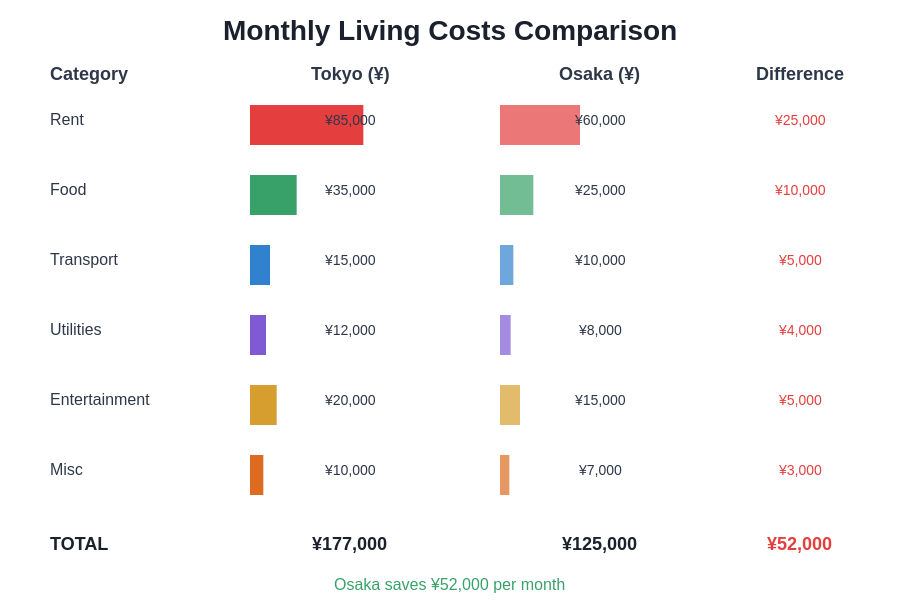
The financial implications of choosing between Tokyo and Osaka for sharehouse living extend well beyond simple rent comparisons, encompassing transportation costs, daily expenses, part-time work opportunities, and long-term financial planning considerations that significantly impact student budgets throughout their academic programs.
Tokyo’s higher cost of living is immediately apparent in sharehouse rental prices, which typically range from 60,000 to 120,000 yen per month depending on location, amenities, and room type. How much Tokyo sharehouses really cost per month provides detailed breakdowns that help students understand the true financial commitment required for Tokyo living, including hidden costs and additional expenses that can strain student budgets.
Osaka offers significantly more affordable accommodation options, with sharehouse rents typically ranging from 40,000 to 80,000 yen per month for comparable facilities and locations. This substantial difference in housing costs can free up budget allocation for other essential student expenses such as textbooks, research materials, cultural activities, and travel experiences that enhance the educational journey.
Transportation expenses vary considerably between the cities, with Tokyo’s extensive but expensive rail network requiring substantial monthly passes for students who need to travel across the metropolitan area for classes, part-time work, and social activities. Osaka’s more compact urban structure and comprehensive public transportation system often result in lower monthly transportation costs while maintaining excellent connectivity to universities, commercial districts, and cultural attractions.
Part-time work opportunities, which many international students rely upon to supplement their finances, present different advantages in each city. Tokyo offers higher hourly wages and more diverse employment options in international companies, English conversation schools, and tourism-related businesses, while Osaka provides opportunities to develop Japanese language skills through local business interactions and traditional service industry positions.
University Access and Academic Environment
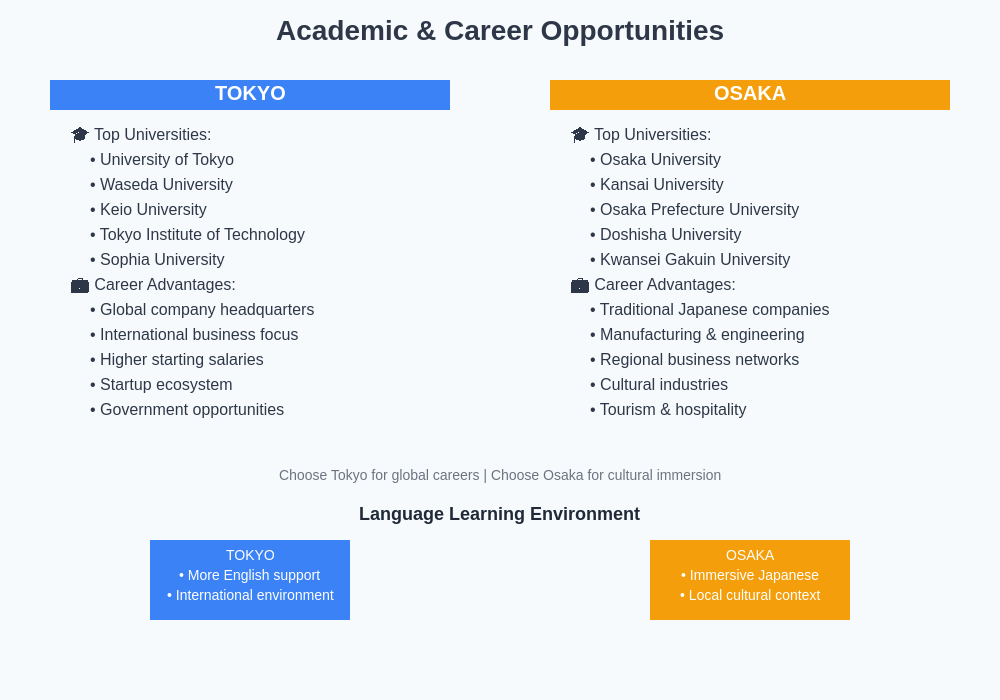
The concentration of prestigious universities and research institutions differs significantly between Tokyo and Osaka, creating distinct academic ecosystems that influence student experiences, networking opportunities, and post-graduation career prospects. Tokyo hosts numerous internationally recognized institutions including the University of Tokyo, Waseda University, and Keio University, along with specialized schools focusing on international business, technology, and liberal arts programs.
Tokyo’s academic environment emphasizes global perspectives, international collaboration, and connections to multinational corporations and organizations that provide internship opportunities and career pathways for ambitious students. The city’s role as Japan’s political and economic center creates unique opportunities for students studying international relations, economics, business administration, and public policy to engage with real-world applications of their academic pursuits.
Osaka’s university landscape includes respected institutions such as Osaka University, Kansai University, and Osaka Prefecture University, which often provide more intimate learning environments and stronger connections to local industries, traditional Japanese business practices, and regional economic development initiatives. The academic focus tends toward practical applications, regional studies, and cultural preservation that appeal to students seeking deep understanding of Japanese society and business culture.
Research opportunities and academic resources vary between the cities, with Tokyo offering access to national libraries, government research facilities, and international conferences that attract global scholars and researchers. Osaka provides opportunities for field research in traditional industries, regional economic development, and cultural studies that benefit from the city’s rich historical background and active preservation of traditional practices.
The language learning environment differs substantially, as Tokyo’s international atmosphere may provide more English-language support but fewer opportunities for intensive Japanese practice, while Osaka’s more homogeneous population creates immersive language learning experiences that accelerate fluency development through daily necessity rather than formal instruction alone.
Cultural Experiences and Social Opportunities
The cultural landscapes of Tokyo and Osaka offer distinctly different experiences for international students seeking to understand Japanese society, develop meaningful relationships, and create lasting memories during their academic programs. Tokyo’s cosmopolitan atmosphere provides exposure to contemporary Japanese culture, international influences, and cutting-edge trends in fashion, technology, and entertainment that reflect Japan’s position as a global cultural leader.
Tokyo’s entertainment districts, museums, cultural events, and international festivals create abundant opportunities for students to explore diverse interests while building networks with like-minded individuals from around the world. Making friends through Tokyo sharehouse communities demonstrates how the city’s international sharehouse residents create supportive social networks that enhance both academic and personal development.
Osaka’s cultural environment emphasizes traditional Japanese values, regional customs, and authentic local experiences that provide deeper insight into Japanese society beyond the international veneer often present in Tokyo. The city’s famous food culture, traditional festivals, historical sites, and neighborhood community structures offer international students opportunities to participate in genuine Japanese social traditions and develop cultural understanding that extends beyond surface-level observations.
Social dynamics within sharehouses reflect these broader cultural differences, with Tokyo properties often attracting residents focused on career development, international networking, and global opportunities, while Osaka sharehouses tend to foster communities centered around cultural exchange, language learning, and local integration that create more intimate and supportive living environments.
The proximity to other cultural destinations also differs significantly, as Tokyo provides easy access to Mount Fuji, Nikko, and other iconic Japanese destinations, while Osaka serves as a gateway to Kyoto, Nara, and the broader Kansai region’s historical and cultural treasures that offer unparalleled opportunities for cultural exploration and traditional Japanese experiences.
Career Prospects and Professional Development
The long-term career implications of choosing between Tokyo and Osaka for student accommodation extend far beyond university graduation, influencing professional networks, industry connections, and employment opportunities that shape post-graduation success in Japan or international markets. Tokyo’s status as Japan’s business capital provides unmatched access to multinational corporations, international organizations, and global career opportunities that appeal to students planning international careers.
Tokyo’s business environment offers internship opportunities with major corporations, government agencies, and international organizations that provide valuable professional experience and networking connections essential for competitive job markets. Living with Japanese roommates in Tokyo sharehouses often includes interactions with young professionals who can provide career guidance and industry insights valuable for student career development.
The startup ecosystem and entrepreneurial opportunities in Tokyo attract students interested in innovation, technology development, and business creation, with numerous incubators, accelerators, and venture capital firms actively seeking talented international students who can bridge cultural and business gaps in global markets.
Osaka’s business environment focuses more heavily on traditional Japanese companies, regional enterprises, and manufacturing industries that provide different but equally valuable career development opportunities for students interested in understanding Japanese business culture, management practices, and long-term employment traditions that remain important in many sectors.
Professional language development opportunities differ between the cities, with Tokyo offering more English-language business environments that may slow Japanese language acquisition but provide comfort for students still developing language skills, while Osaka’s business community typically requires stronger Japanese proficiency but offers more authentic cultural and linguistic immersion experiences.
Transportation and Accessibility
Transportation infrastructure and accessibility considerations significantly impact daily life quality, study efficiency, and social opportunities for international students living in sharehouses throughout either metropolitan area. Tokyo’s extensive rail network provides unparalleled connectivity but at substantial cost, with monthly transportation expenses often exceeding 15,000 yen for students who need regular access to multiple university campuses, part-time work locations, and social destinations.
Tokyo’s complex transportation system requires significant time investment to master route optimization, transfer procedures, and cost-effective travel strategies that can overwhelm newcomers but ultimately provide access to virtually any destination within the metropolitan area. The city’s size means that daily commutes can be lengthy, affecting study time, social activities, and overall quality of life for students living in more affordable suburban sharehouses.
Osaka’s more compact urban structure and comprehensive transportation network typically result in shorter commute times and lower transportation costs while maintaining excellent access to universities, commercial districts, and cultural attractions. The city’s bicycle-friendly infrastructure also provides cost-effective transportation alternatives that promote both physical fitness and environmental sustainability while reducing monthly expenses.
Regional accessibility differs substantially, with Tokyo serving as the hub for Japan’s shinkansen network and international airports that facilitate travel throughout Japan and abroad, while Osaka provides excellent access to the culturally rich Kansai region including Kyoto, Nara, and Kobe that offer weekend exploration opportunities and cultural immersion experiences essential for comprehensive understanding of Japanese history and traditions.
Housing Quality and Living Standards
The quality and characteristics of sharehouse accommodation vary significantly between Tokyo and Osaka, reflecting different market demands, construction standards, and cultural expectations that affect daily comfort, study environments, and overall satisfaction with the living experience. Tokyo sharehouses often emphasize modern amenities, technological integration, and international resident services that cater to globally-minded students who prioritize convenience and connectivity.
Modern Tokyo sharehouses frequently feature high-speed internet, smart home technologies, furnished rooms, and comprehensive support services including multilingual staff, maintenance teams, and community management programs designed to create seamless living experiences for busy students balancing academic and professional commitments.
Osaka sharehouses typically focus on community building, cultural integration, and traditional Japanese living experiences that provide authentic insights into local customs, social practices, and daily routines that enhance cultural understanding and language learning opportunities through immersive environmental exposure.
Space considerations differ between the cities, with Tokyo’s premium real estate market resulting in smaller rooms and common areas that require efficient organization and minimalist living approaches, while Osaka’s more affordable market often allows for larger personal spaces and more generous common areas that support both study activities and social interactions.
Building quality and maintenance standards vary within each city based on price points and operator policies, but Osaka generally offers better value in terms of space and amenities per yen spent, while Tokyo provides more standardized quality assurance and professional management services that appeal to students prioritizing reliability and consistency in their accommodation experience.
Community Integration and Cultural Immersion
The depth and nature of cultural integration opportunities available to international students differ substantially between Tokyo and Osaka sharehouses, influencing language development, cultural understanding, and the formation of meaningful relationships with Japanese residents and local communities. Tokyo’s international atmosphere provides comfort and support for students adjusting to Japanese life but may limit opportunities for deep cultural immersion and authentic local experiences.
Tokyo sharehouses often attract diverse international populations that create multicultural communities beneficial for global networking but potentially limiting intensive Japanese cultural and linguistic immersion experiences that many students seek during their academic programs in Japan. Dating while living in Tokyo sharehouses reflects the international social dynamics common in Tokyo’s sharehouse communities.
Osaka’s more homogeneous population and stronger emphasis on local traditions create natural opportunities for international students to participate in authentic Japanese social practices, seasonal celebrations, and community activities that provide insights into contemporary Japanese society beyond tourist attractions and international business environments.
Neighborhood integration varies significantly, with Tokyo’s rapid pace and anonymous urban environment making casual social connections more challenging, while Osaka’s neighborhood-focused culture and slower pace facilitate natural relationship building with local residents, shopkeepers, and community members who often become valuable language practice partners and cultural guides.
The balance between international support and local immersion represents a crucial consideration for students planning their Japanese experience, as Tokyo offers more safety nets and familiar comforts while Osaka provides more challenging but ultimately more rewarding cultural integration opportunities that develop independence, resilience, and deep cultural competency.
Climate and Environmental Factors
Environmental conditions and climate considerations affect daily comfort, health, and lifestyle choices for international students throughout their academic programs in either city. Both Tokyo and Osaka experience similar seasonal patterns, but urban density, air quality, and environmental management practices create different living experiences that impact study habits, outdoor activities, and overall well-being.
Tokyo’s higher population density and extensive industrial activity contribute to air quality challenges during certain seasons, while the urban heat island effect intensifies summer temperatures and humidity levels that can affect concentration, sleep quality, and outdoor exercise opportunities essential for maintaining physical and mental health during demanding academic programs.
Osaka’s slightly more manageable urban density and proximity to natural areas provide better air quality and more accessible green spaces that support outdoor activities, recreational opportunities, and stress relief essential for academic success and personal well-being throughout intensive study periods.
Seasonal considerations affect both cities similarly, with humid summers, cold winters, and rainy seasons that require adaptation strategies and appropriate clothing investments that impact student budgets and daily routines. How climate control preferences create conflicts in sharehouses becomes particularly relevant during extreme weather periods when heating and cooling costs and comfort preferences can create household tensions.
Natural disaster preparedness and building safety standards are important considerations for international students unfamiliar with earthquake safety procedures and emergency protocols that require understanding and preparation regardless of chosen city location.
Making the Decision: Factors to Consider
The choice between Tokyo and Osaka sharehouses requires careful evaluation of personal priorities, academic goals, financial constraints, and long-term objectives that will guide your Japanese experience and influence future opportunities. Students prioritizing international career development, global networking, and exposure to cutting-edge industries may find Tokyo’s advantages outweigh its higher costs and more competitive environment.
Academic program requirements and university locations obviously influence decision-making, but students should also consider the broader educational ecosystem, research opportunities, and cultural experiences available in each city when evaluating their options. How to find the perfect sharehouse in Tokyo and similar resources for Osaka provide practical guidance for students who have decided on their preferred city.
Financial planning requires realistic assessment of total living costs, part-time work opportunities, and long-term budget sustainability throughout the academic program duration. Students should consider not only immediate expenses but also opportunities for savings, travel, and cultural experiences that enhance the overall educational value of their Japanese experience.
Personal adaptability and cultural preferences play crucial roles in determining satisfaction with either choice, as students who thrive in fast-paced, international environments may prefer Tokyo’s energy and opportunities, while those seeking authentic cultural immersion and community building may find greater fulfillment in Osaka’s more traditional social environment.
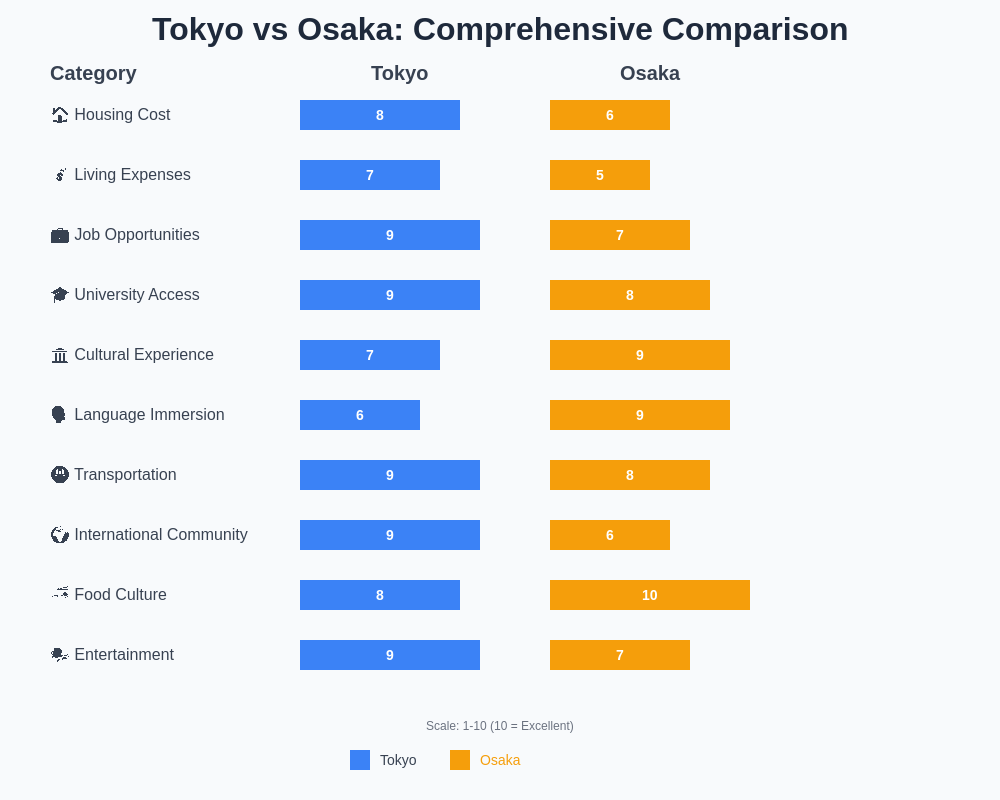
The decision between Tokyo and Osaka sharehouses ultimately depends on individual priorities, goals, and preferences that reflect personal values and academic objectives. Both cities offer exceptional opportunities for international students, and success in either location depends more on preparation, adaptability, and engagement with local communities than on the inherent advantages of any particular city. Understanding the distinct characteristics of each option empowers students to make informed decisions that align with their unique circumstances and aspirations for their Japanese educational experience.
Disclaimer
This article is for informational purposes only and does not constitute professional educational or housing advice. City conditions, housing markets, and university policies change frequently, and students should conduct current research and consult with relevant institutions when making housing decisions. Individual experiences may vary based on personal circumstances, language abilities, and adaptation strategies. Costs and availability mentioned are approximate and subject to market fluctuations.