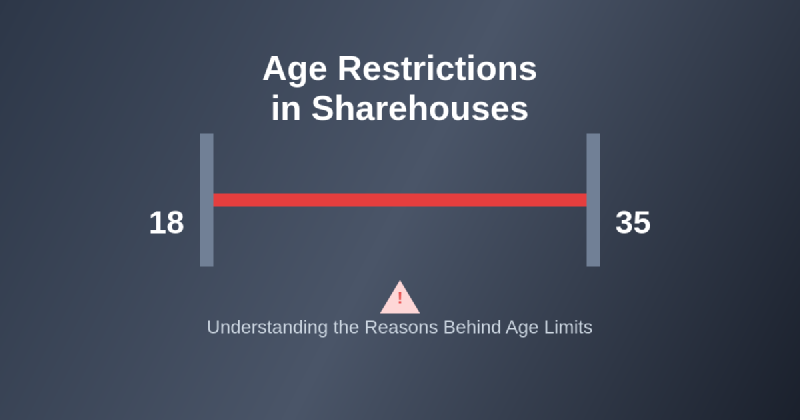
Age restrictions in Tokyo sharehouses represent one of the most controversial yet widely implemented policies in the shared living industry, creating significant barriers for certain demographics while serving specific operational and community-building purposes that many property managers consider essential for maintaining stable, harmonious living environments. Understanding the complex reasoning behind these age limitations reveals deeper insights into Japanese housing culture, legal frameworks, and the practical challenges of managing diverse residential communities in one of the world’s most expensive cities.
The implementation of age restrictions varies dramatically across different sharehouses and operators, ranging from subtle preferences expressed during application screening to explicit age brackets clearly stated in rental advertisements and contracts. These policies significantly impact housing accessibility for international residents, particularly older professionals, mature students, and career changers who find themselves excluded from substantial portions of Tokyo’s shared housing market despite possessing stable incomes and excellent references.
Legal Framework and Discrimination Considerations
Japanese housing law presents a complex landscape regarding age-based discrimination, with sharehouses operating in legal gray areas that allow certain types of demographic targeting while prohibiting others. Understanding the legal disputes that get resolved in sharehouses provides broader context for how housing regulations apply to shared living arrangements and the limited recourse available to residents facing discriminatory practices.
The distinction between legitimate business reasons and unlawful discrimination becomes particularly nuanced in sharehouse contexts, where operators argue that age restrictions serve community harmony rather than arbitrary exclusion. Legal precedents remain limited, with most age-related disputes resolved through private negotiation rather than formal legal proceedings, leaving many affected individuals without clear understanding of their rights or available remedies.
Property management companies often justify age restrictions through business necessity arguments, claiming that homogeneous age groups create more stable communities, reduce conflict rates, and improve resident retention. These justifications receive varying degrees of legal protection, with courts generally recognizing property owners’ rights to establish reasonable occupancy criteria while maintaining scrutiny over policies that appear discriminatory without legitimate business purposes.
The enforcement mechanisms for age restrictions range from application screening processes that request birthdates and employment history to informal selection criteria that consider age alongside other demographic factors. How to find the perfect sharehouse in Tokyo explores strategies for navigating these restrictions and identifying age-inclusive housing options in competitive markets.
Community Dynamics and Social Compatibility
Age-based community curation reflects deeply held beliefs among many sharehouse operators about generational compatibility, lifestyle synchronization, and social harmony factors that influence daily interactions and long-term community stability. These assumptions, while sometimes based on observable patterns, often oversimplify the complex factors that determine interpersonal compatibility and community success in shared living environments.
Younger resident communities, typically targeting individuals in their early twenties to early thirties, often prioritize social activities, flexible schedules, and informal living arrangements that accommodate frequent schedule changes, spontaneous gatherings, and higher tolerance for noise levels. Making friends through Tokyo sharehouse communities examines how age demographics influence friendship formation and social integration patterns within different types of shared housing environments.
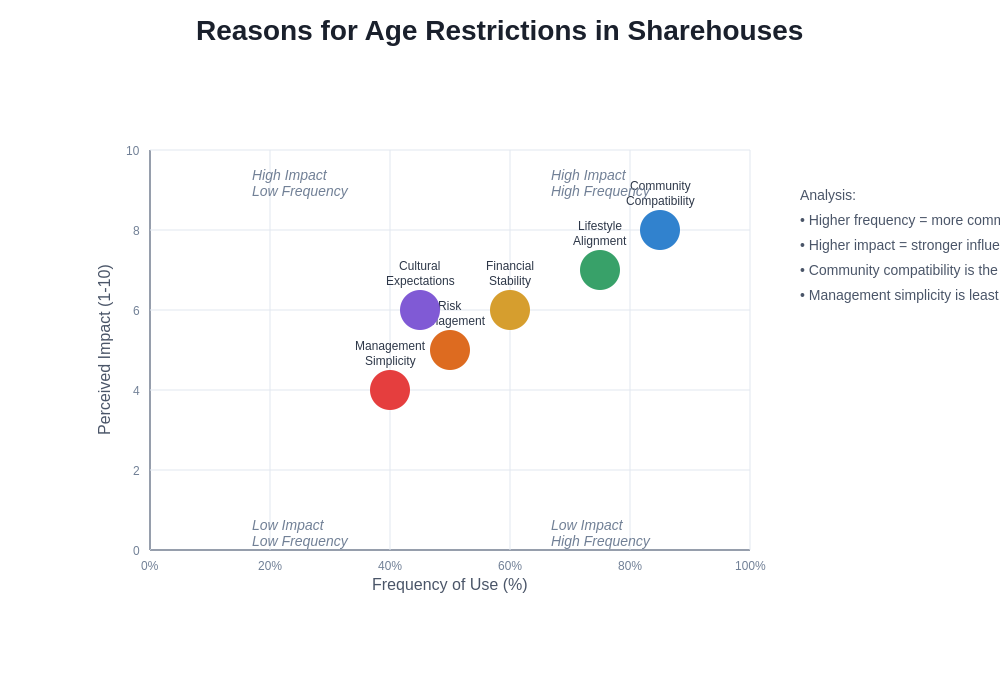
Operators frequently cite lifestyle compatibility concerns when implementing age restrictions, arguing that significant age gaps create different expectations regarding quiet hours, social interaction levels, common area usage patterns, and household responsibility approaches. These differences can manifest in conflicts over music volume, guest policies, cleaning standards, and participation in community activities that younger residents may consider essential while older residents view as disruptive.
The assumption that age predicts lifestyle compatibility, however, fails to account for individual personality differences, cultural backgrounds, and life circumstances that often prove more significant than chronological age in determining community harmony. Many successful sharehouses demonstrate that well-designed house rules, clear communication channels, and respectful conflict resolution processes can accommodate diverse age ranges more effectively than exclusionary policies.
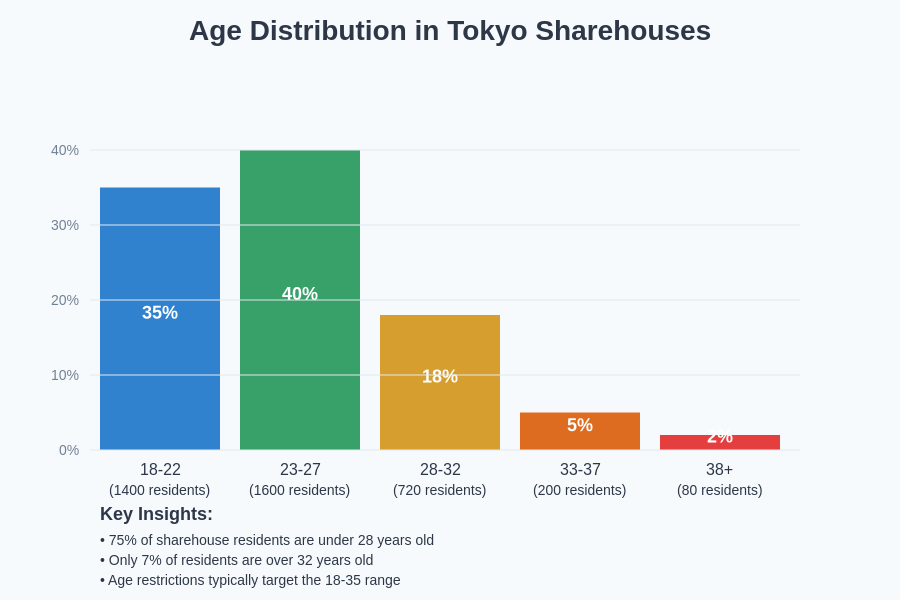
Career stage considerations also influence age restriction policies, with some operators believing that mixing students, early-career professionals, and established workers creates uncomfortable income disparities and different commitment levels that destabilize community dynamics. How career changes affect sharehouse eligibility explores how professional circumstances intersect with age-based assumptions in housing selection processes.
Financial and Risk Management Factors
Age restrictions often correlate with perceived financial stability and risk assessment, with younger residents sometimes viewed as higher default risks due to variable income, career uncertainty, and limited credit history, while older applicants may face assumptions about income stability versus short-term housing commitment that influence acceptance decisions.
Property managers frequently implement age-based screening as simplified risk assessment tools, assuming that certain age groups present predictable financial profiles that reduce due diligence requirements and improve collection rates. These assumptions can disadvantage both younger applicants with strong financial backgrounds and older applicants with temporary income situations or non-traditional employment arrangements.
Insurance considerations sometimes drive age restrictions, particularly in properties where coverage terms or premium calculations factor in tenant demographics, though such practices remain relatively uncommon in Japan’s sharehouse market. More commonly, age restrictions reflect management preferences for tenant profiles that align with their operational capabilities and experience levels rather than actual insurance requirements.
The relationship between age and housing commitment presents another financial consideration, with some operators believing that younger residents provide longer tenancy periods due to limited alternative options, while older residents may view sharehouses as temporary solutions pending more suitable arrangements. Why rent increases happen in Japanese sharehouses examines how tenant turnover costs influence management policies and pricing strategies.
Cultural and Generational Expectations
Japanese cultural concepts of age-appropriate behavior and social hierarchy significantly influence sharehouse age restriction policies, reflecting broader societal expectations about intergenerational relationships and appropriate living arrangements for different life stages. These cultural factors create additional complexity for international residents unfamiliar with local social norms and expectations.
The concept of “reading the air” (kuuki o yomu) becomes particularly relevant in age-diverse communities, where different generations may have varying comfort levels with direct communication, conflict resolution approaches, and social boundary establishment. How cultural differences affect friendship building explores how cultural competency intersects with age-related social dynamics in international sharehouse communities.
Generational differences in technology usage, communication preferences, and privacy expectations can create friction in shared living environments, with younger residents often comfortable with social media sharing and constant connectivity while older residents may prefer more traditional privacy boundaries and communication methods. These differences can influence house rule development and community management approaches.
Work-life balance expectations also vary significantly across age groups, with different generations bringing distinct attitudes toward career prioritization, leisure activities, and household responsibility sharing that can create tension without careful community management. How age differences impact sharehouse compatibility provides detailed analysis of specific compatibility challenges and successful management strategies.
Practical Management Considerations
Sharehouse operators often cite practical management challenges when justifying age restrictions, including communication complexity, conflict resolution difficulty, and administrative burden associated with managing diverse resident demographics with different needs, expectations, and communication styles.
Staff training and cultural competency requirements increase significantly in age-diverse communities, where property managers must navigate generational differences alongside cultural and linguistic barriers that complicate routine operations and emergency situations. Many smaller operators lack resources for comprehensive staff development programs that would enable effective management of diverse communities.
Maintenance and facility usage patterns differ across age groups, with younger residents potentially causing more wear and tear through social activities while older residents may have higher expectations for maintenance quality and response times. These operational differences can influence cost structures and service level commitments that affect overall property profitability and resident satisfaction.
Emergency response procedures and health considerations may vary by age demographics, with older residents potentially requiring different safety protocols or medical emergency preparedness that smaller operators feel unprepared to accommodate. How emergency medical situations are handled examines the practical challenges of medical emergency management in diverse residential communities.
Marketing and community building strategies often target specific age demographics more effectively than broad appeals, leading operators to specialize in particular resident profiles rather than attempting to serve diverse populations. This specialization can improve operational efficiency and resident satisfaction within targeted demographics while limiting housing options for excluded groups.
Market Segmentation and Business Models
The sharehouse industry has evolved toward market segmentation strategies that treat age restrictions as product differentiation tools rather than discriminatory practices, with different operators specializing in specific demographic segments to optimize their service offerings and community management approaches.
Student-focused sharehouses often implement upper age limits to maintain academic atmosphere and social compatibility among residents with similar educational commitments and lifestyle patterns. Student sharehouses near top Tokyo universities explores how educational institution proximity influences age restriction policies and community characteristics.
Professional sharehouses targeting working adults may establish minimum age requirements to ensure income stability and career focus while maintaining maximum limits to preserve energy levels and social compatibility. These restrictions often correlate with premium pricing and enhanced amenities that appeal to specific professional demographics.
Luxury sharehouses frequently implement age restrictions as exclusivity measures that enhance brand positioning and resident prestige, using demographic selectivity to justify premium pricing and create perceived value through community curation. Luxury sharehouses worth the extra cost in Tokyo examines how demographic targeting influences pricing strategies and service offerings.
The emergence of age-specific sharehouse concepts, including senior-focused communities and young professional networks, represents market evolution toward specialized services rather than broad demographic inclusion. These specialized approaches can provide superior experiences for target demographics while reducing overall housing accessibility.
Impact on Housing Accessibility
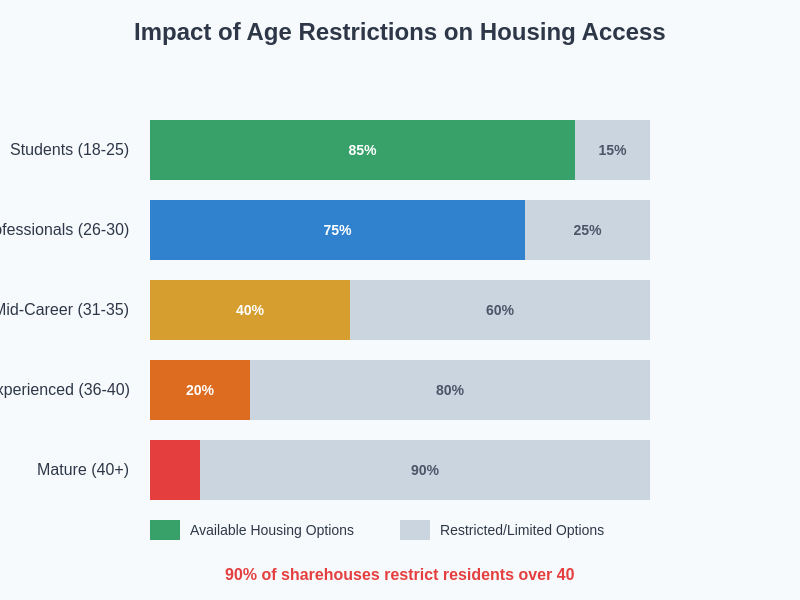
Age restrictions significantly limit housing options for affected demographics, particularly international residents over thirty who face reduced sharehouse availability despite possessing stable incomes, excellent references, and strong community integration capabilities. This limitation becomes particularly problematic in Tokyo’s expensive housing market where sharehouses represent essential affordable options.
Career changers, returning students, and international professionals pursuing advanced degrees often find themselves excluded from substantial portions of the sharehouse market due to age restrictions that fail to account for their specific circumstances and housing needs. How career changes affect sharehouse eligibility provides strategies for overcoming these barriers.
The concentration of age restrictions in affordable housing segments disproportionately affects lower-income older residents who may rely on shared living arrangements for financial sustainability. This impact creates equity concerns about housing accessibility and social inclusion in Tokyo’s already challenging residential market.
Alternative housing options for affected demographics often involve significantly higher costs, reduced flexibility, or less favorable locations that may impact career opportunities and social integration. Cheaper sharehouse options in Tokyo suburbs explores geographic strategies for finding age-inclusive affordable housing options.
Legal Alternatives and Workarounds
Some property managers implement age preferences rather than strict restrictions, using informal screening processes that consider age alongside other factors while maintaining legal flexibility and avoiding explicit discrimination claims. These approaches can provide operational benefits while reducing legal exposure and maintaining some demographic diversity.
Portfolio diversification strategies allow larger operators to maintain age-restricted properties while offering age-inclusive options, providing market choice while serving diverse demographics through different property types and management approaches. This strategy can satisfy both discriminatory and inclusive market demands.
Partnership arrangements with employers, educational institutions, and community organizations sometimes provide alternative pathways for age-restricted applicants through institutional recommendations and guarantee arrangements that address operator concerns about financial stability and community compatibility.
Co-housing and intentional community models represent emerging alternatives that explicitly welcome age diversity while implementing community governance structures designed to manage intergenerational dynamics effectively. How to handle roommate conflicts without moving out provides conflict resolution strategies applicable to age-diverse communities.
Future Trends and Industry Evolution
The sharehouse industry shows signs of evolving toward more inclusive policies as operators gain experience managing diverse communities and recognize the business benefits of expanded market reach. Successful age-inclusive properties demonstrate that effective management practices can overcome perceived compatibility challenges while accessing broader tenant pools.
Legal pressure and social advocacy continue pushing toward greater housing accessibility, with discrimination awareness campaigns and policy advocacy potentially influencing future regulations and industry standards. These efforts may gradually reduce age restriction prevalence through legal requirements and social pressure.
Technology solutions for community management and conflict resolution may reduce operational barriers to age diversity by providing tools for effective communication, transparent rule enforcement, and proactive problem solving that address traditional management concerns about diverse communities.
Market competition and demographic changes may eventually force greater inclusivity as operators compete for tenants in saturated markets and adapt to aging populations with evolving housing needs. The long-term sustainability of age-restrictive business models depends on continued demographic and economic conditions that may change over time.
Understanding age restrictions in sharehouses requires recognizing the complex interplay of legal frameworks, cultural expectations, business considerations, and practical management challenges that influence these policies. While some restrictions serve legitimate operational purposes, many reflect assumptions and biases that limit housing accessibility without providing corresponding community benefits. As the industry matures and social awareness increases, the future likely holds more inclusive approaches that balance community harmony with broader housing accessibility goals.
Disclaimer
This article is for informational purposes only and does not constitute legal advice regarding housing discrimination or rental rights in Japan. Age restriction policies vary significantly between properties and operators, and legal protections may differ based on specific circumstances. Readers should consult with legal professionals for guidance on their individual situations and rights under Japanese housing law.