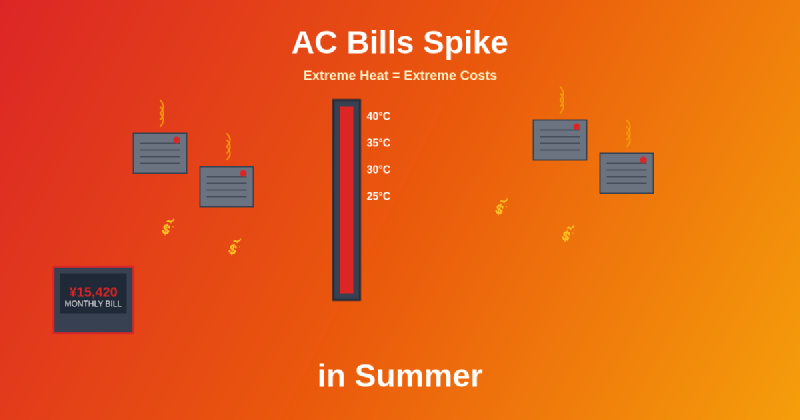
Summer air conditioning bills in Japanese sharehouses experience dramatic cost increases that can triple or quadruple monthly utility expenses compared to spring and autumn periods, driven by the combination of extreme heat and humidity, intensive cooling demands, inefficient older HVAC systems, and simultaneous usage patterns among multiple residents that create cumulative energy consumption far exceeding typical residential planning assumptions. These seasonal cost spikes create significant financial strain for residents unprepared for the substantial increase in shared utility expenses during Japan’s notoriously hot and humid summer months.
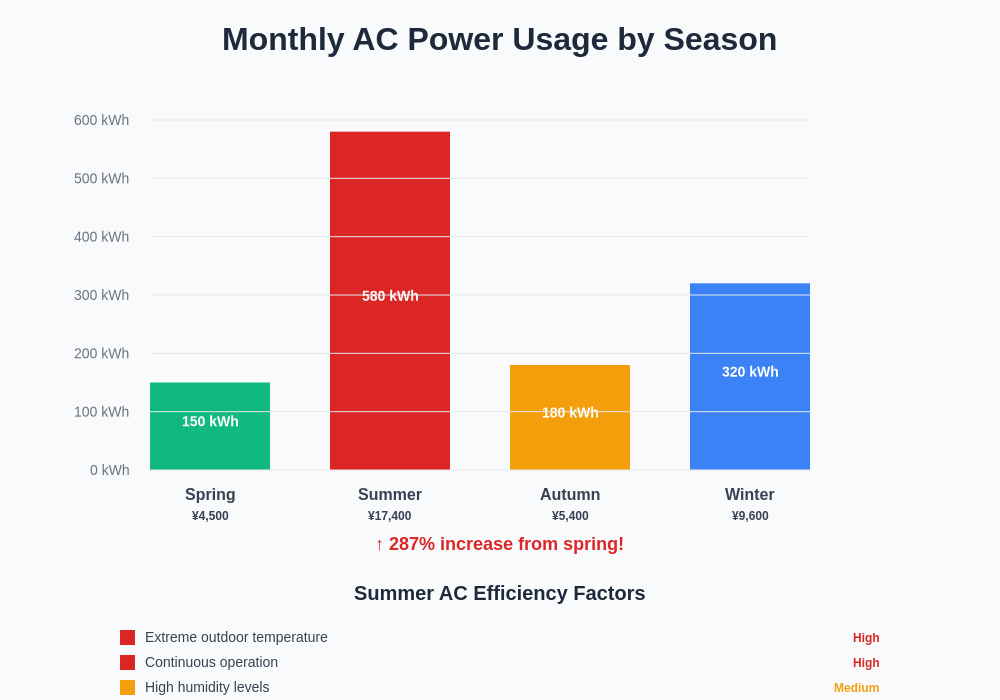
The intensity of Japanese summers, characterized by temperatures regularly exceeding thirty-five degrees Celsius combined with humidity levels that make perceived temperatures feel even higher, forces air conditioning systems to operate continuously at maximum capacity throughout day and night periods to maintain habitable indoor conditions. Understanding the technical and behavioral factors contributing to these cost increases enables better planning and cost management strategies that can help residents navigate summer utility expenses while maintaining reasonable comfort levels in shared living environments.
Japan’s Extreme Summer Climate Conditions
Temperature extremes during Japanese summers regularly reach thirty-five to forty degrees Celsius in urban areas, with heat island effects in dense cities like Tokyo creating even higher localized temperatures that force air conditioning systems to work harder and consume more energy to achieve desired cooling temperatures in residential buildings.
Humidity levels exceeding eighty percent combine with high temperatures to create heat index values that make outdoor and indoor conditions without air conditioning dangerous to human health, necessitating continuous cooling operation that consumes substantially more energy than moderate climate cooling requirements experienced in spring and autumn months.
Extended heat periods lasting weeks or months without significant temperature relief mean air conditioning systems cannot benefit from natural cooling cycles that would normally allow equipment to rest and reduce energy consumption, instead requiring continuous operation that maximizes electrical usage throughout extended summer periods.
Urban heat island effects concentrated in dense residential areas create localized temperature increases of three to five degrees above surrounding areas, forcing air conditioning systems in sharehouses to overcome both natural outdoor temperatures and additional heat generated by surrounding buildings, pavement, and urban infrastructure.
Peak Demand and Electrical Grid Strain
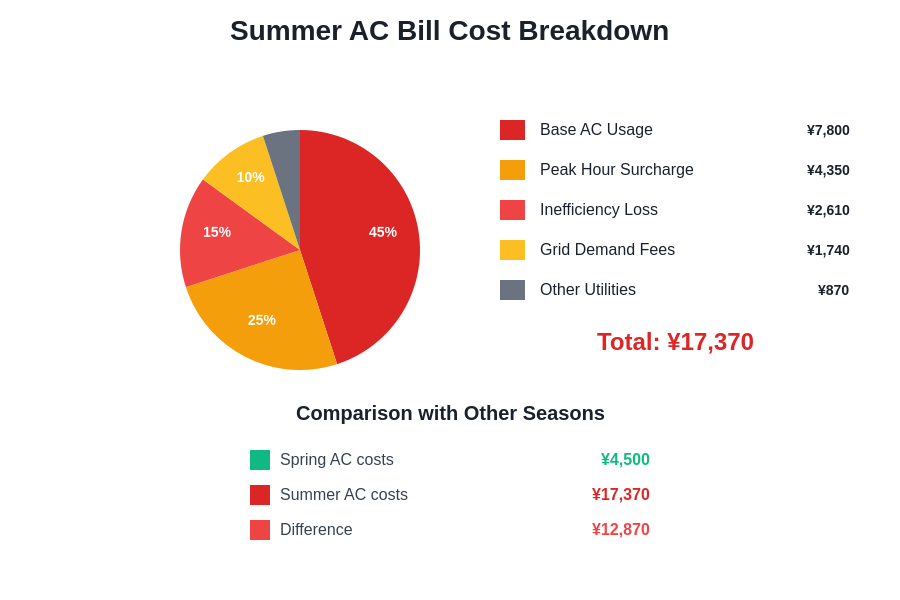
Peak demand periods during summer months coincide with maximum air conditioning usage when all residents attempt to cool their spaces simultaneously during the hottest parts of the day, creating cumulative electrical loads that exceed building electrical capacity and trigger higher utility rates during peak consumption periods.
Grid demand surcharges applied by utility companies during peak summer periods can increase electricity costs by twenty to fifty percent above standard rates, with time-of-use pricing structures that penalize exactly the periods when air conditioning usage becomes most necessary for maintaining habitable indoor conditions.
Electrical system strain from simultaneous air conditioning operation can cause voltage drops, circuit breaker trips, and equipment inefficiencies that further increase energy consumption while potentially damaging air conditioning equipment and requiring expensive repairs that compound overall cooling costs for sharehouses.
Utility company load management programs may implement rolling blackouts or demand reduction requirements during extreme heat events, forcing residents to choose between comfort and electrical system stability while potentially creating health risks for vulnerable residents who depend on air conditioning for safety during dangerous heat conditions.
Air Conditioning System Inefficiencies
Older HVAC equipment commonly installed in sharehouses may have efficiency ratings significantly below modern standards, consuming thirty to fifty percent more electricity than newer high-efficiency units while providing equivalent cooling capacity, creating ongoing cost penalties that compound throughout intensive summer usage periods.
Improper system sizing for actual cooling loads results in equipment that works harder than necessary or cycles inefficiently, with undersized units running continuously without achieving desired temperatures while oversized units short-cycle and fail to remove humidity effectively, both scenarios increasing energy consumption unnecessarily.
Poor maintenance including dirty filters, clogged coils, and refrigerant leaks can reduce system efficiency by twenty to forty percent while increasing operating costs and potentially causing equipment failures during peak demand periods when replacement parts and service technicians become expensive and difficult to obtain.
Why summer heat makes small rooms unbearable creates additional challenges when inadequate insulation and poor thermal design force air conditioning systems to work harder to maintain comfortable temperatures in poorly designed spaces.
Building Insulation and Thermal Performance Issues
Inadequate insulation in older Japanese buildings allows significant heat transfer through walls, roofs, and windows that forces air conditioning systems to continuously combat heat gain from outdoor temperatures, dramatically increasing energy consumption required to maintain indoor comfort levels during summer heat periods.
Single-pane windows and poor window sealing create thermal bridges that allow hot outdoor air to enter conditioned spaces while allowing cooled air to escape, requiring air conditioning systems to work harder to compensate for continuous heat transfer that undermines cooling effectiveness and efficiency.
Roof heat absorption in multi-story sharehouses creates heat loads that affect upper floor cooling requirements, with dark roofing materials and inadequate attic insulation allowing solar heat gain to increase indoor temperatures that air conditioning systems must overcome using additional energy consumption.
Air leakage through gaps around doors, windows, and building penetrations allows hot humid outdoor air to infiltrate conditioned spaces, forcing air conditioning systems to continuously cool incoming hot air while also removing humidity, both energy-intensive processes that significantly increase operational costs.
Multiple Resident Usage Patterns
Simultaneous operation of multiple air conditioning units during peak periods creates cumulative electrical loads that can overwhelm building electrical systems while triggering peak demand charges that increase costs for all residents sharing utility expenses in proportion to total building consumption during high-demand periods.
Individual room cooling preferences varying significantly among residents can result in some residents setting extremely low temperatures while others attempt moderate cooling, creating conflicts over shared utility costs when individual usage patterns dramatically affect total building energy consumption and shared expense allocation.
Continuous operation preferences among residents who leave air conditioning running while absent from sharehouses create unnecessary energy consumption that increases shared utility costs for all residents, particularly problematic when individual usage monitoring and cost allocation systems cannot accurately distribute costs based on actual individual consumption patterns.
Guest and visitor cooling needs during summer months increase total building cooling loads when additional people require climate-controlled space, creating incremental energy consumption that may not be anticipated in utility budget planning and cost-sharing arrangements among regular residents.
Appliance and Heat Source Interactions
Internal heat generation from electronic devices, cooking equipment, lighting, and residents’ body heat creates additional cooling loads that air conditioning systems must overcome, with multiple residents using heat-generating appliances simultaneously during summer months creating cumulative heat loads that substantially increase cooling requirements.
Kitchen cooking activities generate significant heat and humidity that overwhelm localized exhaust systems and spread throughout sharehouses, forcing air conditioning systems to work harder to remove both heat and moisture while maintaining comfortable conditions in living spaces affected by cooking activities.
Electronics and computing equipment operated by multiple residents generate continuous heat loads that compound during summer months when ambient temperatures already stress cooling systems, creating cumulative heat generation that requires additional air conditioning capacity and energy consumption to maintain comfortable indoor environments.
Lighting heat generation becomes more significant during summer months when incandescent and halogen lighting adds to overall heat loads that air conditioning systems must remove, though LED lighting adoption can reduce these heat contributions while providing equivalent illumination with less thermal impact.
Humidity Control and Dehumidification Costs
Humidity removal requires substantial energy consumption beyond temperature cooling, with air conditioning systems consuming additional electricity to condense moisture from indoor air during humid summer conditions that can double or triple energy requirements compared to dry heat cooling in arid climates.
Dehumidification effectiveness decreases when residents frequently open doors and windows, allowing humid outdoor air to enter and requiring air conditioning systems to repeatedly remove moisture that continuously enters conditioned spaces, creating ongoing energy consumption that undermines cooling efficiency and cost management efforts.
Latent heat removal from humidity requires energy-intensive refrigeration processes that consume electricity beyond sensible cooling requirements, with Japanese summer humidity levels creating substantial latent cooling loads that significantly increase operational costs compared to dry climate cooling requirements.
Ventilation requirements for air quality maintenance conflict with humidity control goals when outdoor air contains high moisture content that must be removed through energy-intensive dehumidification processes, creating ongoing energy consumption requirements that persist throughout humid summer periods.
Time-of-Use Pricing and Peak Rate Structures
Peak rate periods typically coincide with maximum air conditioning demand when utility companies charge higher electricity rates during afternoon and early evening hours that correspond exactly with the times when cooling needs reach maximum levels, creating cost multiplication effects that compound high usage with premium pricing.
Time-of-use pricing structures can increase electricity costs by fifty to one hundred percent during peak demand periods compared to off-peak rates, with air conditioning usage patterns naturally concentrated during the highest-cost periods when cooling becomes most necessary for maintaining habitable conditions.
Demand charges based on maximum monthly electrical usage often trigger during peak air conditioning periods when multiple units operate simultaneously, creating additional utility costs that persist throughout entire billing periods based on brief periods of maximum demand during extreme heat events.
Living costs in Tokyo sharehouses explained must account for dramatic seasonal utility cost variations that can overwhelm resident budgets unprepared for summer air conditioning expenses that substantially exceed spring and autumn utility costs.
Equipment Sizing and Capacity Issues
Undersized air conditioning systems struggle to maintain desired temperatures during extreme heat, running continuously at maximum capacity while consuming maximum energy without achieving comfortable indoor conditions, creating situations where residents pay premium energy costs while receiving inadequate cooling performance.
Oversized equipment short-cycles inefficiently without removing humidity effectively, creating uncomfortable conditions that prompt residents to set lower temperatures to compensate for high humidity, inadvertently increasing energy consumption while failing to address underlying humidity control problems that require properly sized equipment.
Zoning imbalances in multi-room sharehouses create situations where some areas remain uncomfortably warm while others become overcooled, forcing residents to adjust overall system settings that may increase energy consumption while failing to achieve comfortable conditions throughout all living spaces.
Capacity limitations during peak demand periods may prevent air conditioning systems from achieving desired cooling levels even with maximum energy consumption, creating situations where utility costs spike without corresponding comfort improvements that justify the increased electrical usage and associated costs.
Behavioral Factors and Usage Patterns
Temperature setting preferences significantly impact energy consumption, with each degree of additional cooling potentially increasing energy usage by five to ten percent, making resident temperature setting behaviors major factors in determining overall cooling costs and shared utility expenses.
Door and window opening behaviors undermine air conditioning effectiveness when residents allow conditioned air to escape and hot outdoor air to enter, forcing cooling systems to work harder while wasting energy that increases costs without providing cooling benefits that justify the additional energy consumption.
Scheduling conflicts over air conditioning usage create inefficiencies when residents operate individual units during different periods rather than coordinating cooling strategies that could optimize overall building energy consumption and reduce peak demand charges that affect shared utility costs.
Room occupancy patterns affect cooling efficiency when residents attempt to cool spaces while absent or fail to adjust temperatures based on actual occupancy needs, creating energy waste that increases shared utility costs without providing corresponding comfort benefits for residents actually present in cooled spaces.
Cost Allocation and Billing Challenges
Individual usage monitoring becomes complicated in sharehouses with multiple air conditioning units where individual consumption cannot be accurately measured, leading to cost allocation disputes when residents have different usage patterns but share utility expenses based on equal distribution rather than actual individual consumption.
Shared utility billing systems may not reflect individual resident consumption patterns accurately, creating fairness issues when some residents use air conditioning extensively while others attempt conservation measures but still pay equal shares of dramatically increased summer utility costs.
Budget planning difficulties arise when residents underestimate summer cooling costs and face unexpected financial strain from utility bills that can double or triple compared to moderate weather periods, creating payment difficulties and conflicts over shared utility expense management and cost allocation among residents.
Utility deposit requirements may increase during summer months when utility companies anticipate higher consumption and require larger security deposits to cover potential unpaid bills, creating additional upfront costs that compound the financial impact of seasonal utility cost increases.
Energy Efficiency and Conservation Strategies
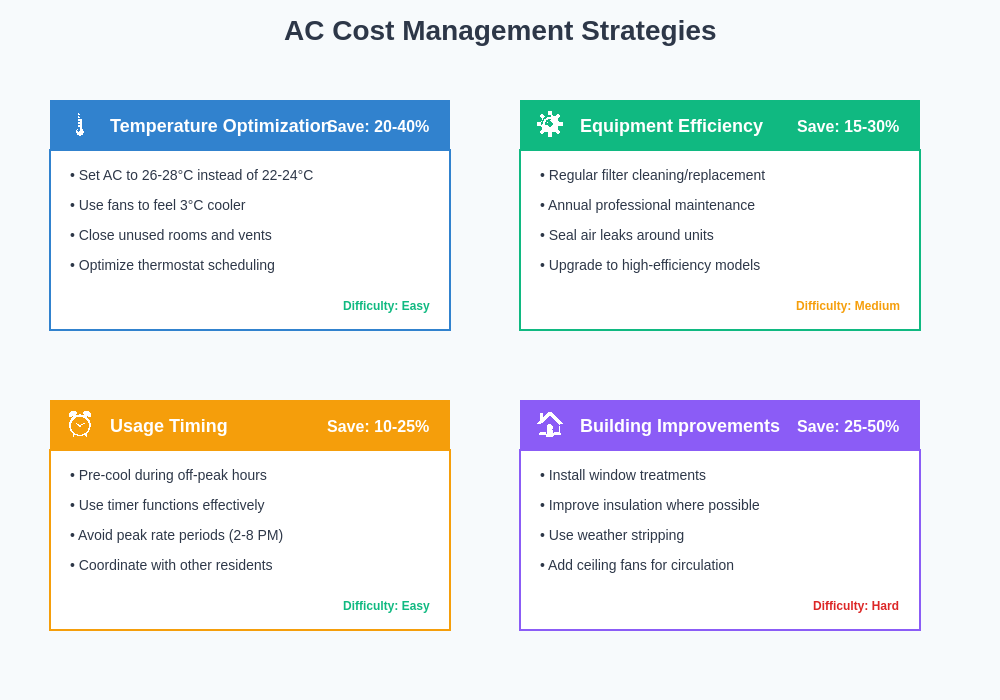
Temperature setting optimization through slightly higher thermostat settings can provide substantial energy savings, with temperatures set to twenty-six to twenty-eight degrees Celsius rather than twenty-two to twenty-four degrees reducing energy consumption by twenty to forty percent while maintaining reasonable comfort levels during extreme heat periods.
Programmable thermostat usage enables automatic temperature adjustments based on occupancy patterns and time-of-day rate structures, allowing residents to reduce cooling during vacant periods and minimize energy consumption during peak rate periods while maintaining comfort when spaces are actually occupied.
Fan usage supplementation allows residents to feel comfortable at higher air conditioning temperatures through improved air circulation that enhances evaporative cooling from skin, enabling energy savings through reduced air conditioning loads while maintaining perceived comfort through enhanced air movement.
Japanese sharehouse rules every foreigner should know often include energy conservation guidelines and air conditioning usage policies that help manage summer utility costs through community cooperation and shared conservation efforts.
Building Improvements and Long-term Solutions
Insulation upgrades including wall insulation, roof insulation, and window improvements can reduce cooling loads by thirty to fifty percent, providing long-term energy savings that justify investment costs through reduced summer utility expenses while improving year-round comfort and energy efficiency.
Window treatments including reflective films, thermal curtains, and external shading can reduce solar heat gain that forces air conditioning systems to work harder, providing cost-effective improvements that reduce cooling loads and energy consumption during peak summer periods.
Equipment upgrades to high-efficiency air conditioning systems can reduce energy consumption by twenty to forty percent compared to older equipment while providing improved comfort and reliability, though upgrade costs require evaluation against potential energy savings and improved comfort benefits.
Building envelope improvements including air sealing, vapor barriers, and thermal bridging reduction can enhance overall thermal performance that reduces cooling loads and energy consumption while improving comfort and reducing utility costs throughout summer periods and other seasons.
Alternative Cooling Strategies and Supplemental Solutions
Natural ventilation strategies during cooler evening and early morning periods can reduce air conditioning requirements by allowing outdoor air cooling when outdoor temperatures drop below indoor temperatures, providing energy-free cooling that reduces overall air conditioning loads and energy consumption.
Evaporative cooling supplements including personal cooling devices, wet towel cooling, and strategic water usage can enhance comfort at higher air conditioning settings, enabling energy conservation through reduced air conditioning loads while maintaining reasonable comfort through alternative cooling approaches.
Heat avoidance strategies including cooking schedule adjustments, appliance usage timing, and activity modification during peak heat periods can reduce internal heat generation that forces air conditioning systems to work harder, providing behavioral approaches to cooling load reduction and energy conservation.
Shared space cooling coordination enables residents to gather in common areas with centralized air conditioning rather than operating multiple individual units simultaneously, providing community cooling solutions that reduce overall energy consumption while maintaining comfort through shared resource utilization.
The dramatic increase in summer air conditioning costs reflects the intersection of extreme climate conditions, building performance limitations, equipment inefficiencies, and usage patterns that create cumulative energy consumption far exceeding normal residential utility planning assumptions. How to budget realistically for sharehouse living must account for seasonal utility cost variations that can substantially impact monthly living expenses during summer cooling periods.
Disclaimer
This article provides general information about air conditioning costs and energy consumption patterns for educational purposes and does not constitute energy or financial advice. Utility costs, equipment performance, and energy consumption vary significantly based on building characteristics, equipment condition, usage patterns, and local utility rate structures. Residents experiencing high utility costs should consult with utility companies, energy efficiency professionals, and property managers about specific cost reduction strategies and equipment improvements appropriate to their situation and budget.