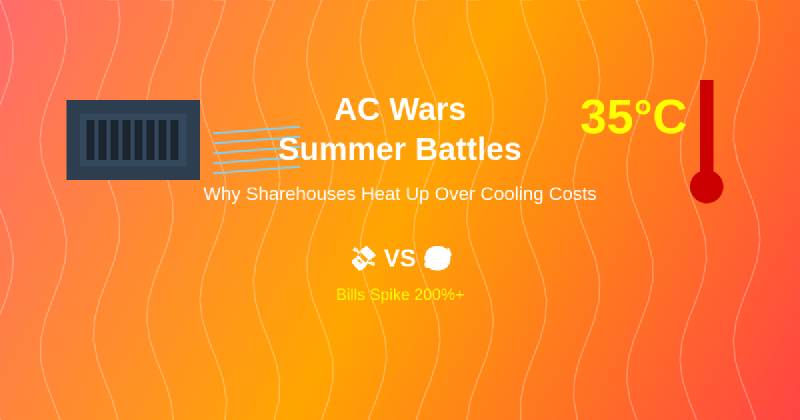
Every summer in Tokyo sharehouses, a predictable yet intense battle emerges that tests the patience, diplomacy, and financial flexibility of residents living in shared accommodations. The air conditioning wars represent far more than simple disagreements over temperature settings; they expose fundamental differences in cultural backgrounds, economic priorities, health considerations, and personal comfort standards that can transform harmonious living situations into sources of daily tension and conflict.
The phenomenon intensifies each year as Tokyo’s summers become increasingly brutal, with temperatures regularly exceeding 35°C and humidity levels that make even moderate heat feel oppressive. Understanding how air conditioning bills spike in summer becomes crucial for residents who find themselves caught between physical comfort and financial responsibility, creating complex negotiations that can strain even the strongest household relationships.
The Cultural Temperature Divide
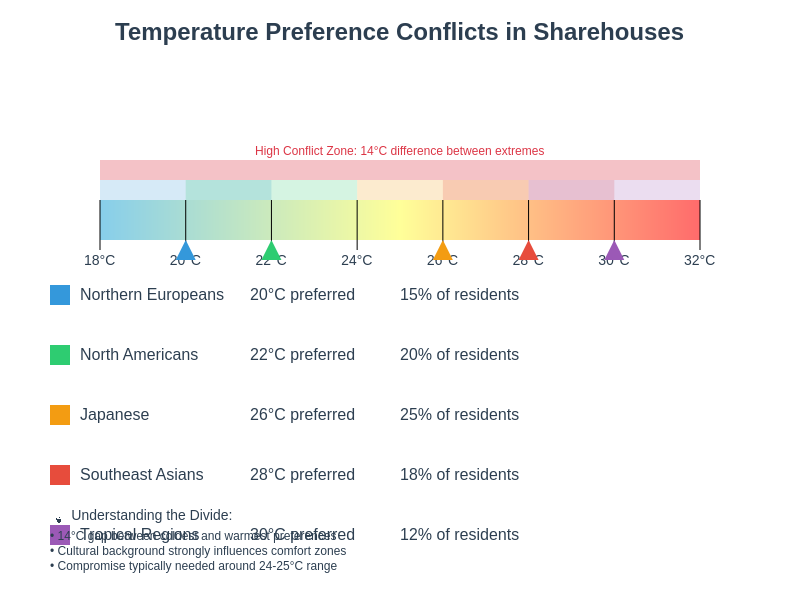
International sharehouses in Tokyo become cultural battlegrounds where different national approaches to climate control create immediate and ongoing conflicts that reflect deeper cultural values about comfort, energy consumption, and collective decision-making. Residents from tropical climates often display remarkable tolerance for heat and humidity, viewing excessive air conditioning use as wasteful and environmentally irresponsible, while those from temperate regions may consider cool indoor temperatures essential for basic functionality and mental health.
The Japanese cultural emphasis on enduring discomfort, known as “gaman,” adds another layer of complexity to these discussions, as local residents may demonstrate stoic acceptance of uncomfortable conditions that international residents find unbearable. Living with Japanese roommates in Tokyo sharehouses reveals how these cultural differences manifest in daily decision-making processes that affect everyone’s comfort and financial obligations.
Northern European residents often arrive in Tokyo with expectations of consistently cool indoor environments that match their home country standards, creating immediate conflict with cost-conscious housemates who view such temperature preferences as luxury demands rather than basic necessities. The adjustment period can create lasting tensions that influence house dynamics throughout the entire summer season and beyond.
The Economics of Cool Air
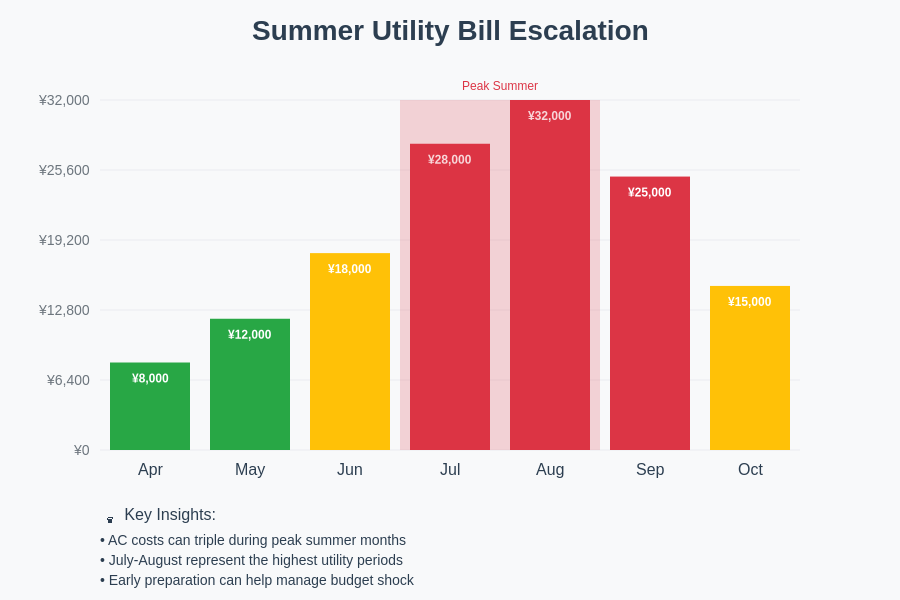
Financial considerations dominate air conditioning discussions in Tokyo sharehouses, where summer utility bills can double or triple monthly housing costs, forcing residents to choose between physical comfort and budget constraints that may affect other aspects of their Japanese living experience. Understanding utility bills in Japanese sharehouses provides essential context for understanding how cooling costs impact overall living expenses and household financial planning.
Student residents operating on extremely tight budgets often find themselves advocating for minimal air conditioning use, regardless of comfort levels, while working professionals with higher incomes may prioritize comfort over cost considerations. These economic disparities create natural divisions within houses that can lead to resentment, passive-aggressive behavior, and ongoing negotiations that consume significant time and emotional energy throughout the summer months.
The bill-splitting methodologies employed by different sharehouses can exacerbate these tensions, with flat-rate systems potentially penalizing conservative users while usage-based systems create monitoring and measurement challenges that introduce new sources of conflict. Some houses attempt to implement complex tracking systems that account for individual room usage, time-based consumption patterns, and common area cooling costs, but these solutions often create more problems than they solve.
Health Considerations and Physical Tolerance
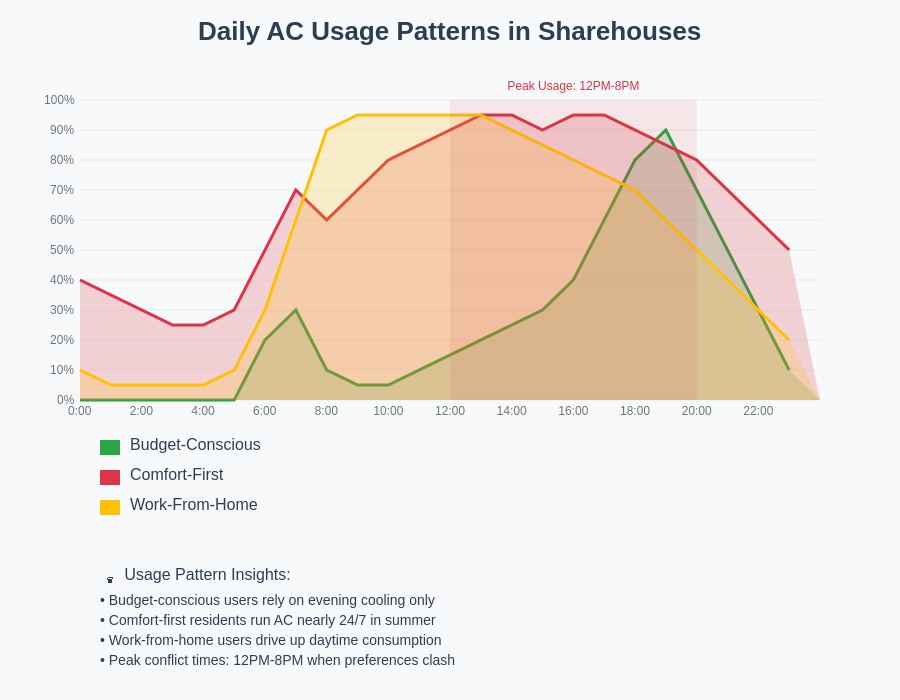
The intersection of health concerns and air conditioning preferences creates additional complexity in sharehouse negotiations, as residents with medical conditions, medication requirements, or specific physical needs may require consistent temperature control that conflicts with cost-saving measures or cultural preferences of other household members. Heat sensitivity conditions, sleep disorders exacerbated by high temperatures, and work-from-home requirements can transform air conditioning access from a luxury preference into a medical necessity.
How summer heat makes small rooms unbearable explores how Tokyo’s dense living conditions and limited ventilation systems amplify heat-related comfort issues that go beyond simple temperature preferences. Residents in smaller rooms or those facing direct sunlight may experience significantly different comfort levels than those in larger, well-ventilated spaces, creating inequality within the same household that complicates collective decision-making.
Age-related temperature tolerance differences also contribute to ongoing conflicts, as older residents may require different cooling levels than younger housemates, while physical activity levels, work schedules, and daily routines affect individual heat generation and comfort requirements. These biological and lifestyle factors make one-size-fits-all cooling solutions practically impossible and emotionally fraught.
Technology and Control Systems
Modern sharehouse air conditioning systems often feature complex control mechanisms, programmable timers, and individual room units that create new opportunities for conflict while attempting to provide personalized comfort solutions. Smart thermostats reduce utility conflicts examines how technological solutions can either alleviate or complicate temperature-related disputes depending on implementation and resident cooperation.
Remote control access, thermostat programming authority, and override capabilities become sources of power struggles within households, as residents attempt to enforce their preferred settings while preventing others from making unauthorized adjustments. Some houses resort to hiding remotes, installing lockboxes, or implementing complex rotation systems that often create more animosity than the original temperature disagreements.
The proliferation of individual room units creates new dynamics where residents can control their personal spaces but struggle with common area temperature settings that affect shared spaces like kitchens, living rooms, and bathrooms. The energy costs associated with multiple units running simultaneously can shock residents who assumed individual control would reduce overall expenses rather than multiply them.
Communication Breakdown and Escalation Patterns
Air conditioning disputes often follow predictable escalation patterns that begin with passive-aggressive behavior, progress through direct confrontations, and sometimes result in house meetings, management intervention, or resident departures that could have been avoided through better communication and compromise strategies. How to handle roommate conflicts without moving out provides frameworks for addressing these issues before they reach crisis levels.
Initial conflicts typically manifest as unauthorized thermostat adjustments, competing schedules for air conditioning operation, and increasingly tense discussions about utility bill responsibilities. Residents may begin hoarding remote controls, secretly adjusting settings when others are absent, or engaging in temperature warfare that creates hostile living environments for everyone involved.
The anonymous nature of thermostat adjustments makes it difficult to identify responsible parties, leading to group accusations, surveillance behaviors, and conspiracy theories that poison household relationships far beyond the original comfort disagreements. Some residents resort to leaving passive-aggressive notes, implementing unofficial cooling schedules, or creating elaborate monitoring systems to track usage and identify violators.
Regional and Building-Specific Factors
Tokyo’s diverse neighborhood microclimates create varying air conditioning demands across different areas, with residents in heat island zones experiencing significantly different cooling needs than those in areas with better air circulation or green space proximity. Best Tokyo neighborhoods for sharehouse living considers how location affects summer comfort and cooling costs that influence resident satisfaction and conflict levels.
Building age, insulation quality, and architectural design significantly impact cooling efficiency and costs, with older buildings requiring more energy to achieve comfortable temperatures while newer constructions may provide better climate control at lower expense. Residents in poorly insulated sharehouses often face impossible choices between financial burden and physical comfort that create ongoing tension throughout summer months.
Window orientation, floor level, and proximity to heat sources like commercial kitchens or industrial facilities affect individual room cooling requirements, making equitable utility cost distribution challenging and potentially unfair to residents facing unique environmental conditions beyond their control.
Compromise Strategies and Solutions
Successful resolution of air conditioning conflicts requires creative problem-solving approaches that acknowledge the legitimate concerns of all parties while establishing fair and sustainable cooling policies that can survive changing resident populations and varying economic conditions. Time-based cooling schedules that provide guaranteed relief periods for heat-sensitive residents while limiting overall usage can address both comfort and cost concerns when properly implemented and consistently enforced.
Room-specific solutions such as individual fans, cooling mats, dehumidifiers, and improved ventilation can reduce reliance on central air conditioning systems while providing personalized comfort options that don’t affect other residents’ experiences or financial obligations. How to budget realistically for sharehouse living includes strategies for managing variable seasonal expenses like summer cooling costs.
Temperature compromise strategies that establish house-wide comfort ranges rather than specific settings can provide flexibility while preventing extreme adjustments that satisfy no one while maximizing costs. Some successful sharehouses implement majority-rule systems for common areas while maintaining individual room autonomy for personal spaces.
Long-term Impact on House Dynamics
Air conditioning conflicts leave lasting impacts on sharehouse relationships and community cohesion that extend far beyond summer months, affecting trust levels, communication patterns, and overall living satisfaction in ways that influence resident retention and house reputation. Unresolved cooling disputes often create permanent divisions within households that affect future decision-making processes and social interactions.
Making friends through Tokyo sharehouse communities becomes significantly more challenging when residents harbor resentment over previous summer conflicts that involved accusations, financial disputes, and comfort compromises that left some parties feeling victimized or ignored.
The memory of difficult summers can influence lease renewal decisions, recommendation patterns, and overall satisfaction with sharehouse living that affects both individual residents and property management companies seeking to maintain stable, harmonious communities.
Prevention and Early Intervention
Proactive approaches to air conditioning management can prevent many conflicts through clear policy establishment, expectation setting, and communication frameworks that address potential issues before they become sources of ongoing tension and resentment. House orientations for new residents should include detailed discussions of summer cooling policies, cost-sharing arrangements, and conflict resolution procedures that provide clarity and reduce surprises.
Japanese sharehouse rules every foreigner should know emphasizes the importance of understanding utility management expectations and collective decision-making processes that affect major household expenses like summer air conditioning costs.
Regular house meetings during spring months can establish summer cooling budgets, usage guidelines, and compromise strategies before heat-related stress affects rational decision-making and diplomatic communication capabilities among residents.
Management Company Perspectives
Professional sharehouse operators develop sophisticated approaches to air conditioning management that balance resident satisfaction with utility cost control, recognizing that cooling conflicts can destroy house harmony and increase turnover rates that affect profitability and operational efficiency. Living costs in Tokyo sharehouses explained includes insights into how management companies structure utility costs and cooling policies.
Some operators implement flat-rate utility systems that remove individual cost concerns but may encourage overconsumption, while others use complex metering systems that can create monitoring overhead and administrative burdens that offset potential savings. The most successful approaches often involve hybrid systems that provide both individual accountability and collective cost management.
Property managers report that air conditioning conflicts rank among the most common and difficult resident disputes, requiring diplomatic intervention, policy enforcement, and sometimes resident relocation to resolve situations that threaten house stability and community relationships.
The annual cycle of air conditioning wars in Tokyo sharehouses reflects deeper challenges inherent in international shared living arrangements where cultural differences, economic disparities, and personal needs intersect in ways that test the limits of compromise and cooperation. Understanding these dynamics helps residents prepare for summer challenges while developing realistic expectations and effective communication strategies that can preserve both comfort and community harmony throughout the challenging hot months that define Tokyo’s summer experience.
Disclaimer
This article is for informational purposes only and does not constitute professional advice regarding utility management or conflict resolution in shared living situations. Individual experiences with air conditioning disputes may vary based on specific house policies, resident demographics, and local conditions. Readers should consult their sharehouse management or relevant professionals for specific guidance regarding utility costs and cooling system usage in their particular living situations.