The intricate web of Japanese apology customs creates one of the most bewildering cultural challenges that international residents encounter when living in Tokyo sharehouses. What appears to be simple politeness on the surface reveals itself as a complex social framework that governs everything from minor daily interactions to significant household conflicts, leaving many foreigners struggling to understand when, how, and why apologies are expected, offered, and received in shared living environments.
The frequency and variety of apologies that permeate Japanese sharehouse life can overwhelm newcomers who find themselves constantly questioning whether they should be apologizing, accepting apologies, or interpreting the deeper meanings behind seemingly routine expressions of regret. This cultural navigation becomes particularly challenging when living in close quarters with Japanese roommates who seamlessly integrate these customs into their daily interactions while international residents struggle to decode the unspoken rules that govern social harmony within shared spaces.
The Foundation of Japanese Apology Culture
Japanese apology culture extends far beyond simple expressions of regret or acknowledgment of wrongdoing, functioning instead as a sophisticated social lubricant that maintains group harmony, shows respect for others, and demonstrates awareness of one’s position within social hierarchies. In sharehouse environments, this cultural foundation creates a constant undercurrent of apologetic interactions that can mystify international residents who interpret these expressions through their own cultural lenses.
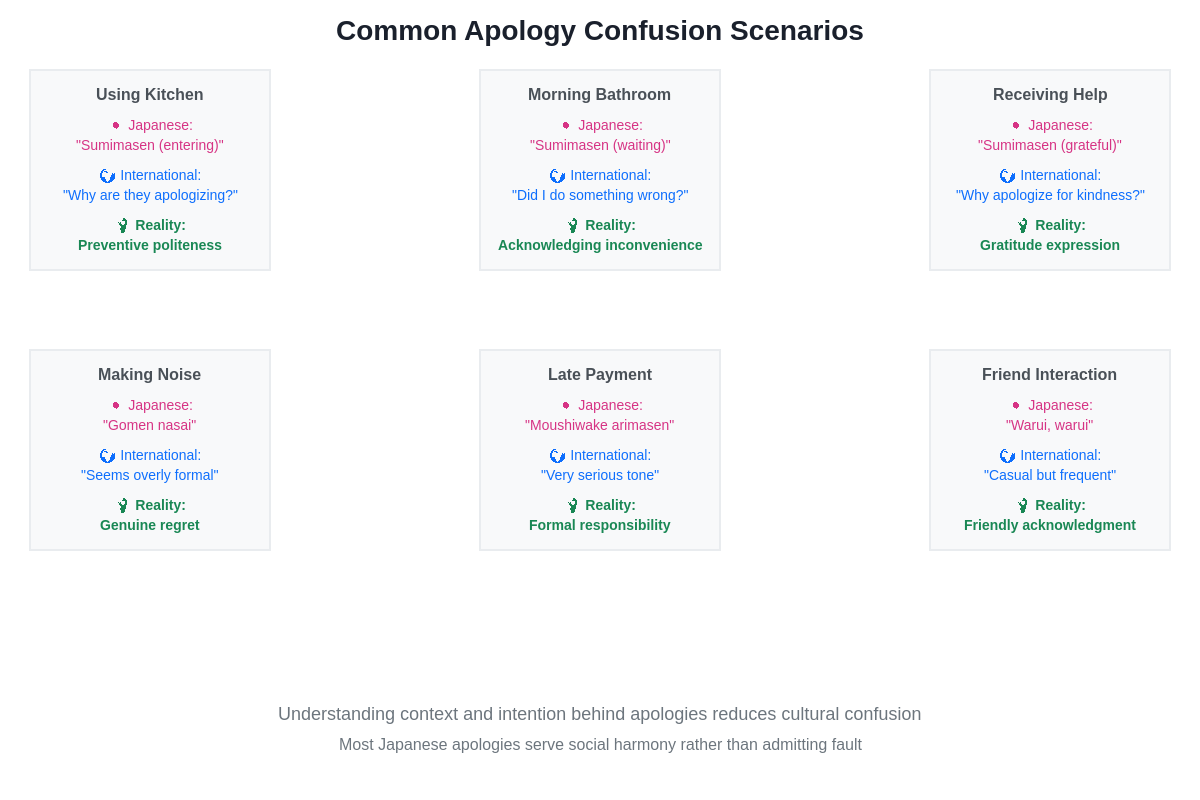
The concept of “sumimasen” alone encompasses dozens of different meanings and applications that range from genuine apologies to polite attention-getting devices, expressions of gratitude, acknowledgments of inconvenience, and demonstrations of social awareness. Living with Japanese roommates in Tokyo sharehouses becomes significantly more complex when these subtle communication patterns influence every aspect of daily interaction from kitchen usage to bathroom scheduling.
Understanding that apologies in Japanese culture often serve preventative rather than remedial purposes helps explain why residents might apologize before potential inconveniences occur, during normal activities that might affect others, and even when accepting help or kindness from housemates. This forward-thinking approach to social friction prevention contrasts sharply with Western apology customs that typically respond to problems after they have occurred.
The hierarchical aspects of Japanese society influence apology patterns within sharehouses, where age, length of residency, professional status, and cultural background create invisible social rankings that determine appropriate apologetic responses in various situations. International residents often find themselves unknowingly violating these hierarchical expectations, leading to confusion and potential social friction within their living communities.

Navigating Daily Apology Scenarios
The mundane activities of sharehouse life become minefields of apologetic complexity for international residents who must learn to navigate kitchen interactions, bathroom usage, common area activities, and noise considerations while managing the constant stream of apologies that accompany these routine tasks. Morning bathroom queues alone can generate dozens of apologetic exchanges as residents acknowledge inconvenience, express gratitude, and demonstrate consideration for others’ schedules.
Kitchen interactions represent particularly challenging scenarios where international residents must balance cooking needs with apologetic acknowledgments of space usage, cooking odors, cleaning responsibilities, and timing conflicts with other residents’ meal preparations. How cooking odors create cultural conflicts becomes even more complex when navigating the apologetic frameworks that surround food preparation and consumption in shared spaces.
The timing and intensity of apologies must align with the perceived level of inconvenience or disruption, requiring international residents to develop sensitivity to situations that might warrant different apologetic responses. Using inappropriate levels of apologetic language can signal either insufficient awareness of others’ comfort or excessive formality that creates social distance within the household community.
Common area usage scenarios demand careful attention to apologetic protocols when using entertainment systems, receiving guests, conducting phone calls, or engaging in activities that might impact other residents’ comfort or access to shared facilities. How social events become obligatory often involves complex apologetic negotiations as residents balance personal preferences with group harmony expectations.
Understanding Apologetic Hierarchies
The social hierarchies within Japanese sharehouses create layered expectations for apologetic behavior that vary based on residents’ relative positions in age, professional status, cultural background, and length of tenancy. International residents often struggle to identify their position within these hierarchies and adjust their apologetic behavior accordingly, leading to social missteps that can affect their integration and acceptance within the household community.
Senior residents, whether by age or tenure, typically receive more frequent and formal apologies while being expected to offer gentler, more paternal apologetic responses when addressing concerns with newer or younger housemates. How age differences impact sharehouse compatibility becomes complicated by these hierarchical apologetic expectations that international residents may not immediately recognize or understand.
Professional status influences apologetic patterns, with residents in higher-status positions or demanding careers often receiving more deferential apologetic treatment while being expected to demonstrate humility and consideration through their own apologetic behavior. The complexity of managing these professional hierarchies while maintaining household harmony requires careful attention to social cues and apologetic appropriateness.
Cultural background creates additional layers of complexity as Japanese residents may adjust their apologetic expectations for international housemates while still maintaining certain standards for social harmony and respect. How cultural differences affect friendship building often hinges on international residents’ ability to participate appropriately in apologetic social frameworks without completely abandoning their own cultural communication styles.
Misinterpreting Apologetic Intentions
International residents frequently misinterpret the intentions behind Japanese apologies, leading to confusion about fault, responsibility, relationship dynamics, and appropriate responses that can create ongoing social friction within sharehouse communities. The automatic nature of many Japanese apologetic expressions can leave international residents questioning whether genuine problems exist or if they should be taking corrective action in response to what appear to be serious apologies.
The reflexive “sumimasen” that accompanies routine activities like passing in hallways, using shared facilities, or making normal household noises often confuses international residents who interpret these expressions as indicators of actual problems or excessive politeness that creates social distance. Understanding the routine, automatic nature of many apologetic expressions helps international residents avoid over-analyzing normal social interactions.
Genuine apologies for actual mistakes or problems can be difficult for international residents to distinguish from routine apologetic expressions, creating confusion about when corrective action, reciprocal apologies, or problem-solving discussions are appropriate. How conflict resolution abilities improve depends heavily on understanding the difference between routine apologetic politeness and genuine expressions of regret or concern.
The emotional weight that international residents attach to apologetic language often exceeds the intended significance in Japanese cultural context, leading to misunderstandings about relationship status, personal fault, and the seriousness of various household situations. Learning to calibrate emotional responses to apologetic language according to Japanese cultural norms helps prevent unnecessary stress and social confusion.
Apologizing Across Cultural Boundaries
International residents must develop strategies for participating in Japanese apologetic customs while maintaining their own cultural authenticity and avoiding the social exhaustion that can result from constant apologetic hypervigilance. The balance between cultural adaptation and personal comfort requires careful consideration of which apologetic customs to adopt fully and which to approach with modified participation.
Learning basic apologetic vocabulary and appropriate usage contexts enables international residents to participate in routine apologetic exchanges without necessarily adopting the full complexity of Japanese apologetic culture. How language barriers complicate legal documents extends to social documents like apologetic customs that govern household harmony and interpersonal relationships.
The development of cultural empathy allows international residents to appreciate the social functions of Japanese apologetic customs without necessarily feeling compelled to match the frequency or intensity of their Japanese housemates’ apologetic behavior. Understanding the underlying social goals of apologetic culture helps international residents contribute to household harmony in culturally appropriate ways.
Reciprocal cultural education often emerges as international residents share their own apologetic and conflict resolution customs with Japanese housemates, creating opportunities for mutual understanding and hybrid approaches to household social management. How cultural sensitivity develops through daily interaction benefits both international and Japanese residents when apologetic customs become topics for cultural exchange rather than sources of confusion.
Managing Apologetic Overload
The sheer volume of apologetic interactions in Japanese sharehouses can create mental fatigue for international residents who must constantly process, interpret, and respond appropriately to apologetic language while managing their own daily activities and responsibilities. This apologetic overload can lead to withdrawal from social interactions or inappropriate responses that affect household harmony.
Developing selective attention strategies helps international residents focus on apologetic interactions that require genuine attention while allowing routine apologetic politeness to flow naturally without demanding cognitive analysis or emotional response. How stress management techniques become necessary often includes managing the mental load of cultural navigation in addition to normal household responsibilities.
Setting personal boundaries around apologetic participation allows international residents to maintain cultural sensitivity while protecting their own emotional and social energy for genuine interpersonal connections and problem-solving activities. The balance between cultural adaptation and personal sustainability requires ongoing attention and adjustment as residents become more familiar with household dynamics.
Creating personal strategies for apologetic overwhelm might include designated times for cultural processing, discussions with other international residents about apologetic navigation, or conversations with understanding Japanese housemates about cultural differences and accommodation possibilities. How patience levels get tested daily often centers around managing cultural confusion while maintaining positive relationships with housemates.
The Role of Context in Apologetic Meaning
Context plays a crucial role in determining the meaning, appropriate response, and social significance of apologetic expressions in Japanese sharehouse environments. Time of day, recent household events, seasonal considerations, and individual resident personalities all influence the interpretation and appropriate handling of apologetic interactions.
Morning apologies often carry different weight and expectations than evening apologies, with morning interactions typically focusing on day-starting courtesy while evening apologies might address day-ending responsibilities or preparation for others’ rest. Why morning bathroom queues are inevitable in sharehouses creates specific contextual frameworks for apologetic interactions that international residents must learn to navigate.
Recent household tensions or positive events influence the interpretation of apologetic language, with residents adjusting their apologetic behavior in response to community mood, recent conflicts, or celebrations that affect household dynamics. Understanding these contextual influences helps international residents respond appropriately to apologetic expressions and contribute positively to household atmosphere.
Seasonal and cultural events create specific apologetic contexts as households navigate holidays, academic schedules, work pressures, and weather-related challenges that influence social interactions and apologetic expectations. How cultural festivals affect house activities often involves specific apologetic protocols for managing noise, space usage, and cultural accommodation during special periods.
Building Apologetic Cultural Intelligence
Developing cultural intelligence around Japanese apologetic customs enables international residents to participate more effectively in household social systems while reducing personal stress and improving relationships with housemates. This intelligence involves both intellectual understanding of apologetic functions and practical skills for navigating apologetic interactions.
Observation and pattern recognition help international residents identify recurring apologetic scenarios, appropriate responses, and the social outcomes of different apologetic strategies within their specific household contexts. Each sharehouse develops its own apologetic microculture based on resident personalities, cultural backgrounds, and established social patterns.
Practice in low-stakes situations allows international residents to experiment with different apologetic approaches while building confidence and cultural sensitivity without risking significant social consequences. How empathy grows through cultural exposure often begins with apologetic interactions that require residents to consider others’ perspectives and social comfort.
Seeking guidance from understanding Japanese housemates or other experienced international residents provides valuable insights into household-specific apologetic expectations and strategies for cultural navigation. How friendship expectations differ across cultures often includes discussions about apologetic customs and their role in building and maintaining positive relationships.
Long-term Adaptation and Integration
Long-term success in Japanese sharehouse environments often correlates with international residents’ ability to develop comfortable, authentic approaches to apologetic customs that respect Japanese cultural values while maintaining personal cultural identity. This adaptation process typically involves gradual integration of apologetic behaviors that feel natural and sustainable rather than forced cultural mimicry.
The evolution of apologetic comfort usually progresses through phases of confusion, hypervigilance, selective adoption, and eventual integration where international residents develop personalized approaches to apologetic participation that work within their household contexts. How adaptability becomes essential survival skill often centers around finding sustainable approaches to cultural differences like apologetic customs.
Successful integration often involves international residents becoming cultural bridges who can help other newcomers navigate apologetic customs while also helping Japanese housemates understand international perspectives on apologies and conflict resolution. This bidirectional cultural facilitation benefits entire household communities and improves social harmony.
The development of apologetic cultural fluency ultimately enables international residents to focus their attention on deeper aspects of Japanese culture and household relationships rather than remaining perpetually confused by surface-level social interactions. How cultural competency develops faster in sharehouses often depends on resolving foundational cultural confusions like apologetic customs that can impede deeper cultural learning and relationship building.
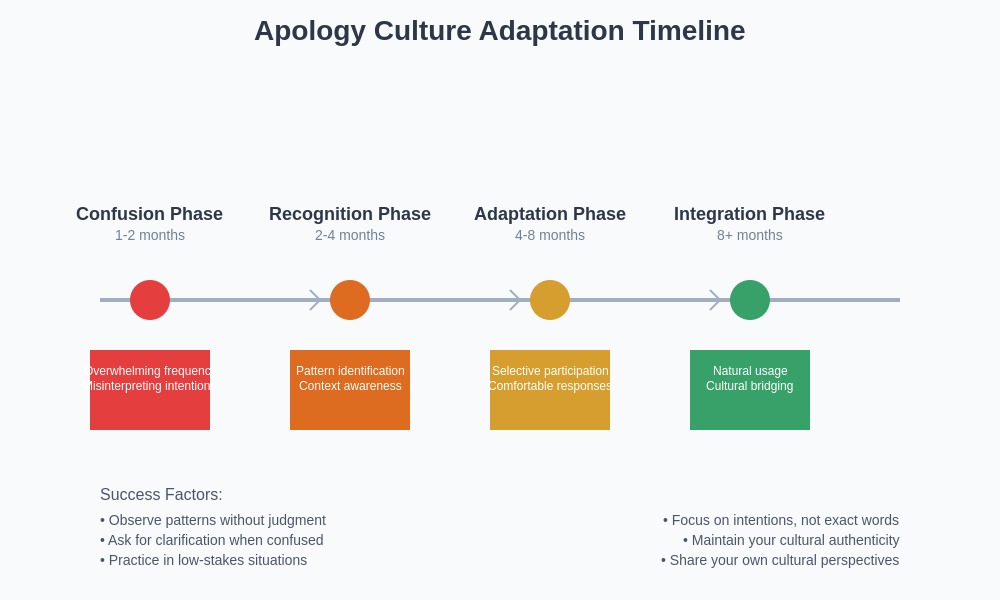
The adaptation process follows predictable phases that most international residents experience, with timeline variations depending on individual cultural sensitivity, language ability, and willingness to engage with Japanese customs while maintaining personal authenticity.
Understanding Japanese apologetic customs represents just one aspect of the complex cultural navigation required for successful sharehouse living, but mastering this social skill creates a foundation for addressing other cultural challenges and building meaningful cross-cultural relationships that enhance the entire sharehouse experience for all residents.
Disclaimer
This article is for informational purposes only and represents general observations about Japanese apologetic customs in sharehouse contexts. Individual experiences may vary significantly based on specific household dynamics, resident personalities, and regional cultural variations. Readers should approach cultural adaptation with patience and seek guidance from trusted sources within their own living situations. Cultural understanding develops gradually through direct experience and respectful interaction with housemates from different backgrounds.