
Background checks have become a standard practice in Tokyo’s sharehouse industry, with property managers and operators implementing increasingly sophisticated screening processes to identify potentially problematic residents before they move in. Despite these comprehensive vetting procedures, experienced sharehouse residents and managers consistently report that background checks, while valuable, cannot eliminate all potential issues that may arise in shared living environments. Understanding the inherent limitations of these screening processes helps both residents and operators maintain realistic expectations while developing additional strategies for creating safe and harmonious living communities.
The reality of sharehouse living involves complex human dynamics that extend far beyond what traditional background checks can reveal about an individual’s character, behavior patterns, or compatibility with communal living arrangements. While criminal history verification and financial stability assessments provide valuable baseline information, they cannot predict how someone will adapt to cultural differences, handle interpersonal conflicts, or respond to the daily stresses of shared living in a foreign country.
The Scope and Limitations of Standard Background Checks
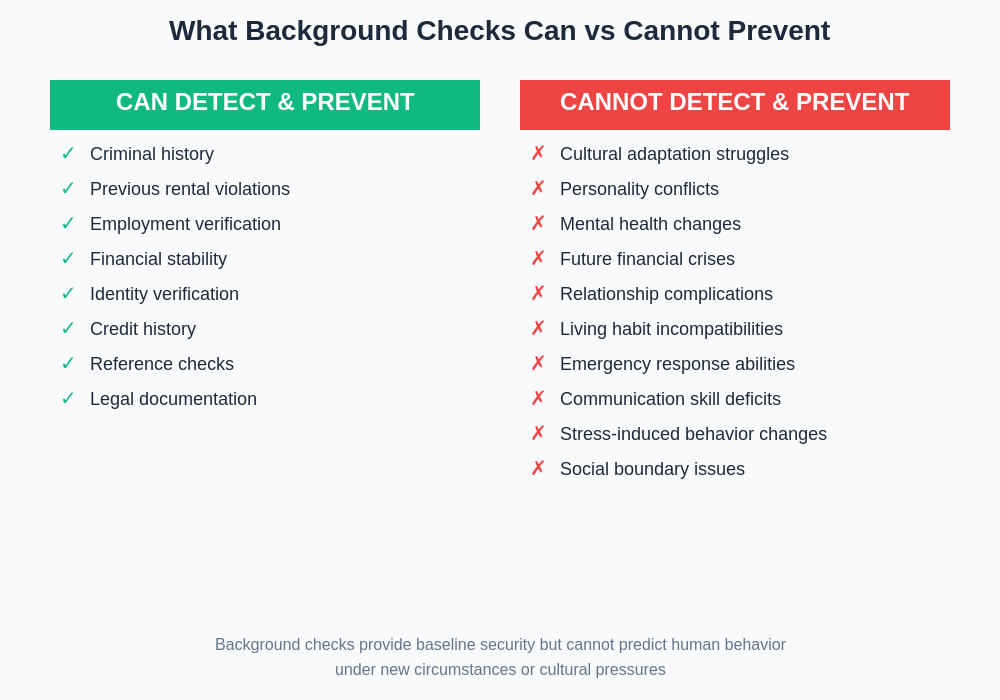
Traditional background screening processes in Japan’s sharehouse market typically focus on verifiable historical data such as criminal records, employment history, previous rental behavior, and financial stability indicators. Why background checks take longer for foreigners highlights the additional complexities involved in screening international residents, where documentation from multiple countries may be required and verification processes can extend for weeks or months.
The fundamental limitation of historical data lies in its inability to predict future behavior under new circumstances, particularly in cross-cultural living environments where individuals may face unprecedented challenges and stresses. A person with an exemplary background in their home country may struggle significantly with cultural adaptation, language barriers, or the psychological pressures of living in a foreign environment, leading to behavioral changes that no background check could have anticipated.
Financial screening processes, while effective at identifying individuals with current income stability, cannot predict future economic circumstances or personal crises that might affect payment reliability or create stress-induced behavioral problems. Employment verification provides a snapshot of current professional standing but cannot account for job market volatility, career transitions, or workplace conflicts that might emerge after move-in.
Cultural Adaptation Challenges Beyond Screening
Cultural adjustment difficulties represent one of the most significant categories of problems that background checks cannot predict or prevent. Individuals who appear perfectly suitable based on documentation may struggle profoundly with Japanese social norms, communication styles, or daily living practices, creating friction within the sharehouse community despite their clean background check results.
Living with Japanese roommates in Tokyo sharehouses explores how even well-intentioned residents can inadvertently create conflicts through cultural misunderstandings that no screening process could have identified. The stress of constant cultural navigation can manifest in various ways, from social withdrawal and depression to frustration-driven conflicts with housemates who may interpret these behaviors as rudeness or inconsideration.
Language barriers create additional complications that extend beyond simple communication difficulties, affecting everything from house meeting participation to emergency situation responses. A resident who appears highly qualified on paper may become isolated or problematic if their language skills prove insufficient for meaningful participation in house community activities or conflict resolution processes.
The psychological impact of cultural immersion varies dramatically between individuals and cannot be assessed through standard screening procedures. Some people thrive in multicultural environments while others experience significant stress and behavioral changes that affect their relationships with housemates and their ability to follow house rules effectively.
Personality Conflicts and Social Dynamics
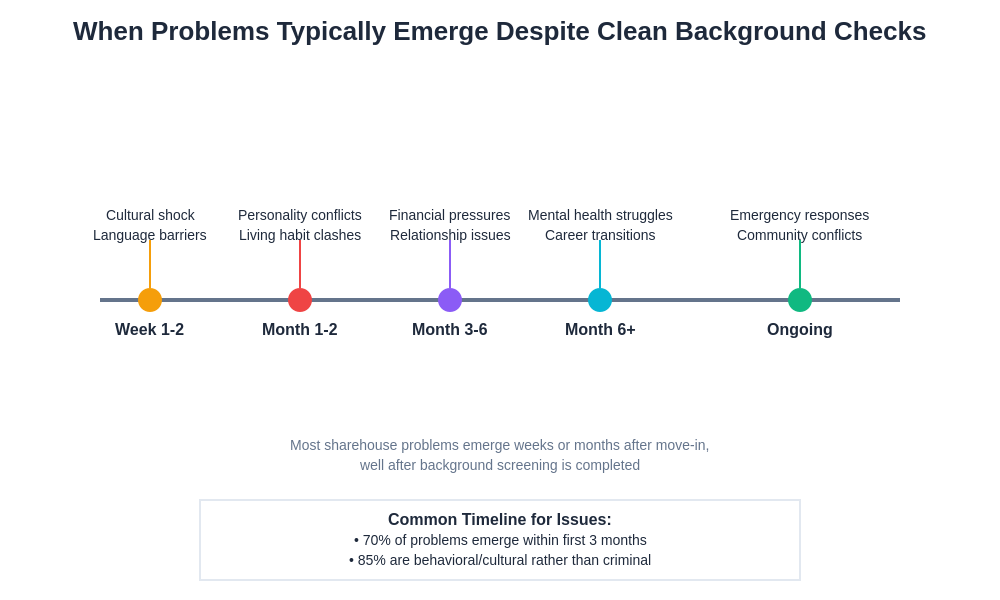
Background checks provide no insight into personality compatibility, social preferences, or interpersonal communication styles that significantly influence sharehouse harmony. How personality conflicts escalate quickly demonstrates how residents with clean backgrounds can become embroiled in serious disputes based purely on incompatible living styles, communication preferences, or social expectations.
Introversion and extroversion differences can create significant tension in sharehouses, particularly when space usage patterns conflict or when residents have different expectations about social interaction levels. These fundamental personality differences cannot be assessed through document review but can dramatically impact daily living experiences and community cohesion.
Conflict resolution skills and emotional maturity levels vary enormously between individuals and cannot be evaluated through standard screening processes. Residents who appear mature and responsible on paper may lack the interpersonal skills necessary for navigating the inevitable disagreements and compromises required in shared living situations.
Social boundary awareness and respect for shared spaces represent crucial factors in sharehouse success that remain invisible during background screening. Some individuals may have never lived in shared environments and genuinely lack understanding of appropriate boundaries regarding noise levels, space usage, or community resource sharing, leading to conflicts despite their good intentions and clean background checks.
Mental Health and Stress-Related Issues
Mental health conditions and psychological stress responses represent significant factors in sharehouse compatibility that remain largely invisible during standard background screening processes. Why mental health crises require professional help addresses how residents may develop or experience exacerbation of mental health issues that can affect their ability to maintain positive relationships with housemates or follow house rules consistently.
The stress of international living, career pressures, academic demands, or personal relationship issues can trigger behavioral changes or mental health episodes in individuals with previously stable psychological profiles. These stress responses may manifest as increased irritability, social withdrawal, neglect of shared responsibilities, or inability to communicate effectively with housemates.
Depression and anxiety conditions may not be disclosed during application processes due to privacy concerns or stigma fears, but can significantly impact a resident’s ability to participate positively in house community activities or maintain their living space appropriately. These conditions may also affect their reliability in meeting financial obligations or following through on shared responsibilities.
Substance abuse issues may develop or worsen under the stress of international living, even in individuals with no prior history of such problems. The isolation, language barriers, and cultural adjustment pressures can contribute to the development of unhealthy coping mechanisms that affect house safety and community dynamics.
Financial Circumstances and Hidden Economic Pressures
While background checks assess current financial stability, they cannot predict future economic challenges or hidden financial pressures that might affect a resident’s ability to meet their obligations or maintain stable behavior patterns. Why emergency expenses are never budgeted illustrates how unexpected costs can create significant stress for residents who appeared financially stable during the screening process.
Currency exchange fluctuations can dramatically impact the actual financial burden for international residents, particularly those whose income originates in their home countries. A resident who appeared financially comfortable during application may find themselves struggling if exchange rates shift unfavorably, creating stress that can manifest in various behavioral changes or interpersonal difficulties.
Family financial emergencies or unexpected support obligations in home countries can suddenly change a resident’s economic circumstances, creating pressure that affects their ability to meet housing costs or participate normally in house community activities. These situations often arise without warning and cannot be predicted through initial financial screening.
Hidden debt obligations or financial commitments that were not disclosed during the application process may create ongoing stress and affect a resident’s long-term stability within the sharehouse. Some individuals may underreport their financial obligations or overestimate their income stability, leading to problems that emerge only after move-in.
Relationship and Personal Life Complications
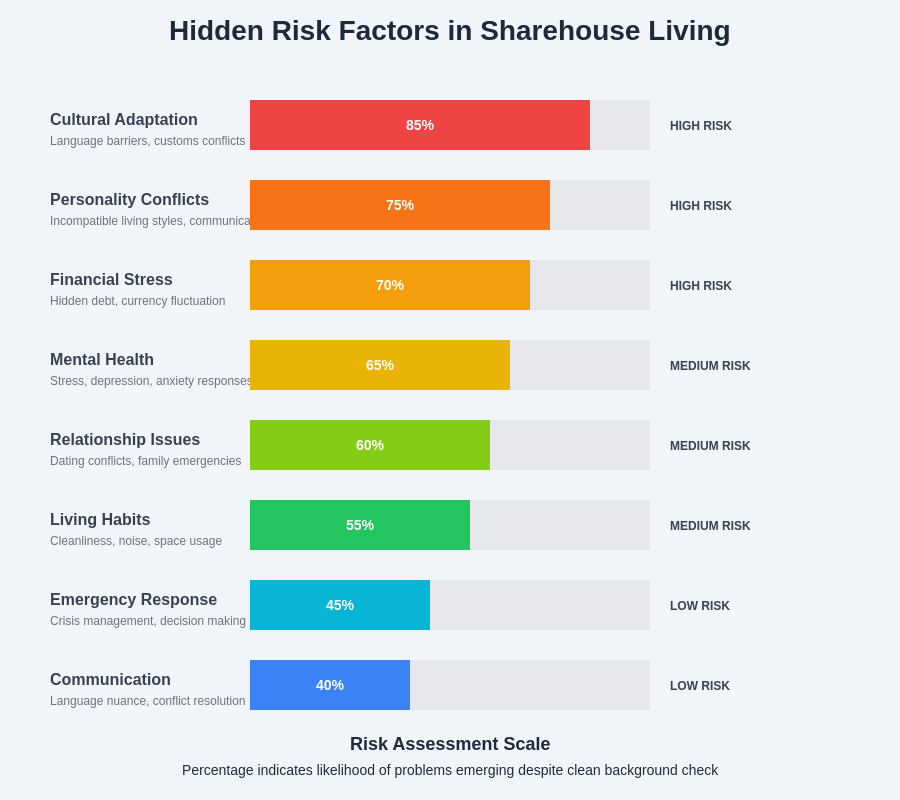
Personal relationship developments and life transitions represent major sources of disruption in sharehouses that cannot be predicted through background screening processes. Why breakups affect entire house dynamics explores how romantic relationships, whether they develop within the house or involve external partners, can create complications that affect all residents regardless of the individuals’ background check results.
Dating behaviors and relationship management styles cannot be assessed through document review but can significantly impact house dynamics when residents bring romantic interests to shared spaces or when relationships develop between housemates. These situations can create tension, favoritism, or uncomfortable social dynamics that affect the entire community.
Family emergencies or personal crises may require residents to temporarily or permanently alter their living situations, potentially abandoning lease obligations or requiring extended absences that affect house community stability. While these situations are understandable, they cannot be predicted during initial screening and can create significant disruptions for remaining residents.
Career transitions, academic program changes, or visa status modifications may necessitate sudden departures or create stress that affects a resident’s ability to participate positively in house community life. These life changes often occur without advance notice and can impact residents who appeared stable and committed during the application process.
Behavioral Adaptation and Habit Formation
Living habits and cleanliness standards cannot be accurately assessed through background checks, yet they represent some of the most common sources of conflict in sharehouse environments. Why some residents never clean their dishes demonstrates how individuals with clean backgrounds may have very different standards or expectations regarding shared space maintenance and personal responsibility.
Sleep schedules and noise sensitivity levels create frequent conflicts in sharehouses, particularly when residents come from different cultural backgrounds with varying expectations about appropriate noise levels and timing. These preferences and sensitivities cannot be evaluated through document review but significantly impact daily living harmony.
Personal hygiene standards and bathroom usage patterns represent invisible factors that can create significant tension in shared living environments. Residents who appear professional and responsible may have personal habits that conflict with community expectations or cultural norms, leading to uncomfortable situations that affect house dynamics.
Technology usage patterns and digital boundaries cannot be assessed during screening but increasingly affect sharehouse living, particularly regarding internet bandwidth usage, streaming service sharing, or appropriate use of shared entertainment systems. These modern living considerations require ongoing negotiation and compromise that extends beyond traditional screening capabilities.
Emergency Responses and Crisis Management
Crisis response abilities and emergency decision-making skills cannot be evaluated through standard background checks but become crucial during the inevitable emergencies that occur in shared living environments. Why emergency evacuation plans are often unclear highlights how residents may panic, make poor decisions, or fail to cooperate effectively during emergency situations despite appearing capable and responsible during normal circumstances.
Medical emergency responses reveal character traits and decision-making abilities that remain invisible during screening processes. Some residents may freeze under pressure, make poor choices that endanger others, or lack the communication skills necessary for effective emergency coordination with both housemates and emergency services.
Natural disaster preparedness and response capabilities vary dramatically between individuals and cannot be assessed through document review. Japan’s earthquake, typhoon, and flooding risks require residents to respond appropriately to emergency warnings and evacuation procedures, abilities that only become apparent during actual emergency situations.
Security incident responses, such as building breaches, suspicious activities, or threats to resident safety, require judgment and cooperation that cannot be predicted through background screening. Some residents may overreact to minor issues while others may underrespond to genuine threats, creating additional complications during already stressful situations.
Communication and Conflict Resolution Limitations
Language proficiency assessments during application processes often focus on basic communication abilities rather than the sophisticated interpersonal skills required for effective conflict resolution and community participation. How language barriers complicate legal documents illustrates how residents may struggle with complex discussions about house rules, financial obligations, or interpersonal disputes despite appearing linguistically competent during initial screening.
Emotional intelligence and empathy levels cannot be evaluated through standard screening procedures but significantly influence a resident’s ability to navigate the cultural sensitivity and interpersonal awareness required for successful sharehouse living. Some individuals may lack the emotional skills necessary for understanding different cultural perspectives or responding appropriately to housemate concerns.
Negotiation and compromise abilities remain invisible during background checks but become essential for resolving the inevitable disagreements about space usage, resource sharing, and community standards that arise in shared living environments. Residents who appear reasonable during application processes may prove inflexible or unwilling to adapt their preferences for community harmony.
Building Comprehensive Safety Strategies Beyond Background Checks
Effective sharehouse management requires multiple layers of resident screening, ongoing community building, clear communication channels, and proactive conflict resolution systems that extend far beyond initial background verification. How to handle roommate conflicts without moving out provides strategies for addressing issues that arise despite thorough screening procedures.
Regular house meetings, clear rule enforcement, and ongoing resident feedback systems help identify and address problems before they escalate into serious conflicts or safety issues. These proactive management approaches recognize that background checks provide only baseline security and that ongoing community maintenance requires constant attention and intervention.
Cultural orientation programs, language exchange opportunities, and community integration activities can help prevent many of the adaptation-related problems that background checks cannot predict. By providing structured support for cultural adjustment and interpersonal relationship building, sharehouse operators can address some of the root causes of conflicts that emerge despite clean background screening results.
Emergency response training, clear crisis communication protocols, and established procedures for handling various types of problems help residents develop the skills and knowledge necessary for managing situations that extend beyond what background checks can predict or prevent. These preparedness measures acknowledge the limitations of screening and focus on building community resilience for handling unexpected challenges.
Understanding the limitations of background checks enables both residents and operators to maintain realistic expectations while implementing comprehensive strategies for creating safe, harmonious sharehouse communities. While screening processes provide valuable baseline security, they represent just one component of effective risk management in shared living environments where human complexity, cultural diversity, and life’s unpredictability require ongoing attention, flexibility, and community commitment to maintain positive living experiences for all residents.
Disclaimer
This article is for informational purposes only and does not constitute professional advice on property management or tenant screening. Background check procedures and legal requirements vary by property operator and local regulations. The examples discussed represent general patterns observed in sharehouse environments and may not apply to all situations. Readers should consult with legal professionals and property management experts when developing screening procedures or addressing resident-related issues.