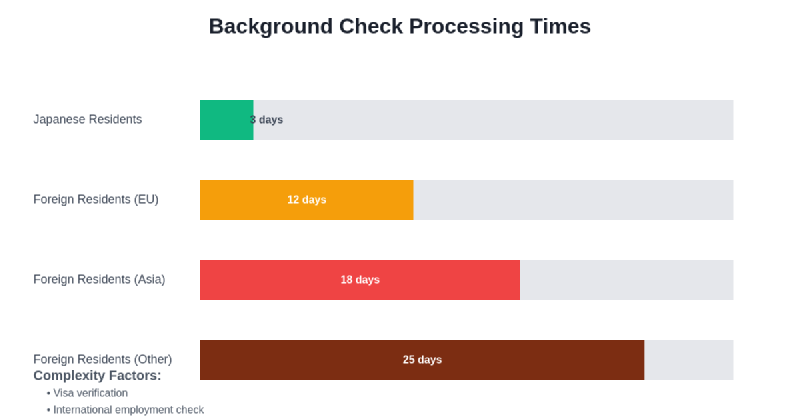
Background verification processes for international applicants in Japanese sharehouses involve significantly more complex and time-consuming procedures compared to domestic residents, reflecting the challenges of verifying information across different legal systems, languages, and documentation standards that property managers must navigate to ensure accurate tenant screening. These extended timelines create additional stress and uncertainty for foreign residents seeking housing while highlighting the systemic barriers that international communities face in Japan’s rental market.
The complexity of international background checks stems from fundamental differences in information accessibility, verification protocols, and legal frameworks between countries that require specialized knowledge, additional resources, and extended processing periods to complete thorough tenant screening. Understanding these challenges helps international applicants prepare more effectively for the application process while setting realistic expectations for approval timelines.
Document Authentication and Translation Requirements
International documents require multiple layers of verification including translation by certified translators, authentication by relevant authorities, and sometimes apostille certification or embassy validation that adds weeks or months to the standard application timeline. What documents you need for Tokyo sharehouse applications provides context for understanding basic documentation requirements that become more complex for foreign applicants.
Language barriers create additional verification challenges when property managers must rely on translated documents without the ability to independently verify authenticity or accuracy of foreign language materials, leading to more conservative screening approaches that require additional documentation and verification steps.
Legal system variations between countries affect document interpretation when foreign certificates, records, and credentials may not have direct equivalents in Japanese legal or administrative systems, requiring specialized knowledge to evaluate their significance and reliability for tenant screening purposes.
Notarization and certification requirements often involve multiple government agencies, professional translators, and verification services that operate on different timelines and may require international communication to complete the authentication process properly.
Cross-Border Information Verification
International credit history verification requires coordination with foreign financial institutions, credit reporting agencies, and regulatory bodies that may have different privacy laws, reporting standards, and communication protocols that complicate or delay information gathering for tenant screening purposes.
Employment verification across borders involves confirming job details, salary information, and professional standing with foreign employers who may not understand Japanese verification requirements or may be unwilling to provide detailed employment information to overseas property managers.
Educational credential verification requires coordination with foreign universities, professional licensing bodies, and educational authorities that may have limited English or Japanese language capabilities and varying procedures for providing official verification to international requesters.
Criminal background checks from foreign jurisdictions involve complex legal procedures, international law enforcement cooperation, and varying record-keeping standards that may take months to complete and may not provide comprehensive information due to privacy laws and jurisdictional limitations.
Visa Status and Immigration Verification
Immigration status verification requires coordination with Japanese immigration authorities to confirm visa validity, permitted activities, and legal residence status that affects tenant eligibility and long-term housing stability concerns for property managers evaluating application risk.
Visa expiration and renewal uncertainty creates additional screening complexity when property managers must evaluate the likelihood of continued legal residence and the potential impact of immigration status changes on lease obligations and community stability.
Sponsor and guarantor verification for visa holders often involves confirming relationships with Japanese citizens or residents who serve as immigration sponsors, adding another layer of verification that requires additional documentation and communication with multiple parties.
Work permit verification ensures that employment-based visa holders have legal authorization for their stated employment, requiring coordination between immigration authorities, employers, and property managers to confirm compliance with visa conditions.
Financial Verification Challenges
International banking relationships complicate financial verification when foreign bank accounts, credit histories, and financial institutions may not provide information to Japanese property managers or may require specialized procedures for international information requests.
Currency conversion and financial context translation require property managers to evaluate foreign income levels, savings accounts, and financial obligations in terms of Japanese economic standards, often requiring expert assistance to assess financial stability accurately.
Tax record verification from foreign jurisdictions involves understanding different tax systems, documentation standards, and reporting requirements that may not translate directly to Japanese income verification standards used for rental applications.
Investment and asset verification across borders requires coordination with foreign financial institutions, investment firms, and regulatory bodies that may have strict privacy protections and limited international cooperation procedures for rental verification purposes.
Technology and Communication Barriers
Time zone differences create logistical challenges when verification processes require real-time communication between Japanese property managers and foreign institutions, references, or verification services that operate on different business schedules and may have limited availability.
Communication technology limitations affect verification efficiency when international phone calls, email systems, and digital document transmission may face technical barriers, security restrictions, or reliability issues that delay information gathering and confirmation processes.
Language interpretation requirements for verification calls, document review, and reference communications add time and expense to background check processes while potentially introducing communication errors or misunderstandings that require additional clarification rounds.
Digital security and privacy regulations in different countries may restrict information sharing, require specialized secure communication channels, or impose additional verification procedures that extend processing timelines for international background checks.
Legal and Regulatory Compliance
Anti-discrimination laws create compliance requirements that property managers must navigate when conducting extended background checks for foreign applicants, ensuring that longer processing times are based on legitimate verification needs rather than discriminatory practices or bias against international residents.
Privacy protection regulations in applicants’ home countries may limit information availability, require specific consent procedures, or impose restrictions on international information sharing that complicate or prevent comprehensive background verification within reasonable timeframes.
Professional liability concerns motivate property managers to conduct more thorough verification for international applicants when unfamiliarity with foreign systems increases perceived risk and potential for oversight or fraud that could affect property operations and community safety.
Regulatory reporting requirements may impose additional documentation and verification standards for international tenants, particularly those from specific countries or visa categories that require enhanced due diligence under Japanese law or industry regulations.
Impact on Application Success and Timeline
Extended processing periods create competitive disadvantages for international applicants when desirable properties may be secured by domestic applicants with faster approval timelines, forcing foreign residents to accept less favorable housing options or extend their housing search periods significantly.
Application uncertainty during extended verification periods creates stress and planning difficulties for international residents who may need temporary housing, storage solutions, or flexible move-in arrangements while awaiting background check completion and final approval decisions.
Cost implications of extended verification include additional fees for translation services, document authentication, international communication, and extended temporary housing that can significantly increase the total cost of securing sharehouse accommodation for foreign residents.
Multiple application strategies become necessary when single applications may face extended processing periods, requiring international residents to submit multiple applications simultaneously to improve their chances of securing housing within reasonable timeframes.
Strategies for Expediting the Process
Proactive document preparation before beginning housing searches allows international applicants to complete translation, authentication, and certification procedures in advance, reducing delays when specific applications require immediate submission of verified documentation.
Professional verification services specializing in international background checks can streamline verification processes through established relationships with foreign institutions, understanding of cross-border procedures, and expertise in Japanese requirements for international documentation.
Early communication with property managers about verification timelines and requirements enables better planning and may identify alternative verification methods or expedited procedures that can reduce processing delays for international applications.
Alternative verification approaches including guarantor arrangements, increased security deposits, or short-term lease options may provide pathways to housing approval while comprehensive background checks are completed, though such arrangements typically require additional financial commitments.
Industry Trends and Future Improvements
Technology solutions including digital verification platforms, international information sharing agreements, and automated authentication systems may reduce background check timelines for international applicants as the sharehouse industry adopts more efficient verification technologies and procedures.
Standardization efforts within the sharehouse industry could create consistent verification requirements, processing timelines, and documentation standards that reduce uncertainty and improve efficiency for both operators and international applicants seeking housing.
International cooperation agreements between verification services, government agencies, and housing industry organizations may streamline cross-border information sharing and reduce duplication of verification efforts for international residents with established housing histories.
Professional training for property managers in international verification procedures, cultural competency, and efficient cross-border communication could improve processing speed and accuracy while reducing bias and discrimination in the verification process.
The extended background check requirements for international sharehouse applicants reflect legitimate challenges in verifying information across different legal and administrative systems, but also highlight opportunities for industry improvement through technology adoption, professional training, and international cooperation that could create more equitable and efficient housing access for the growing international community in Japan.
Disclaimer
This article provides general information about background check processes and does not constitute legal or professional advice. Verification requirements, processing timelines, and documentation standards vary between property operators, visa types, and individual circumstances. International applicants should verify specific requirements with property managers and consider consulting with housing specialists familiar with their situation. The information provided reflects general practices and may not apply to all sharehouses or verification situations.