The significance of bicycle access in Tokyo sharehouse living extends far beyond simple transportation convenience, fundamentally shaping residents’ daily experiences, financial situations, and social integration within Japan’s unique urban environment. For international residents navigating the complexities of Tokyo’s transportation network while managing tight budgets and cultural adaptation challenges, bicycle accessibility often determines the difference between thriving and merely surviving in shared living arrangements throughout the metropolitan area.
Understanding the critical role that bicycle infrastructure and storage facilities play in sharehouse selection empowers residents to make informed decisions that dramatically impact their quality of life, monthly expenses, and ability to fully explore and enjoy everything Tokyo has to offer. The interconnected relationship between cycling access and successful sharehouse living creates opportunities for enhanced mobility, community building, and cultural immersion that traditional accommodation options rarely provide.
Economic Impact of Bicycle Access on Monthly Living Costs
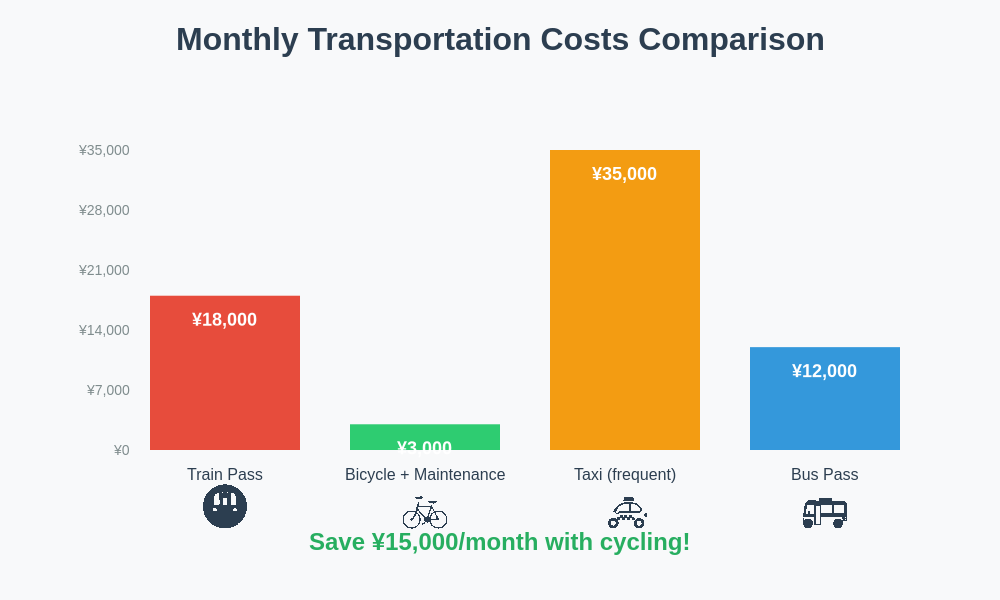
The financial implications of having reliable bicycle access from your sharehouse location create substantial monthly savings that can transform your overall living experience in Tokyo. Transportation costs represent one of the largest expense categories for most sharehouse residents, often consuming fifteen to twenty percent of monthly budgets when relying exclusively on Tokyo’s extensive but expensive train and subway systems for daily commuting and recreational activities.
Living costs in Tokyo sharehouses explained demonstrates how transportation expenses can quickly accumulate, making bicycle access a crucial factor in maintaining sustainable monthly budgets. A typical Tokyo train pass for comprehensive city access costs between fifteen thousand to twenty thousand yen monthly, while bicycle maintenance and occasional parking fees rarely exceed three thousand yen during the same period.
The cost-effectiveness of cycling becomes even more pronounced when considering short-distance trips that would otherwise require train transfers or taxi services. Many sharehouse residents discover that neighborhoods with excellent bicycle infrastructure allow them to reach grocery stores, convenience shops, restaurants, and entertainment venues without incurring additional transportation costs, effectively expanding their accessible radius while reducing daily expenses.
Beyond direct transportation savings, bicycle access enables residents to take advantage of distant shopping opportunities, discount stores, and bulk purchasing options that would be impractical when limited to train-accessible locations. The ability to carry groceries, household supplies, and personal items via bicycle eliminates delivery fees and provides flexibility in shopping strategies that can result in significant monthly savings across multiple expense categories.
Enhancing Daily Convenience and Flexibility
The convenience factor of bicycle access fundamentally transforms daily routines and lifestyle possibilities for sharehouse residents, providing unprecedented flexibility in scheduling, route planning, and spontaneous activity participation. Unlike train schedules that dictate departure times and require advance planning, bicycles offer immediate availability and door-to-door transportation that adapts to individual preferences and changing circumstances throughout each day.
How commute times impact your quality of life illustrates how transportation flexibility directly correlates with overall satisfaction and stress levels in urban living situations. Bicycle access eliminates the anxiety associated with missing last trains, dealing with service disruptions, or navigating crowded platforms during peak hours, while providing reliable backup transportation options during emergencies or unexpected schedule changes.
The time efficiency of cycling for short to medium-distance trips often surpasses train travel when accounting for walking time to stations, waiting periods, transfers, and final destination approaches. Many residents discover that cycling to destinations within five to eight kilometers actually saves time compared to complex train routes while providing exercise benefits and environmental advantages that enhance overall well-being and personal satisfaction.
Morning commute flexibility becomes particularly valuable for sharehouse residents with varying work schedules, part-time employment, or academic commitments that don’t align with standard rush hour patterns. How shift work schedules affect roommate relations highlights how transportation independence reduces conflicts and stress within shared living environments by eliminating coordination requirements and scheduling dependencies.
Expanding Social and Cultural Opportunities
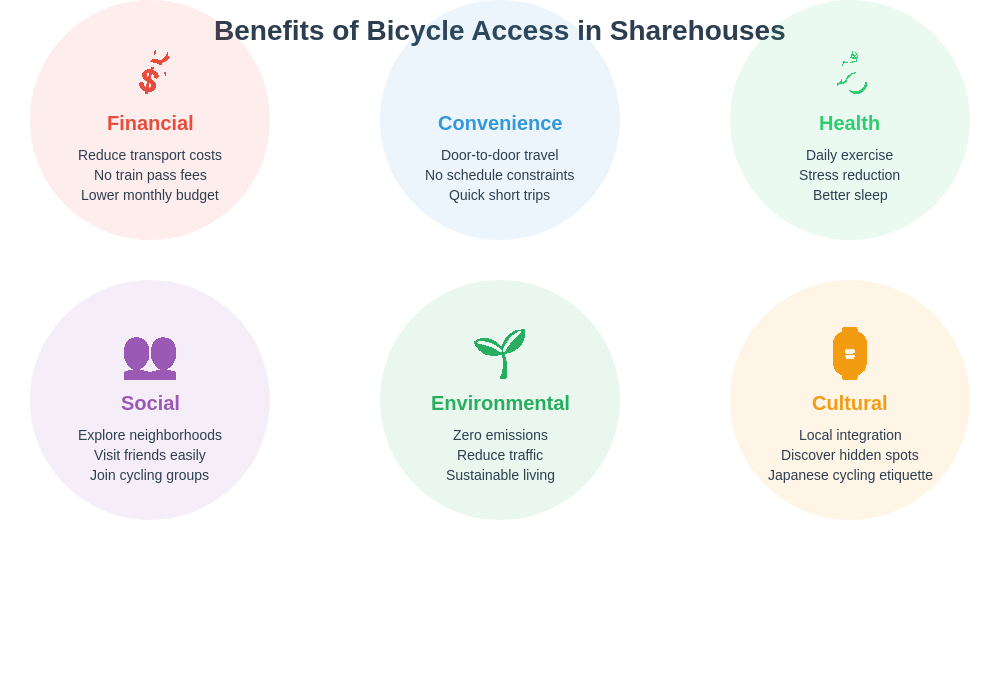
Bicycle access dramatically expands the social and cultural radius available to sharehouse residents, enabling participation in community events, cultural activities, and social gatherings that would otherwise be cost-prohibitive or logistically challenging when relying solely on public transportation. The ability to explore diverse neighborhoods, attend evening events, and maintain active social lives without transportation budget constraints enhances the overall sharehouse experience and cultural immersion opportunities.
Making friends through Tokyo sharehouse communities emphasizes how mobility options influence social integration and relationship building within international resident networks. Bicycle access enables residents to visit friends in different neighborhoods, participate in group activities across the city, and maintain social connections that extend beyond immediate sharehouse communities without imposing financial barriers on relationship maintenance.
The spontaneous exploration opportunities that bicycle access provides contribute significantly to cultural discovery and personal growth experiences that define successful international living arrangements. Residents can discover hidden local attractions, seasonal festivals, specialty shops, and authentic dining experiences that remain inaccessible to those constrained by train route limitations and transportation budget concerns.
Weekend and evening entertainment options multiply exponentially when bicycle transportation removes cost barriers and schedule restrictions associated with train travel. Late-night social activities, early morning events, and impromptu gatherings become accessible without the expense of taxi services or the limitations of train operating hours, significantly enhancing the social aspects of sharehouse living that many residents cite as primary motivation factors.
Health and Wellness Benefits Integration
The integration of regular cycling into daily sharehouse routines provides substantial health and wellness benefits that contribute to overall quality of life improvements while reducing healthcare costs and stress-related issues commonly associated with urban living. Daily cycling activities naturally incorporate cardiovascular exercise, muscle strengthening, and mental health benefits into routine transportation needs without requiring separate gym memberships or dedicated workout time allocation.
How air quality concerns affect daily decisions addresses environmental health considerations that make cycling particularly beneficial in Tokyo’s urban environment. While air quality concerns exist, the health benefits of regular cycling combined with route selection strategies that favor parks, riverside paths, and less congested streets often outweigh potential drawbacks while providing superior alternatives to sedentary transportation methods.
The stress reduction benefits of cycling prove particularly valuable for sharehouse residents managing cultural adaptation, language learning, work pressures, and social integration challenges simultaneously. The meditative aspects of cycling, combined with endorphin release from physical activity, provide natural stress management tools that enhance emotional well-being and improve interpersonal relationships within shared living environments.
Sleep quality improvements associated with regular physical activity from cycling contribute to better academic performance, work productivity, and social interactions that define successful sharehouse experiences. How sleep quality suffers in shared environments explores how exercise-induced fatigue can improve sleep patterns even in potentially noisy or disruptive shared living situations.
Infrastructure Considerations and Storage Solutions
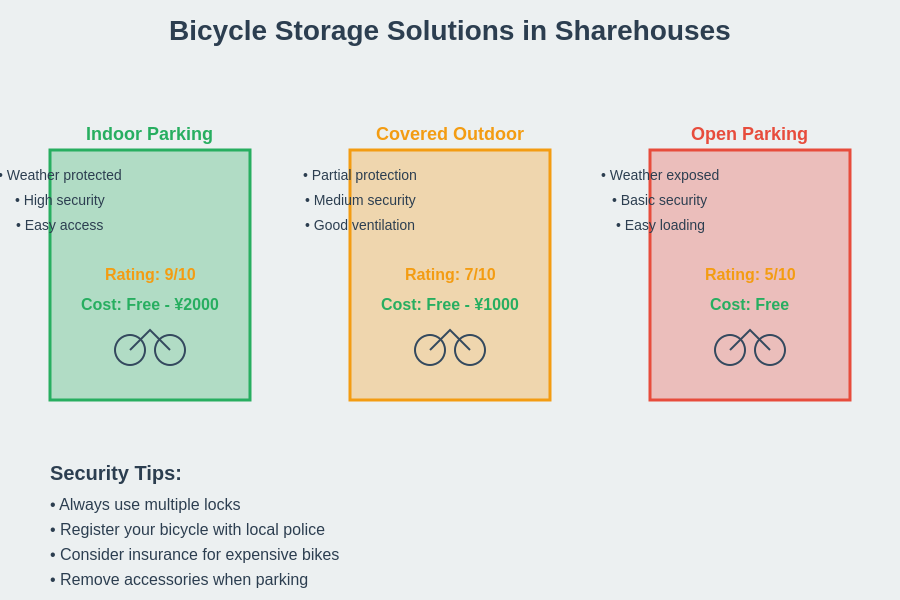
The practical aspects of bicycle ownership and maintenance in sharehouse environments require careful consideration of storage solutions, security measures, and building infrastructure that directly impact the feasibility and convenience of cycling as a primary transportation option. Secure, weather-protected bicycle storage represents a crucial amenity that significantly influences the practical value of cycling access for daily transportation needs.
Japanese sharehouse rules every foreigner should know includes bicycle storage and usage policies that vary significantly between properties and management companies. Understanding these regulations before committing to a sharehouse ensures that bicycle access remains viable throughout your residency period without conflicts or unexpected restrictions that could limit transportation options.
Indoor storage facilities protect bicycles from Tokyo’s diverse weather conditions, including intense summer heat, heavy rainfall, snow, and humidity that can damage components and reduce operational reliability. Climate-controlled storage areas prevent rust, tire degradation, and mechanical issues that could result in expensive repairs or replacement costs that undermine the economic benefits of bicycle ownership.
Security considerations become paramount in urban environments where bicycle theft remains a persistent concern that can eliminate transportation options and create significant financial losses. Proper storage facilities with access controls, surveillance systems, and individual security measures protect investments while providing peace of mind that encourages regular bicycle usage for daily transportation needs.
Maintenance and Practical Management
The practical aspects of bicycle maintenance and management in sharehouse environments require understanding of local resources, seasonal considerations, and community dynamics that influence long-term cycling success. Access to nearby bicycle shops, repair services, and maintenance supplies affects the ongoing viability of cycling as a reliable transportation option throughout changing seasons and usage patterns.
Tokyo’s bicycle maintenance infrastructure provides excellent support networks for residents who embrace cycling as primary transportation, with neighborhood shops offering affordable repairs, seasonal tune-ups, and emergency services that maintain operational reliability. Understanding local service options and building relationships with trusted mechanics ensures that mechanical issues don’t create transportation disruptions that could affect work, study, or social commitments.
Seasonal maintenance requirements address Tokyo’s diverse weather conditions that impact bicycle performance and safety throughout the year. Summer heat affects tire pressure and component expansion, while winter conditions require attention to chain lubrication, brake adjustments, and lighting systems that ensure safe operation during shorter daylight periods and challenging weather conditions.
How seasonal employment affects resident turnover relates to bicycle ownership considerations for residents with temporary or changing living situations. Understanding resale markets, storage options during travel periods, and transfer procedures helps maximize the value of bicycle investments even when living arrangements change unexpectedly.
Integration with Tokyo’s Cycling Culture
Understanding and integrating with Tokyo’s established cycling culture enhances safety, efficiency, and social acceptance while navigating the complex urban environment that sharehouse residents encounter daily. Japanese cycling etiquette, traffic patterns, and infrastructure usage norms require cultural adaptation that influences both practical success and social integration within local communities.
Tokyo’s extensive cycling infrastructure includes dedicated lanes, parking facilities, and traffic management systems designed to accommodate high-volume bicycle usage while maintaining safety standards and traffic flow efficiency. Learning to effectively utilize these systems maximizes the benefits of bicycle access while demonstrating cultural sensitivity and integration that enhances overall living experiences.
How cultural adaptation happens gradually includes transportation customs and social norms that affect daily cycling experiences. Understanding traffic patterns, pedestrian interactions, and courtesy expectations prevents conflicts while building positive relationships with local residents and fellow cyclists throughout diverse neighborhoods.
The integration of cycling into broader transportation strategies that combine bicycles with train systems for longer distances provides optimal flexibility and cost-effectiveness for comprehensive city access. Understanding transfer procedures, bicycle parking at stations, and multi-modal journey planning maximizes the utility of cycling access while maintaining access to distant destinations when necessary.
Environmental and Community Impact
The environmental benefits of bicycle access align with growing sustainability consciousness among international residents while contributing to broader community health and environmental improvements that enhance neighborhood quality and social responsibility. Reduced carbon emissions, decreased traffic congestion, and lower noise pollution from cycling adoption create positive community impacts that extend beyond individual transportation benefits.
How sustainability values affect household consumption patterns explores how transportation choices influence broader lifestyle decisions and community dynamics within shared living environments. Residents who prioritize cycling often demonstrate enhanced environmental awareness that contributes to positive house culture and shared values that improve overall living experiences.
Community cycling initiatives, group rides, and neighborhood events create opportunities for social integration and cultural exchange that extend beyond individual transportation needs. Participating in local cycling communities provides networking opportunities, cultural learning experiences, and social connections that enrich the international living experience while contributing to positive community relationships.
The demonstration of environmental responsibility through cycling choices often facilitates positive interactions with Japanese neighbors and colleagues who increasingly value sustainability and environmental consciousness. These shared values create common ground for relationship building and cultural exchange that enhances integration experiences and personal growth opportunities throughout the sharehouse living period.
Long-term Investment and Mobility Planning
The strategic consideration of bicycle access as part of long-term mobility planning affects residence selection, lifestyle development, and financial planning throughout extended Tokyo living periods. Understanding how cycling capabilities influence career opportunities, social development, and personal growth helps residents make informed decisions about neighborhood selection and housing commitments that align with long-term goals and aspirations.
How career changes affect sharehouse eligibility includes mobility considerations that influence professional development and employment opportunities. Bicycle access can expand job search radii, reduce commute constraints, and provide backup transportation options that enhance employment flexibility and career advancement possibilities.
The development of cycling skills, route knowledge, and mechanical understanding represents valuable life skills that extend beyond immediate transportation needs while providing confidence and independence that enhance overall living experiences. These capabilities contribute to personal growth and self-reliance that benefit residents throughout their international living journey and future relocations.
Investment in quality bicycle equipment and accessories provides long-term value that justifies initial costs while ensuring reliable performance throughout diverse usage scenarios and seasonal conditions. Understanding equipment selection, upgrade strategies, and resale considerations helps residents maximize the financial and practical benefits of cycling investments throughout changing living situations and evolving transportation needs.
The transformative impact of bicycle access on sharehouse living extends across financial, practical, social, and personal development dimensions that collectively define successful international living experiences in Tokyo. By prioritizing bicycle accessibility in housing selection and embracing cycling as integral to daily life, residents unlock opportunities for enhanced mobility, cultural integration, and personal growth that traditional accommodation arrangements rarely provide, creating foundations for memorable and successful Tokyo living adventures.
Disclaimer
This article is for informational purposes only and does not constitute professional advice regarding transportation choices or safety considerations. Bicycle safety requirements, traffic regulations, and infrastructure conditions may vary by location and change over time. Readers should research current local conditions, safety requirements, and regulations when making transportation decisions. Individual experiences with bicycle access may vary depending on personal circumstances, location, and usage patterns.