Bill splitting in Tokyo sharehouses represents one of the most persistent sources of tension and misunderstanding among international residents, transforming what should be straightforward financial arrangements into complex negotiations that can strain relationships and create lasting resentment. The seemingly simple concept of dividing shared expenses equally becomes complicated by varying usage patterns, cultural differences in financial expectations, and the intricate web of utilities and services that modern sharehouses require to function effectively.
The challenges of fair cost allocation in shared living environments extend far beyond basic arithmetic, encompassing issues of personal responsibility, lifestyle differences, and the fundamental question of what constitutes equitable distribution of expenses when residents have dramatically different consumption patterns and financial circumstances. Understanding these complications helps residents prepare for potential conflicts and develop strategies for maintaining harmonious financial relationships within their sharehouse communities.
The Foundation of Financial Complexity
The modern Tokyo sharehouse operates as a microcosm of diverse international lifestyles, where residents from different countries bring varying expectations about financial responsibility, consumption habits, and fairness in cost-sharing arrangements. Understanding utility bills in Japanese sharehouses becomes essential when navigating these complex arrangements, as the structure of Japanese utility billing often differs significantly from what international residents expect based on their home country experiences.
The basic challenge begins with the fundamental question of whether equal splitting truly represents fair distribution when residents have vastly different usage patterns, work schedules, and lifestyle preferences. A resident who works long hours and rarely uses common areas might reasonably question why they should pay the same heating costs as someone who works from home and maintains higher temperature preferences throughout the day.
Cultural differences in financial transparency and communication styles further complicate these arrangements, as some residents come from backgrounds where detailed expense tracking is normal and expected, while others prefer more casual, trust-based approaches to shared costs. These fundamental differences in financial philosophy can create misunderstandings before any actual bills arrive, setting the stage for future conflicts over seemingly minor expense categories.
Utility Bill Variations and Seasonal Fluctuations
Tokyo’s seasonal climate extremes create dramatic variations in utility costs that challenge even the most carefully planned bill-splitting arrangements, with summer air conditioning and winter heating expenses often doubling or tripling monthly utility bills compared to mild seasons. How much Tokyo sharehouses really cost per month reveals how these seasonal fluctuations can strain budgets and create disputes when residents have different tolerance levels for temperature control costs.
The complexity increases when residents have different schedules and temperature preferences, leading to situations where some housemates advocate for minimal heating or cooling to control costs while others prioritize comfort regardless of expense. These differences become particularly pronounced during extreme weather periods when the choice between comfort and cost-consciousness can significantly impact both individual budgets and house harmony.
Electricity usage patterns vary dramatically among residents based on work schedules, device ownership, and lifestyle preferences, with some residents maintaining minimal electrical consumption while others operate multiple devices, gaming systems, or work equipment that substantially increase overall household consumption. The challenge lies in determining whether these differences warrant individual accountability or should be absorbed into collective cost-sharing arrangements.
Water usage represents another area of complexity, particularly in sharehouses where residents have different hygiene standards, cooking habits, and laundering frequencies. Long showers, frequent clothes washing, and extensive cooking can create significant variations in water consumption that become apparent in monthly bills but difficult to attribute to specific residents without invasive monitoring systems.
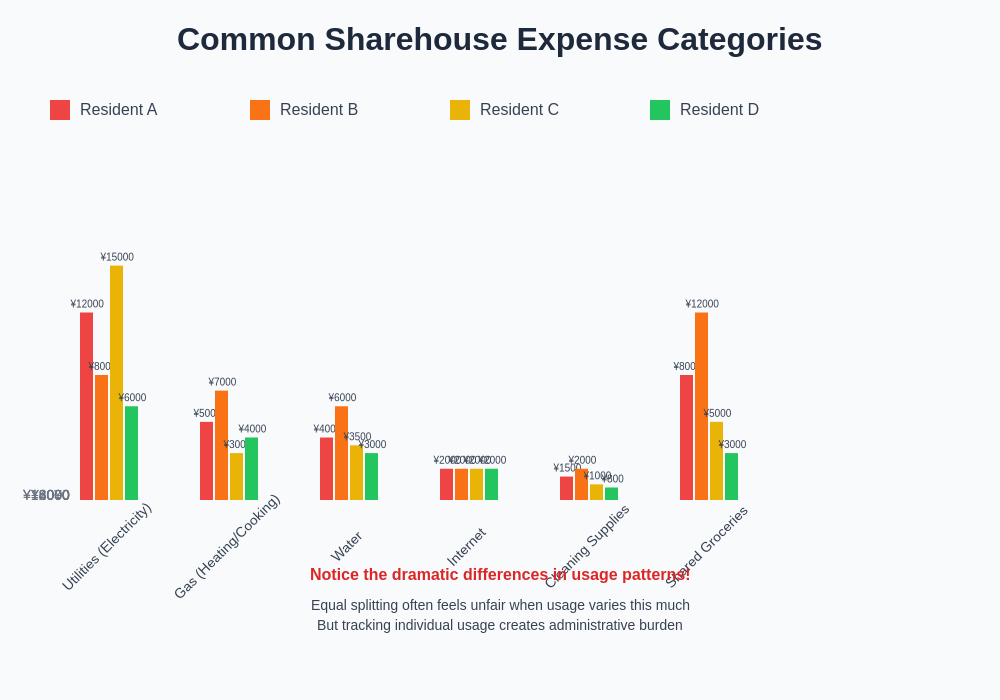
These dramatic differences in consumption patterns illustrate why equal bill splitting often feels unfair to light users, yet tracking individual usage creates administrative burdens that many houses struggle to maintain consistently.
Internet and Communication Service Disputes
High-speed internet has become essential infrastructure for most international residents, yet usage patterns and quality expectations vary dramatically among housemates, creating ongoing tensions about service levels and cost allocation. How device limits cause internet connection issues explores how different usage patterns can strain both network capacity and financial arrangements when residents have varying requirements for bandwidth and connection stability.
The proliferation of streaming services, gaming platforms, and remote work requirements means that internet usage has become increasingly intensive and varied among residents, with some using minimal bandwidth for basic communication while others require high-performance connections for professional or entertainment purposes. These usage differences raise questions about whether internet costs should be split equally or allocated based on consumption patterns and quality requirements.
Upgrade decisions become particularly contentious when some residents advocate for premium internet packages to support their professional or entertainment needs while others prefer basic service to minimize costs. The democratic process of making these decisions can become complicated when residents have different financial constraints and varying degrees of dependency on high-quality internet connectivity.
Streaming service subscriptions and shared digital accounts create additional layers of complexity when residents want to share costs for entertainment services but have different preferences for platforms, content, and subscription levels. Managing access permissions, account sharing protocols, and cost allocation for multiple services requires ongoing coordination that many houses struggle to maintain effectively.
Food and Kitchen-Related Expense Complications
Shared kitchen expenses represent one of the most common sources of bill-splitting disputes, encompassing everything from basic cleaning supplies and cookware replacement to the complex economics of shared grocery purchases and communal meal arrangements. How grocery shopping becomes more strategic demonstrates how different shopping preferences and dietary requirements can complicate group purchasing decisions and cost allocation.
The challenge of fairly distributing food costs becomes particularly complex when residents have dramatically different dietary preferences, cooking frequencies, and quality expectations for ingredients and kitchen supplies. Vegetarian residents may question contributing to meat purchases, while budget-conscious residents might object to premium ingredient costs that others prefer for their cooking.
Cleaning supply expenses create ongoing tension when residents have different cleanliness standards and prefer different product types or brands, leading to debates about whether to purchase basic supplies that satisfy minimum requirements or premium products that some residents prefer. The frequency of replacement and the responsibility for purchasing decisions can become contentious when some residents use supplies more heavily than others.
Kitchen equipment replacement and maintenance costs present unique challenges when items break or wear out, particularly when the cause of damage is unclear or when residents have different opinions about the necessity of repairs or replacements. Determining responsibility for accidental damage, normal wear and tear, and upgrade decisions requires diplomatic negotiation that many houses struggle to manage effectively.
Cleaning Service and Maintenance Disputes
Professional cleaning services and house maintenance represent significant monthly expenses that can become sources of ongoing conflict when residents have different standards for cleanliness and varying opinions about the necessity and frequency of professional services. How cleaning responsibilities create house drama illustrates how these disagreements extend beyond simple cost considerations to fundamental questions about living standards and personal responsibility.
The decision to hire professional cleaning services often divides residents between those who prefer to minimize expenses through self-cleaning arrangements and those who prioritize convenience and consistent cleanliness standards regardless of cost. These philosophical differences about cleanliness responsibility can create lasting tensions that extend far beyond the immediate financial implications.
Maintenance and repair costs present particular challenges when determining whether expenses should be covered through collective funds or attributed to specific residents based on usage patterns or responsibility for damage. Emergency repairs, preventive maintenance, and improvement projects require decision-making processes that many houses lack, leading to delays, conflicts, and unequal cost distribution.
The timing of cleaning and maintenance services can create additional complications when residents have different schedules and preferences for when these services should occur, particularly when some residents work from home and others prefer services during specific hours to minimize disruption to their routines.
Personal Item and Shared Resource Boundaries
The boundary between personal and shared expenses becomes increasingly blurred in modern sharehouses where residents frequently share items ranging from basic household supplies to entertainment equipment and specialized appliances. How personal belongings disappear despite locks highlights how unclear ownership and usage boundaries can complicate expense tracking and cost allocation decisions.
Toiletries and personal care items present ongoing challenges when residents prefer different brands, have varying usage requirements, or want to share certain items while keeping others private. The decision about which items should be shared expenses versus personal purchases requires ongoing negotiation and clear communication that many houses struggle to maintain consistently.
Kitchen appliances and specialized equipment create complex ownership and cost-sharing arrangements when residents contribute different items to shared use, leading to questions about maintenance responsibility, replacement costs, and usage rights when ownership becomes unclear over time. The depreciation and eventual replacement of shared items requires planning and agreement that many houses lack.
Entertainment equipment and subscription services blur the lines between personal and shared expenses when items like gaming systems, streaming subscriptions, or fitness equipment benefit some residents more than others, raising questions about fair cost allocation and usage priority during peak demand periods.
Cultural Differences in Financial Transparency
International sharehouses bring together residents from diverse cultural backgrounds with fundamentally different approaches to financial transparency, privacy, and expense tracking, creating communication challenges that can escalate into serious conflicts over seemingly minor financial disagreements. How cultural differences affect friendship building explores how these financial philosophy differences can impact overall house relationships and community harmony.
Some cultures emphasize detailed expense tracking and transparent financial communication, expecting regular reports, receipts, and precise accounting for all shared expenses, while others prefer more informal, trust-based arrangements that prioritize relationship harmony over detailed financial accuracy. These fundamental differences in financial communication styles can create misunderstandings and resentment when expectations are not clearly established and maintained.
Payment timing and method preferences vary significantly among international residents, with some expecting immediate settlement of shared expenses while others prefer monthly reconciliation periods, and some preferring cash transactions while others expect digital payment methods. These logistical differences can create ongoing friction and complicate expense tracking efforts.
The concept of financial fairness varies dramatically across cultures, with some emphasizing strict mathematical equality while others consider factors like income levels, usage patterns, and personal circumstances when determining appropriate contribution levels. These philosophical differences can create ongoing tension when houses attempt to establish fair cost-sharing arrangements that satisfy all residents.
Technology Solutions and Digital Complications
Modern expense-tracking applications and digital payment systems promise to simplify bill splitting but often create new complications when residents have different technology preferences, privacy concerns, or varying levels of digital literacy that affect their willingness to adopt shared financial management tools. How shared expense apps create new problems examines how these technological solutions can sometimes exacerbate rather than resolve financial coordination challenges.
The selection of expense-tracking platforms requires consensus among residents with different technology preferences and privacy concerns, particularly when some residents prefer simple solutions while others want comprehensive features, or when security concerns conflict with convenience preferences. Getting all residents to consistently use any chosen system requires ongoing coordination and troubleshooting that many houses find difficult to maintain.
Digital payment integration presents challenges when residents use different banking systems, payment platforms, or currency preferences, particularly for international residents who may have limited access to certain Japanese payment systems or prefer to maintain financial accounts in their home countries. These technical barriers can complicate even simple expense settlements and create delays in financial reconciliation.
Data privacy and financial security concerns affect some residents’ willingness to share detailed expense information through digital platforms, particularly when apps require access to banking information or when residents prefer to maintain separation between their personal financial management and shared house expenses.
Long-term Financial Planning Challenges
Seasonal budget planning becomes increasingly complex when houses attempt to balance seasonal utility fluctuations with stable monthly payment arrangements, requiring either monthly bill variations that strain some residents’ budgets or advance planning that requires financial reserves and complicated reconciliation processes. How to budget realistically for sharehouse living provides insights into managing these long-term financial planning challenges while maintaining fair cost distribution.
Resident turnover creates ongoing complications when departing residents have outstanding expense obligations or when new residents need to be integrated into existing financial arrangements and expense-sharing agreements. The timing of moves, security deposit transfers, and final expense settlements requires careful coordination that many houses struggle to manage effectively.
Major expense planning for items like appliance replacement, house improvements, or emergency repairs requires advance planning and financial reserves that challenge houses to balance current expense minimization with future preparedness, particularly when residents have different timelines for their residency and varying willingness to contribute to long-term house investments.
The accumulation of small unpaid balances and ongoing minor disputes can create significant financial and relationship complications over time, particularly when houses lack effective systems for addressing small conflicts before they escalate into larger problems that affect overall house harmony and financial stability.
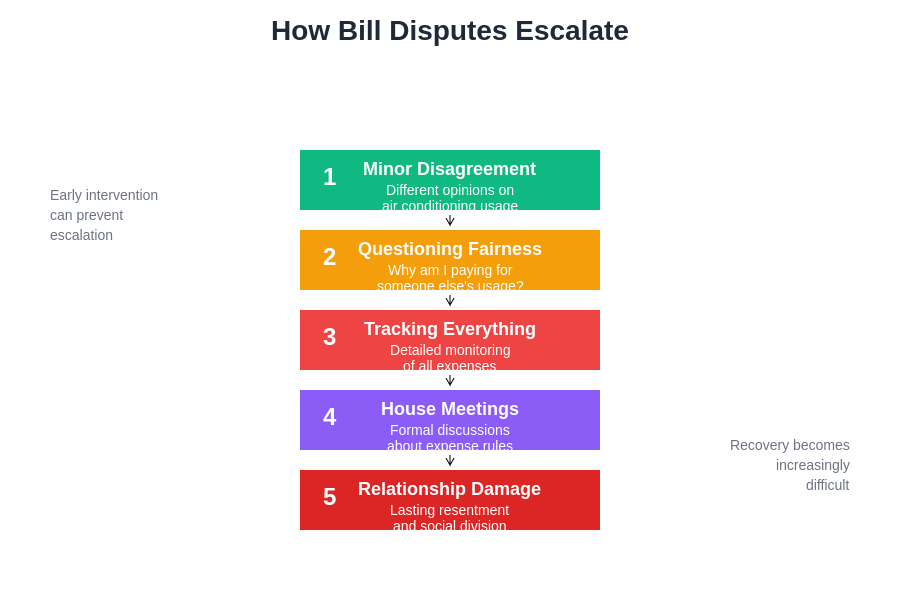
Understanding this escalation pattern helps residents recognize when early intervention is needed to prevent minor disagreements from developing into serious relationship damage.
Resolution Strategies and Prevention Methods
Establishing clear financial agreements and communication protocols from the beginning of residency helps prevent many common bill-splitting complications, though implementing these systems requires commitment from all residents and ongoing maintenance that many houses struggle to sustain effectively. How to handle roommate conflicts without moving out offers strategies for addressing financial disagreements before they escalate into serious relationship problems.
Regular house meetings focused specifically on financial matters provide opportunities to address emerging concerns, adjust expense-sharing arrangements, and maintain transparency about house finances, though scheduling and maintaining consistent participation requires ongoing effort and commitment from all residents. These meetings can help identify potential problems early and develop solutions before conflicts become entrenched.
Implementing trial periods for new expense-sharing arrangements allows houses to test different approaches to cost allocation while maintaining flexibility to adjust systems based on actual experience and resident feedback. This experimental approach can help houses develop customized solutions that work for their specific resident mix and lifestyle patterns.
Creating financial buffers and reserve funds helps houses manage unexpected expenses and seasonal variations without creating immediate conflicts over cost allocation, though building and maintaining these reserves requires additional coordination and financial discipline that challenge many house communities to sustain over time.
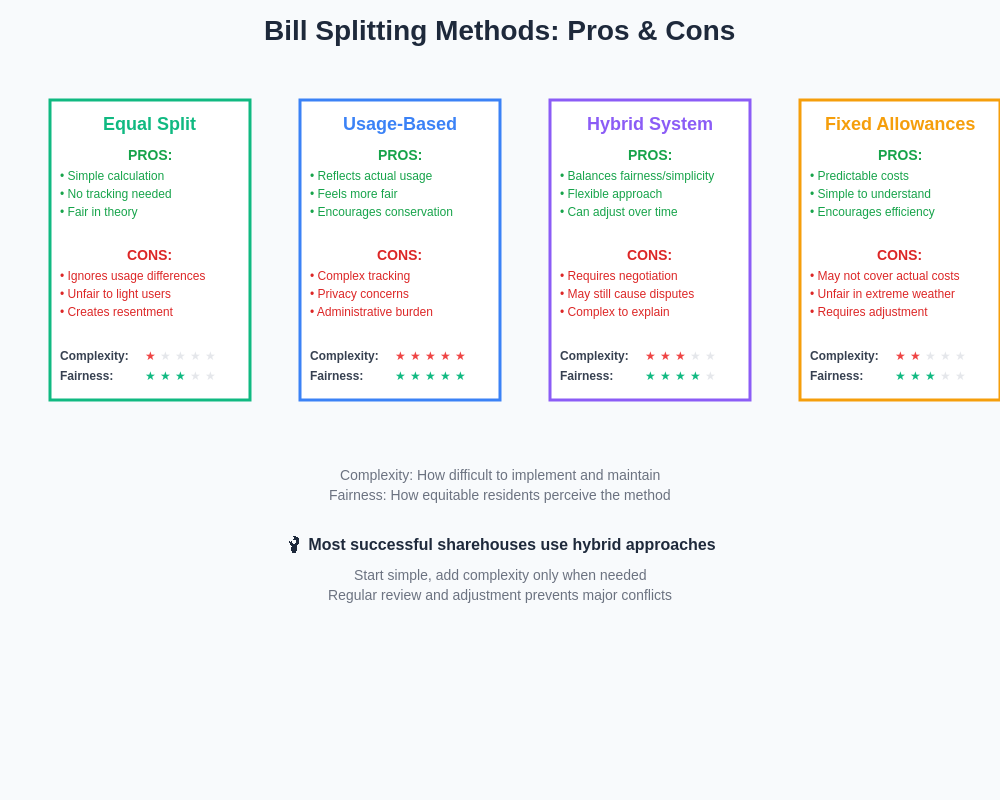
Each bill splitting approach involves tradeoffs between simplicity and fairness, requiring houses to find the right balance for their specific resident mix and circumstances.
The complexity of bill splitting in Tokyo sharehouses reflects the broader challenges of international co-living, where diverse backgrounds, expectations, and lifestyles must be balanced within practical financial constraints and cultural communication styles. Success requires not only mathematical accuracy but also diplomatic skill, cultural sensitivity, and ongoing commitment to fair and transparent financial relationships that support long-term community harmony.
Disclaimer
This article is for informational purposes only and does not constitute financial or legal advice. Bill splitting arrangements and dispute resolution methods may vary significantly between different sharehouses and cultural contexts. Readers should establish clear agreements with their housemates and consult relevant professionals when needed. The effectiveness of suggested strategies may depend on specific house dynamics, resident backgrounds, and local regulations.