Breaking a sharehouse lease early in Tokyo often results in financial consequences that extend far beyond the obvious termination penalties outlined in your rental agreement. The complex web of fees, administrative charges, and opportunity costs can create a substantial financial burden that catches many international residents completely off guard. Understanding these hidden expenses before signing any lease agreement provides crucial protection against unexpected financial hardship and enables better decision-making when circumstances force an early departure.
The reality of early lease termination extends beyond simple penalty calculations to encompass a range of interconnected costs that can accumulate rapidly and significantly impact your financial stability during an already stressful transition period. Many residents discover that the true cost of breaking their lease early can reach several times their monthly rent, creating serious budgetary challenges that affect their ability to secure new housing or manage other essential expenses during relocation.
Understanding Basic Termination Penalties and Structures
Most Tokyo sharehouse contracts include specific clauses outlining early termination penalties, but these basic fees represent only the foundation of total costs involved in breaking a lease before its natural expiration date. Contract terms that are more important than advertised prices highlights how seemingly minor contractual details can create major financial obligations during early termination scenarios.
Standard penalty structures typically require payment of one to three months’ rent as an immediate termination fee, depending on how much advance notice you provide and how much time remains on your original lease agreement. However, these penalties often represent just the beginning of your financial obligations, with additional charges and fees accumulating throughout the termination process in ways that many residents fail to anticipate or budget for adequately.
The timing of your termination notice significantly affects penalty calculations, with shorter notice periods resulting in higher fees and additional charges for emergency processing and replacement tenant search costs. Understanding these timing-based penalty structures helps residents make more informed decisions about when to initiate termination proceedings and how to minimize avoidable costs through strategic planning and communication.
Administrative processing fees often accompany basic termination penalties, covering costs associated with contract modification, documentation updates, and legal processing required to formally release you from your lease obligations. These fees can range from modest administrative charges to substantial processing costs that significantly increase your total termination expenses beyond the advertised penalty amounts.
Hidden Administrative and Processing Charges
The administrative machinery required to process early lease terminations generates numerous hidden costs that rarely appear in initial contract discussions but become mandatory expenses during actual termination proceedings. Document preparation fees, legal processing charges, and administrative handling costs can accumulate quickly and substantially increase your total termination expenses beyond basic penalty calculations.
Property inspection and assessment fees often become necessary when terminating leases early, as management companies conduct detailed evaluations to determine any damage or excessive wear that might require repair or replacement charges. What security deposits actually cover in sharehouses provides insights into how these assessments interact with existing deposit arrangements and potential additional charges.
Communication and notification costs include registered mail fees, legal document delivery charges, and official translation services that may be required for international residents during the termination process. These seemingly minor expenses can accumulate to significant amounts, particularly when multiple notifications and document exchanges are required throughout the termination timeline.
Third-party service fees often emerge during termination proceedings, including real estate agent commissions for finding replacement tenants, professional cleaning services beyond normal turnover cleaning, and specialized inspection services that assess property condition and determine any additional charges or deposit deductions that may apply.
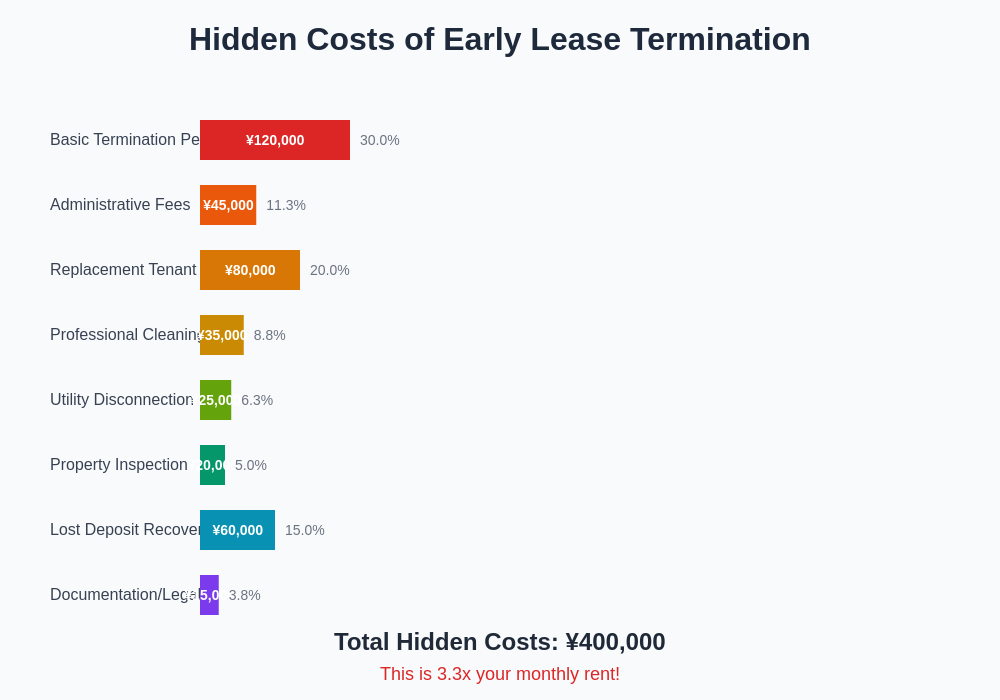
The comprehensive breakdown of hidden termination costs reveals how administrative fees, search costs, and service charges can accumulate to create financial obligations that substantially exceed basic penalty expectations, often totaling more than three times your monthly rent.
Replacement Tenant Search and Marketing Costs
When you terminate your lease early, management companies often transfer the cost of finding and securing a replacement tenant directly to you through various fee structures and charges that can substantially exceed basic termination penalties. Understanding how sharehouse rent pricing works in Japan explains how vacancy costs and replacement tenant expenses factor into overall property management economics and resident financial obligations.
Advertising and marketing expenses include professional photography, online listing fees, virtual tour creation, and promotional materials designed to attract potential replacement tenants quickly and effectively. These costs often range from tens of thousands to over one hundred thousand yen, depending on the property’s market position and the urgency of finding replacement occupants.
Showing and screening costs encompass staff time for conducting property viewings, background checks for potential tenants, and administrative processing for applications and approvals. Management companies frequently bill these expenses to departing tenants as part of replacement tenant search costs, particularly when early termination creates unexpected vacancy periods during low-demand seasons.
Commission and placement fees may apply when external real estate agents or specialized services are required to secure replacement tenants within tight timeframes necessitated by early termination. These professional services can command substantial fees that become your financial responsibility as the departing tenant who created the unexpected vacancy situation.
Utility and Service Disconnection Expenses
Terminating your lease early often triggers immediate utility and service disconnection requirements that generate various fees and charges beyond normal move-out procedures. Final billing adjustments, early termination penalties for utility contracts, and expedited service changes can create unexpected expenses that significantly impact your departure budget calculations.
Internet and communication service cancellations frequently involve early termination penalties separate from your housing lease, particularly when services were bundled or contracted for specific minimum periods that extend beyond your revised departure date. Understanding utility bills in Japanese sharehouses provides context for how these separate service contracts interact with housing lease terminations.
Gas, electricity, and water service modifications require administrative processing, final meter readings, and account closure procedures that often include processing fees and expedited service charges when early termination requires immediate attention and priority scheduling over standard service timelines.
Cable television, streaming services, and other digital subscriptions tied to your residence address may require cancellation or transfer procedures that involve fees, penalties, or loss of promotional pricing that was dependent on longer-term commitments originally aligned with your lease duration.
Property Damage Assessment and Repair Costs
Early lease termination often triggers more intensive property inspections than standard move-out procedures, with management companies conducting detailed assessments to identify any damage or excessive wear that might justify additional charges beyond normal security deposit deductions. How to actually get your deposit back explains how early termination can affect damage assessment procedures and deposit return calculations.
Professional cleaning requirements frequently exceed standard turnover cleaning when early termination creates tight turnaround schedules for preparing units for immediate re-rental. Specialized deep cleaning, carpet treatment, and restoration services can generate substantial costs that become your responsibility as the early-departing tenant who created the compressed timeline.
Repair and maintenance acceleration costs arise when normal maintenance schedules must be compressed to prepare your unit for immediate showing and occupancy by replacement tenants. Rush charges for painting, minor repairs, and facility updates can significantly exceed normal maintenance costs due to expedited scheduling and priority service requirements.
Replacement and upgrade expenses may become necessary when early termination coincides with planned improvements or updates that must be accelerated to maintain property competitiveness during replacement tenant search periods. These costs can be partially transferred to departing tenants through various fee structures and assessment procedures.
Opportunity Cost and Market Timing Factors
The financial impact of early lease termination extends beyond direct fees and penalties to include substantial opportunity costs that can affect your housing situation and financial stability for months or years following your departure. Market timing factors, seasonal demand fluctuations, and availability constraints can create hidden costs that significantly exceed obvious termination expenses.
New housing search costs include application fees, security deposits, and move-in expenses for replacement housing that may be more expensive or less desirable than your current arrangement due to compressed search timelines and limited availability during your departure period. Living costs in Tokyo sharehouses explained provides context for how sudden housing changes can affect overall living expense calculations.
Transportation and logistics expenses for emergency relocation often exceed planned moving costs due to shortened timelines, premium service requirements, and lack of advance planning opportunities that normally allow for cost optimization and competitive pricing comparison among service providers.
Lost deposit and fee recovery opportunities may arise when early termination prevents you from completing your lease term and qualifying for deposit returns, fee waivers, or loyalty incentives that were contingent on successful lease completion according to original agreement terms.
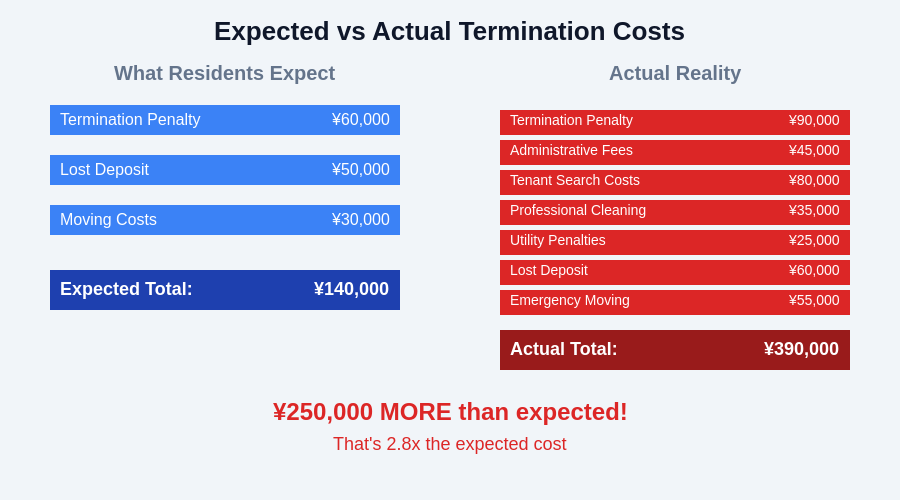
The stark reality of termination costs becomes clear when comparing what residents typically expect to pay versus the actual financial obligations that emerge during early lease termination proceedings.
Strategic Timing and Notice Period Optimization
Understanding how different notice periods and timing strategies affect total termination costs enables residents to minimize financial damage when early departure becomes necessary due to job changes, family emergencies, or other unavoidable circumstances that require lease termination before natural expiration dates.
Notice period calculations directly affect penalty amounts, with longer advance notice typically resulting in reduced fees and more favorable termination terms that can save substantial amounts compared to emergency or immediate departure scenarios. Why contract renewal terms vary significantly explains how advance planning and communication can influence termination cost structures.
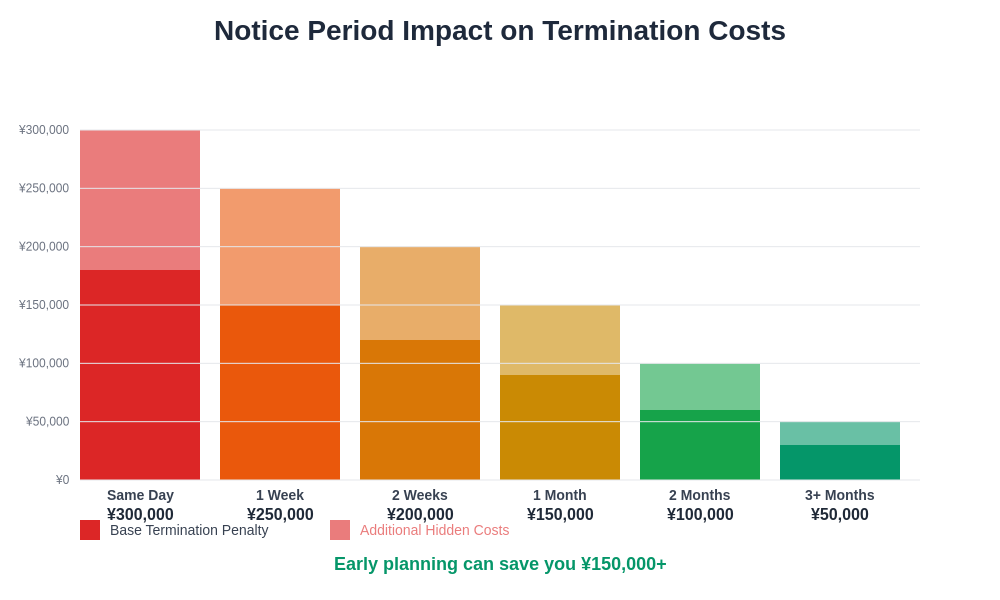
Seasonal timing considerations can significantly impact replacement tenant availability and associated search costs, with departures during high-demand periods typically resulting in lower replacement costs and reduced financial penalties compared to departures during low-demand seasons when tenant search becomes more difficult and expensive.
Month-end versus mid-month departure timing affects utility billing, rent proration, and administrative processing in ways that can create additional costs or savings depending on your specific lease terms and management company policies regarding partial month charges and billing cycle adjustments.
Negotiation Strategies and Cost Mitigation
Proactive communication with management companies and landlords can sometimes result in reduced termination penalties or alternative arrangements that minimize total departure costs while addressing property management concerns about vacancy periods and replacement tenant search requirements.
Assistance with replacement tenant identification can potentially reduce or eliminate some search costs if you can help identify qualified candidates who are ready to move in quickly and meet all screening requirements. Making friends through Tokyo sharehouse communities suggests networking approaches that might help identify potential replacement tenants within your social circles.
Flexible departure date negotiations may allow you to align your termination with natural lease expiration dates for other residents or planned property maintenance periods that reduce management company costs and provide leverage for penalty reduction discussions.
Payment plan arrangements for substantial termination costs can sometimes be negotiated to spread financial impact over several months rather than requiring immediate full payment that might create severe financial hardship during an already challenging transition period.
Documentation and Legal Protection Strategies
Thorough documentation of all termination-related communications, agreements, and cost assessments provides essential protection against excessive charges and enables effective dispute resolution if disagreements arise about penalty calculations or additional fee assessments during the termination process.
Contract review and legal consultation can help identify potential areas where termination costs might be reduced or challenged, particularly when management companies attempt to impose charges that exceed contractual authorization or violate tenant protection regulations that apply to residential lease agreements.
Receipt and billing verification ensures that all charged fees correspond to actual services provided and contractual obligations, preventing unauthorized charges or billing errors that can substantially increase termination costs beyond legitimate penalty amounts specified in your lease agreement.
Written confirmation of all negotiated arrangements and final cost calculations provides legal protection and prevents misunderstandings that could result in additional charges or disputes after you have completed your departure and are no longer available for immediate resolution discussions.
Planning for Emergency Departure Scenarios
Developing contingency plans for potential early termination scenarios helps residents prepare financially and logistically for circumstances that might require immediate departure, reducing stress and financial impact when emergency situations actually occur and immediate action becomes necessary.
Emergency fund allocation specifically for potential termination costs should be considered as part of overall housing budget planning, with recommended reserves covering at least three to six months of rent plus estimated administrative and search costs that typically accompany early departure scenarios.
Alternative housing research conducted before emergency needs arise enables faster decision-making and reduces opportunity costs associated with compressed search timelines when immediate relocation becomes necessary due to job changes, family emergencies, or other unavoidable circumstances.
Legal consultation preparation includes identifying qualified attorneys or tenant advocacy services that can provide rapid assistance if termination cost disputes arise or if management companies attempt to impose excessive charges that exceed contractual authorization or local tenant protection regulations.
Early lease termination in Tokyo sharehouses involves a complex web of costs that extend far beyond obvious penalty fees outlined in rental agreements. The combination of administrative charges, replacement tenant search costs, utility disconnection fees, and opportunity costs can create substantial financial burdens that significantly exceed initial penalty estimates. Understanding these hidden expenses and developing strategies for cost mitigation provides essential protection for residents who may face unexpected departure circumstances during their Tokyo housing experience.
Disclaimer
This article is for informational purposes only and does not constitute professional legal or financial advice. Lease termination costs and procedures vary significantly between different properties and management companies. Readers should carefully review their specific lease agreements and consult with qualified professionals when facing early termination decisions. The information provided reflects general market conditions and may not apply to all situations or contract types.