The persistence of cash-only payment systems in Japanese sharehouses continues to surprise and challenge international residents who arrive expecting digital payment methods that dominate their home countries. This deeply ingrained preference for physical currency transactions reflects broader cultural, economic, and practical considerations that have shaped Japan’s financial landscape for decades, creating unique challenges and opportunities for those navigating the sharehouse rental market.
Understanding why cash payments remain the predominant method for sharehouse transactions requires examining the intersection of traditional Japanese business practices, regulatory frameworks, and practical considerations that influence property management decisions across Tokyo and other major Japanese cities. This cultural phenomenon extends far beyond simple preference, encompassing complex relationships between trust, accountability, and financial security that international residents must learn to navigate effectively.
Historical Context and Cultural Foundation
Japan’s cash-centric society developed through centuries of economic evolution that prioritized physical currency as the primary medium of exchange, creating deeply embedded cultural associations between cash transactions and trustworthiness, reliability, and personal accountability. Japanese sharehouse rules every foreigner should know often include specific protocols around cash handling that reflect these traditional values and expectations.
The post-war economic reconstruction period reinforced cash-based systems as banks and financial institutions focused on stability and conservative growth strategies rather than technological innovation, creating institutional inertia that continues to influence contemporary business practices. Sharehouse operators who began their businesses during these formative periods established operational procedures built around cash transactions that have proven reliable and cost-effective over decades of operation.
Traditional Japanese business culture emphasizes face-to-face interactions and personal relationships that cash transactions facilitate through direct human contact and immediate transaction completion. This preference for personal interaction aligns with sharehouse management philosophies that prioritize community building and resident relationship development over purely transactional property management approaches.
The concept of financial privacy and personal autonomy that cash transactions provide resonates strongly with Japanese cultural values around individual responsibility and discretion in financial matters. Many Japanese individuals and business owners view cash payments as offering superior control over their financial information and transaction records compared to digital payment systems that create comprehensive data trails.
Regulatory and Banking System Influences
Japan’s complex regulatory environment surrounding digital payments and financial services creates significant compliance burdens that many smaller sharehouse operators find prohibitively expensive and administratively challenging to navigate. Understanding utility bills in Japanese sharehouses reveals how payment processing complications often extend beyond rent to encompass various service fees and charges.
Banking regulations require extensive documentation and verification procedures for electronic payment processing that can be particularly challenging for sharehouses serving international residents with diverse visa statuses and banking relationships. The administrative overhead associated with maintaining compliance across multiple payment systems often exceeds the operational capacity of smaller sharehouse operations.
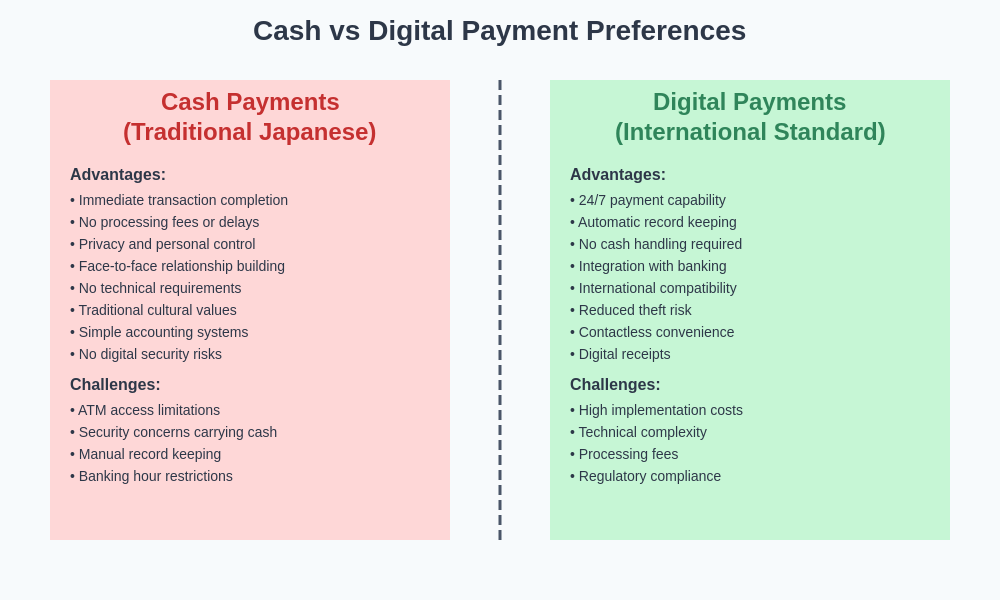
Credit card processing fees and transaction costs can represent significant expenses for sharehouse operators who typically operate on thin profit margins, making cash transactions financially advantageous despite the additional handling requirements. The immediate availability of cash payments eliminates the delays and uncertainties associated with electronic fund transfers and payment processing delays.
International banking complications create additional challenges for sharehouse operators who must navigate currency exchange issues, international transfer fees, and varying bank processing times that complicate automated payment systems. Living costs in Tokyo sharehouses explained demonstrates how payment method complications can affect overall housing expense calculations.
Practical Management Considerations
Cash payment systems offer sharehouse operators immediate access to funds without waiting periods, processing delays, or the risk of payment reversals that can complicate financial planning and operational cash flow management. This immediacy proves particularly valuable for smaller operators who may lack the financial reserves to accommodate payment processing delays or disputes.
The simplicity of cash transaction recording and bookkeeping appeals to many sharehouse operators who prefer straightforward accounting systems that don’t require specialized software or technical expertise to maintain accurate financial records. Traditional ledger-based accounting systems remain popular among older property managers who built their businesses using these proven methodologies.
Staff training requirements for cash handling procedures are generally less complex than digital payment system management, reducing operational overhead and minimizing the technical knowledge requirements for front-desk personnel and property managers. This simplification proves particularly valuable for sharehouses that employ part-time or temporary staff members.
Security considerations around cash handling, while requiring physical safeguards and procedures, eliminate concerns about digital security breaches, online fraud, and cybersecurity threats that increasingly affect electronic payment systems. Many operators view physical cash security as more manageable and controllable than digital security requirements.
International Resident Challenges and Adaptation
Foreign residents often struggle with cash payment requirements that conflict with their home country financial habits and expectations, creating practical challenges around budgeting, record-keeping, and expense tracking that digital payment systems typically facilitate automatically. How to budget realistically for sharehouse living addresses these adaptation challenges.
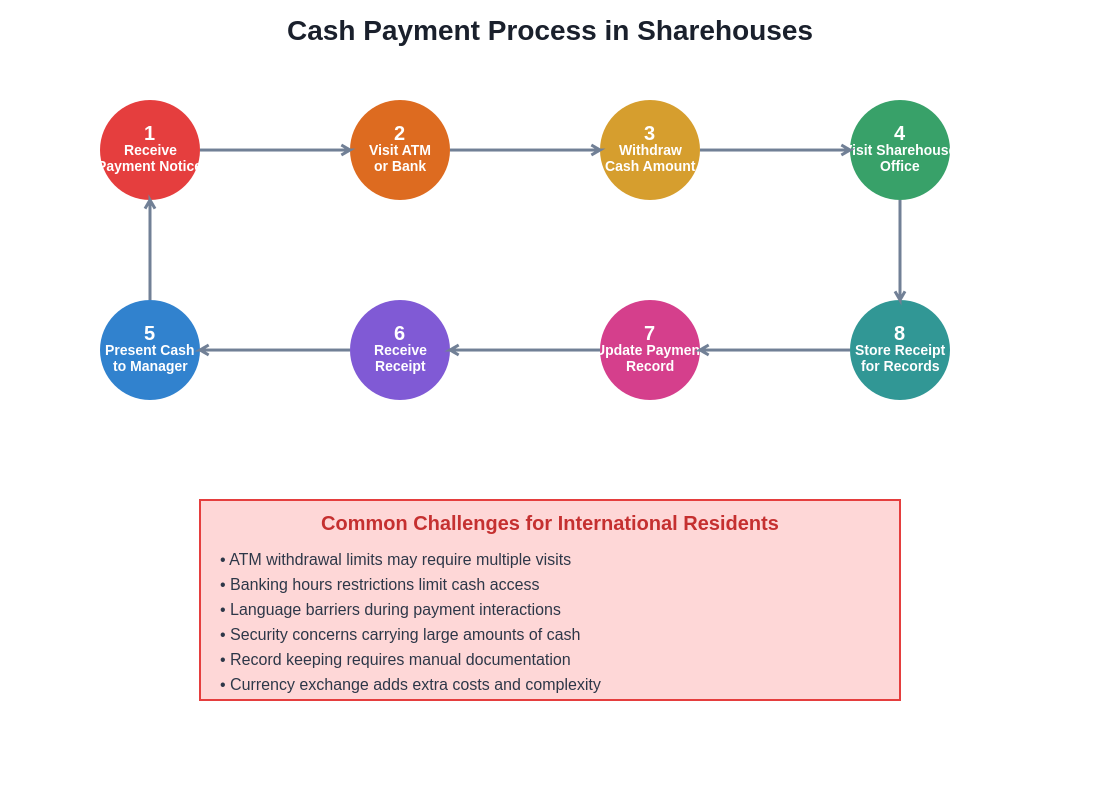
ATM accessibility and withdrawal limits can create significant inconveniences for international residents who must plan cash acquisition around banking hours, location constraints, and daily withdrawal restrictions that may not align with rent payment schedules. The need to carry large amounts of cash for rent payments raises safety and security concerns that many foreigners find uncomfortable.
Currency exchange considerations affect residents who maintain bank accounts in their home countries and must convert funds to Japanese yen for cash payments, potentially incurring unfavorable exchange rates and additional transaction fees that increase overall housing costs. How much Tokyo sharehouses really cost per month includes analysis of these hidden costs.
Record-keeping complications arise when cash payments don’t automatically generate the digital transaction records that many international residents rely upon for expense tracking, tax preparation, and financial management in their home countries. The manual documentation requirements can prove particularly challenging for residents managing complex international financial obligations.
Technology Adoption Barriers
Older sharehouse operators and property managers may lack the technical knowledge or confidence required to implement and maintain digital payment systems, creating resistance to adoption that extends beyond simple preference to encompass genuine capability concerns and training requirements. Why some residents never learn basic life skills often includes adaptation to local payment systems.
Infrastructure requirements for digital payment processing include reliable internet connectivity, point-of-sale equipment, and backup systems that represent significant capital investments for smaller operators who may prefer to allocate resources toward property improvements and resident services rather than payment system upgrades.
Technical support and maintenance considerations for digital payment systems require ongoing relationships with service providers and technical specialists that many traditional sharehouse operators find complicated and expensive compared to the self-contained nature of cash transaction management.
Integration challenges between digital payment systems and existing property management software or accounting procedures can create operational complications that discourage adoption, particularly for established operators with proven manual systems that meet their current needs effectively.
Trust and Relationship Dynamics
Cash transactions facilitate immediate, personal interactions between residents and property managers that many Japanese operators view as essential for building trust and maintaining positive community relationships within their sharehouses. Making friends through Tokyo sharehouse communities often begins with these financial interactions.
The physical exchange of money creates opportunities for face-to-face communication about payment issues, property concerns, and resident needs that automated payment systems might eliminate, potentially reducing the quality of property management and community building efforts that characterize successful sharehouse operations.
Accountability and commitment that cash payments represent appeal to property managers who view the effort required to obtain and present cash as demonstration of resident responsibility and commitment to their housing obligations. This perception influences tenant selection and evaluation processes in ways that automated payments might not replicate.
Cultural expectations around respect and formality that cash payment ceremonies embody align with traditional Japanese business practices that emphasize proper etiquette and personal attention in commercial relationships. Living with Japanese roommates in Tokyo sharehouses includes understanding these cultural nuances.
Economic and Market Factors
Cost considerations for implementing digital payment systems include not only initial setup expenses but ongoing transaction fees, maintenance costs, and potential revenue losses from payment failures or disputes that cash transactions eliminate entirely. Small-scale sharehouse operators often find these expenses difficult to justify given their limited profit margins.
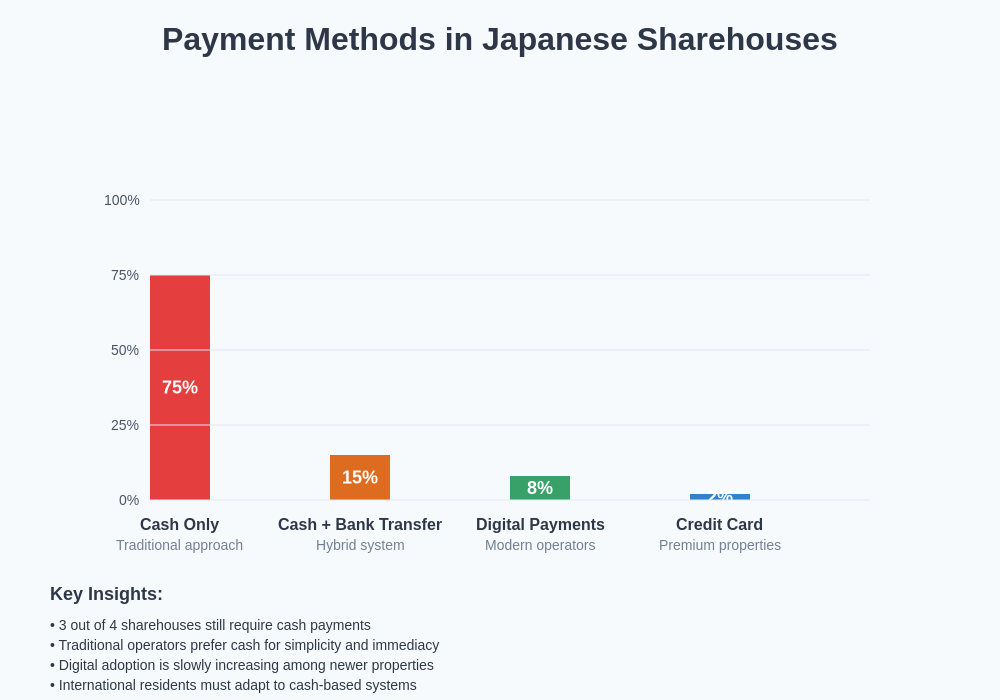
Market competition among sharehouse operators who largely maintain cash-only policies reduces pressure for individual operators to invest in digital payment infrastructure, creating industry-wide inertia that perpetuates traditional payment methods despite changing resident preferences and technological capabilities.
Insurance and liability considerations around digital payment processing can create additional expenses and compliance requirements that cash transactions avoid, making traditional payment methods more attractive from risk management perspectives despite their operational inconveniences.
Best sharehouses in Tokyo often maintain cash payment systems despite their premium positioning, demonstrating that payment method preferences transcend price point and market positioning within the sharehouse industry.
Future Evolution and Adaptation Strategies
Generational changes among both sharehouse operators and residents are gradually increasing pressure for digital payment adoption as younger property managers and international residents bring different expectations and technological comfort levels to the market. This demographic shift suggests eventual evolution toward hybrid payment systems.
Government initiatives promoting cashless society development and digital payment adoption may eventually influence sharehouse payment practices through regulatory incentives, tax advantages, or compliance requirements that make digital payment systems more attractive to traditional operators.
Technology improvements that simplify digital payment implementation and reduce associated costs could accelerate adoption rates among sharehouse operators who currently find these systems too complex or expensive to justify implementing for their operations.
International resident advocacy and market demand for digital payment options may eventually create competitive advantages for sharehouses that offer multiple payment methods, potentially driving industry-wide adoption through market forces rather than regulatory requirements.
Practical Navigation Strategies
International residents can adapt to cash payment requirements by establishing regular ATM visit schedules that align with rent due dates and banking hours, ensuring adequate cash availability without the stress of last-minute withdrawal attempts that may encounter system limitations or accessibility issues.
Record-keeping systems that document cash payments through photographs, receipts, and manual ledgers can help international residents maintain the financial documentation they need for tax purposes and personal budgeting while complying with cash-only payment requirements. How to calculate your true living costs includes cash payment tracking strategies.
Banking relationship optimization through Japanese bank account establishment and understanding of local ATM networks can significantly reduce the inconvenience and costs associated with regular cash withdrawals for rent and other sharehouse-related expenses.
Communication strategies that demonstrate understanding and respect for cash payment preferences can help international residents build positive relationships with property managers while advocating for gradual modernization of payment processes where appropriate and welcomed.
The persistence of cash-only payment systems in Japanese sharehouses reflects deep cultural, practical, and economic considerations that continue to influence property management decisions despite technological advances and changing international expectations. Understanding these underlying factors helps international residents navigate the system more effectively while appreciating the cultural context that shapes their housing experience in Japan.
Successful adaptation to cash payment requirements often becomes part of the broader cultural learning experience that makes sharehouse living in Japan uniquely valuable for international residents seeking authentic immersion in local customs and business practices that extend far beyond simple accommodation arrangements.
Disclaimer
This article is for informational purposes only and does not constitute financial or legal advice. Payment requirements and methods may vary between individual sharehouses and management companies. Readers should verify specific payment policies with their chosen sharehouse operators and consult appropriate professionals regarding banking and financial matters. Cultural observations are generalizations and may not apply to all situations or individuals.