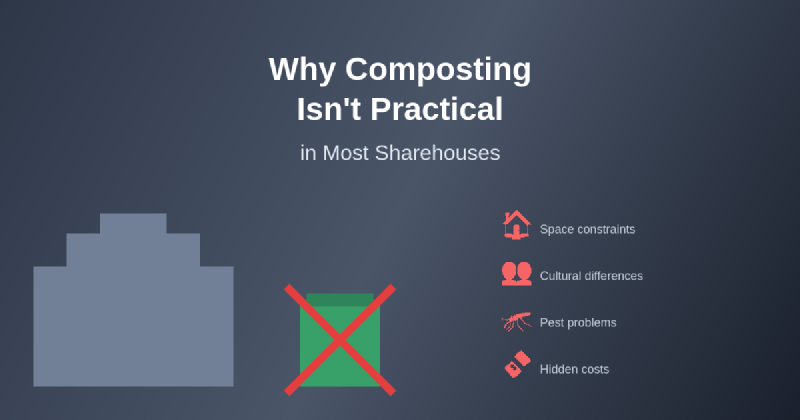
The growing environmental consciousness among international residents in Japanese sharehouses has sparked numerous discussions about implementing sustainable practices, with composting frequently emerging as a seemingly obvious solution for reducing household waste. However, the reality of sharehouse living presents numerous practical, cultural, and logistical obstacles that make composting far more challenging than individual environmental enthusiasts initially anticipate. Understanding these barriers provides valuable insights into the complex dynamics of shared living spaces and the limitations of implementing personal environmental values in communal settings.
Environmental sustainability represents an increasingly important consideration for many sharehouse residents, particularly those from countries where composting has become a normalized household practice. The disconnect between personal environmental values and the practical realities of Japanese urban living creates ongoing tension that affects everything from daily kitchen routines to long-term community harmony within sharehouses.
Space Constraints and Storage Limitations
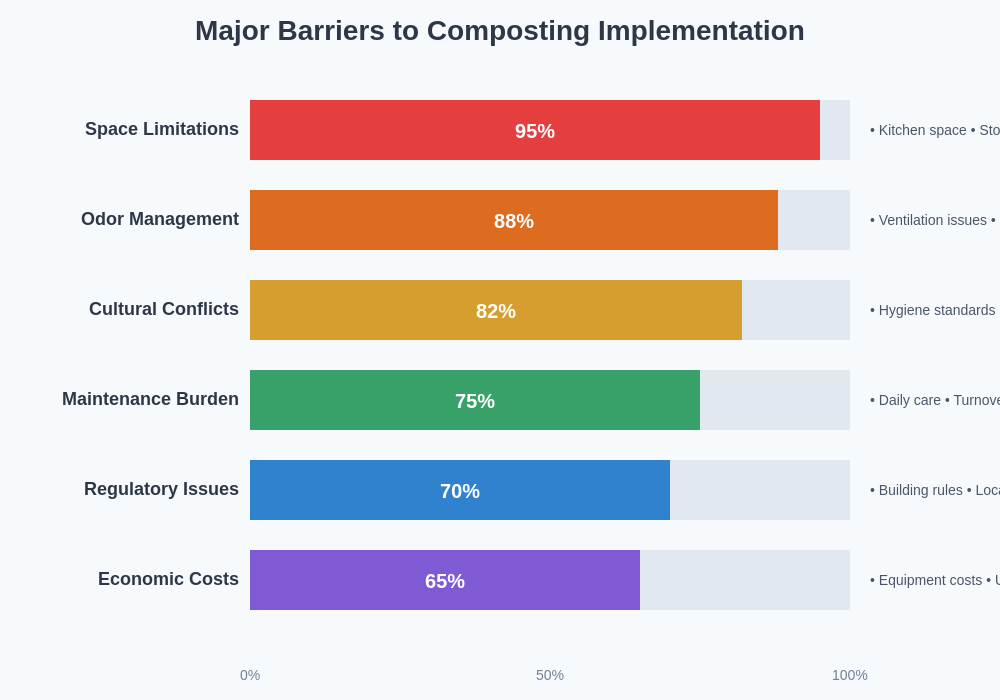
The fundamental challenge facing composting initiatives in Japanese sharehouses stems from severe space limitations that characterize most urban housing arrangements in Tokyo and other major cities. Limited storage forces you to live minimally affects every aspect of daily life, and composting equipment represents an additional storage burden that many residents find unacceptable in already cramped living conditions.
Kitchen spaces in typical sharehouses barely accommodate basic cooking equipment and food storage for multiple residents, leaving virtually no room for composting bins, collection containers, or the various tools required for effective organic waste management. The premium placed on every square centimeter of usable space means that composting infrastructure competes directly with essential living needs such as food preparation areas, dish storage, and basic appliances that residents require for daily survival.
Counter space limitations become particularly problematic when considering that effective composting requires dedicated areas for waste separation, temporary storage, and processing activities that can disrupt normal kitchen operations. The typical sharehouse kitchen, designed for efficiency rather than environmental sustainability, simply cannot accommodate the additional workspace and storage requirements that successful composting demands without significantly impacting other residents’ ability to prepare meals and maintain their daily routines.
Refrigerator space competition intensifies when organic waste requires temporary storage before composting processing, particularly during periods when outdoor composting systems cannot accommodate immediate disposal. The ongoing struggle for refrigerator territory that characterizes most sharehouse experiences becomes even more contentious when residents attempt to store decomposing organic materials alongside food items, creating hygiene concerns and social friction.
Odor Management and Hygiene Concerns
The enclosed nature of sharehouse living spaces creates particularly challenging conditions for managing the inevitable odors associated with organic waste decomposition, regardless of the composting method employed. How air quality problems develop in crowded spaces becomes significantly more complex when introducing decomposing organic matter into environments where multiple people must coexist in close proximity throughout the day.
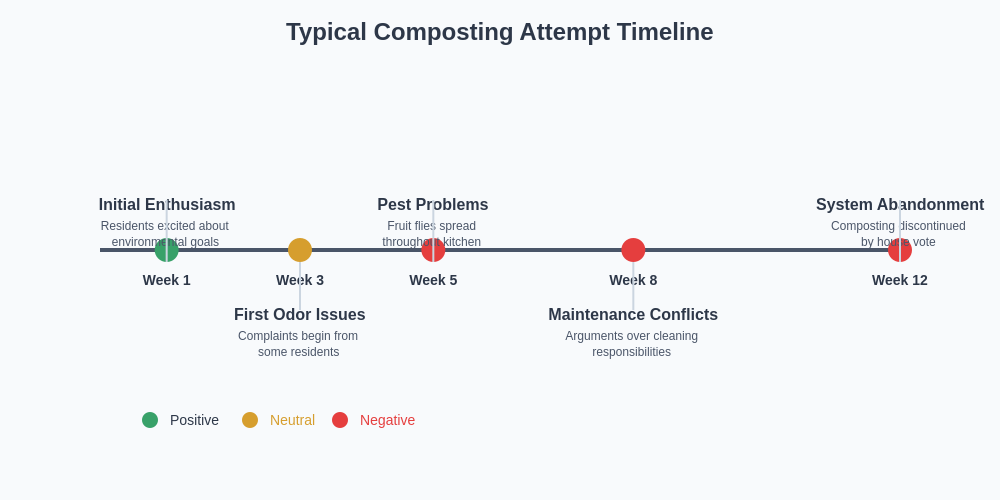
Ventilation limitations in most Japanese housing structures, combined with the tendency for residents to keep windows closed during extreme weather conditions, create environments where composting odors can quickly become overwhelming and persistent. The smell of decomposing food scraps, even when properly managed, can permeate common areas and individual rooms, creating discomfort for residents who have not consented to participate in composting initiatives but must endure the environmental consequences.
Fruit flies, gnats, and other insects attracted to decomposing organic matter represent ongoing pest management challenges that extend far beyond the immediate composting area. These insects can spread throughout the sharehouse, affecting residents’ personal spaces and creating hygiene concerns that impact everyone’s living experience regardless of their participation in or support for composting efforts.
The humid climate conditions common in Japan for significant portions of the year accelerate decomposition processes and intensify odor production, making year-round composting particularly challenging even with proper ventilation and maintenance procedures. Summer months become especially problematic when high temperatures and humidity create ideal conditions for rapid bacterial growth and smell development that can make shared living spaces unpleasant for all residents.
Cultural and Social Dynamics
Japanese cultural attitudes toward waste management and cleanliness often conflict with typical Western approaches to composting, creating social tension within internationally diverse sharehouse communities. Living with Japanese roommates in Tokyo sharehouses involves navigating cultural differences that extend to environmental practices and household management approaches.
The concept of keeping decomposing organic matter in living spaces contradicts deeply ingrained Japanese preferences for cleanliness, order, and waste separation that prioritize immediate removal of potentially unsanitary materials from residential environments. Japanese residents may view composting as fundamentally incompatible with proper household hygiene standards, creating ongoing conflict with environmentally motivated international residents who see composting as a responsible sustainability practice.
Consensus building around composting initiatives requires unanimous agreement among residents with vastly different cultural backgrounds, environmental priorities, and personal tolerance levels for the inconveniences associated with organic waste management. The democratic decision-making processes common in sharehouse communities often result in composting proposals being rejected due to valid concerns raised by residents who prioritize other aspects of community living over environmental sustainability.
Communication barriers can complicate discussions about composting implementation, particularly when technical aspects of proper composting procedures must be explained across language differences and cultural contexts. Misunderstandings about composting requirements, maintenance responsibilities, and problem resolution procedures can lead to failed implementations that create lasting negative associations with environmental initiatives.
Maintenance Responsibility and Fair Distribution
The ongoing maintenance requirements for successful composting create complex responsibility distribution challenges that can strain relationships and create ongoing conflict within sharehouse communities. How cleaning responsibilities create house drama becomes exponentially more complicated when composting systems require daily attention, regular maintenance, and specialized knowledge that not all residents possess or are willing to develop.
Establishing fair rotation systems for composting maintenance proves particularly difficult when residents have different schedules, travel frequently, or possess varying levels of knowledge about proper composting procedures. The consequences of missed maintenance can affect all residents through odors, pest problems, and system failures that require immediate attention regardless of who was responsible for care during the incident.
Resident turnover, which characterizes most sharehouse environments, creates ongoing challenges for maintaining institutional knowledge about composting systems and ensuring continuity of proper care procedures. New residents require education about existing composting systems, and departing residents may leave behind improperly maintained systems that create problems for remaining community members.
Financial responsibility for composting equipment, maintenance supplies, and system replacement becomes contentious when residents have different financial situations and varying levels of commitment to environmental initiatives. The initial investment in quality composting equipment often exceeds what many residents are willing to contribute, while ongoing costs for maintenance materials create recurring expenses that require ongoing consensus and payment coordination.
Regulatory and Building Management Issues
Japanese local regulations regarding waste management and building modifications often prohibit or restrict composting activities that sharehouses might otherwise implement to address environmental concerns. How recycling rules vary by Tokyo ward demonstrates the complexity of local waste management regulations that affect what environmental practices are legally permissible in different areas.
Building management companies typically prohibit modifications to plumbing systems, installation of outdoor composting equipment, or any activities that might attract pests or create odors that could affect other tenants in the building. These restrictions eliminate many composting options that might otherwise be viable in single-family residential settings but are incompatible with multi-unit housing structures.
Liability concerns related to pest problems, property damage, or neighbor complaints often result in building management specifically prohibiting composting activities in lease agreements or building rules. Even when not explicitly banned, the risk of lease violations or security deposit forfeiture can deter sharehouses from implementing composting systems that might be interpreted as violating property care requirements.
Local waste collection services may not accommodate the altered waste streams that result from successful composting programs, creating logistical challenges for disposing of finished compost or managing the reduced volume of conventional waste that results from organic matter diversion. The complexity of coordinating with municipal waste management systems often exceeds the administrative capacity of typical sharehouse communities.
Alternative Environmental Approaches
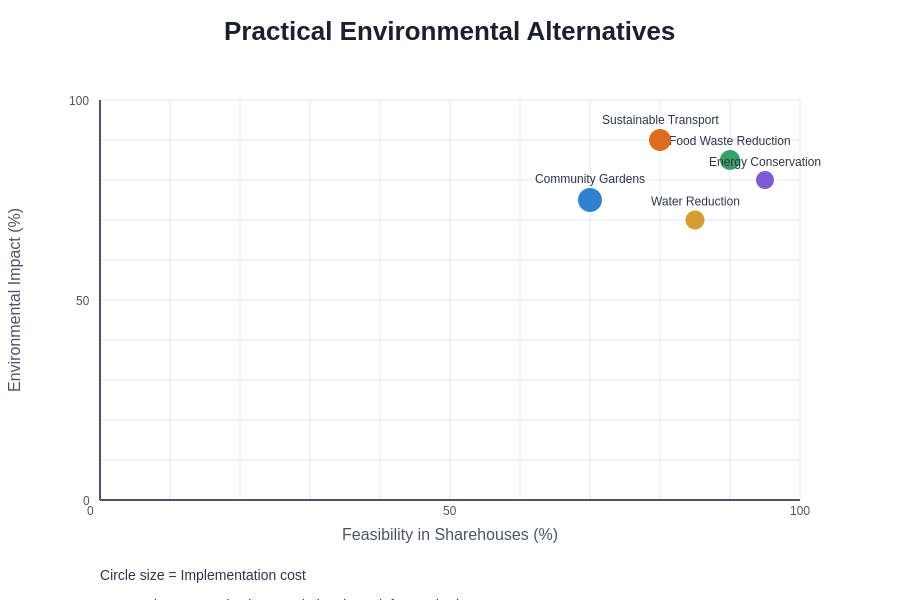
Recognition of composting limitations has led many environmentally conscious sharehouse communities to explore alternative sustainability approaches that better accommodate the constraints of shared urban living. Why sustainable living practices clash with convenience highlights the ongoing tension between environmental goals and practical living requirements that characterizes modern urban environmental efforts.
Food waste reduction through improved meal planning, leftover sharing systems, and bulk purchasing coordination can achieve significant environmental benefits without the ongoing maintenance and space requirements associated with composting systems. These approaches address environmental concerns while working within the practical limitations of sharehouse living rather than against them.
Community gardens and external composting programs offer opportunities for residents to participate in environmental initiatives while avoiding the practical challenges of in-house composting systems. Many Tokyo neighborhoods provide community composting sites where residents can contribute organic waste without managing systems within their living spaces.
Energy conservation initiatives, water usage reduction programs, and sustainable transportation coordination often provide more significant environmental benefits with fewer ongoing maintenance requirements and greater compatibility with diverse cultural preferences among international sharehouse communities.
Practical Experimentation and Learning Opportunities
Despite the numerous obstacles, some sharehouse communities have attempted composting implementations that provide valuable learning experiences about environmental initiative management in shared living contexts. How environmental activism isn’t always welcome explores the social dynamics that affect environmental initiative acceptance within diverse residential communities.
Small-scale composting experiments using countertop systems or individual room-based approaches allow environmentally motivated residents to explore composting without imposing their preferences on unwilling community members. These individual initiatives can provide personal satisfaction while respecting the autonomy and preferences of residents who prefer not to participate in composting activities.
Seasonal composting trials during periods when odor management is less challenging can help communities evaluate their capacity for handling organic waste management without committing to year-round systems that may prove unsustainable during more difficult weather conditions. These experiments provide valuable data about community tolerance levels and practical implementation challenges.
Educational initiatives that focus on waste reduction and environmental awareness rather than specific composting implementation can build environmental consciousness within sharehouse communities while avoiding the practical challenges associated with ongoing composting system management. These approaches can lay groundwork for future environmental initiatives while respecting current community limitations.
Economic Considerations and Cost-Benefit Analysis
The financial implications of composting initiatives extend beyond initial equipment costs to include ongoing expenses for maintenance supplies, pest control measures, and potential property damage that can make composting economically unattractive for budget-conscious sharehouse residents. How to budget realistically for sharehouse living includes consideration of additional expenses that environmental initiatives might introduce to monthly living costs.
Utility cost impacts from increased ventilation requirements, additional cleaning supplies, and pest management measures can offset any financial benefits that might result from reduced waste disposal fees. The cost-benefit analysis for composting becomes particularly unfavorable when considering the time investment required for proper maintenance and the potential costs of addressing problems that arise from improper composting management.
Equipment replacement costs and the ongoing expense of composting accelerants, pest control measures, and specialized cleaning supplies create recurring financial obligations that require ongoing resident commitment and payment coordination. These expenses often exceed the financial benefits of reduced waste disposal costs, particularly in urban areas where waste disposal fees represent a relatively small portion of overall living expenses.
The potential for property damage from pest infestations, moisture problems, or odor issues that affect security deposit returns can create significant financial risks that outweigh any environmental benefits that composting might provide. Risk assessment often favors avoiding composting to protect financial interests rather than pursuing environmental goals that carry potential economic penalties.
Technology Limitations and Infrastructure Requirements
Modern composting technologies designed for apartment living often require electrical connections, specialized ventilation systems, or ongoing consumable supplies that are incompatible with typical sharehouse infrastructure and budget constraints. The limited electrical capacity in many sharehouse kitchens cannot accommodate additional appliances without affecting other essential equipment usage.
Automated composting systems that address some odor and maintenance concerns often produce noise that disturbs residents in adjacent rooms or during nighttime hours when shared walls provide minimal sound insulation. The constant operation requirements of many automated systems create ongoing noise pollution that affects community harmony and individual sleep quality.
Internet connectivity requirements for smart composting systems may exceed the limited bandwidth available in many sharehouses or require ongoing subscription fees that add to monthly expenses. The complexity of maintaining technological composting solutions often exceeds the technical expertise available within typical sharehouse communities.
Power consumption for electric composting units can significantly impact utility bills in households where residents are budget-conscious and may object to increased electrical expenses for environmental initiatives that they did not choose to support. The ongoing operational costs of technological solutions often make them economically unviable for typical sharehouse budgets.
The fundamental incompatibility between composting requirements and sharehouse living constraints reflects broader challenges in implementing individual environmental values within shared community contexts. While the environmental benefits of composting remain significant, the practical realities of Japanese urban living, cultural diversity, space limitations, and community dynamics create barriers that make composting impractical for most sharehouse environments. Understanding these limitations helps residents make informed decisions about environmental priorities while focusing their sustainability efforts on approaches that better accommodate the unique characteristics of shared living situations.
Recognition of composting limitations does not diminish the importance of environmental consciousness but rather redirects environmental efforts toward more sustainable and community-compatible approaches that can achieve meaningful results without compromising the harmony and functionality of sharehouse communities. The most successful environmental initiatives in sharehouses typically involve strategies that work with rather than against the fundamental characteristics of shared urban living.
Disclaimer
This article is for informational purposes only and reflects common experiences in Japanese sharehouses. Individual sharehouse policies and local regulations may vary significantly. Residents interested in environmental initiatives should consult with their house management and local authorities to understand specific restrictions and opportunities. The views expressed represent general observations about composting challenges and may not apply to all sharehouse situations or locations.