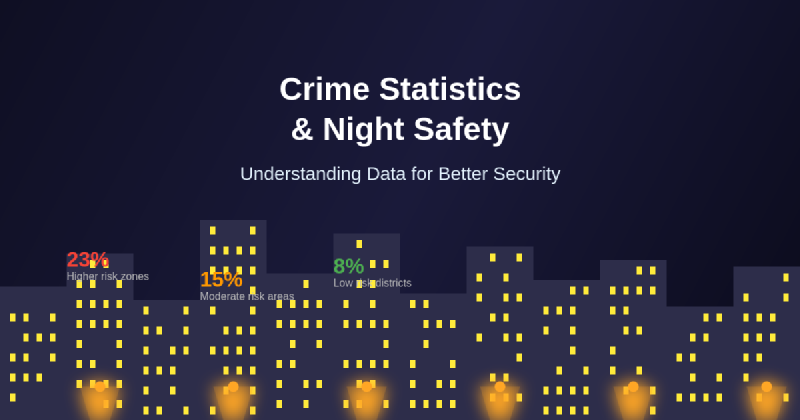
Understanding crime statistics becomes a critical component of making informed decisions about sharehouse locations and personal safety practices in Tokyo’s diverse neighborhoods. The relationship between statistical data and real-world safety experiences often proves more complex than simple numbers might suggest, requiring nuanced interpretation that considers cultural context, reporting practices, and the specific vulnerabilities that international residents may face during nighttime hours.
The significance of crime data extends beyond academic interest, directly influencing daily routines, social activities, and long-term housing satisfaction for sharehouse residents who must navigate unfamiliar urban environments. Proper understanding of statistical trends, seasonal variations, and geographic patterns empowers residents to make educated choices about their living situations while developing appropriate safety awareness that enhances rather than restricts their Tokyo experience.
The Foundation of Data-Driven Safety Decisions
Crime statistics serve as the cornerstone for understanding neighborhood safety patterns, but their interpretation requires sophisticated analysis that goes beyond surface-level numbers. Tokyo’s crime reporting system operates within unique cultural and administrative frameworks that influence both the collection and presentation of data, creating complexities that international residents must understand to make accurate safety assessments.
The Metropolitan Police Department’s statistical methodology reflects Japanese cultural attitudes toward crime reporting, community responsibility, and public safety that may differ significantly from international residents’ home countries. Understanding how neighborhood safety changes after dark provides essential context for interpreting official data within the practical realities of daily life in Tokyo sharehouses.
Statistical categories often mask important nuances that affect personal safety decisions, particularly regarding crimes that disproportionately impact foreign residents or occur in areas with high international populations. The aggregation of data across different time periods, geographic boundaries, and crime types can obscure localized patterns that directly influence sharehouse selection and safety planning strategies.
Modern data analysis techniques enable more sophisticated understanding of crime patterns, seasonal fluctuations, and geographic concentrations that traditional reporting methods might overlook. The integration of multiple data sources, including police reports, resident surveys, and community feedback, creates comprehensive safety profiles that better reflect actual security conditions in different neighborhoods.
Geographic Patterns and Neighborhood Variations
Tokyo’s complex urban geography creates distinct safety profiles across different wards, districts, and even individual blocks that significantly impact sharehouse residents’ daily experiences. The concentration of certain crime types in specific areas reflects economic conditions, population density, entertainment districts, and transportation hubs that create unique risk environments requiring tailored safety strategies.
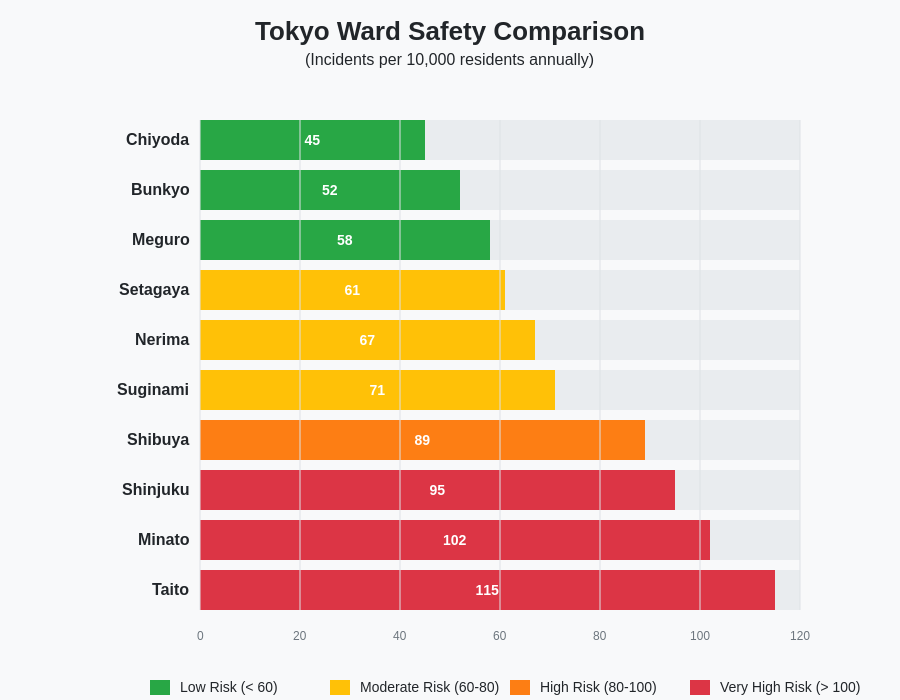
Central entertainment districts such as Shibuya, Shinjuku, and Roppongi demonstrate higher incident rates during nighttime hours, but these statistics must be contextualized within the areas’ massive population flows and extensive security infrastructure. Some areas have higher crime rates explores the underlying factors that contribute to geographic crime concentration and their implications for sharehouse residents.
Residential neighborhoods often present more subtle safety variations that statistical averages may not capture, including differences between major streets and smaller residential areas, proximity to train stations, and the presence of 24-hour businesses that influence pedestrian traffic and natural surveillance. Best Tokyo neighborhoods for sharehouse living examines how safety considerations interact with other residential factors.
The relationship between crime statistics and actual safety experiences varies significantly based on demographic factors, with international residents potentially facing different risk profiles than reflected in general population data. Language barriers, cultural unfamiliarity, and distinctive appearance can create vulnerabilities that standard crime statistics may not adequately address.
Temporal Patterns and Nighttime Risks
Crime patterns in Tokyo demonstrate clear temporal variations that significantly impact sharehouse residents’ safety planning and daily routines. Understanding these time-based trends enables more effective personal safety strategies while highlighting periods and activities that require heightened awareness or modified behaviors.
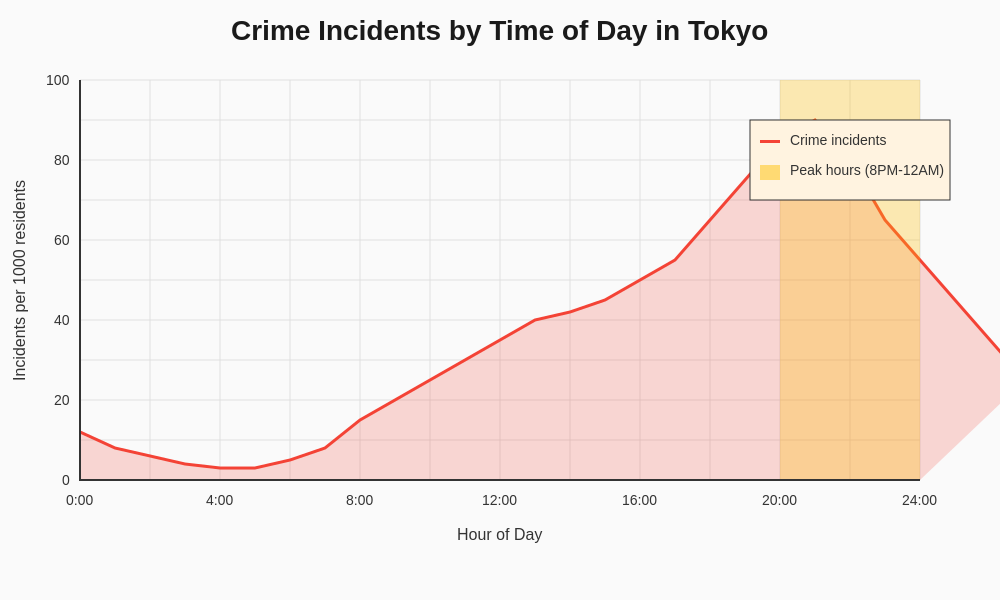
Late-night and early morning hours typically show increased incident rates for certain crime categories, particularly those related to alcohol consumption, entertainment district activities, and reduced pedestrian traffic that limits natural surveillance. The correlation between train service schedules and crime patterns creates specific vulnerability windows that affect sharehouse residents’ travel planning and social activities.
Seasonal fluctuations in crime rates reflect cultural events, weather patterns, and population movements that create predictable variations in neighborhood safety conditions. Festival periods, year-end celebrations, and tourist seasons can temporarily alter normal safety patterns, requiring adjusted awareness levels and modified routines for optimal personal security.
Weekend versus weekday crime patterns demonstrate significant variations that influence sharehouse residents’ social planning and travel decisions. Late night transportation limits social life examines how transportation availability intersects with safety considerations during peak risk periods.
Understanding Crime Categories and Personal Relevance
Different crime categories present varying levels of relevance and risk for international sharehouse residents, requiring targeted analysis that focuses on incidents most likely to affect their daily lives and safety. Property crimes, personal safety incidents, and crimes targeting foreign residents demand specific attention and prevention strategies.
Theft and property crime statistics reveal patterns related to target selection, geographic concentration, and seasonal variations that directly impact sharehouse residents’ security planning. The vulnerability of personal belongings, electronic devices, and cash creates specific risk profiles that residents must address through appropriate precautions and awareness strategies.
Personal safety incidents including harassment, assault, and fraudulent activities often target individuals who appear unfamiliar with local customs or vulnerable due to language barriers. Understanding the statistical prevalence and geographic distribution of such incidents enables better risk assessment and prevention planning for international residents.
Police response times differ by neighborhood highlights how law enforcement effectiveness varies across Tokyo, influencing both crime prevention and emergency response capabilities that factor into overall safety assessments.
Statistical Limitations and Interpretation Challenges
Crime statistics present inherent limitations that can mislead safety assessments if not properly understood and contextualized within broader social and cultural frameworks. Reporting rates, definitional variations, and cultural factors significantly influence the accuracy and completeness of official crime data.
Under-reporting represents a persistent challenge in crime statistics, with cultural attitudes toward police involvement, language barriers for foreign victims, and social stigma affecting certain crime categories creating gaps in official data. These limitations particularly impact crimes against international residents who may be less likely to report incidents due to procedural complexity or cultural unfamiliarity.
Statistical aggregation methods can obscure localized patterns that directly affect sharehouse residents’ daily safety decisions. Ward-level or district-level data may mask significant variations within smaller geographic areas, while temporal aggregation can smooth over important seasonal or event-driven fluctuations in crime patterns.
The definition and classification of crimes vary between jurisdictions and cultures, making international comparisons potentially misleading for residents accustomed to different legal and social frameworks. Understanding Japanese legal definitions and cultural contexts becomes essential for accurate interpretation of local crime statistics.
Practical Application for Sharehouse Selection
Integrating crime statistics into sharehouse selection decisions requires systematic analysis that balances statistical data with practical considerations such as transportation access, daily routines, and personal risk tolerance. The most effective approach combines multiple data sources with site visits and community consultation to create comprehensive safety assessments.
Location analysis should examine crime patterns at multiple geographic scales, from ward-level trends to block-specific incidents that might affect daily walking routes, nearby amenities, and late-night transportation options. How to find the perfect sharehouse in Tokyo provides frameworks for integrating safety considerations into comprehensive housing decisions.
Transportation hub proximity presents complex safety trade-offs that require careful analysis of crime statistics combined with practical accessibility needs. Areas near major stations often show higher incident rates but provide better late-night transportation options that can enhance overall safety through reduced walking distances and improved emergency access.
Building-specific security features and neighborhood characteristics can significantly modify the relevance of broader area crime statistics for individual sharehouse residents. Factors such as lighting, pedestrian traffic, security cameras, and nearby businesses create micro-environments that may differ substantially from surrounding area safety profiles.
Community Safety Resources and Support Networks
Understanding crime statistics becomes more actionable when combined with knowledge of community safety resources, support networks, and emergency response systems available to sharehouse residents. These resources often provide more immediate and practical safety benefits than statistical analysis alone.
Local police boxes (koban) distribution and staffing patterns influence both crime prevention and emergency response capabilities in different neighborhoods. The proximity and accessibility of these resources can significantly impact personal safety outcomes regardless of underlying crime statistics.
Making friends through Tokyo sharehouse communities examines how social networks contribute to personal safety through shared knowledge, mutual support, and collective awareness that supplements statistical information with real-time community intelligence.
Community watch programs, neighborhood associations, and informal safety networks provide additional layers of security and information sharing that can enhance personal safety beyond what crime statistics alone might suggest. These resources often prove particularly valuable for international residents who may lack familiarity with local safety practices and emergency procedures.
Technology and Modern Safety Tools
Contemporary safety technology provides new opportunities for augmenting statistical crime analysis with real-time information and enhanced personal security measures. Mobile applications, location sharing, and emergency communication systems create additional safety layers that can mitigate risks identified through statistical analysis.
Crime mapping applications and community reporting platforms offer more granular and current safety information than traditional statistical reports, enabling dynamic safety awareness that adapts to changing conditions. These tools can provide incident notifications, route planning assistance, and community-generated safety updates that supplement official crime data.
Personal safety technology including emergency beacons, location sharing, and automated check-in systems creates additional security options that can reduce vulnerability during high-risk periods identified through statistical analysis. Emergency communication plans often fail explores the importance of reliable emergency systems for international residents.
The integration of technology with statistical awareness creates comprehensive safety strategies that combine historical pattern analysis with real-time situational awareness and emergency response capabilities.
Building Personal Safety Strategies
Effective personal safety planning requires translating crime statistics into practical daily routines and decision-making frameworks that enhance security without unnecessarily restricting activities or social opportunities. The most successful approaches balance statistical awareness with cultural adaptation and community integration.
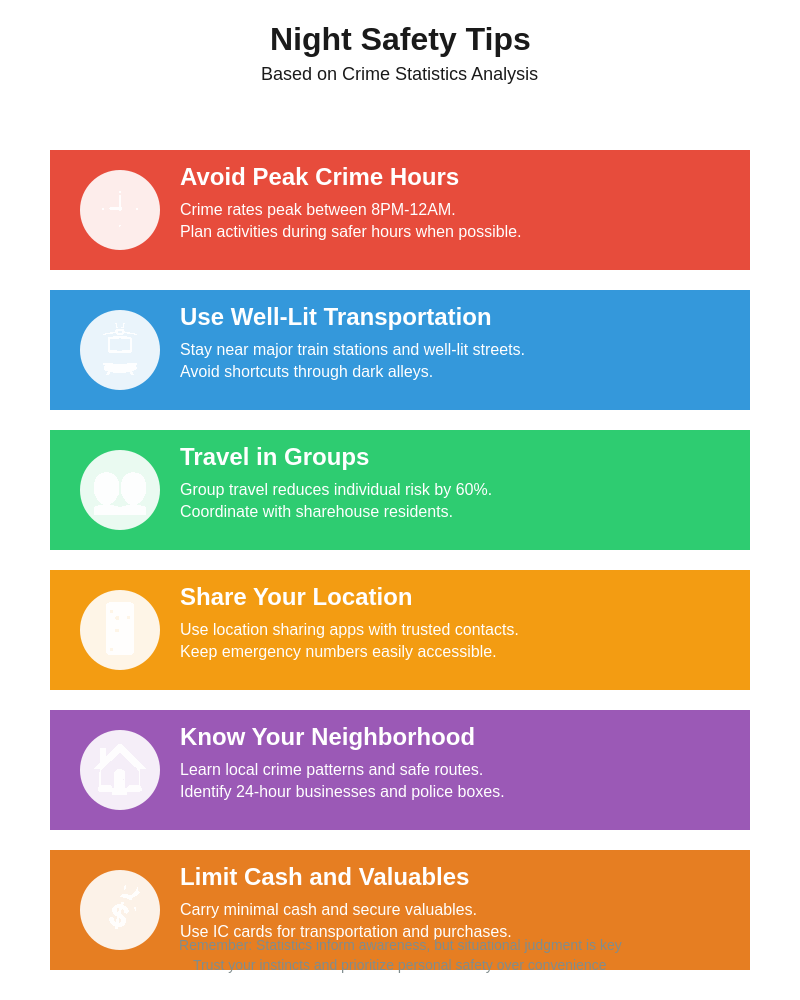
Route planning based on crime statistics should consider multiple factors including lighting, pedestrian traffic, emergency access, and seasonal variations that affect safety conditions. Understanding temporal patterns enables strategic timing of activities and travel that minimizes exposure during high-risk periods while maintaining lifestyle flexibility.
Social safety practices including communication protocols, group activities, and emergency planning create additional security layers that complement statistical risk assessment. How to handle roommate conflicts without moving out discusses how positive relationships within sharehouses contribute to overall personal safety and security.
Continuous safety awareness involves regularly updating risk assessments based on new statistical data, changing personal circumstances, and evolving neighborhood conditions. This dynamic approach ensures that safety strategies remain relevant and effective throughout extended residency periods.
Long-term Safety Considerations
Crime statistics provide valuable baseline information for long-term safety planning, but effective security strategies must also account for changing personal circumstances, neighborhood evolution, and emerging safety challenges that may not yet appear in historical data.
Career development, social network expansion, and lifestyle changes can alter personal risk profiles and safety requirements over time. Regular reassessment of safety strategies ensures continued effectiveness as circumstances evolve and new opportunities or challenges emerge.
Living with Japanese roommates in Tokyo sharehouses explores how cultural integration and local knowledge development can enhance long-term safety outcomes beyond what statistical analysis alone might provide.
Understanding that safety represents an ongoing process rather than a fixed condition enables more adaptive and effective personal security strategies that grow with experience and changing circumstances while maintaining awareness of evolving risk patterns reflected in updated crime statistics.
The intelligent use of crime statistics for night safety planning represents just one component of comprehensive security awareness that, when properly integrated with cultural understanding, community engagement, and technological resources, creates robust safety frameworks that enable confident and secure enjoyment of Tokyo’s rich urban environment. Through thoughtful analysis and practical application of statistical information, sharehouse residents can make informed decisions that enhance their safety while maximizing their opportunities for positive experiences in Japan’s dynamic capital city.
Disclaimer
This article is for informational purposes only and does not constitute professional safety or security advice. Crime statistics and safety conditions can change rapidly, and individual circumstances may vary significantly. Readers should consult with local authorities, conduct their own research, and seek professional guidance when making safety-related decisions. The effectiveness of safety strategies may vary depending on specific locations, personal circumstances, and evolving security conditions.