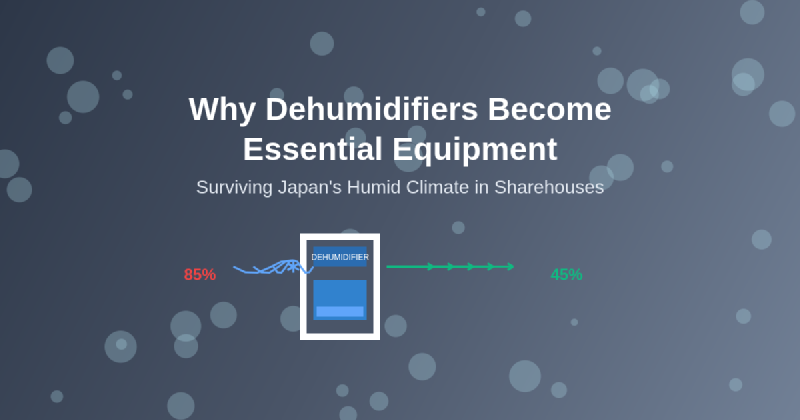
Living in a Japanese sharehouse during the country’s notoriously humid seasons transforms what might seem like a minor comfort appliance into an absolutely critical piece of survival equipment. The unique combination of Japan’s subtropical climate, traditional building construction methods, and the increased moisture load from multiple residents sharing common spaces creates an environment where humidity management becomes essential for both health and comfort. Understanding why dehumidifiers transition from luxury items to daily necessities reveals the fundamental challenges that international residents face when adapting to Japan’s demanding climate conditions.
The transition from viewing dehumidifiers as optional equipment to recognizing them as essential infrastructure occurs rapidly for most sharehouse residents, particularly during Japan’s intense rainy season and sweltering summer months. The cumulative effect of multiple people breathing, cooking, showering, and drying clothes within shared spaces creates moisture levels that can quickly become overwhelming without proper humidity control systems in place.
Understanding Japan’s Humidity Challenge
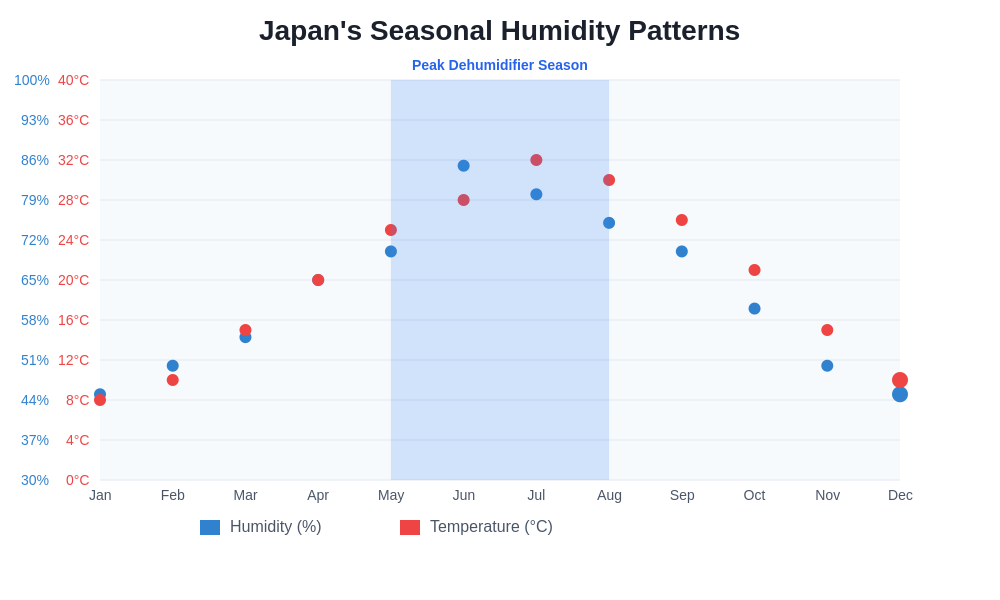
Japan’s geographical location and seasonal weather patterns create humidity conditions that many international residents find shocking and difficult to adapt to, especially those coming from drier climates or regions with more effective building ventilation systems. The country experiences distinct periods of extreme humidity, including the infamous rainy season from June to July and the oppressive summer months that follow, during which outdoor humidity levels regularly exceed 80 percent and indoor conditions can become even more challenging.
How rainy season creates humidity problems demonstrates how quickly moisture accumulates in shared living spaces during Japan’s wettest months. Traditional Japanese building construction, while elegant and historically appropriate, often prioritizes other factors over humidity control, creating situations where modern climate management tools become necessary supplements to architectural design.
The physiological impact of sustained high humidity affects sleep quality, respiratory health, and general comfort levels in ways that many people don’t anticipate until they experience prolonged exposure. International residents frequently report feeling constantly damp, experiencing disrupted sleep patterns, and developing respiratory issues that disappear immediately upon returning to more controlled climate environments.
Sharehouse environments compound these challenges because increased occupancy density creates additional moisture sources through cooking, bathing, breathing, and indoor clothes drying that was never part of the original building design considerations. The cumulative effect of multiple residents’ daily activities can push indoor humidity levels well beyond comfortable ranges, creating conditions that demand active intervention rather than passive adaptation.
Health Implications of Uncontrolled Humidity
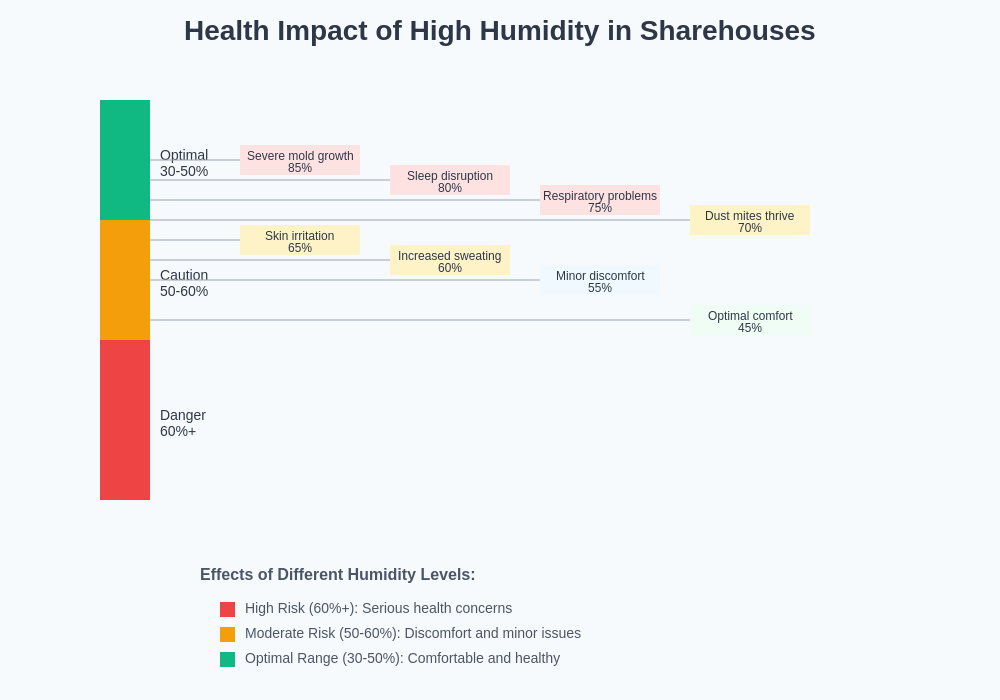
The health consequences of living in consistently high humidity environments extend far beyond simple discomfort, encompassing respiratory issues, skin problems, and sleep disruption that can significantly impact quality of life and daily performance. Medical research consistently demonstrates that humidity levels above 60 percent create optimal conditions for dust mite proliferation, mold growth, and bacterial development that can trigger allergic reactions and respiratory distress in sensitive individuals.
How mold problems develop in humid sharehouses illustrates the serious health risks that emerge when moisture control fails in shared living environments. Respiratory symptoms including coughing, wheezing, and congestion often develop gradually, making it difficult for residents to connect their symptoms with environmental humidity levels until problems become severe enough to require medical intervention.
Sleep quality deterioration represents one of the most immediate and noticeable effects of excessive humidity, as the human body’s natural cooling mechanisms become less effective in moisture-saturated air. Night sweats, restless sleep, and morning fatigue become common complaints among sharehouse residents who haven’t yet invested in proper humidity control equipment, creating cascading effects on work performance, social interactions, and overall life satisfaction.
Skin health issues including increased acne, fungal infections, and general irritation frequently plague residents of humid sharehouses, particularly those from drier climates whose skin hasn’t adapted to constant moisture exposure. These problems often worsen during summer months when air conditioning use increases, creating temperature fluctuations that combine with high humidity to create particularly challenging conditions for skin health maintenance.
The Mold Prevention Imperative
Mold prevention in Japanese sharehouses requires proactive humidity management rather than reactive cleaning efforts, as once established, mold colonies become extremely difficult to eliminate completely and tend to return rapidly in favorable conditions. The combination of organic building materials, limited air circulation, and consistent moisture sources creates an environment where mold spores can establish thriving colonies within days of favorable conditions emerging.
Why moisture control prevents mold growth explains the scientific relationship between humidity levels and mold proliferation. Maintaining indoor humidity below 50 percent creates conditions where most common household mold species cannot establish sustainable colonies, making prevention through dehumidification far more effective than attempting to control established infestations through cleaning and chemical treatments.
The economic implications of mold damage in sharehouses can be substantial, affecting security deposit returns, requiring expensive remediation procedures, and potentially forcing residents to replace personal belongings that become contaminated. Understanding what security deposits actually cover in sharehouses reveals how mold damage often exceeds normal wear and tear coverage, creating unexpected financial obligations for departing residents.
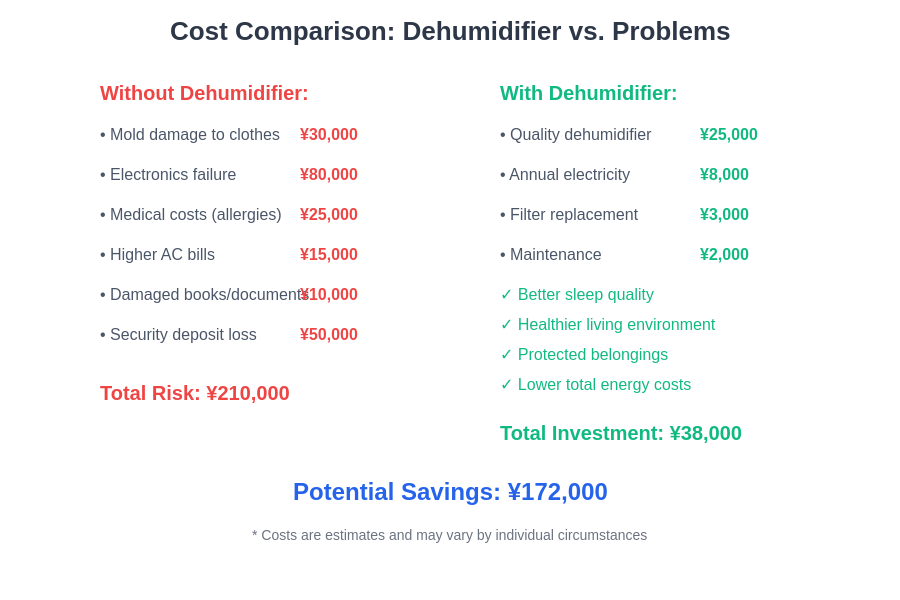
Personal belongings including clothing, books, electronics, and furniture become vulnerable to mold damage in high humidity environments, with natural fiber materials being particularly susceptible to rapid colonization. The replacement costs for mold-damaged personal items can quickly exceed the initial investment in quality dehumidification equipment, making humidity control a financially prudent preventive measure rather than an optional comfort upgrade.
Sleep Quality and Comfort Enhancement
The relationship between humidity control and sleep quality becomes immediately apparent to sharehouse residents who invest in dehumidification equipment, with many reporting dramatic improvements in sleep depth, duration, and morning alertness within the first few nights of use. High humidity interferes with the body’s natural thermoregulation mechanisms, making it difficult to maintain optimal core body temperature for quality sleep even when ambient temperatures are relatively comfortable.
How sleep quality suffers in shared environments explores the various environmental factors that affect rest in sharehouses, with humidity control emerging as one of the most impactful single interventions available to individual residents. The ability to create a controlled microclimate within personal spaces provides significant advantage over residents who rely solely on building-level climate management systems.
Night sweats and excessive perspiration during sleep create discomfort that extends beyond the immediate sleeping period, affecting sheets and mattresses in ways that can create hygiene issues and additional laundry demands. Dehumidifiers help maintain skin dryness during sleep, reducing the bacterial and fungal growth potential that develops from extended contact with moisture-saturated bedding materials.
Temperature perception becomes more accurate in properly dehumidified spaces, allowing residents to set air conditioning systems more efficiently and reduce energy consumption while maintaining equivalent comfort levels. The combination of dehumidification and moderate air conditioning often provides superior comfort compared to aggressive cooling in high humidity conditions, resulting in both improved sleep quality and reduced utility expenses.
Protecting Personal Belongings and Electronics
Electronic equipment including computers, smartphones, cameras, and audio devices face particular vulnerability in high humidity environments, with moisture infiltration causing corrosion, short circuits, and premature failure that can result in expensive replacement costs and data loss. How consumer electronics sharing works discusses the additional challenges when valuable electronics are exposed to shared space humidity levels that may exceed manufacturer specifications.
Clothing and textile preservation becomes a significant challenge in humid sharehouses, with natural fibers being particularly susceptible to mold growth, odor retention, and fabric deterioration that can destroy expensive wardrobes within a single humid season. Professional clothing required for work environments represents a particular concern, as replacement costs can be substantial and availability of specific sizes or styles may be limited for international residents.
Books, documents, and paper materials face rapid deterioration in high humidity conditions, with pages becoming wavy, text becoming blurred, and bindings failing as adhesives lose effectiveness in moisture-saturated environments. Important documents including visas, contracts, and academic transcripts require particular protection, as replacement processes can be time-consuming and expensive for international residents living in Japan.
Musical instruments represent another category of belongings that require humidity protection, with wooden instruments being particularly vulnerable to warping, cracking, and joint separation that can render them unplayable and expensive to repair. How musical instruments affect noise policies touches on the additional considerations for residents who need to protect valuable instruments from humidity damage.
Energy Efficiency and Cost Considerations
The economic benefits of dehumidifier use extend beyond preventing damage to encompass reduced air conditioning costs, as properly dehumidified air feels cooler at higher temperatures, allowing residents to set thermostats higher while maintaining equivalent comfort levels. This principle of “apparent temperature” means that removing moisture from air can provide comfort improvements equivalent to reducing actual temperature by several degrees.
How air conditioning bills spike in summer demonstrates the financial impact of inefficient cooling strategies. Combining dehumidification with moderate air conditioning typically provides superior comfort at lower energy costs compared to aggressive cooling alone, particularly during Japan’s humid summer months when cooling systems must work against both temperature and humidity challenges.
Modern dehumidifiers incorporate energy-efficient technologies including heat pump systems and intelligent humidity sensors that minimize power consumption while maintaining optimal moisture levels. The most efficient units can remove substantial amounts of moisture while consuming less electricity than equivalent comfort improvements achieved through air conditioning alone, making them cost-effective investments for long-term residents.
Water collection from dehumidifiers provides an additional benefit in the form of distilled water suitable for various household applications including plant watering, iron filling, and cleaning solutions. Some residents report collecting several liters of water daily during peak humidity periods, representing both successful moisture removal and useful byproduct generation that adds value to the dehumidification process.
Choosing the Right Dehumidifier for Sharehouse Living
Dehumidifier selection for sharehouse environments requires balancing capacity, noise levels, energy efficiency, and space constraints to identify units that provide effective humidity control without creating conflicts with roommates or violating house policies. Room size calculations must account for the moisture load from multiple occupants rather than just physical dimensions, as shared spaces generate more humidity per square meter than single-occupancy rooms.
Noise considerations become particularly important in sharehouse settings where sound travels between rooms and common areas, making quiet operation a priority for maintaining positive relationships with housemates. Why noise control becomes critical for career success explains how sound management affects both sleep quality and professional activities in shared living environments.
Capacity requirements for sharehouse rooms typically exceed manufacturer recommendations based on square footage alone, as the calculations must account for additional moisture sources including multiple people, increased cooking activities, and limited ventilation compared to single-family homes. Oversized units that cycle on and off frequently often provide better humidity control and energy efficiency compared to undersized units that run continuously without achieving target humidity levels.
Maintenance accessibility and filter replacement requirements should factor into selection decisions, as units requiring frequent attention may become neglected in busy sharehouse environments. Models with large water tanks, easy-access filters, and automatic shut-off features provide more reliable long-term performance with minimal user intervention, making them suitable for the practical demands of shared living situations.
Seasonal Usage Patterns and Optimization
The seasonal nature of Japan’s humidity challenges means that dehumidifier usage patterns must adapt to changing weather conditions throughout the year, with peak usage during rainy season and summer months requiring different strategies than the relatively dry winter period. Understanding these patterns helps residents optimize equipment settings and energy consumption while maintaining consistent comfort levels.
How seasonal demand affects sharehouse prices touches on how climate factors influence housing markets, with humidity control becoming a significant factor in resident satisfaction and retention rates. Properties that provide adequate humidity management often command premium rates during peak humidity seasons due to the comfort advantages they offer.
Spring preparation involves equipment maintenance, filter replacement, and capacity testing before peak humidity season arrives, as equipment failures during critical periods can create rapid comfort and health deterioration. Preventive maintenance schedules should align with seasonal transitions rather than arbitrary calendar dates to ensure optimal performance when demand peaks.
Winter storage considerations include proper cleaning, drying, and storage procedures that prevent equipment damage during off-season periods while ensuring rapid deployment capability when humidity levels rise. Some residents maintain year-round operation at reduced capacity to prevent sudden humidity spikes during weather transitions, particularly in poorly ventilated sharehouses where moisture can accumulate quickly.
Integration with Sharehouse Living Dynamics
Successful dehumidifier integration in sharehouse environments requires consideration of shared space dynamics, utility billing arrangements, and house rules that may affect equipment placement, operation schedules, and cost sharing. How utility bill calculations can be manipulated reveals the importance of understanding how additional electrical equipment affects shared utility expenses and resident relationships.
Common area humidity management often requires coordination between multiple residents to avoid conflicts over thermostat settings, equipment placement, and operating schedules. Some sharehouses implement shared dehumidification systems for common areas while allowing individual room-level control, creating hybrid approaches that balance efficiency with personal preferences.
Storage space allocation for dehumidifiers must account for both active operation locations and off-season storage requirements, as these units typically require accessible placement for optimal performance and regular maintenance. Conflict prevention strategies include establishing clear agreements about noise levels, operating hours, and shared space usage before equipment installation rather than attempting to resolve disputes after problems develop.
Educational sharing among housemates about humidity control benefits often creates positive adoption patterns, as residents who initially resist dehumidifier use frequently become advocates after experiencing the comfort and health improvements firsthand. Making friends through Tokyo sharehouse communities discusses how shared challenges and solutions can strengthen community bonds among residents.
The evolution from viewing dehumidifiers as optional comfort devices to recognizing them as essential health and safety equipment represents a common learning curve for international residents adapting to Japan’s demanding climate conditions. This transformation typically occurs within the first humid season, as residents experience firsthand the dramatic difference that proper humidity control makes in their daily comfort, health, and property protection. The investment in quality dehumidification equipment consistently proves worthwhile through improved sleep quality, reduced health issues, protection of valuable belongings, and enhanced overall quality of life in shared living environments.
Understanding the critical role of humidity control in Japanese sharehouses empowers residents to make informed decisions about equipment purchases, usage strategies, and seasonal preparation that can dramatically improve their living experience. The combination of health benefits, property protection, and comfort enhancement makes dehumidifiers one of the most valuable investments that sharehouse residents can make for long-term satisfaction and well-being in Japan’s challenging climate conditions.
Disclaimer
This article is for informational purposes only and does not constitute professional medical or technical advice. Individual health conditions, building characteristics, and climate sensitivity may vary. Readers should consult with healthcare professionals regarding any persistent respiratory or health issues, and consider professional assessment of their specific living conditions when making equipment decisions. Dehumidifier effectiveness may vary based on room size, occupancy, building construction, and local climate conditions.