Living in Tokyo as a foreign resident brings numerous administrative responsibilities that directly impact your legal status and ability to remain in Japan. Among these critical considerations, embassy access stands as one of the most overlooked yet essential factors when selecting your sharehouse location. The proximity to your home country’s embassy or consulate can mean the difference between swift resolution of urgent visa matters and costly delays that could jeopardize your residency status, employment opportunities, and overall stability in Japan.
The complexity of Japanese immigration procedures, combined with the unique challenges faced by sharehouse residents, creates situations where immediate embassy access becomes not just convenient but absolutely necessary. Understanding these scenarios and planning accordingly represents a crucial aspect of successful long-term living in Tokyo that many newcomers discover only after encountering urgent situations that require immediate diplomatic intervention.
The Critical Role of Embassy Services in Tokyo Living
Embassy services extend far beyond simple passport renewals and tourist assistance, encompassing a comprehensive range of vital functions that directly affect your daily life and legal standing in Japan. How to find the perfect sharehouse in Tokyo requires considering proximity to essential services, with embassy access ranking among the most critical location factors for international residents.
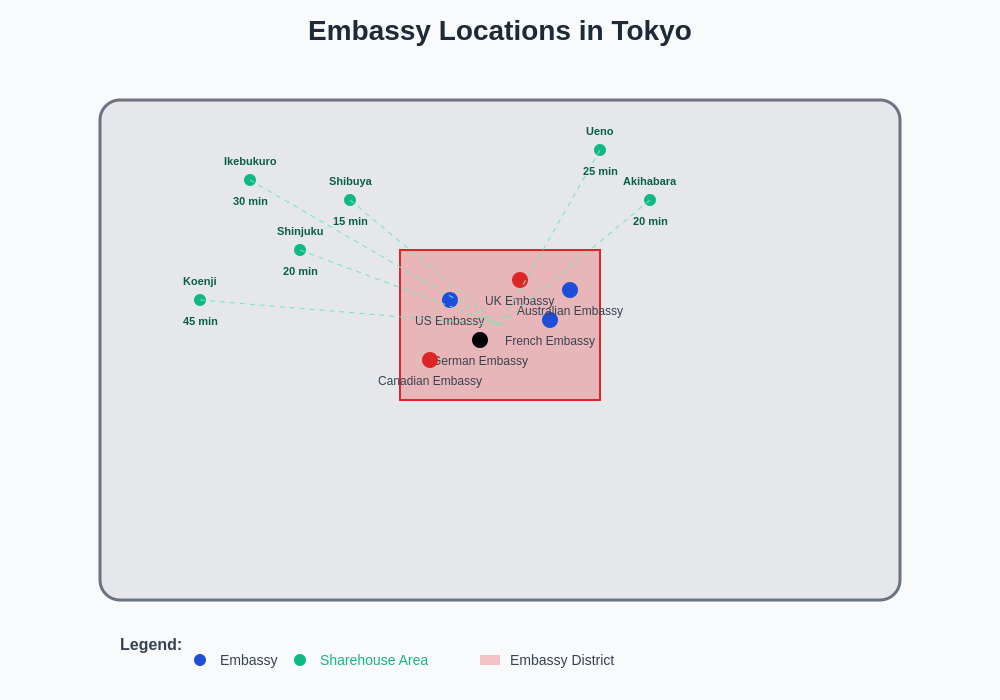
Visa status changes, employment authorization updates, and emergency documentation needs often arise with minimal advance notice, requiring immediate access to embassy services that operate on strict appointment schedules and limited availability. The difference between same-day emergency appointments and weeks-long waiting periods frequently depends on your ability to physically present yourself at embassy premises during specific hours when urgent services become available.
Document authentication, notarization services, and legal certification requirements for Japanese bureaucratic processes often mandate embassy involvement that cannot be completed remotely or through third-party services. Japanese sharehouse rules every foreigner should know include understanding how documentation requirements affect your housing stability and legal compliance obligations.
Emergency situations involving family crises, medical emergencies, or sudden changes in home country circumstances require immediate embassy coordination that can affect everything from emergency travel permissions to financial assistance programs specifically designed for overseas nationals facing unexpected difficulties.
Understanding Visa Emergency Scenarios
Visa emergencies encompass a broad spectrum of situations that can arise without warning and require immediate embassy intervention to prevent serious legal and practical consequences. Employment visa complications, including sudden job termination or employer sponsorship changes, create urgent timelines for status adjustment that often provide only days or weeks for resolution before legal violations occur.
Student visa holders face particular vulnerabilities when academic programs change unexpectedly, school closures occur, or enrollment status modifications require immediate immigration office coordination supported by embassy documentation and advocacy services. Student sharehouses near top Tokyo universities become strategic choices not only for academic convenience but for proximity to both educational institutions and diplomatic support services.
Working holiday visa holders encounter unique challenges when employment situations change rapidly or when visa conditions require clarification that only embassy staff can provide through direct communication with Japanese immigration authorities. The time-sensitive nature of these interventions often determines whether individuals can maintain legal status or must face costly departure and re-entry procedures.
Family reunification visas, spouse visas, and dependent status changes frequently require urgent embassy involvement when relationship circumstances change, family emergencies arise, or documentation needs immediate authentication for Japanese immigration proceedings that cannot accommodate delays in processing timelines.
Geographic Distribution of Embassies in Tokyo
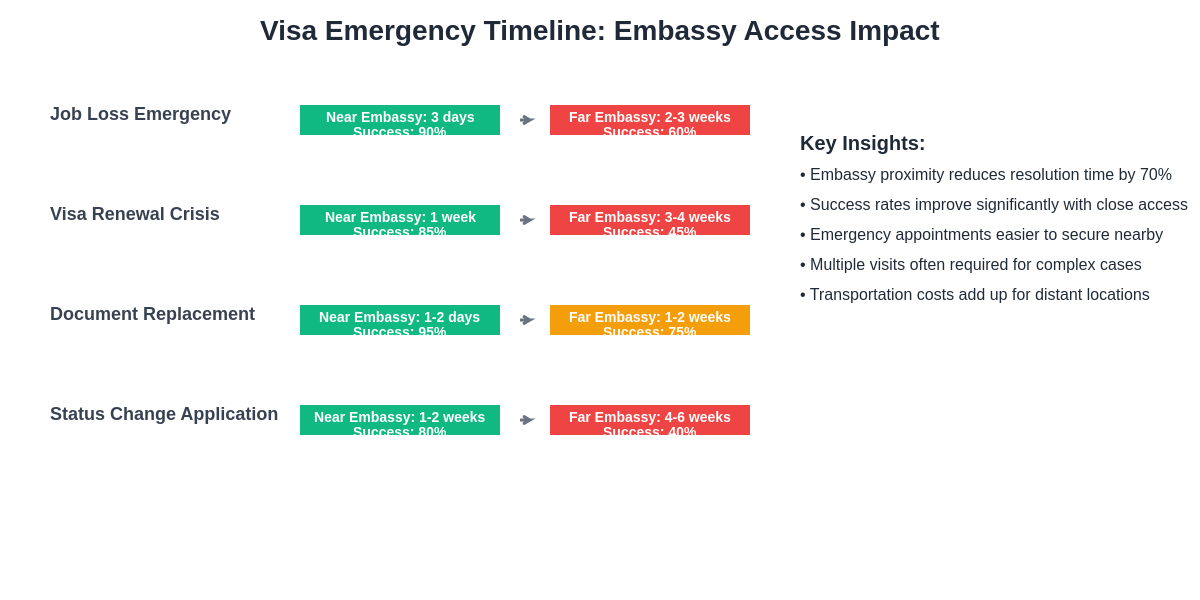
Tokyo’s embassy district centers primarily around specific areas that create significant travel time variations depending on your sharehouse location choice. The concentration of major embassies in central Tokyo areas such as Akasaka, Roppongi, and Aoyama means that residents in outlying areas may face hour-long commutes each direction for routine embassy visits that become prohibitively time-consuming during urgent situations.
Best Tokyo neighborhoods for sharehouse living must balance multiple factors including embassy proximity alongside other practical considerations such as work commute convenience, social opportunities, and budget constraints that affect long-term satisfaction with location choices.
Transportation accessibility to embassy districts varies dramatically across Tokyo’s extensive metropolitan area, with some suburban sharehouse locations requiring multiple train transfers and significant travel time that can prevent same-day problem resolution when urgent embassy services become necessary for visa or legal matters.
Peak hour transportation congestion can extend embassy visits into full-day commitments when combined with appointment waiting times and document processing periods, particularly affecting working residents who must balance employment responsibilities with essential embassy obligations that cannot be postponed or delegated to others.
Documentation and Administrative Requirements
Embassy documentation requirements for visa-related services often involve complex paperwork that must be completed accurately and submitted within specific timeframes that leave little room for errors or delays. What documents you need for Tokyo sharehouse applications represents just one aspect of the broader documentation landscape that international residents must navigate throughout their stay in Japan.
Notarization services for Japanese legal proceedings, including housing contracts, employment agreements, and financial transactions, require embassy authentication that cannot be obtained through alternative channels or remote processing methods available in many other countries.
Income verification, background check updates, and criminal record clearances for visa renewals often require embassy coordination with home country authorities that involves multiple appointment visits and document collection periods spanning several weeks or months of preparation time.
Emergency passport services, replacement documentation for lost or stolen identification, and expedited processing for urgent travel needs require immediate embassy access that becomes critical during family emergencies or unexpected business requirements that cannot accommodate standard processing delays.
Impact on Sharehouse Selection Strategy
Strategic sharehouse selection should incorporate embassy access considerations into the broader decision-making framework that balances multiple competing priorities affecting daily convenience and emergency preparedness capabilities. Living costs in Tokyo sharehouses explained must include transportation costs for regular embassy visits alongside other recurring expenses that affect monthly budget planning.
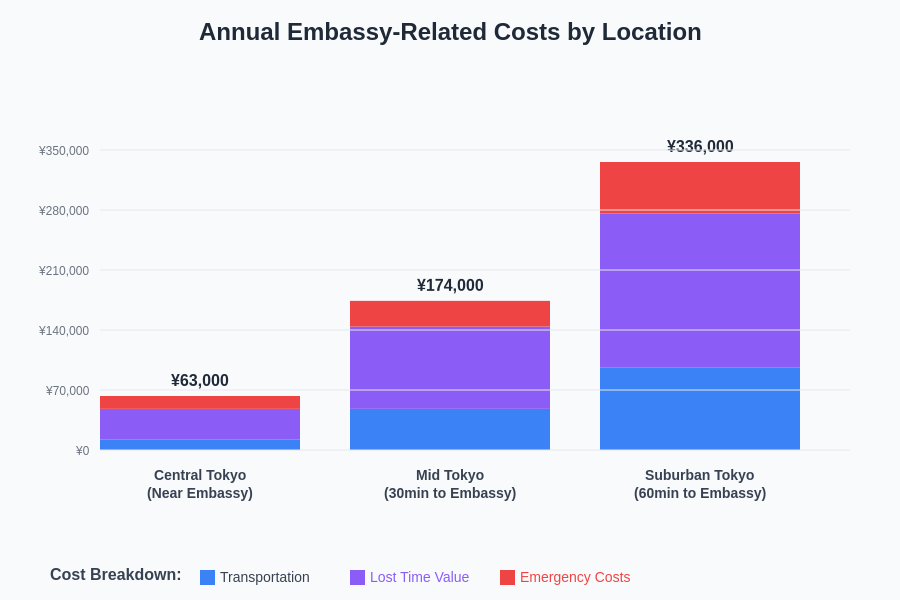
Central Tokyo sharehouses command premium pricing partly due to superior access to essential services including embassies, but the investment often proves worthwhile when embassy visits become frequent due to complex visa situations or ongoing administrative requirements that affect legal status maintenance.
Suburban sharehouse options may offer significant cost savings but create transportation expenses and time commitments for embassy visits that can offset housing savings when visa situations require multiple appointments or urgent intervention services that mandate immediate physical presence at embassy facilities.
Business district sharehouses near Tokyo Station often provide optimal embassy access through efficient transportation connections that enable same-day appointment completion without interfering significantly with work schedules or other daily obligations.
Transportation Logistics and Time Management
Effective embassy visit planning requires understanding Tokyo’s complex transportation network and how peak hour timing affects travel duration and appointment scheduling flexibility. Morning embassy appointments often conflict with rush hour transportation that can double normal travel times and create stress during already challenging administrative procedures.
Afternoon embassy visits may require extended absence from work or study commitments, particularly when combined with document processing delays or additional requirements discovered during appointment procedures that cannot be completed in single visits.
How commute times impact your quality of life extends beyond daily work travel to include embassy access that becomes increasingly important as visa complexity increases and administrative requirements multiply throughout extended stays in Japan.
Emergency embassy visits often occur during inconvenient timing that conflicts with planned activities, work responsibilities, or personal commitments that cannot be easily rescheduled to accommodate urgent administrative requirements that emerge without advance warning.
Financial Implications of Embassy Access
Embassy visit costs extend beyond simple transportation expenses to include lost work time, appointment fees, and potential accommodation costs when multiple-day processing requirements prevent same-day completion of essential services. How to budget realistically for sharehouse living should incorporate embassy-related expenses that vary significantly based on location choice and individual visa complexity.
Emergency embassy services often carry premium fees that can strain monthly budgets, particularly when combined with transportation costs from distant sharehouse locations and potential accommodation expenses when processing delays require multiple-day stays in central Tokyo areas.
Document replacement costs, expedited processing fees, and emergency service charges can accumulate rapidly during visa crisis situations that require immediate resolution to prevent legal violations or departure requirements that would disrupt employment, education, or personal relationships established in Japan.
Lost income from work absence during embassy visits becomes particularly significant for hourly workers or freelancers whose income depends directly on time availability that embassy obligations can significantly impact during complex administrative procedures or urgent problem resolution periods.
Language and Communication Considerations
Embassy services often provide native language support that becomes invaluable during complex visa procedures or emergency situations where precise communication determines successful outcomes. Language barriers prevent deep friendships and also complicate administrative procedures where misunderstandings can have serious legal consequences.
Cultural mediation services provided by embassy staff help navigate Japanese bureaucratic procedures that may not align with home country expectations or legal frameworks, particularly during dispute resolution or complex immigration matters requiring diplomatic intervention.
Translation services for official documents, legal proceedings, and administrative communications often require embassy authentication that cannot be obtained through commercial translation services when Japanese authorities require diplomatic verification of document accuracy and authenticity.
Emergency communication with family members, legal representatives, or financial institutions during crisis situations may require embassy assistance when language barriers or international communication restrictions prevent direct resolution of urgent matters affecting visa status or legal standing.
Long-term Strategic Planning
Visa pathway planning often requires ongoing embassy consultation as immigration policies change and individual circumstances evolve throughout extended stays in Japan. How to handle roommate conflicts without moving out represents one aspect of stability planning that includes maintaining consistent embassy access for ongoing administrative requirements.
Career development opportunities, including job changes or professional advancement, frequently involve visa status modifications that require embassy documentation and advocacy services throughout transition periods when legal status changes affect employment authorization and residency rights.
Family planning, relationship changes, and long-term residency goals often involve complex visa applications that require multiple embassy visits over extended periods, making location convenience a significant factor in successful navigation of Japanese immigration procedures.
How visa status affects your sharehouse application demonstrates the interconnected nature of housing and immigration status that requires ongoing embassy access for maintaining legal compliance and accessing advancement opportunities.
Emergency Preparedness and Risk Management
Natural disaster response procedures often involve embassy coordination for evacuation assistance, emergency communication with home countries, and documentation replacement services when personal belongings and identification documents are lost or destroyed during crisis situations.
Medical emergency situations may require embassy intervention for insurance coordination, family notification, and emergency travel authorization when serious health issues affect visa status or require immediate departure for specialized treatment not available in Japan.
Political or economic crises in home countries can affect visa status, financial support access, and communication capabilities that require immediate embassy assistance for maintaining legal status and accessing emergency services designed specifically for overseas nationals.
How emergency medical situations are handled includes embassy notification procedures and documentation requirements that become critical when medical conditions affect visa compliance or require specialized intervention beyond standard healthcare services.
The strategic importance of embassy access in sharehouse location selection extends far beyond occasional administrative convenience to encompass critical support systems that can determine the success or failure of your entire Tokyo living experience. Understanding these factors and planning accordingly represents an essential component of successful international residency that protects your legal status while maximizing opportunities for personal and professional growth in Japan’s dynamic capital city.
Disclaimer
This article is for informational purposes only and does not constitute legal or immigration advice. Embassy services, visa requirements, and immigration procedures are subject to change, and individual circumstances may vary significantly. Readers should consult with appropriate legal professionals and embassy staff for specific guidance on visa matters and documentation requirements. The proximity to embassy services should be considered alongside other factors when making housing decisions in Tokyo.