Living in a Tokyo sharehouse transforms more than just your living arrangements; it fundamentally reshapes your emotional landscape and interpersonal capabilities in ways that extend far beyond your temporary housing situation. The unique social dynamics, cultural complexities, and daily interpersonal challenges inherent in shared living environments create an intensive training ground for developing emotional intelligence that proves invaluable throughout all aspects of life. This transformation occurs gradually yet profoundly as residents navigate the intricate web of human relationships, cultural expectations, and personal boundaries that define sharehouse communities.
The development of emotional intelligence through sharehouse living represents one of the most significant yet underappreciated benefits of this housing choice. While most people focus on financial savings or convenience factors when considering sharehouses, the profound personal growth opportunities often prove to be the most lasting and valuable outcomes of the experience. Understanding how and why these emotional skills develop can help residents maximize their growth potential while contributing positively to their living communities.
Understanding Emotional Intelligence in Shared Living Contexts
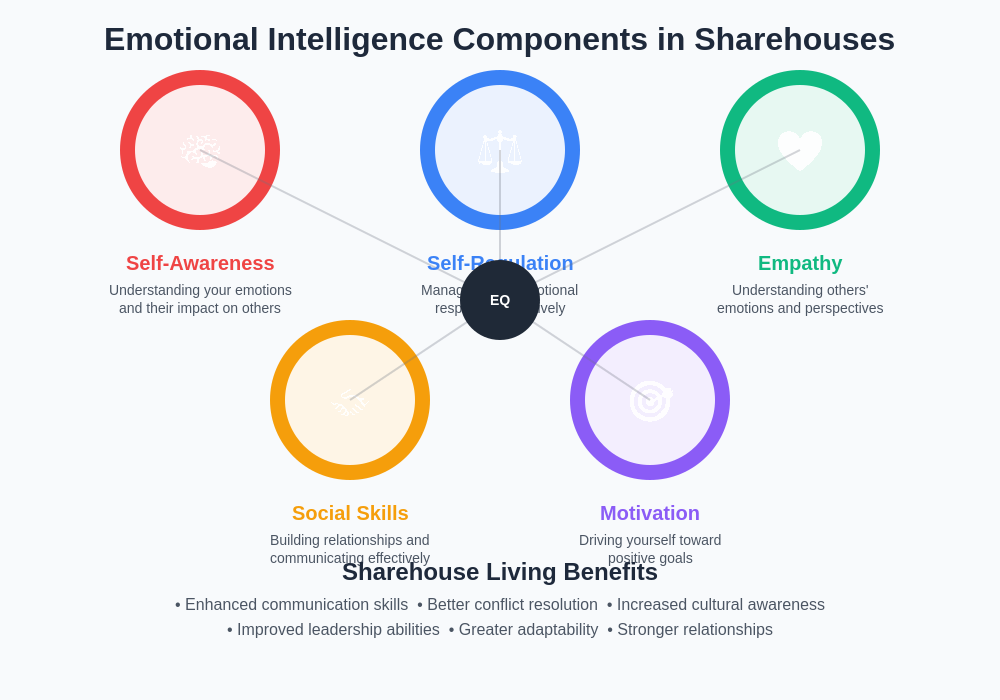
Emotional intelligence encompasses the ability to recognize, understand, and manage your own emotions while simultaneously perceiving and responding appropriately to the emotions of others around you. In sharehouse environments, these skills become essential survival tools rather than optional social niceties, as residents must constantly navigate complex interpersonal situations involving people from diverse cultural backgrounds, personality types, and lifestyle preferences.
The intensity of shared living amplifies every emotional interaction, making subtle social cues and unspoken tensions much more significant than they would be in casual social settings. Living with Japanese roommates in Tokyo sharehouses requires particularly sophisticated emotional awareness as cultural communication styles and conflict resolution approaches can differ dramatically from Western norms.
Daily interactions in sharehouses involve constant micro-negotiations around space usage, noise levels, cleanliness standards, and social expectations that require exceptional emotional sensitivity and diplomatic skills. These seemingly minor interactions accumulate into comprehensive emotional intelligence training that develops crucial life skills applicable to professional environments, romantic relationships, and future family dynamics.
The multicultural nature of most Tokyo sharehouses creates additional layers of emotional complexity as residents learn to interpret emotional expressions, communication patterns, and social expectations across different cultural frameworks. This cross-cultural emotional intelligence becomes increasingly valuable in globalized professional environments where understanding diverse perspectives and communication styles provides significant competitive advantages.
Developing Self-Awareness Through Constant Social Interaction
Living in close proximity with multiple housemates creates an environment of continuous social feedback that accelerates self-awareness development in ways that solitary living arrangements simply cannot replicate. The constant presence of others makes it impossible to ignore personal habits, emotional patterns, and behavioral tendencies that might remain hidden in more private living situations.
Residents quickly discover how their moods affect others, how their communication style influences group dynamics, and how their personal boundaries interact with community expectations. How to handle roommate conflicts without moving out becomes essential knowledge as residents learn to recognize their own emotional triggers and develop healthier response patterns.
The feedback loop created by daily interactions provides immediate consequences for emotional choices, whether positive or negative. Residents who learn to regulate their emotions effectively find their social relationships improving rapidly, while those who struggle with emotional management experience increased tension and isolation that motivates personal growth and change.
This accelerated self-awareness development extends beyond interpersonal skills to include deeper understanding of personal values, lifestyle preferences, and long-term goals. The contrast between different residents’ approaches to life often illuminates aspects of personal identity that might have remained unconscious in more homogeneous social environments.
Mastering Empathy and Perspective-Taking Skills
Sharehouse living demands exceptional empathy development as residents must constantly consider how their actions affect others while simultaneously understanding the motivations and circumstances driving their housemates’ behaviors. The diversity of backgrounds, cultures, and personal situations within most sharehouses creates rich opportunities for developing sophisticated perspective-taking abilities.
Understanding why some residents prefer silence while others thrive on social interaction requires moving beyond personal preferences to genuinely appreciate different personality types and cultural norms. Making friends through Tokyo sharehouse communities involves learning to connect with people whose worldviews and lifestyle approaches may initially seem incompatible with your own.
The empathy skills developed through sharehouse living prove particularly valuable in professional environments where team collaboration, client relationships, and cross-cultural business interactions require sophisticated emotional intelligence. The ability to understand and respond appropriately to different emotional needs and communication styles becomes a significant career advantage in increasingly diverse workplace environments.
Daily empathy practice through mundane interactions such as kitchen scheduling, noise management, and space sharing develops intuitive understanding of social dynamics that extends far beyond the sharehouse environment. These skills enhance romantic relationships, family interactions, and professional collaborations throughout residents’ future lives.
Enhancing Communication and Conflict Resolution Abilities
The necessity of addressing conflicts constructively in sharehouse environments develops advanced communication skills that prove invaluable throughout all areas of life. Unlike workplace or social conflicts that can often be avoided or postponed, sharehouse disputes require immediate and effective resolution to maintain livable community dynamics.
Residents learn to express concerns diplomatically, listen actively to different perspectives, and find creative solutions that address multiple parties’ needs simultaneously. How conflict resolution abilities improve through practice in low-stakes but personally meaningful situations that occur regularly in shared living environments.
The multilingual and multicultural aspects of many Tokyo sharehouses add additional complexity to communication challenges, requiring residents to develop sensitivity to different communication styles, directness levels, and conflict resolution approaches. Learning to navigate these differences successfully builds confidence and competence in handling difficult conversations across all life contexts.
The skills developed through managing sharehouse conflicts directly translate to professional advancement opportunities, as employers increasingly value team members who can facilitate productive discussions, mediate disputes, and maintain positive working relationships even during challenging periods. These communication skills become particularly valuable in leadership roles where managing diverse teams and complex interpersonal dynamics determines organizational success.
Building Tolerance and Adaptability in Diverse Environments
Sharehouse living exposes residents to constant variation in daily routines, social expectations, and environmental conditions that builds exceptional tolerance for ambiguity and change. The inability to control all aspects of your living environment requires developing flexibility and adaptability that extends far beyond housing arrangements.
Learning to thrive despite different music preferences, cooking schedules, social activities, and cleanliness standards builds resilience and adaptability that proves crucial in professional environments where change, uncertainty, and compromise are constant realities. How adaptability becomes essential survival skill in sharehouses directly correlates with professional success in dynamic work environments.
The diversity of personalities, backgrounds, and lifestyle approaches within sharehouses creates daily opportunities for expanding comfort zones and challenging personal assumptions. Residents who embrace this diversity typically develop broader worldviews and increased tolerance for different approaches to life that enhance their personal relationships and professional effectiveness.
The adaptability skills developed through sharehouse living prove particularly valuable during major life transitions such as career changes, relationship developments, or geographical relocations. The confidence gained from successfully navigating complex social environments translates into increased willingness to pursue challenging opportunities and embrace positive changes.
Strengthening Emotional Regulation Under Pressure
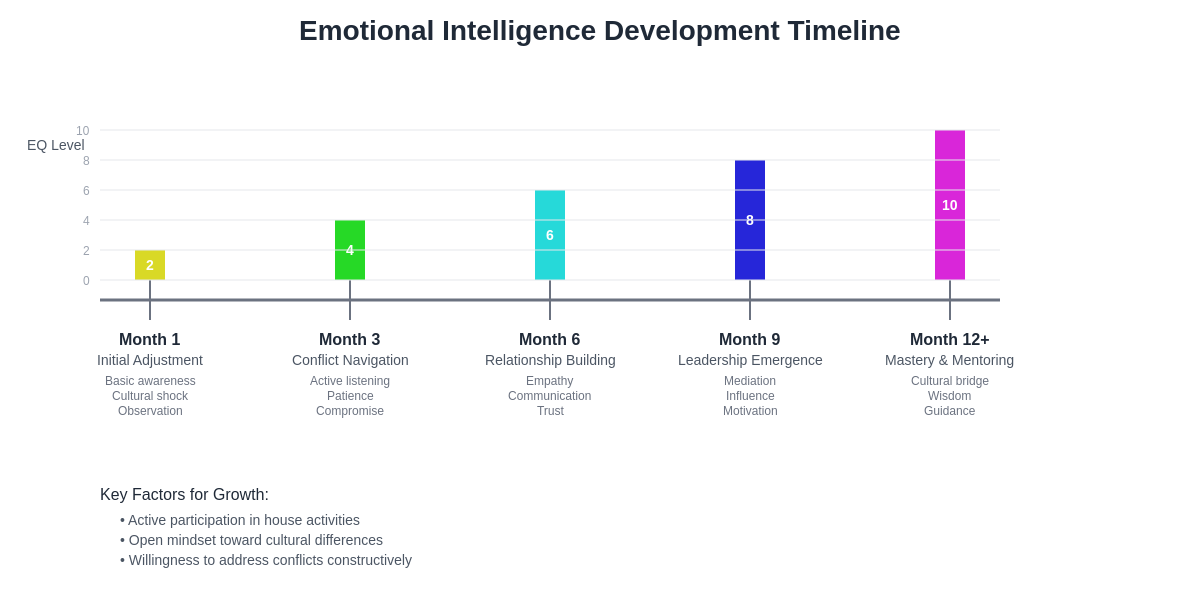
The shared living environment creates numerous situations that test emotional regulation abilities, from minor irritations such as dirty dishes to more significant challenges such as personality conflicts or cultural misunderstandings. Learning to manage emotional responses constructively in these situations builds crucial self-regulation skills that benefit all areas of life.
Residents discover the importance of emotional timing, learning when to address issues immediately versus when to allow emotions to settle before engaging in difficult conversations. How stress management techniques become necessary as residents develop personalized strategies for maintaining emotional equilibrium despite ongoing interpersonal challenges.
The inability to completely avoid sources of frustration in shared living environments forces residents to develop internal emotional regulation strategies rather than relying on external circumstance management. These internal regulation skills prove invaluable in professional environments where stress, deadlines, and interpersonal tensions are common experiences.
The emotional regulation skills developed through sharehouse living contribute significantly to long-term mental health and relationship satisfaction. Residents who learn to manage their emotional responses effectively typically report improved stress levels, better sleep quality, and more satisfying personal relationships that extend well beyond their sharehouse experience.
Developing Leadership and Influence Skills
Many sharehouse residents discover leadership abilities they never knew they possessed as they naturally take on roles such as conflict mediator, activity organizer, or house rule facilitator. These informal leadership opportunities provide safe environments for developing influence skills without the high stakes associated with professional leadership roles.
Learning to motivate housemates to participate in cleaning schedules, social activities, or house meetings requires understanding different personality types and finding approaches that resonate with diverse individuals. How leadership opportunities emerge naturally in sharehouse environments provides valuable experience that translates directly to professional advancement opportunities.
The collaborative nature of successful sharehouse communities teaches residents how to build consensus, facilitate group decision-making, and create inclusive environments where all residents feel valued and heard. These skills become increasingly important in professional environments that emphasize teamwork, employee engagement, and inclusive leadership practices.
The influence skills developed through informal sharehouse leadership roles often surprise residents who previously considered themselves followers rather than leaders. The discovery of these capabilities frequently leads to increased confidence in pursuing professional advancement opportunities and taking on greater responsibilities in work environments.
Cultivating Cultural Intelligence and Global Competence
The international nature of most Tokyo sharehouses provides intensive cultural intelligence training that proves increasingly valuable in globalized professional and social environments. Daily interactions with people from different countries, religions, and cultural backgrounds develop sophisticated understanding of how culture influences behavior, communication, and values.
Residents learn to navigate cultural differences in areas such as personal space preferences, communication directness, conflict resolution styles, and social hierarchy expectations. How cultural competency develops faster in sharehouses compared to other international experiences due to the intensity and consistency of cross-cultural interactions.
The cultural intelligence developed through sharehouse living enhances career prospects in international business, diplomacy, education, and any field requiring effective cross-cultural communication. Employers increasingly value candidates who can work effectively with diverse teams and navigate complex international relationships successfully.
The global perspective gained through sharehouse living often influences life choices, career directions, and personal relationships in ways that extend far beyond the housing experience itself. Many residents report that their sharehouse experience fundamentally altered their worldview and opened opportunities they never would have considered previously.
Improving Social Awareness and Network Building
Living in sharehouses develops exceptional social awareness as residents learn to read group dynamics, identify social tensions, and understand the complex relationships that exist within their community. Making friends through Tokyo sharehouse communities requires sophisticated social intelligence that translates into valuable networking abilities throughout life.
The social awareness skills developed through sharehouse living prove particularly valuable in professional networking environments where understanding group dynamics, identifying key influencers, and building meaningful relationships determine career advancement opportunities. The confidence gained from successfully navigating complex social environments enhances professional networking effectiveness significantly.
The diversity of residents’ professional backgrounds, educational experiences, and career goals creates valuable networking opportunities that often extend far beyond the sharehouse experience. Many residents report that friendships and professional connections made in sharehouses have influenced their career trajectories and life opportunities years later.
The social skills developed through sharehouse living enhance romantic relationship satisfaction as residents learn to navigate complex interpersonal dynamics, communicate effectively across different personality types, and maintain healthy boundaries while building intimate connections.
Long-term Benefits for Professional and Personal Success
The emotional intelligence skills developed through sharehouse living provide lasting advantages that compound throughout residents’ careers and personal relationships. The ability to work effectively with diverse teams, navigate complex interpersonal dynamics, and maintain positive relationships despite challenges becomes increasingly valuable as careers advance and responsibilities increase.
Many former sharehouse residents report that the emotional intelligence skills gained during their housing experience have been crucial factors in their professional success, relationship satisfaction, and overall life fulfillment. How sharehouse living prepares you for future challenges extends far beyond housing arrangements to include comprehensive life skill development.
The confidence gained from successfully managing complex social environments often encourages residents to pursue challenging career opportunities, international assignments, and leadership roles they might have avoided previously. The emotional intelligence skills provide the foundation necessary for success in these advanced roles.
The personal growth achieved through sharehouse living frequently influences major life decisions such as career direction, relationship choices, and lifestyle priorities. Many residents discover aspects of their personality and capabilities that redirect their life trajectories in positive ways they never would have imagined before their sharehouse experience.
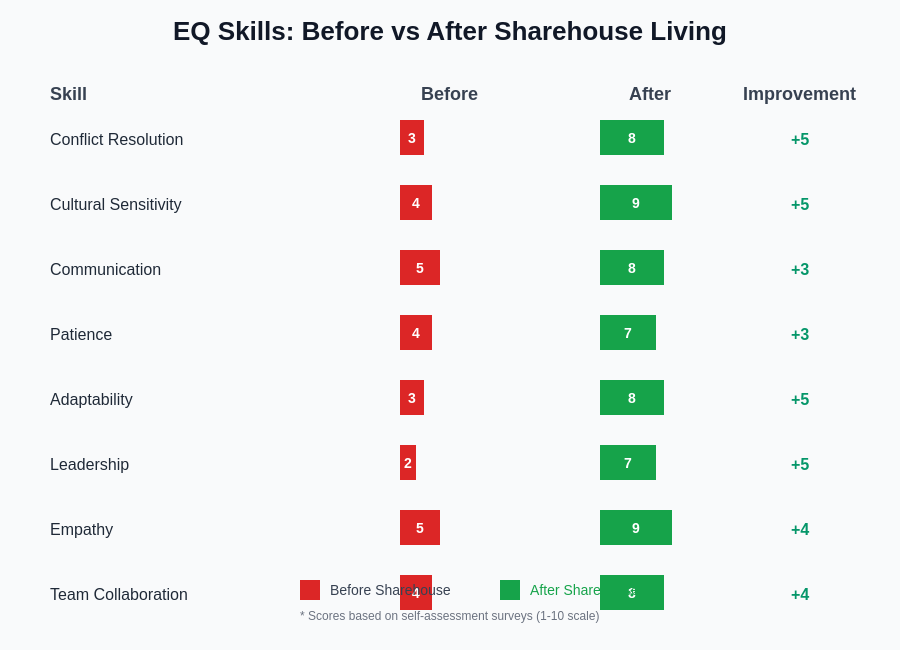
The emotional intelligence developed through sharehouse living represents an investment in lifelong personal and professional success that provides returns far beyond the housing experience itself. The skills gained become part of residents’ permanent capability set, enhancing their ability to build meaningful relationships, pursue ambitious goals, and navigate life’s inevitable challenges with greater resilience and effectiveness.
Understanding the profound impact that sharehouse living can have on emotional intelligence development helps residents approach their housing experience with greater intentionality and appreciation for the growth opportunities available. Rather than viewing sharehouses simply as temporary accommodation, residents who recognize the personal development potential can maximize their growth while contributing positively to their community’s collective emotional intelligence and overall success.
Disclaimer
This article is for informational purposes only and reflects general observations about sharehouse living experiences. Individual results may vary significantly based on personal circumstances, house dynamics, and individual commitment to personal growth. The emotional intelligence development described may not occur automatically and often requires conscious effort and reflection. Readers should consider their own emotional readiness and personal goals when evaluating sharehouse living options.