Living in a Tokyo sharehouse fundamentally transforms how residents approach entertainment spending, shifting individual budget categories into collective financial responsibilities that require negotiation, compromise, and shared decision-making. This evolution from personal entertainment choices to group-managed expenses represents one of the most significant lifestyle adjustments that newcomers to shared living must navigate, affecting everything from streaming service subscriptions to weekend social activities and recreational equipment purchases.
The transformation occurs naturally as residents discover that individual entertainment investments become less practical and cost-effective when living in close quarters with others who share similar interests and space limitations. What begins as personal subscription services and individual hobby expenses gradually evolves into pooled resources that benefit the entire household while creating both opportunities and challenges for maintaining financial boundaries and personal preferences within the community framework.
The Natural Evolution from Individual to Collective Entertainment
The shift toward shared entertainment expenses typically begins within the first few weeks of sharehouse living, as residents naturally gravitate toward common areas for relaxation and social interaction. Individual streaming subscriptions, gaming platforms, and digital content libraries become de facto shared resources when accessed through communal televisions and entertainment systems, creating informal sharing arrangements that gradually formalize into structured expense-sharing agreements.
This evolution reflects the practical reality that entertainment consumption in sharehouses becomes inherently social, with movie nights, gaming sessions, and music streaming happening primarily in shared spaces rather than private rooms. Living costs in Tokyo sharehouses explained demonstrates how these gradual shifts in consumption patterns affect overall monthly budgets and require adjustment of individual financial planning strategies.
The physical limitations of most Tokyo sharehouse rooms, which prioritize sleeping and storage over entertainment space, naturally push recreational activities into common areas where individual subscriptions and equipment become shared resources by necessity rather than design. This spatial constraint creates the foundation for entertainment budget sharing that extends far beyond simple cost-splitting arrangements.
Digital Subscription Services and Streaming Platforms
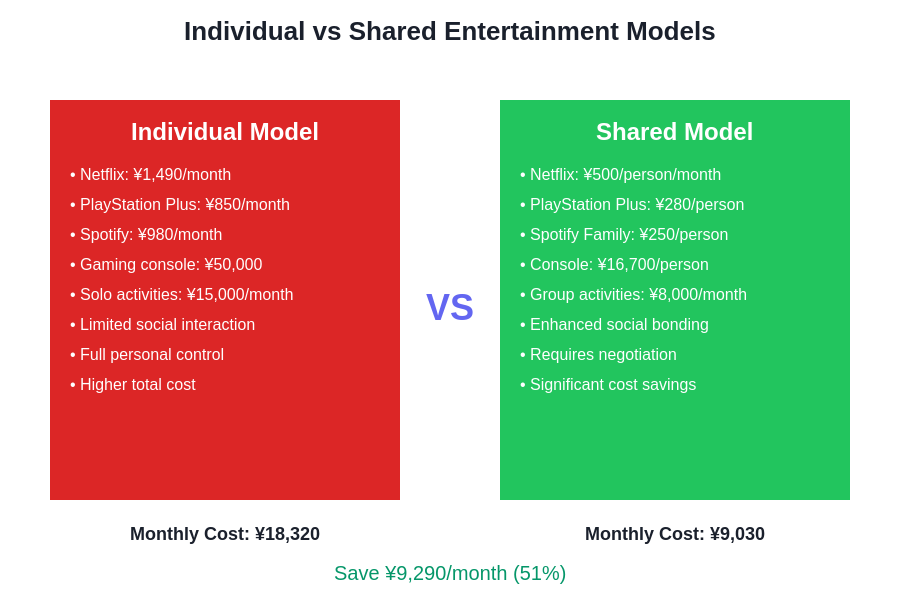
Streaming services represent the most common entry point into shared entertainment expenses, as multiple Netflix, Hulu, Amazon Prime, and Disney+ subscriptions become redundant when residents gather in common areas to watch content together. The economics of entertainment sharing become immediately apparent when comparing the cost of four individual Netflix subscriptions against a single premium family plan that serves the entire household more effectively.
The complexity increases with platform-specific content preferences, where some residents prioritize Japanese content on platforms like U-Next or AbemaTV, while others focus on international content through Western streaming services. English-speaking sharehouses in Tokyo for foreigners often develop sophisticated subscription-sharing arrangements that accommodate diverse language preferences and cultural content needs.
Gaming subscriptions for PlayStation Plus, Xbox Game Pass, Nintendo Switch Online, and PC gaming platforms create additional layers of shared expense considerations, particularly when console systems become communal property that multiple residents use regularly. The decision-making process for which subscriptions to maintain collectively requires ongoing discussion and periodic evaluation of usage patterns and value perception among all contributing residents.
Music streaming services like Spotify, Apple Music, and YouTube Premium present unique sharing challenges due to personalized playlists and listening habits, leading many houses to maintain both individual and family plan subscriptions that serve different use cases and privacy preferences within the shared living environment.
Recreational Equipment and Shared Entertainment Assets
Physical entertainment equipment purchases represent significant shared investments that require careful consideration of space constraints, usage patterns, and long-term residency stability among contributing residents. Television upgrades, gaming consoles, sound systems, and streaming devices become collective assets that must be managed through house policies regarding usage rights, maintenance responsibilities, and ownership transfer protocols when residents move out.
Board games, card games, and tabletop entertainment collections naturally become house assets as individual purchases get incorporated into common area entertainment options that everyone can access and enjoy. Making friends through Tokyo sharehouse communities explores how shared game collections become catalysts for social interaction and community building that justify their collective expense status.
Exercise equipment, sports gear, and outdoor recreation items often transition from individual ownership to house resources when storage space limitations make personal ownership impractical. Yoga mats, resistance bands, sports equipment, and outdoor gear sharing arrangements develop organically as residents recognize the efficiency of collective ownership for occasionally-used items that benefit from shared storage and maintenance.
Kitchen appliances for entertainment cooking, such as takoyaki makers, hot pot equipment, and specialized cooking tools for social dining experiences, represent entertainment expenses that serve the dual purpose of food preparation and social activity facilitation, blurring the lines between necessity and recreation in shared living environments.
Social Activity Funding and Group Entertainment Expenses
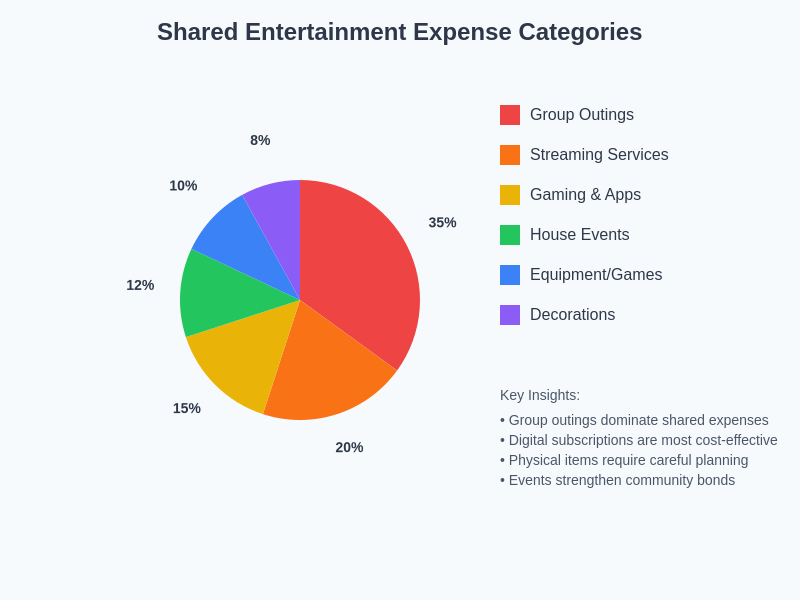
Group outings, social events, and shared experiences require collective funding mechanisms that transform individual entertainment budgets into coordinated spending plans that accommodate varying financial capabilities and interest levels among residents. Restaurant visits, karaoke sessions, festival attendance, and seasonal celebrations become house expenses that require fair contribution systems and inclusive participation strategies.
How to budget realistically for sharehouse living emphasizes the importance of allocating specific amounts for these collective social expenses that enhance community bonding while respecting individual financial boundaries and preferences for different types of entertainment activities.
Seasonal entertainment expenses, such as hanami parties, summer festival preparations, Halloween decorations, and New Year celebrations, create periodic spikes in collective spending that require advance planning and fair cost distribution among residents who may have different levels of enthusiasm for various cultural celebrations and social events.
Transportation costs for group activities, including train tickets for day trips, taxi sharing for late-night entertainment, and group discounts for attractions and events, necessitate sophisticated expense-tracking and reimbursement systems that ensure fair cost distribution while maintaining spontaneity in group entertainment decision-making.
House Decoration and Ambiance Enhancement
Common area aesthetics and ambiance improvements become shared entertainment expenses as residents invest collectively in creating comfortable and visually appealing spaces that enhance everyone’s daily living experience and entertainment enjoyment. Lighting upgrades, decorative elements, plants, artwork, and seasonal decorations represent investments in the collective entertainment environment rather than individual preferences.
Sound system improvements, smart home devices, and ambiance lighting create entertainment atmospheres that benefit all residents but require collective funding and decision-making about features, quality levels, and aesthetic choices that reflect the diverse preferences within the household community.
Furniture upgrades for entertainment areas, including comfortable seating, coffee tables, storage solutions for games and equipment, and workspace improvements for collaborative activities, require significant financial investment that individuals rarely undertake alone but collectively provide substantial quality-of-life improvements for all residents.
Living with Japanese roommates in Tokyo sharehouses highlights how decoration and ambiance preferences can vary significantly across cultural backgrounds, requiring negotiation and compromise in collective spending decisions that affect the overall entertainment environment.
Financial Management and Expense Tracking Systems
Effective management of shared entertainment expenses requires sophisticated tracking systems that monitor individual contributions, track usage patterns, and ensure fair distribution of costs among residents with varying consumption levels and financial capabilities. Digital expense-sharing applications, house bank accounts, and rotating payment responsibilities help manage the complexity of collective entertainment spending.
Monthly entertainment budgets must be established through house meetings and consensus-building processes that balance individual financial constraints with collective desires for enhanced entertainment options and social activities. These budgets require regular review and adjustment as resident composition changes and entertainment preferences evolve over time.

How shared expense apps create new problems discusses the technical and social challenges that arise when implementing digital solutions for tracking and managing shared entertainment expenses, including privacy concerns, usage disputes, and payment coordination difficulties.
Transparency in entertainment spending decisions helps prevent conflicts and ensures that all residents understand how their contributions are being used, what benefits they receive, and how decisions are made regarding new entertainment investments or subscription changes that affect monthly expense obligations.
Cultural Differences in Entertainment Preferences and Spending
International sharehouses must navigate diverse entertainment preferences that reflect different cultural backgrounds, economic circumstances, and personal values regarding recreational spending priorities. What constitutes reasonable entertainment expenses varies dramatically across different cultural contexts, requiring sensitivity and accommodation in collective decision-making processes.
Language barriers in entertainment content selection, platform preferences, and social activity choices create additional complexity in shared expense decisions as houses attempt to balance diverse needs while maintaining cost-effective collective subscriptions and activity choices that provide value for all contributing residents.
How cultural differences affect friendship building explores how entertainment spending decisions can either facilitate or hinder cross-cultural relationship development, depending on how well houses manage to accommodate diverse preferences and financial capabilities in their collective entertainment investments.
Religious and dietary restrictions affect entertainment choices and associated costs, particularly for food-related entertainment activities, social dining experiences, and cultural celebrations that may require alternative arrangements or additional expense categories to ensure inclusive participation opportunities for all residents.
Conflict Resolution in Shared Entertainment Spending
Disputes over entertainment expenses and usage rights require clear protocols and communication systems that address common sources of conflict while maintaining community harmony and fair resource distribution. Usage monitoring, contribution tracking, and preference accommodation become essential skills for successful shared entertainment management.
How to handle roommate conflicts without moving out provides frameworks for addressing entertainment-related disputes, including subscription cancellation disagreements, equipment usage conflicts, and social activity participation pressure that can strain house relationships.
Establishing clear boundaries between individual and collective entertainment expenses helps prevent conflicts by defining which types of entertainment remain personal choices and which become shared responsibilities that require group consultation and collective funding decisions.
Regular house meetings focused on entertainment budget review and preference assessment provide structured opportunities for residents to voice concerns, suggest changes, and negotiate solutions that maintain both individual satisfaction and collective cost-effectiveness in entertainment spending decisions.
Long-term Planning and Resident Turnover Considerations
Entertainment expense sharing becomes complicated by resident turnover, which affects long-term subscription commitments, equipment ownership rights, and collective investment recovery when contributing members move out of the sharehouse. Clear policies regarding asset transfer, subscription continuation, and prorated expense recovery help manage these transitions smoothly.
What moving out really costs in Tokyo sharehouses examines how shared entertainment investments factor into moving decisions and final expense settlements, including equipment buyout options and subscription transfer procedures that protect both departing and remaining residents’ interests.
New resident integration requires updating entertainment expense sharing arrangements, introducing newcomers to existing systems and agreements, and potentially adjusting collective spending levels and preferences to accommodate changing household demographics and entertainment priorities.
Investment recovery mechanisms for major entertainment equipment purchases ensure that residents who contribute to expensive collective assets receive appropriate compensation when they leave, while providing clear pathways for new residents to buy into existing entertainment infrastructure and ongoing subscription arrangements.
The evolution of entertainment budgets from individual expenses to shared investments reflects the fundamental transformation that occurs when transitioning from independent living to community-based accommodation in Tokyo sharehouses. Understanding these dynamics, establishing clear communication protocols, and developing fair expense-sharing systems enable residents to maximize the social and financial benefits of collective entertainment spending while maintaining individual autonomy and financial responsibility.
Success in managing shared entertainment expenses requires ongoing attention to changing preferences, fair cost distribution, and conflict resolution that respects both individual financial boundaries and collective community enhancement goals. The investment in effective shared entertainment systems pays dividends in improved social cohesion, reduced individual costs, and enhanced quality of life that makes sharehouse living both economically and socially rewarding for all participants.
Disclaimer
This article is for informational purposes only and does not constitute financial advice. Entertainment expense sharing arrangements should be documented clearly and agreed upon by all residents. Individual financial circumstances and preferences may vary, and readers should consider their own situation when implementing shared expense systems. Legal and cultural considerations may affect shared expense arrangements in different jurisdictions.