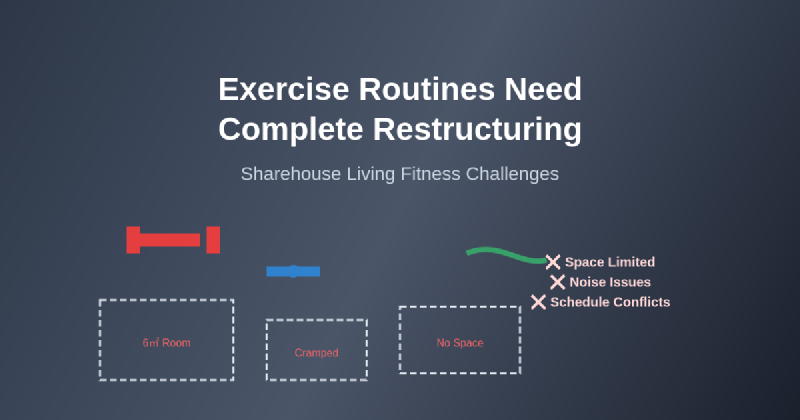
Moving into a sharehouse in Tokyo fundamentally transforms every aspect of your daily routine, but perhaps no area requires more dramatic adjustment than your exercise and fitness habits. The transition from having complete control over your workout environment to navigating shared spaces, considerate timing, and limited storage creates challenges that force even the most dedicated fitness enthusiasts to completely reimagine their approach to staying healthy and active.
The reality of sharehouse living means that your previous exercise routine, whether it involved home workouts, gym sessions, or outdoor activities, will need comprehensive restructuring to accommodate new spatial, temporal, and social constraints. Understanding these challenges and developing adaptive strategies becomes essential for maintaining physical health and mental well-being while building positive relationships with your housemates and navigating the unique dynamics of shared living spaces.
Space Limitations Transform Workout Possibilities
The most immediate challenge facing sharehouse residents involves the dramatic reduction in available exercise space compared to previous living arrangements. Personal space boundaries are constantly tested in shared environments, making traditional home workout routines nearly impossible to maintain in their original form.
Private rooms in Tokyo sharehouses typically measure between six to twelve square meters, leaving minimal floor space for movement-based exercises after accounting for essential furniture, storage needs, and daily living requirements. The challenge extends beyond simple measurements to include ceiling height restrictions, noise considerations for downstairs neighbors, and the need to quickly transform living spaces from exercise areas back to functional bedrooms or study spaces.
Common areas such as living rooms or shared recreational spaces offer additional square footage but come with their own complications including scheduling conflicts with other residents, varying cleanliness standards, and the social awkwardness of exercising while others are trying to relax, study, or socialize. Living with Japanese roommates in Tokyo sharehouses often involves understanding cultural expectations about appropriate use of shared spaces that may not align with Western exercise habits.
The storage implications for exercise equipment create additional complications, as sharehouses typically provide minimal personal storage space and shared storage areas may not accommodate bulky fitness gear. Resistance bands, yoga mats, and small weights become practical alternatives to larger equipment, but even these modest items require strategic storage solutions that don’t infringe on limited personal or shared space.
Noise Considerations Reshape Exercise Timing and Types
Sound management becomes a critical factor in maintaining harmonious relationships with housemates while pursuing fitness goals within shared living environments. The wooden construction common in many Tokyo buildings amplifies impact sounds, making high-intensity interval training, jumping exercises, or early morning workouts potentially disruptive to sleeping residents above, below, and adjacent to your living space.
Sleep quality suffers in shared environments when inconsiderate exercise timing disrupts other residents’ rest periods, creating tension that can affect overall house dynamics and social relationships. Understanding the sleep schedules, work patterns, and study requirements of your housemates becomes essential for determining appropriate exercise windows that minimize conflict and maintain community harmony.
The acoustic properties of different exercise types require careful evaluation, with low-impact activities such as yoga, stretching, and bodyweight exercises without jumping movements generally being more compatible with shared living situations. Cardiovascular workouts may need to shift from high-impact indoor activities to outdoor running, walking, or cycling that removes noise concerns from the shared living environment entirely.
Sound masking strategies such as using exercise mats, carpet layers, or scheduling workouts during periods when most residents are away from the house can help minimize acoustic disruption while maintaining some flexibility in exercise timing and intensity. However, these solutions require ongoing attention and consideration that many residents find mentally exhausting over extended periods.
Scheduling Conflicts Create Time Management Challenges
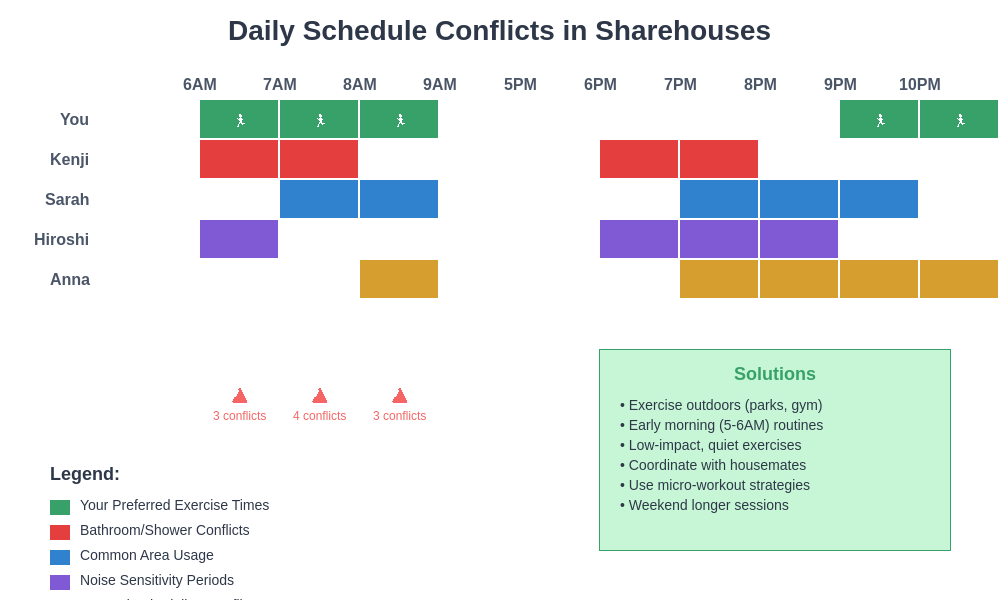
The coordination required to access shared spaces for exercise purposes introduces complex scheduling dynamics that most residents underestimate before moving into sharehouses. Morning bathroom queues are inevitable in sharehouses, and similar congestion affects access to living rooms, outdoor spaces, and other areas suitable for physical activity.
Peak exercise times such as early mornings and evenings coincide with high-demand periods for shared facilities, creating competition for space that can lead to frustration and abandoned workout plans. The informal nature of space reservation in most sharehouses means that planned exercise sessions may be disrupted by unexpected gatherings, cleaning activities, or other residents’ needs for the same areas.
Work schedules, study commitments, and social activities of multiple residents create a constantly shifting landscape of available exercise opportunities that requires unprecedented flexibility and backup planning. Shift work schedules affect roommate relations by creating irregular patterns of space availability that make consistent exercise routines extremely difficult to maintain.
The mental energy required to constantly negotiate, plan, and adapt exercise schedules often leads to decision fatigue that results in skipped workouts and declining fitness levels. Many residents find that the cognitive load of coordinating exercise timing becomes more exhausting than the physical activity itself, leading to gradual abandonment of structured fitness routines.
Cultural Differences Affect Exercise Acceptance
International sharehouses bring together residents from diverse cultural backgrounds with varying attitudes toward physical activity, body image, and appropriate exercise behaviors within residential settings. Cultural differences affect friendship building and extend to exercise-related interactions that can create unexpected social friction or bonding opportunities.
Some cultures view home exercise as completely normal and acceptable, while others consider physical activity outside designated facilities to be inappropriate or disruptive to residential tranquility. These differences can lead to misunderstandings about noise levels, space usage, and social boundaries that affect both exercise freedom and house harmony.
Gender-specific exercise concerns become more complex in mixed-gender sharehouses, particularly for activities requiring minimal clothing or body-conscious movements that may make some residents uncomfortable in shared spaces. Gender policies are legally enforced in some housing arrangements, but informal social dynamics often create additional considerations for exercise behavior and timing.
Religious or modesty considerations may require additional accommodation for exercise clothing, timing around prayer schedules, or understanding of dietary restrictions that affect workout planning and recovery nutrition. The intersectional nature of these cultural factors creates complex social navigation requirements that many residents find overwhelming when combined with exercise goals.
Equipment Storage Becomes Impossible
The storage limitations inherent in sharehouse living create significant obstacles for maintaining comprehensive exercise equipment collections that support varied and effective workout routines. Limited storage forces you to live minimally, and exercise equipment often becomes an early casualty of space prioritization decisions.
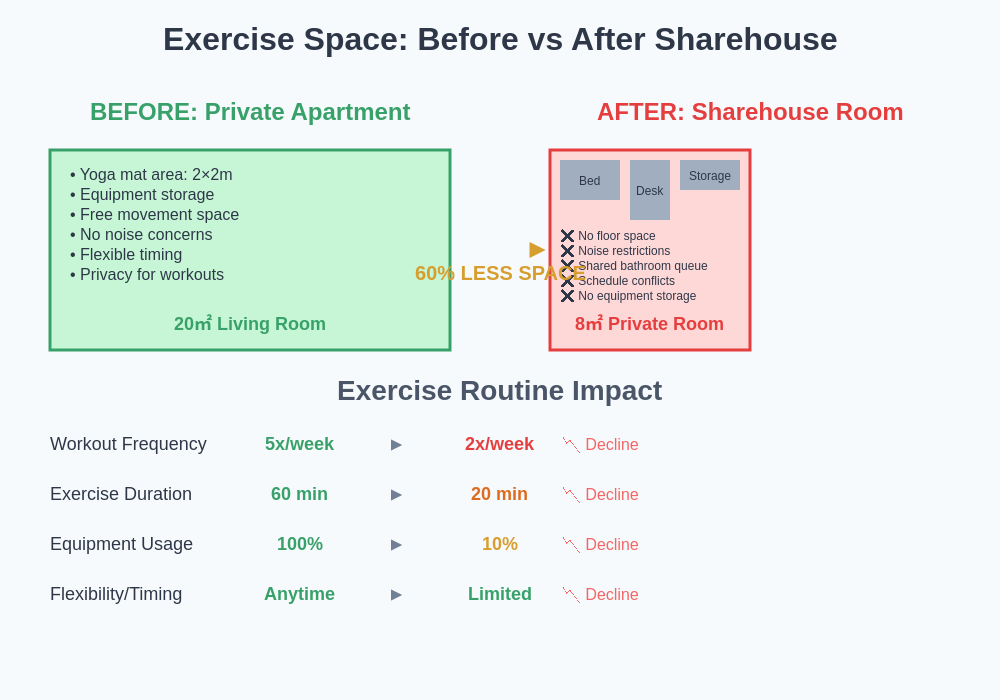
Shared storage areas, when available, typically prioritize essential household items, cleaning supplies, and seasonal clothing over personal fitness equipment that benefits only individual residents. The informal nature of shared storage agreements can lead to equipment displacement, damage, or conflicts over space allocation that make investing in exercise gear impractical.
Portable and multipurpose fitness equipment becomes essential, but even compact options require dedicated storage solutions that may not exist within cramped personal rooms or contested shared spaces. Resistance bands, suspension trainers, and foldable equipment offer space-efficient alternatives, but the constant setup and breakdown required for each workout session creates additional barriers to consistent exercise habits.
The financial implications of purchasing exercise equipment that cannot be properly stored or used effectively in sharehouse environments leads many residents to delay fitness investments, further hampering their ability to maintain structured workout routines during their shared living period.
Bathroom Access Affects Hygiene Planning
Post-workout hygiene becomes significantly more complicated in sharehouses where bathroom access requires coordination with other residents’ schedules and needs. Bathroom cleanliness affects health concerns become more pronounced when multiple residents need shower access during peak exercise periods.
The timing of workouts must account for adequate bathroom availability for proper post-exercise hygiene, adding another layer of complexity to already challenging exercise scheduling. Extended wait times for shower access can make certain types of exercise impractical, particularly high-intensity workouts that require immediate cooling and cleaning.
Shared bathroom etiquette regarding exercise-related usage, including appropriate timing for longer showers, management of sweaty clothing, and cleanup responsibilities, requires ongoing negotiation and consideration that many residents find socially exhausting. Personal hygiene standards vary wildly among residents, creating additional complications for exercise planning and social dynamics.
The psychological barrier of exercising when unsure about post-workout hygiene access often leads to skipped exercise sessions or significant modifications to workout intensity and duration that compromise fitness goals and motivation.
Outdoor Exercise Becomes More Important
The limitations of indoor exercise in sharehouse environments naturally shift focus toward outdoor physical activities that offer greater freedom, space, and reduced impact on housemate relationships. Transportation costs impact entertainment budgets, but may require reallocation to accommodate new exercise venues and activities.
Tokyo’s extensive park system, riverside running paths, and public exercise facilities provide alternatives to home workouts, but accessing these resources requires additional time, transportation costs, and weather contingency planning that complicate exercise consistency. The seasonal nature of outdoor exercise in Japan, with extreme summer heat and winter cold, creates periods where alternative indoor solutions become necessary.
Public gym access becomes more critical for comprehensive fitness routines, but membership costs, travel time, and facility availability during preferred hours add financial and logistical complexities to exercise planning. How to budget realistically for sharehouse living must account for these additional fitness-related expenses that may not have been necessary in previous living situations.
Weather dependency becomes a significant factor in exercise consistency when outdoor activities replace indoor routines, requiring backup plans and alternative activities that may not align with fitness goals or personal preferences. The mental adaptation to weather-dependent exercise schedules can be particularly challenging for residents from climates with more consistent weather patterns.
Social Dynamics Influence Exercise Behavior
The social environment within sharehouses significantly impacts individual exercise motivation, scheduling, and activity choices in ways that most residents don’t anticipate before moving into shared living situations. Making friends through Tokyo sharehouse communities can include exercise partnerships, but also social pressure and judgment about fitness habits.
Group exercise opportunities can emerge naturally from sharehouse social dynamics, creating positive motivation and accountability systems that support consistent physical activity. However, varying fitness levels, schedule conflicts, and personal preferences among residents can make group activities challenging to organize and maintain over time.
Social judgment about exercise habits, body image, or fitness dedication can create psychological barriers to home workouts, particularly for residents who feel self-conscious about their fitness level or exercise knowledge. The constant presence of other people eliminates the privacy that many individuals need to feel comfortable with physical activity and personal fitness exploration.
Competitive dynamics may develop around exercise habits, creating pressure to maintain appearances or participate in activities that don’t align with individual fitness goals or capabilities. How age differences impact sharehouse compatibility extends to exercise expectations and capabilities that can create social tension or exclusion.
Mental Health Impact of Exercise Disruption
The psychological effects of disrupted exercise routines extend far beyond physical fitness concerns, affecting mood regulation, stress management, and overall mental health during the challenging transition period of adapting to sharehouse living. Exercise often serves as a critical stress relief mechanism that becomes unavailable precisely when residents are experiencing heightened stress from cultural adaptation, social navigation, and lifestyle changes.
The loss of exercise routine control can trigger feelings of helplessness and frustration that compound other adjustment challenges associated with international living and cultural adaptation. Mental health support varies in sharehouses, and exercise disruption can exacerbate existing mental health challenges or create new ones.
Sleep quality, energy levels, and emotional regulation often depend on consistent physical activity, and the disruption of exercise routines can create cascading effects on overall well-being and daily functioning. The additional stress of constantly planning and adapting exercise schedules can become mentally exhausting, leading to exercise avoidance and declining physical health.
Identity issues may arise for individuals whose self-concept and daily structure heavily incorporate fitness activities, as the inability to maintain previous exercise patterns can feel like loss of personal identity and control over life circumstances.
Adaptive Strategies for Sharehouse Fitness
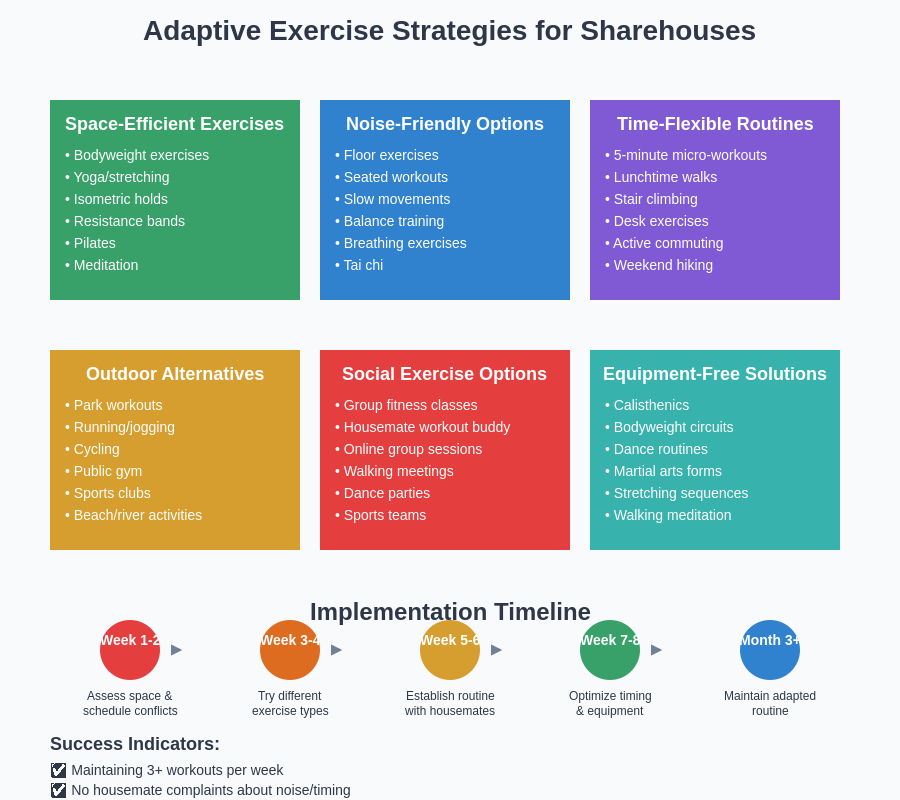
Successful exercise routine restructuring requires developing flexible, space-efficient, and socially considerate approaches that can adapt to the changing demands and constraints of shared living environments. Micro-workout strategies that break traditional exercise sessions into smaller, more frequent activities can help maintain fitness consistency despite space and time limitations.
Bodyweight exercise progressions that require minimal space and equipment provide comprehensive fitness options that can be performed in private rooms or small shared spaces without causing noise disruption or social friction. Isometric exercises, yoga flows, and resistance band routines offer effective alternatives to traditional gym-based workouts.
Time-efficient exercise approaches such as high-intensity interval training modified for low-impact movements can maximize fitness benefits within brief time windows when space access is available. Combining exercise with daily activities such as walking meetings, stair climbing, or active transportation helps maintain physical activity levels without requiring dedicated workout time or space.
Building relationships with housemates around shared fitness goals can create support systems and accountability partnerships that enhance motivation while reducing scheduling conflicts through coordinated planning and mutual accommodation.
The restructuring of exercise routines in sharehouse environments represents a significant lifestyle adaptation that requires patience, creativity, and flexibility from residents committed to maintaining their physical health and fitness goals. Success depends on accepting the limitations inherent in shared living while developing innovative approaches that work within these constraints rather than fighting against them.
Understanding that exercise routine restructuring is a necessary and temporary adaptation rather than a permanent limitation helps maintain perspective and motivation during the adjustment period. The problem-solving skills, adaptability, and social consideration developed through this process often prove valuable in other areas of life and can contribute to personal growth beyond simple fitness maintenance.
Disclaimer
This article is for informational purposes only and does not constitute professional fitness or health advice. Exercise routines and physical activity recommendations should be tailored to individual health conditions, fitness levels, and living situations. Readers should consult with qualified fitness professionals or healthcare providers when making significant changes to their exercise habits. The challenges described may vary depending on specific sharehouse arrangements, cultural contexts, and individual circumstances.