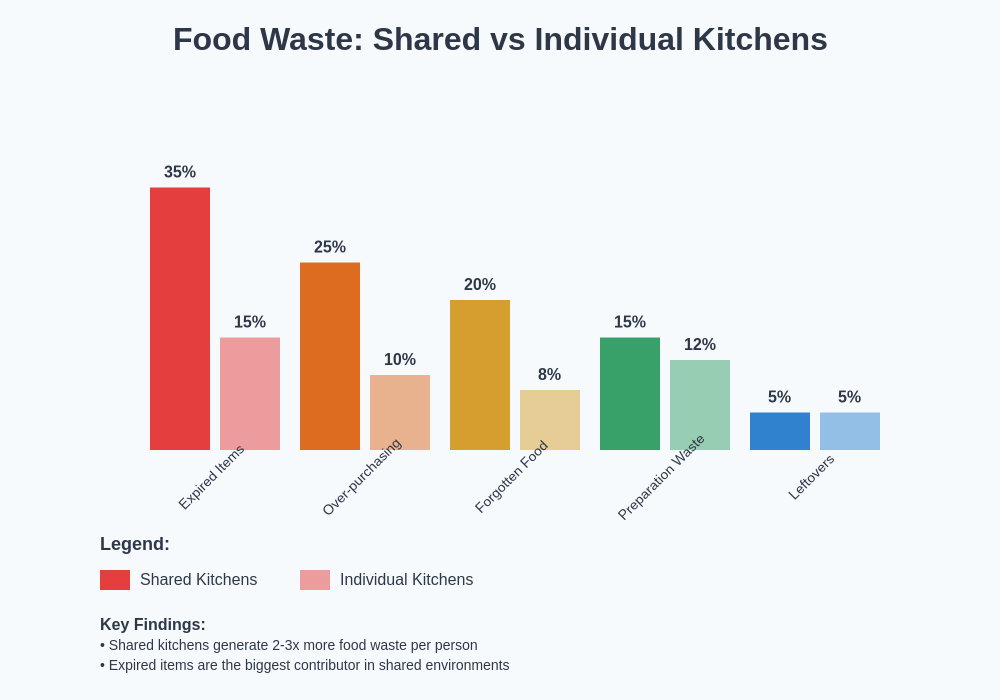
The phenomenon of increased food waste in shared kitchens represents one of the most pervasive and environmentally damaging aspects of communal living that affects millions of sharehouse residents worldwide. While individual households typically maintain reasonable control over food consumption and waste patterns, the dynamics of shared living spaces create complex psychological, social, and logistical challenges that systematically contribute to higher rates of food spoilage, over-purchasing, and disposal than would occur in private living arrangements.
Understanding these underlying mechanisms becomes crucial not only for environmental responsibility but also for maintaining harmonious living relationships and managing personal budgets effectively. The financial implications of food waste in shared environments often remain hidden from individual residents, as the collective nature of the problem diffuses responsibility and obscures the true cost of wasteful practices that accumulate over time.
The Psychology of Shared Ownership and Responsibility
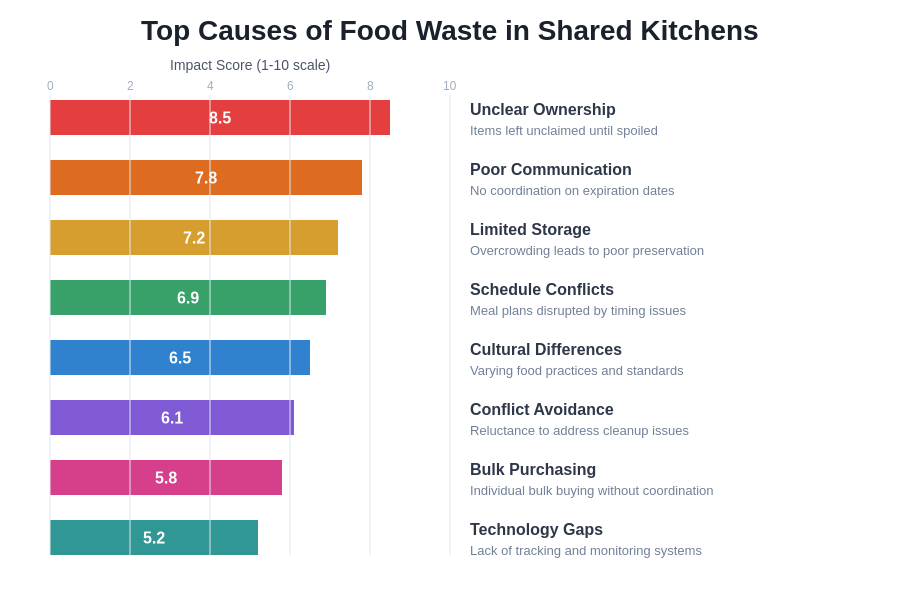
The fundamental shift from individual to collective food management creates immediate psychological barriers that influence decision-making processes around food purchasing, storage, and consumption. When multiple individuals share refrigerator and pantry space, the clear ownership boundaries that govern private kitchens become blurred, leading to a phenomenon known as the “tragedy of the commons” where shared resources suffer from overuse and neglect due to diffused responsibility.
Kitchen politics actually work in Japanese sharehouses demonstrates how power dynamics and unspoken hierarchies emerge around food storage and preparation areas. Residents often experience anxiety about using items that might belong to others, while simultaneously feeling less accountable for maintaining communal spaces and resources that they don’t exclusively own.
The psychological concept of “moral licensing” also plays a significant role, where individuals justify wasteful behavior in shared spaces by rationalizing that their personal waste contribution represents only a small fraction of the total household impact. This mental framework allows residents to engage in behaviors they would never consider acceptable in their private living situations, such as leaving expired items in shared refrigerators or abandoning cooking projects that create cleanup obligations for others.
Research in behavioral economics shows that when responsibility is distributed among multiple parties, individual accountability decreases exponentially rather than proportionally, meaning that a kitchen shared by four people doesn’t simply divide responsibility by four, but can reduce individual felt responsibility to levels approaching zero in practical decision-making situations.
Communication Breakdowns and Coordination Failures
Effective food management in shared living environments requires constant communication and coordination that most residents significantly underestimate in complexity and time investment. How cultural differences affect friendship building reveals how language barriers and varying communication styles compound the challenges of discussing practical matters like food sharing, expiration monitoring, and cleanup responsibilities.
The absence of clear communication protocols around food ownership, sharing permissions, and expiration monitoring creates situations where edible food spoils simply because residents cannot determine whether items are available for consumption or belong to absent housemates. Many sharehouses lack systematic approaches for labeling personal items, tracking purchase dates, or establishing collective responsibility for monitoring refrigerator contents.
Cultural differences in food preservation knowledge, expiration date interpretation, and acceptable food sharing practices create additional layers of complexity that require ongoing negotiation and adjustment. Some residents may come from backgrounds where food sharing is expected and automatic, while others maintain strict personal ownership boundaries that prevent efficient utilization of purchased items before spoilage occurs.
Why morning bathroom queues are inevitable in sharehouses illustrates how coordination challenges extend beyond food to all aspects of shared resource management. The same scheduling conflicts and communication gaps that create bathroom bottlenecks also prevent effective meal planning and coordinated shopping that could reduce overall food waste through better resource utilization.
Refrigerator Space Competition and Storage Inefficiencies
Physical storage limitations in shared kitchens create competitive dynamics that systematically contribute to food waste through inefficient space utilization and inadequate preservation conditions. Most sharehouses feature standard residential refrigerators designed for single-family use, creating immediate capacity constraints when divided among multiple residents with varying dietary needs, shopping patterns, and storage preferences.
The “territorial” behavior that emerges around limited refrigerator space leads to inefficient packing strategies where residents claim disproportionate space for their personal items while leaving insufficient room for proper air circulation and temperature maintenance. This overcrowding reduces the effectiveness of refrigeration systems and accelerates spoilage rates for all stored items, regardless of their original quality or freshness.
How limited storage forces you to live minimally addresses the broader storage challenges in sharehouse living, but the specific dynamics of food storage create unique pressures that don’t apply to other personal belongings. Unlike clothing or books, food items have expiration dates and preservation requirements that make storage competition particularly wasteful when residents cannot access or properly maintain their purchased items.
The vertical space utilization in most shared refrigerators remains poor because residents tend to claim horizontal shelf space rather than learning to organize efficiently in three-dimensional arrangements. Items frequently get pushed to the back of deep shelves where they remain invisible and forgotten until they spoil, while the front areas become overcrowded with frequently accessed items that could be stored elsewhere.
Shopping Pattern Disruptions and Over-Purchasing
Individual shopping behaviors that work effectively in private households often become wasteful when transplanted to shared living environments without adjustment for the new social and logistical constraints. How grocery shopping becomes more strategic explains how the complexity of shared living requires fundamental changes to purchasing patterns that many residents never fully implement.
The inability to predict housemates’ schedules, dietary choices, and social plans creates uncertainty that leads to over-purchasing as a defensive strategy against potential food shortages or meal planning failures. Residents often buy larger quantities than they can personally consume within freshness windows, assuming they can share excess items or incorporate them into communal meals that may never materialize due to scheduling conflicts.
Bulk purchasing strategies that provide economic benefits for families or couples become problematic in sharehouses where storage space is limited and consumption coordination is difficult. Items purchased in bulk often spoil before they can be fully utilized, creating net economic losses despite the lower per-unit costs that initially motivated the purchasing decisions.
The psychological comfort of having “backup” food options available leads to redundant purchasing when multiple residents buy similar items without coordination. Refrigerators and pantries in sharehouses often contain multiple partially used packages of the same basic ingredients, each belonging to different residents who couldn’t efficiently share or coordinate their purchasing to prevent duplication.
Social Dynamics and Conflict Avoidance
The desire to maintain harmonious relationships with housemates creates behavioral patterns that inadvertently increase food waste through conflict avoidance strategies that prioritize social comfort over resource efficiency. How to handle roommate conflicts without moving out discusses broader conflict resolution strategies, but food-related disputes require particularly delicate handling due to their daily frequency and emotional significance.
Many residents choose to waste their own food rather than risk social tension by asking housemates about mysterious items in shared storage areas, consuming questionable leftovers that might belong to others, or initiating conversations about cleaning responsibilities for spoiled communal items. This conflict-avoidant behavior protects immediate social relationships while creating ongoing environmental and financial costs that accumulate over time.
The reluctance to enforce cleanliness standards or expiration monitoring creates situations where obviously spoiled items remain in shared storage for extended periods because no individual resident feels empowered to dispose of items that might belong to others. These situations often escalate into more serious conflicts when the accumulated waste begins to affect kitchen usability or creates unpleasant odors that impact everyone’s daily experience.
Social hierarchies within sharehouses can also contribute to food waste when more assertive residents dominate kitchen space and resources while others retreat from shared areas rather than compete for access. This dynamic often results in some residents avoiding cooking altogether, leading to waste of purchased ingredients, while others over-utilize shared facilities in ways that discourage participation from less assertive housemates.
Time Management and Schedule Coordination Challenges
The complexity of coordinating meal preparation, cleanup, and food management activities among multiple residents with varying schedules creates systematic inefficiencies that directly contribute to increased food waste. How shift work schedules affect roommate relations illustrates how different work patterns create coordination challenges that extend to all aspects of shared living, including food management.
Traditional meal planning strategies assume consistent schedules and predictable availability that rarely exist in sharehouse environments where residents may work different shifts, travel frequently, or maintain social schedules that conflict with regular meal times. This unpredictability makes it difficult to plan meals around purchased ingredients, leading to spoilage when cooking plans get disrupted by schedule changes.
The time investment required for effective shared kitchen management often exceeds what busy residents can realistically maintain while balancing work, study, and social obligations. Proper food waste prevention in shared environments requires regular refrigerator monitoring, proactive communication about expiration dates, coordinated meal planning, and systematic cleanup protocols that many residents cannot consistently implement given their other commitments.
Kitchen access scheduling becomes particularly problematic during peak cooking times when multiple residents need to prepare meals simultaneously. The resulting delays and disruptions often lead to abandonment of cooking plans in favor of restaurant meals or takeout, creating waste of ingredients that were purchased with specific meal preparation intentions.
Cultural Food Practices and Preservation Knowledge Gaps
International sharehouses frequently experience food waste increases due to cultural differences in food preservation practices, expiration date interpretation, and acceptable consumption standards that create confusion and inefficiencies in shared food management. How cultural adaptation happens gradually explains the broader process of cultural adjustment, but food practices often represent some of the most deeply ingrained behaviors that resist change.
Different cultural backgrounds contribute varying levels of food preservation knowledge, with some residents possessing extensive experience in extending food freshness through proper storage techniques while others lack basic understanding of refrigeration principles, freezing strategies, or signs of spoilage that could prevent premature disposal of still-edible items.
The interpretation of expiration dates varies significantly across cultures, with some treating “best by” dates as absolute safety cutoffs while others view them as quality guidelines that allow for extended consumption periods. These differences create situations where some residents discard perfectly edible food while others consume items that may pose health risks, contributing to both waste and potential conflicts over food safety standards.
Traditional preservation techniques that work effectively in some cultural contexts may not translate well to shared kitchen environments with limited storage space and equipment. Residents may abandon cultural food practices that require specific storage conditions or time-intensive preparation methods, leading to waste of ingredients purchased with cultural cooking intentions that cannot be practically implemented.
Economic Incentive Misalignment
The financial structure of most sharehouses creates economic incentives that inadvertently encourage food waste by separating the costs of waste disposal, utility consumption, and environmental impact from individual purchasing decisions. Why contract terms are more important than advertised prices discusses how hidden costs affect sharehouse economics, including the often-invisible expenses associated with increased waste generation.
Individual residents typically pay for their own food purchases while sharing the costs of waste disposal services, utilities for refrigeration, and cleaning supplies for managing spoiled items. This cost structure means that residents don’t directly experience the full economic consequences of their food waste decisions, reducing the natural economic incentives that normally discourage wasteful behavior in individual households.
The economies of scale that make bulk purchasing attractive in family settings become disadvantageous in sharehouses where coordination difficulties prevent efficient utilization of larger quantities. Residents often end up paying higher per-unit costs for smaller packages while also generating more packaging waste, or they achieve lower per-unit costs through bulk purchasing that results in spoilage waste that negates the economic advantages.
Group purchasing arrangements, when attempted, often fail due to different quality standards, brand preferences, and consumption patterns among residents. These failed coordination attempts can result in significant waste when group purchases don’t align with actual consumption needs or when conflicts over cost-sharing lead to abandonment of shared purchasing agreements.
Technology and Monitoring System Failures
Despite the availability of various technological solutions for food management and waste reduction, most sharehouses fail to implement or maintain systems that could effectively address the coordination and monitoring challenges that contribute to food waste. The complexity of managing shared technology adoption among multiple residents with varying technical comfort levels creates barriers to implementing effective solutions.
Mobile applications designed for household food management typically assume single-household use and lack features necessary for managing shared ownership, multiple purchasing accounts, and complex permission structures required for effective sharehouse food coordination. The learning curve and ongoing maintenance requirements for these systems often exceed what busy residents can realistically manage as a group activity.
Basic labeling systems, even when initially implemented, tend to break down over time as residents forget to maintain consistent labeling practices, labels become illegible or detached, or new residents join the household without proper orientation to established systems. The absence of automated monitoring capabilities means that food waste prevention depends entirely on manual vigilance that proves unsustainable in busy shared living environments.
Refrigerator temperature monitoring, expiration tracking, and consumption coordination could benefit from Internet-of-Things solutions, but the cost, complexity, and maintenance requirements of such systems exceed the investment priorities of most sharehouse arrangements. Simple solutions like shared calendars or messaging systems for food coordination require ongoing cultural adoption and maintenance that often fails when initial enthusiastic residents move out and new residents lack orientation to established practices.
Environmental Impact Amplification Effects
The environmental consequences of food waste in shared living environments extend beyond the simple multiplication of individual waste streams due to amplification effects that make shared kitchen waste disproportionately damaging compared to equivalent waste distributed across separate households. The concentration of waste generation creates logistical challenges for disposal systems while reducing the feasibility of composting and recycling approaches that individual households might implement.
How sustainable living practices clash with convenience explains how the practical challenges of shared living often undermine environmental sustainability goals despite residents’ good intentions. Food waste represents one of the most significant environmental impacts that sharehouses could address through improved coordination, but the behavioral changes required often conflict with the convenience and conflict-avoidance priorities that attract people to sharehouse living.
The carbon footprint of food waste includes not only the disposal process but also the embedded environmental costs of food production, transportation, and packaging that get multiplied when coordination failures lead to redundant purchasing and accelerated spoilage. Sharehouses often generate higher per-capita food waste than equivalent individual living arrangements, creating net negative environmental impacts despite the resource-sharing benefits of communal living.
Composting initiatives in sharehouses face particular challenges due to the coordination requirements for proper organic waste separation, maintenance of composting systems, and management of odors and pests that affect multiple residents. The failure rate of attempted composting programs in shared living environments remains high due to the ongoing commitment required from multiple participants with varying schedules and environmental priorities.
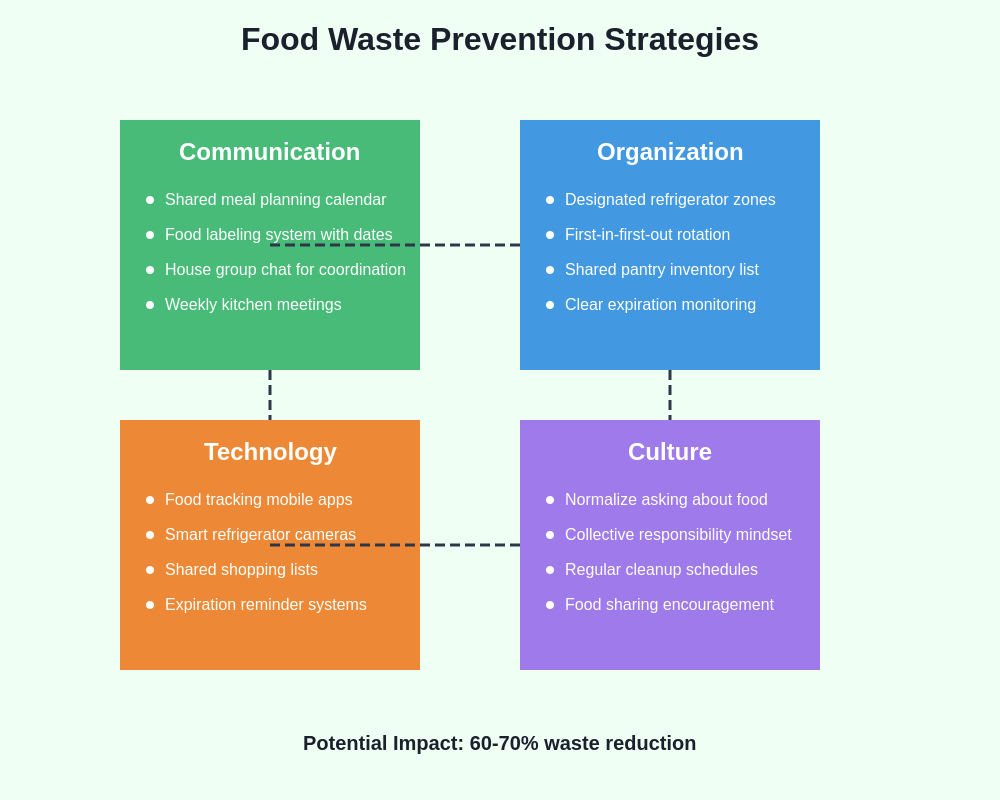
Implementing comprehensive prevention strategies requires coordinated effort across multiple areas including communication systems, organizational improvements, technology adoption, and cultural shifts within the sharehouse community. These interconnected approaches work synergistically to address the root causes of food waste while building sustainable habits that benefit both the environment and household harmony.
Long-term Behavioral and Community Consequences
The patterns of food waste that develop in shared kitchens tend to reinforce themselves through social normalization processes that make wasteful behaviors increasingly acceptable and automatic among resident communities. How personal values get challenged and refined discusses how shared living environments influence individual value systems, including attitudes toward resource consumption and environmental responsibility.
Residents who initially enter sharehouses with strong environmental values and efficient food management practices often find their standards gradually eroded by the practical challenges and social dynamics of shared living. The normalization of food waste within the community creates peer pressure that makes individual conservation efforts seem excessive or antisocial, leading to collective degradation of environmental practices over time.
The learning opportunities that shared living could provide for food management skills, cultural cooking techniques, and collaborative consumption strategies often remain unrealized due to the coordination challenges that prevent effective knowledge sharing. Instead of becoming laboratories for sustainable living practices, many sharehouses develop wasteful cultures that persist across resident turnover and influence newcomers toward less environmentally responsible behaviors.
The financial literacy and resource management skills that residents could develop through effective shared living experiences get replaced by conflict-avoidance strategies and individual consumption patterns that prepare residents poorly for future household management responsibilities. The missed educational opportunities represent long-term consequences that extend beyond the immediate environmental and financial costs of food waste in shared environments.
Understanding these complex dynamics provides the foundation for developing more effective approaches to food waste reduction in shared living environments, requiring systematic changes to social norms, communication practices, storage systems, and economic incentives that address the root causes rather than simply attempting to modify individual behaviors within unchanged structural contexts.
Disclaimer
This article is for informational purposes only and reflects observations about common patterns in shared living environments. Individual experiences may vary significantly based on house culture, management practices, and resident demographics. The suggestions provided should be adapted to specific living situations and local regulations regarding waste management and food safety.