Gaming addiction has emerged as one of the most challenging behavioral issues affecting sharehouse communities across Tokyo, creating ripple effects that extend far beyond the individual gamer and fundamentally alter the social fabric of shared living environments. The immersive nature of modern gaming, combined with the social isolation that often accompanies excessive play, creates a perfect storm of circumstances that can transform harmonious living situations into sources of constant tension and conflict.
The impact of gaming addiction on sharehouse dynamics represents a complex interplay of psychological, social, and practical factors that manifest in ways both obvious and subtle. From disrupted sleep schedules that affect entire communities to the gradual erosion of meaningful relationships, gaming addiction challenges the very foundations upon which successful shared living depends. Understanding these dynamics becomes essential for both current residents dealing with addicted housemates and prospective residents seeking to avoid problematic living situations.
The Psychology of Gaming Addiction in Shared Spaces
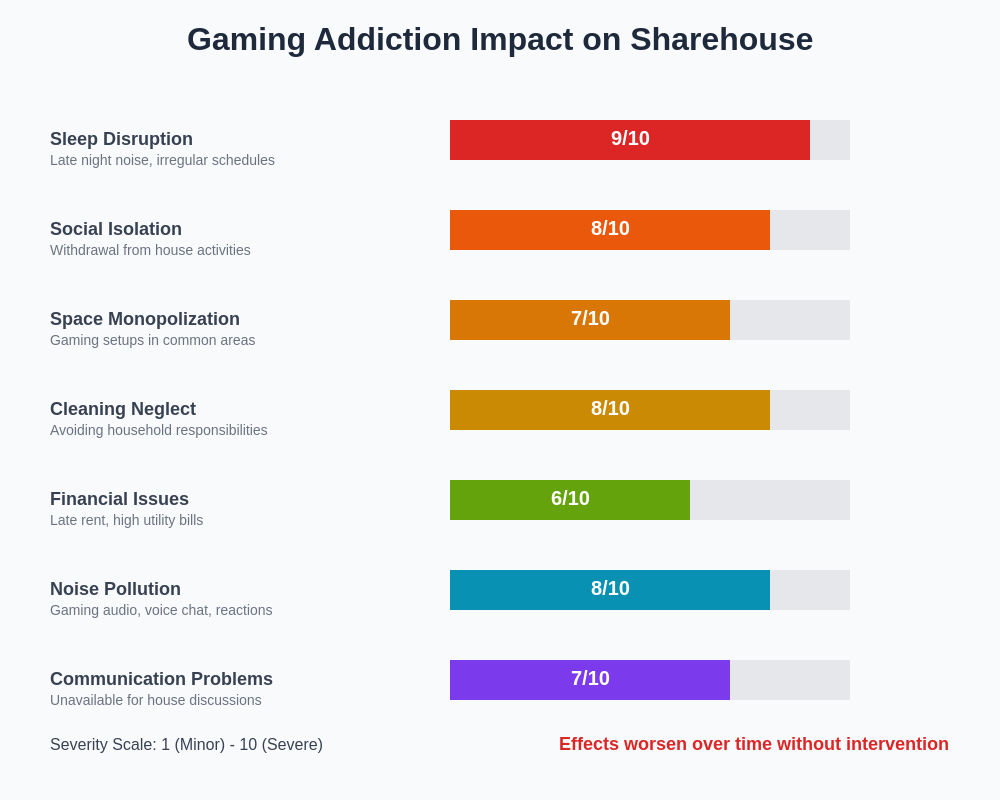
Gaming addiction in sharehouse environments operates under unique psychological pressures that differ significantly from addiction patterns in private residences or family homes. The constant presence of other residents creates both external triggers and internal conflicts that can either exacerbate addictive behaviors or provide unexpected intervention opportunities. Understanding how sleep quality suffers in shared environments becomes particularly relevant when gaming sessions extend deep into night hours, affecting not only the gamer but entire household sleep cycles.
The social dynamics inherent in sharehouse living create complex feedback loops where gaming addiction both stems from and contributes to social isolation within the community. Individuals who struggle with face-to-face social interactions often retreat into gaming worlds where they feel more competent and accepted, yet this retreat further diminishes their ability to engage with housemates in meaningful ways. The result is a progressive disconnection from house community that can leave other residents feeling ignored, frustrated, or even concerned about their housemate’s wellbeing.
Gaming addiction in sharehouses also manifests unique characteristics related to territory and space usage that don’t occur in private living situations. The addicted gamer may begin to treat common areas as extensions of their private gaming space, occupying living rooms, dining areas, or even kitchens for extended gaming sessions. This territorial expansion creates resentment among other residents who find their access to shared spaces increasingly limited by ongoing gaming activities.
The competitive and achievement-oriented nature of many modern games can also create psychological pressure that intensifies during shared living situations. The knowledge that housemates might witness gaming failures or judge performance levels can drive some individuals deeper into gaming sessions as they seek to achieve goals or maintain standings that preserve their self-image. This pressure often leads to longer gaming sessions and more intense emotional responses to in-game events, which inevitably affect the overall household atmosphere.
Disruption of Daily Routines and Shared Schedules
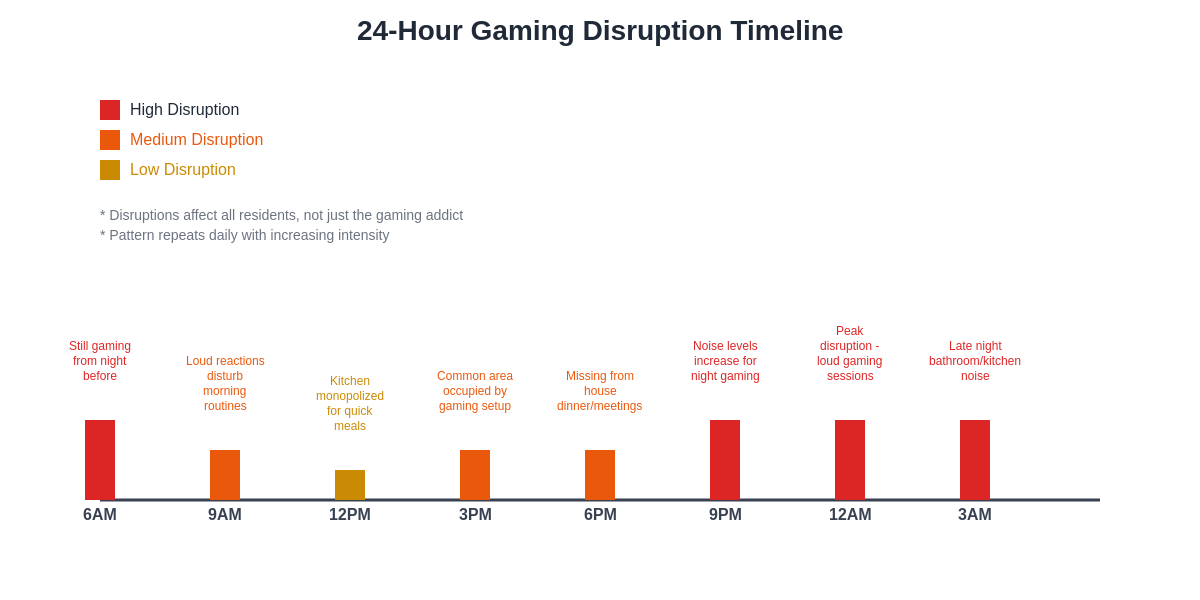
Gaming addiction fundamentally alters the natural rhythms of sharehouse life by introducing unpredictable and often incompatible schedules that clash with the needs and expectations of other residents. How shift work schedules affect roommate relations provides context for understanding how irregular schedules impact shared living, though gaming addiction creates even more erratic patterns that can be particularly disruptive to household harmony.
The most immediately noticeable disruption occurs in kitchen usage patterns, where gaming addicts often avoid regular meal times in favor of quick snacks consumed at their gaming stations. This behavior not only affects the social aspects of shared meals but also creates practical problems around kitchen cleanliness, food storage, and shared cooking responsibilities. Other residents may find themselves unable to plan meals or use kitchen facilities at expected times due to the unpredictable eating patterns of addicted housemates.
Bathroom usage represents another significant area of routine disruption, particularly in sharehouses with limited facilities. Gaming addicts may avoid bathroom breaks for extended periods during intense gaming sessions, then require extended time for personal hygiene when sessions finally end. This pattern can create morning queues, disrupted shower schedules, and general inconvenience for residents who maintain more conventional daily routines.
The disruption extends to household maintenance and cleaning responsibilities, where gaming addicts often become unreliable contributors to essential shared tasks. How cleaning responsibilities create house drama explores these dynamics in detail, but gaming addiction adds particular complications as addicted individuals may genuinely forget commitments, lose track of time, or become so absorbed in gaming that they fail to notice deteriorating conditions in shared spaces.
Impact on Social Relationships and Community Building
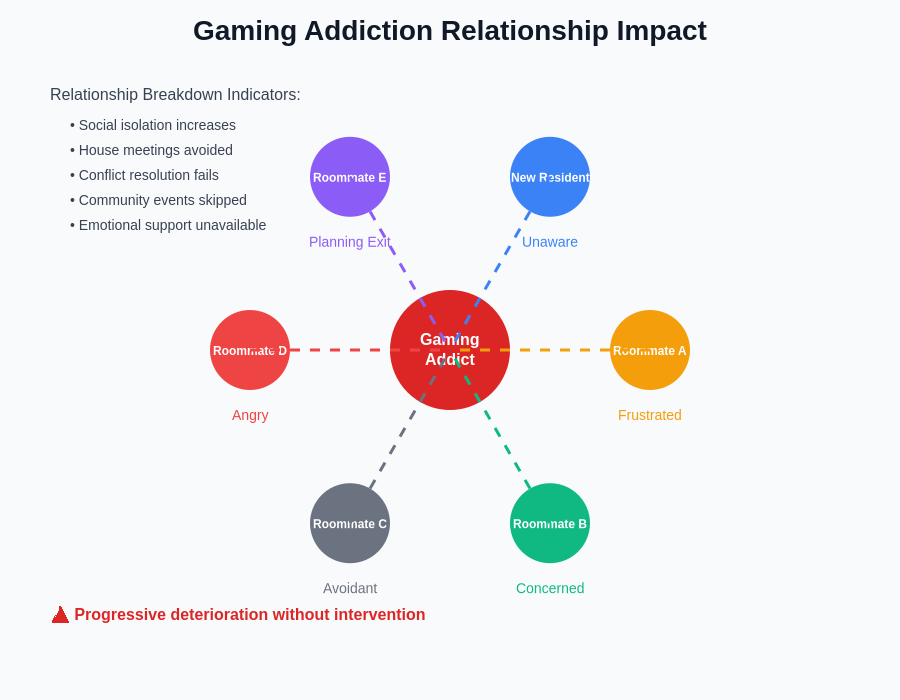
Gaming addiction significantly undermines the social bonds that form the foundation of successful sharehouse communities, creating barriers to the natural friendship development and mutual support systems that make shared living enjoyable and sustainable. The addicted gamer often becomes increasingly disconnected from house social activities, missing community dinners, group outings, and spontaneous conversations that build relationships among residents.
Making friends through Tokyo sharehouse communities highlights the importance of social engagement in creating positive living experiences, yet gaming addiction directly interferes with these relationship-building opportunities. The addicted individual may physically be present in the house but emotionally and socially absent, creating an awkward dynamic where other residents feel uncertain about how to interact with someone who seems perpetually unavailable for meaningful connection.
The competitive and often aggressive nature of many online games can also spill over into real-world interactions, with addicted gamers bringing frustration, anger, or hypercompetitive attitudes into household conversations and conflicts. This emotional spillover can make other residents uncomfortable and hesitant to engage, further isolating the addicted individual while creating tension that affects the entire house atmosphere.
Gaming addiction can also disrupt the natural give-and-take of sharehouse social dynamics, where residents typically balance personal time with community engagement. The addicted gamer often becomes a one-way participant who may expect support, understanding, or accommodation from housemates without reciprocating through participation in house activities or emotional availability when others need support.
Financial Implications and Shared Resource Management
Gaming addiction creates numerous financial pressures that extend beyond individual budgets to affect shared household resources and community financial responsibilities. The high costs associated with maintaining competitive gaming setups, including frequent hardware upgrades, premium internet services, and subscription fees for multiple gaming platforms, can strain personal finances in ways that ultimately impact shared living arrangements.
How to budget realistically for sharehouse living becomes particularly relevant when gaming addiction affects a resident’s ability to meet housing obligations consistently. Addicted gamers may prioritize gaming-related expenses over rent, utilities, or shared household costs, creating financial stress for other residents who must compensate or face service disruptions.
Internet usage represents a particularly contentious shared resource issue when gaming addiction is present. Online gaming requires substantial bandwidth and can create network congestion that affects other residents’ internet activities. How device limits cause internet connection issues explains these technical challenges, but gaming addiction compounds them by introducing intensive, prolonged usage patterns that can monopolize household internet resources.
Electricity costs associated with extended gaming sessions can significantly impact utility bills, particularly when gaming setups include multiple monitors, high-performance computers, and extended lighting for streaming or recording activities. These increased costs are typically shared among all residents, meaning that one individual’s gaming addiction can raise expenses for the entire household without their knowledge or consent.
Physical Space and Territorial Conflicts
Gaming addiction often leads to the gradual expansion of personal gaming space into shared house areas, creating territorial conflicts that challenge the fundamental principles of respectful shared living. What begins as occasional gaming in common areas can evolve into semi-permanent occupation of living rooms, dining spaces, or other shared facilities that other residents expect to access freely.
The physical equipment associated with serious gaming setups requires substantial space and often involves permanent or semi-permanent installations that affect the aesthetics and functionality of shared areas. Multiple monitors, gaming chairs, specialized lighting, and cable management systems can transform shared spaces in ways that serve the gamer’s needs while diminishing the space’s utility and appeal for other residents.
Gaming addiction can also lead to the accumulation of gaming-related materials, including game cases, hardware components, promotional materials, and specialized accessories that gradually encroach upon shared storage areas and common spaces. This accumulation often occurs gradually, making it difficult for other residents to address without seeming unreasonable or petty.
The noise implications of gaming setups extend beyond simple volume considerations to include the spatial distribution of sound throughout the house. Gaming audio, voice chat communications, and keyboard/controller input sounds can carry through walls and floors in ways that affect multiple residents simultaneously, particularly during late-night gaming sessions when sound carries more easily through quiet houses.
Sleep Disruption and Nocturnal Gaming Patterns
Gaming addiction frequently involves extensive late-night gaming sessions that create widespread sleep disruption throughout sharehouse communities. The addicted gamer may lose track of time during intense gaming periods, extending sessions well into early morning hours without consideration for housemates who maintain conventional sleep schedules.
The sounds associated with late-night gaming create multiple sources of sleep disruption for other residents. Keyboard clicking, mouse movements, voice chat communications, game audio, and emotional reactions to gameplay can all penetrate walls and disturb neighboring rooms. Even residents who don’t share adjacent rooms may be affected by sounds traveling through building structures or ventilation systems.
How noise pollution affects sleep quality provides broader context for understanding these sleep disruption patterns, but gaming addiction creates particularly challenging noise issues because the disturbances are both unpredictable and emotionally charged. Unlike consistent background noise, gaming-related sounds include sudden exclamations, victory celebrations, and frustration outbursts that can be especially jarring for sleeping residents.
The irregular sleep patterns of gaming addicts also create indirect disruptions for other residents through shifted usage of shared facilities during typically quiet hours. Late-night kitchen use, bathroom visits, and movement through common areas during hours when other residents expect quiet can create ongoing sleep quality issues that compound over time.
Communication Breakdown and Conflict Resolution
Gaming addiction significantly complicates communication within sharehouse communities by creating barriers to the open dialogue and mutual respect that successful conflict resolution requires. The addicted gamer may become defensive about their gaming habits, interpreting legitimate concerns from housemates as personal attacks or attempts to control their lifestyle choices.
How to handle roommate conflicts without moving out offers strategies for addressing conflicts constructively, but gaming addiction introduces unique challenges because the addicted individual may lack awareness of how their behavior affects others or may minimize the legitimate concerns raised by housemates.
The immersive nature of gaming can also create communication delays and misunderstandings when addicted residents are unavailable for house meetings, conflict discussions, or routine communications about shared responsibilities. This unavailability can frustrate other residents who feel unable to address issues in a timely manner or who must repeatedly attempt to gain the attention of someone absorbed in gaming activities.
Gaming addiction can also affect the quality of communication when addicted individuals do participate in house discussions. The competitive, achievement-oriented mindset encouraged by many games can carry over into conflict resolution attempts, with addicted gamers approaching disagreements as competitions to be won rather than problems to be solved collaboratively.
Impact on House Rules and Community Standards
Gaming addiction challenges established house rules and community standards in ways that can undermine the entire framework of expectations that govern successful shared living. Rules about quiet hours, shared space usage, and community participation become difficult to enforce when one resident’s gaming addiction creates ongoing violations that seem beyond their conscious control.
Japanese sharehouse rules every foreigner should know outlines common expectations in shared living environments, but gaming addiction can make adherence to these standards particularly challenging. The addicted gamer may agree to rules and standards but find themselves unable to consistently follow through due to the compelling nature of their gaming activities.
The presence of gaming addiction can also force house communities to develop new rules and standards that address gaming-specific issues, creating additional complexity in house governance and potentially generating resentment among residents who feel that special accommodations are being made for problematic behavior. These new rules may include gaming curfews, space usage restrictions, or noise limitations that wouldn’t be necessary in houses without addiction issues.
Gaming addiction can also create enforcement challenges when house rules violations occur during intense gaming sessions. The addicted gamer may be genuinely unaware that they are violating community standards or may be unable to modify their behavior immediately due to their engagement with ongoing gaming activities.
Long-term Consequences for House Stability
Gaming addiction creates long-term stability issues for sharehouse communities that extend well beyond immediate conflicts or inconveniences. The ongoing nature of addiction means that problems tend to escalate over time rather than resolving naturally, creating cumulative stress that can eventually destabilize entire house communities.
Resident turnover often increases in houses where gaming addiction is present, as frustrated housemates seek alternative living arrangements rather than continuing to deal with ongoing disruptions. This turnover creates additional stress for remaining residents who must repeatedly adjust to new housemates while the underlying gaming addiction issues remain unresolved.
Why some residents become social outcasts explores how behavioral issues can create isolation within house communities, and gaming addiction represents one of the most common pathways to this social exclusion. The addicted gamer may gradually become marginalized within the house community, creating awkward dynamics that affect everyone’s living experience.
The reputation of sharehouses known to have gaming addiction issues can also suffer in the broader housing market, making it more difficult to attract quality residents and potentially affecting property values or rental demand. This reputation damage can have lasting effects that persist even after addicted residents move out.
Gaming addiction in sharehouse environments represents a complex challenge that requires understanding, patience, and sometimes professional intervention to address effectively. The interconnected nature of shared living means that individual behavioral issues inevitably become community concerns that require collaborative solutions and mutual support to resolve successfully.
Disclaimer
This article is for informational purposes only and does not constitute professional psychological or medical advice. Gaming addiction is a recognized behavioral health issue that may require professional treatment. The situations described reflect common patterns observed in shared living environments but may not apply to all circumstances. Readers dealing with gaming addiction issues should consider consulting with mental health professionals and seeking appropriate support resources.