
Living in close proximity with multiple strangers creates a unique social ecosystem where information flows with remarkable speed and intensity, often transforming innocent observations into complex narratives that can fundamentally alter house dynamics. The phenomenon of gossip in sharehouse environments represents more than mere idle chatter; it serves as a powerful social mechanism that shapes relationships, establishes hierarchies, and influences the overall living experience for every resident within the confined space.
The psychology behind accelerated gossip transmission in shared living spaces stems from fundamental human needs for social connection, information gathering, and community positioning that become amplified when personal space is limited and social interaction is unavoidable. Understanding these dynamics proves essential for navigating sharehouse life successfully while maintaining positive relationships and personal privacy in an environment where boundaries blur and personal information becomes communal knowledge.
The Architecture of Information Flow
Physical proximity creates unprecedented opportunities for information exchange that simply cannot exist in traditional housing arrangements where neighbors maintain clear boundaries and limited interaction. How age differences impact sharehouse compatibility often influences how quickly information spreads between different demographic groups within the same living space, creating distinct communication patterns and social networks.
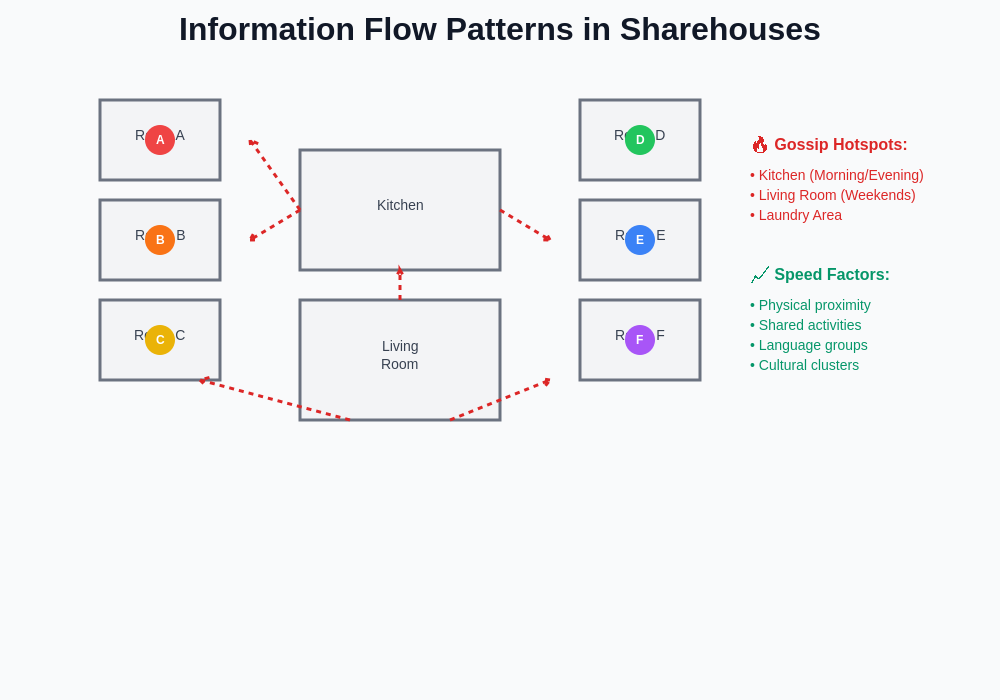
The layout of most sharehouses inadvertently facilitates gossip transmission through shared common areas where residents naturally congregate, creating informal information hubs where casual conversations evolve into detailed discussions about absent housemates. Kitchen spaces, living rooms, and laundry areas become theaters for social observation and commentary, where residents unconsciously gather intelligence about their neighbors’ habits, relationships, and personal circumstances.
Sound transmission through thin walls and shared ventilation systems means that private conversations often become public knowledge without the speakers’ awareness or consent. Phone calls, video conferences, and intimate discussions conducted in supposedly private rooms frequently leak into common areas and adjacent bedrooms, providing unwitting material for community speculation and analysis.
The temporal concentration of resident activity during peak hours creates natural bottlenecks where multiple people encounter each other repeatedly throughout the day, exponentially increasing opportunities for information exchange and social observation. Morning bathroom queues, evening kitchen usage, and weekend common area activities serve as regular forums for casual conversation that inevitably evolves into more substantial information sharing.
Psychological Drivers of Accelerated Gossip
The human need for social connection intensifies in environments where individuals live among strangers while simultaneously craving belonging and community acceptance. Building real friendships in shared living environments requires navigating complex social dynamics where gossip often serves as a bonding mechanism between residents seeking common ground and shared experiences.
Information sharing provides residents with a sense of control and insider knowledge that helps them navigate the uncertainty of living with unfamiliar people whose backgrounds, intentions, and reliability remain unknown quantities. Gossip serves as an informal vetting system where residents collectively assess new housemates and share observations that help establish community norms and expectations.
The psychological stress of maintaining constant social awareness in shared spaces creates cognitive overload that makes residents more susceptible to engaging in gossip as a form of social processing and emotional release. Why stress management techniques become necessary in sharehouse environments often relates directly to the mental exhaustion of continuous social navigation and information processing.
Boredom and limited privacy drive residents to seek entertainment and stimulation through social observation and commentary about their housemates’ lives, relationships, and daily activities. The captive audience nature of sharehouse living means that residents often become unwilling subjects of ongoing social analysis and speculation by their neighbors who have limited alternative sources of entertainment or social engagement.
Cultural and Language Factors
International sharehouses create unique gossip dynamics where language barriers simultaneously impede and accelerate information transmission depending on the linguistic composition of resident groups and their communication preferences. How language barriers prevent deep friendships paradoxically encourages gossip as residents attempt to gather information about housemates they cannot communicate with directly.
Native language clusters within multinational sharehouses often become information silos where gossip travels rapidly within linguistic groups while remaining isolated from other language communities, creating parallel narrative streams about the same events and individuals. These separate information ecosystems can lead to dramatically different perceptions of the same situations and people based purely on which language group controls the narrative.
Cultural differences in privacy expectations and gossip tolerance create tension between residents from societies with different norms regarding personal information sharing and social commentary. How cultural differences affect friendship building includes navigating varying comfort levels with gossip and information sharing that can significantly impact house harmony.
The tendency for residents to seek cultural familiarity often results in nationality-based alliances where information sharing becomes a form of cultural bonding and mutual support against the perceived challenges of living in a foreign environment with unfamiliar social norms and expectations.
Technology’s Role in Gossip Amplification
Digital communication platforms designed to facilitate house coordination and community building often become vehicles for gossip transmission that extends beyond face-to-face interactions and creates permanent records of speculation and commentary. Group messaging applications, social media connections, and house-specific communication channels provide platforms for continuous information exchange that occurs independently of physical proximity.
Social media stalking becomes a common activity where residents investigate their housemates’ online presence to gather personal information that then becomes fodder for house gossip and speculation about relationships, financial situations, and lifestyle choices. How social media impacts real-life relationships in sharehouse contexts often involves the complicated dynamics of online investigation and offline gossip distribution.
The documentation nature of digital communication means that gossip and speculation can be preserved, shared, and referenced long after the original events, creating ongoing tension and relationship complications that might otherwise fade from memory in purely verbal communication environments.
Video calling and online meetings conducted in shared spaces provide opportunities for inadvertent eavesdropping and information gathering about residents’ professional lives, family relationships, and personal circumstances that become integrated into house gossip networks and social speculation.
Impact on House Dynamics and Relationships
Gossip serves as an unofficial house management system where social pressure and community judgment regulate behavior and establish informal rules that supplement official house policies and management oversight. How social hierarchies develop naturally often relies heavily on gossip networks that determine social status and community acceptance based on perceived adherence to unwritten social norms.
The rapid spread of information creates accountability pressure that can positively influence resident behavior regarding cleanliness, noise levels, and community participation while simultaneously creating anxiety and self-consciousness about being constantly observed and judged by housemates. This social surveillance can improve house harmony through peer pressure while also creating stress and limiting authentic self-expression.
Romantic relationships between housemates become immediate subjects of intense speculation and commentary that can significantly impact the couples’ privacy and relationship development. How romantic relationships develop in sharehouses inevitably involves managing community interest and gossip that treats private relationships as public entertainment and social analysis opportunities.
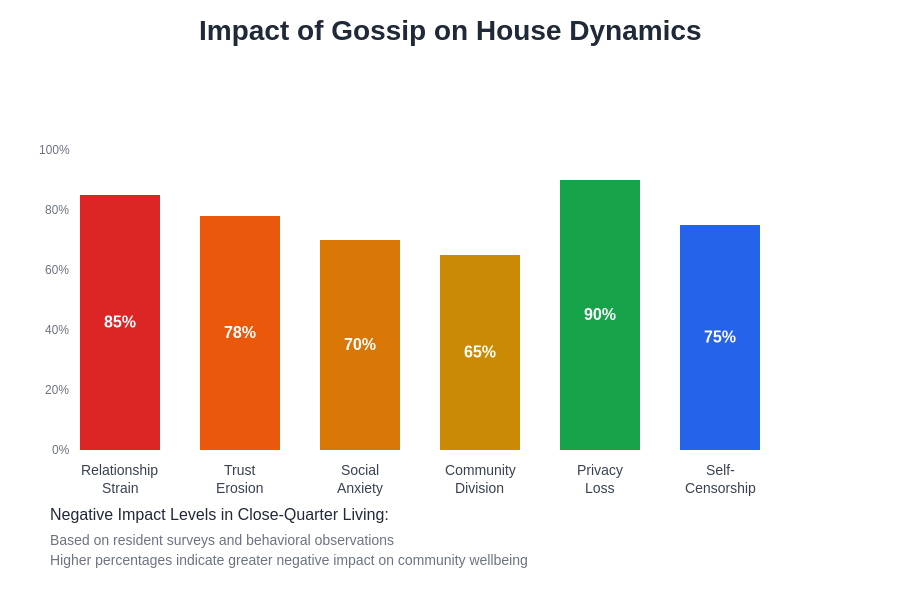
Conflict escalation occurs rapidly when gossip networks amplify minor disagreements or personality conflicts into major house dramas that involve residents who were not initially party to the original disputes. The echo chamber effect of gossip can transform small issues into community-wide tensions that require significant effort to resolve and may result in residents leaving the house to escape ongoing social pressure.
Strategies for Managing Gossip in Shared Spaces
Establishing personal boundaries regarding information sharing requires conscious effort to avoid becoming either a source or recipient of potentially harmful gossip while maintaining positive social relationships with housemates who may view information sharing as essential community bonding. How to handle roommate conflicts without moving out often involves managing gossip-related tensions and establishing healthier communication patterns.
Direct communication with individuals rather than discussing concerns with third parties helps prevent gossip escalation while addressing legitimate issues that affect house harmony and individual comfort. This approach requires courage and social skills but ultimately creates more positive outcomes than allowing problems to fester through gossip networks.
Creating positive alternative activities and conversation topics helps redirect social energy away from gossip toward more constructive community building and relationship development. Making friends through Tokyo sharehouse communities involves fostering environments where residents connect through shared interests and activities rather than mutual speculation about absent housemates.
Selective information sharing allows residents to maintain social connections while protecting personal privacy by consciously choosing what information to share and with whom, rather than allowing all personal details to become community knowledge through casual conversation and social observation.
The Economics of Social Information
Gossip serves as a form of social currency where residents gain status and influence within house communities by possessing and distributing valuable information about their housemates’ lives, relationships, and circumstances. This information economy creates power dynamics where knowledge translates directly into social position and community influence.
The scarcity of alternative entertainment and social stimulation in confined living environments increases the perceived value of personal information and social drama, making gossip a more attractive and engaging activity than it might be in situations with greater privacy and entertainment options. Why some residents always feel like outsiders often relates to their exclusion from information networks and gossip circles that define community membership.
Trust becomes a valuable commodity that residents must carefully manage when deciding what information to share with whom, knowing that personal details shared with one housemate will likely become known to the entire house through gossip networks and social information exchange.
The temporary nature of many sharehouse arrangements can intensify gossip because residents have limited time to form deep relationships and may rely more heavily on surface-level information gathering and speculation to understand their temporary neighbors and living situation.
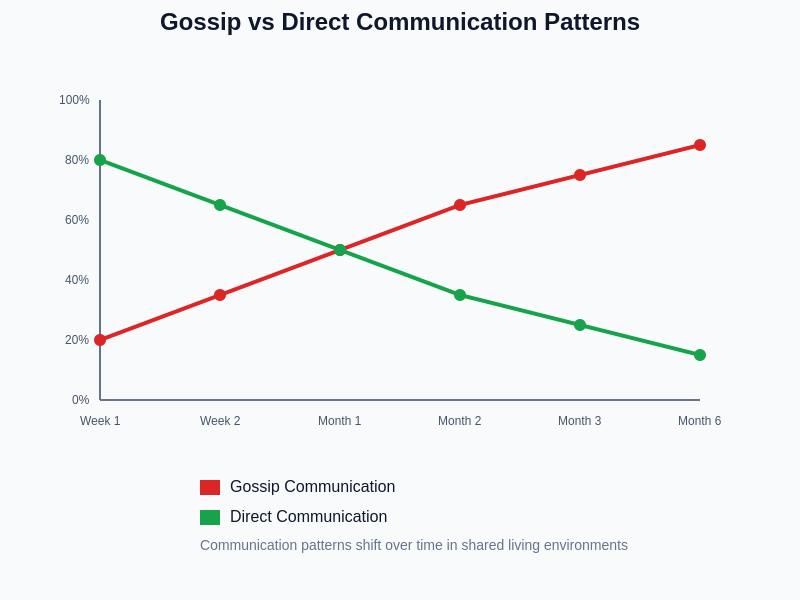
This timeline demonstrates how gossip gradually replaces direct communication as residents become more entrenched in established social patterns and information networks within the sharehouse community.
Long-term Consequences and Community Health
Persistent gossip creates toxic living environments where residents feel constantly surveilled and judged, leading to increased stress levels, reduced authentic self-expression, and eventual resident turnover as people seek more comfortable living situations. Why some residents become social outcasts often results from negative gossip cycles that become self-reinforcing and difficult to escape.
House reputation within broader sharehouse networks can be significantly impacted by gossip patterns and social dynamics, affecting the property’s ability to attract quality residents and maintain stable community environments. Properties known for drama and gossip problems may struggle with higher turnover rates and difficulty maintaining positive community atmospheres.
Personal growth opportunities can be severely limited when residents feel unable to experiment with new behaviors, relationships, or lifestyle choices due to fear of gossip and social judgment from their immediate living community. This social pressure can prevent the positive personal development that often motivates people to choose sharehouse living in the first place.
The skills residents develop in managing gossip and social dynamics in sharehouse environments can provide valuable preparation for navigating workplace politics, community involvement, and other social situations where information management and relationship building require similar awareness and strategic thinking.
Understanding the inevitability of accelerated gossip transmission in close-quarters living helps residents develop realistic expectations and effective strategies for protecting their privacy while participating positively in community life. The goal is not to eliminate gossip entirely, which is neither possible nor necessarily desirable, but to manage its impact through conscious communication choices and healthy boundary setting that preserves both individual privacy and community cohesion in the unique social ecosystem of shared living spaces.
Disclaimer
This article is for informational purposes only and reflects observations about social dynamics in shared living environments. Individual experiences may vary significantly based on cultural background, house management, and resident demographics. The strategies mentioned should be adapted to specific living situations and personal comfort levels. Readers should consider their own values and boundaries when navigating social dynamics in sharehouse environments.