Health insurance requirements represent one of the most critical yet frequently misunderstood aspects of sharehouse living in Japan, with mandatory participation in the national healthcare system affecting every international resident regardless of their housing situation. The complexity of Japan’s healthcare framework, combined with specific documentation requirements for sharehouse applications, creates numerous challenges that can significantly impact both your ability to secure accommodation and access essential medical services throughout your stay in Japan.
Understanding why health insurance serves as a fundamental requirement for sharehouse residents goes beyond simple legal compliance, encompassing practical considerations of community health, financial responsibility, and long-term residential stability that directly influence both individual well-being and collective living harmony. The interconnected nature of healthcare coverage, visa status, and housing eligibility creates a complex web of requirements that demands comprehensive understanding for successful navigation of Japan’s residential landscape.
Legal Framework and Mandatory Coverage Requirements
Japan’s National Health Insurance system operates under strict legal mandates that require all residents, including temporary visitors staying longer than three months, to maintain active healthcare coverage throughout their period of residence. This universal coverage principle extends beyond simple healthcare access to encompass broader social responsibility frameworks that underpin Japan’s approach to community welfare and collective health security.
The legal foundation for mandatory health insurance stems from Japan’s commitment to universal healthcare access, ensuring that all residents can receive necessary medical treatment without creating undue financial burdens on healthcare providers or other system participants. Understanding utility bills in Japanese sharehouses often includes health insurance considerations as part of broader administrative requirements that affect monthly living costs and documentation needs.
Sharehouse operators and property management companies face legal liability issues when accommodating residents without proper health insurance coverage, creating institutional incentives to verify and require proof of insurance before finalizing rental agreements. This legal framework protects both residents and operators from potential financial exposure related to medical emergencies, hospitalization costs, and long-term healthcare needs that could otherwise create significant financial hardships.
The enforcement mechanisms for health insurance compliance include regular verification procedures, penalty assessments for non-compliance, and potential restrictions on various administrative services that affect daily life in Japan. Understanding these enforcement aspects helps explain why sharehouse operators maintain strict policies regarding insurance verification and ongoing compliance monitoring throughout residency periods.
Healthcare System Structure and Coverage Types
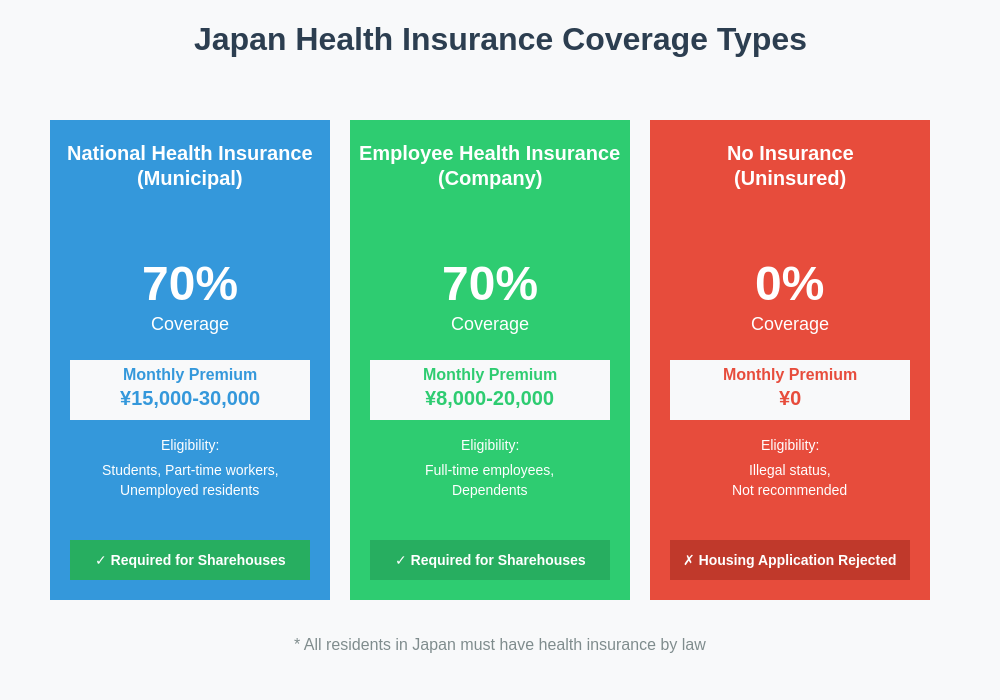
Japan’s healthcare system operates through multiple insurance frameworks designed to provide comprehensive coverage for different population segments, with the National Health Insurance program serving as the primary option for most international residents living in sharehouses. The dual-structure system includes employer-based insurance for full-time workers and municipal insurance programs for students, part-time workers, and unemployed residents.
The National Health Insurance program provides extensive coverage including doctor visits, hospital treatments, prescription medications, preventive care, and emergency services, typically covering seventy percent of total medical costs with patients responsible for thirty percent co-payments. This coverage structure ensures access to Japan’s world-class healthcare system while maintaining reasonable cost-sharing arrangements that prevent overutilization of medical services.
Living costs in Tokyo sharehouses explained demonstrates how health insurance premiums represent significant monthly expenses that must be factored into overall housing budgets, with costs varying based on income levels, age, and specific municipal calculation methods that can differ substantially between different areas of Tokyo and surrounding regions.
Employer-sponsored insurance programs offer alternative coverage options for residents with full-time employment, often providing more comprehensive benefits and lower out-of-pocket costs compared to municipal insurance programs. However, eligibility requirements and coverage limitations may affect housing flexibility and long-term planning considerations for residents whose employment status changes during their sharehouse residency.
Application Procedures and Documentation Requirements
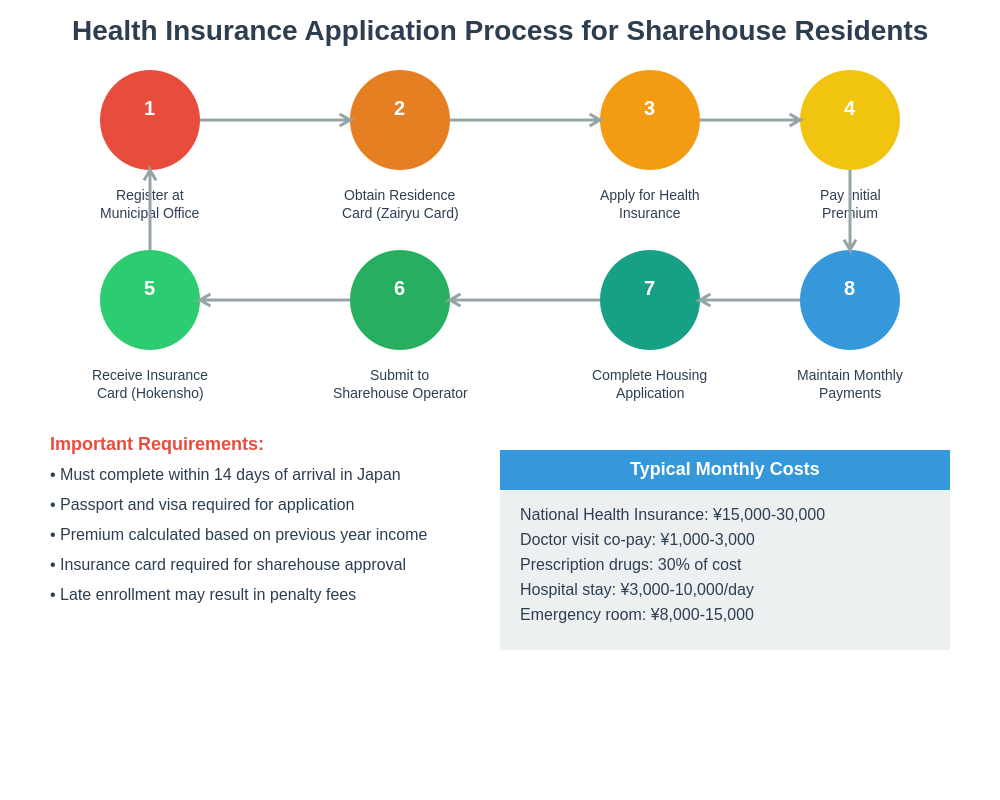
The health insurance enrollment process involves multiple administrative steps that must be completed within specific timeframes following arrival in Japan or changes in residential status, with failure to meet these deadlines potentially resulting in coverage gaps and retroactive premium assessments. What documents you need for Tokyo sharehouse applications typically includes health insurance verification as a standard requirement that affects application approval timelines.
Municipal health insurance enrollment requires presentation of residency registration documentation, passport verification, income information, and completion of detailed application forms that may require Japanese language proficiency or assistance from translation services. The complexity of these procedures often creates challenges for international residents who lack familiarity with Japanese administrative systems and documentation requirements.
Premium calculation methods vary significantly between municipalities and depend on factors including previous year income, household composition, age, and specific local assessment policies that can create substantial cost variations even within the same metropolitan area. Understanding these calculation methods helps residents budget appropriately and select housing locations that optimize both housing costs and insurance premium obligations.
Payment procedures for health insurance premiums include various options such as automatic bank transfers, convenience store payments, and municipal office transactions, with different payment methods offering varying levels of convenience and potential late payment penalties. Establishing reliable payment systems prevents coverage lapses that could affect both healthcare access and sharehouse residency status.
Financial Implications and Budget Planning
Health insurance costs represent substantial monthly expenses that significantly impact overall living budgets for sharehouse residents, with premium amounts often equivalent to ten to fifteen percent of total monthly income for many international residents. How much Tokyo sharehouses really cost per month must account for these insurance costs alongside housing, transportation, and other essential expenses.
The financial structure of Japan’s healthcare system includes various cost-sharing mechanisms, deductibles, and coverage limitations that affect out-of-pocket expenses for medical services, prescription medications, and specialized treatments. Understanding these cost structures helps residents plan for both routine healthcare needs and potential emergency medical situations that could create unexpected financial burdens.
Income-based premium calculations mean that health insurance costs can fluctuate significantly based on employment changes, income variations, and reporting requirements that affect annual premium assessments. These fluctuations create budgeting challenges for residents whose income levels vary throughout the year due to seasonal employment, freelance work, or student status changes.
Emergency medical expenses, even with insurance coverage, can create substantial financial obligations due to the thirty percent co-payment requirements and potential costs for services not fully covered by standard insurance plans. Building emergency funds specifically for healthcare expenses provides essential financial security for sharehouse residents who may lack family support networks or comprehensive savings cushions.
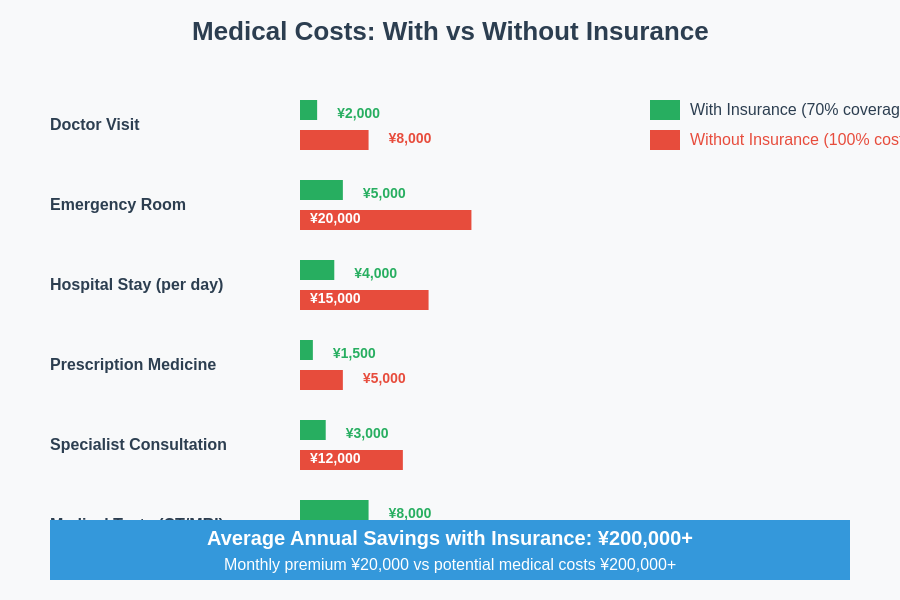
The stark difference in medical costs between insured and uninsured patients demonstrates why health insurance serves as an essential financial protection mechanism for sharehouse residents who may face unexpected medical emergencies or ongoing healthcare needs during their stay in Japan.
Impact on Sharehouse Applications and Approval
Sharehouse operators increasingly require proof of health insurance coverage as part of standard application procedures, with this requirement serving multiple purposes including legal compliance, risk management, and community health protection. Japanese sharehouse rules every foreigner should know often include health insurance verification as a non-negotiable requirement that affects application processing and approval decisions.
The verification process typically involves presenting current insurance cards, payment confirmation documents, and sometimes additional documentation proving ongoing coverage eligibility and premium payment compliance. Failure to provide adequate insurance documentation can result in application rejections, delayed approval processes, or requirements for additional guarantor arrangements that complicate housing acquisition efforts.
Some sharehouse operators maintain relationships with insurance brokers or administrative support services that can assist residents with enrollment procedures, premium payment setup, and ongoing compliance monitoring. These services often come with additional fees but can provide valuable support for international residents who struggle with Japanese administrative procedures and language barriers.
The timing of insurance enrollment relative to sharehouse applications creates logistical challenges since insurance coverage often requires residential address confirmation while housing applications may require insurance verification, creating circular dependency issues that require careful coordination and planning to resolve effectively.
Community Health and Collective Responsibility
Health insurance requirements in sharehouses reflect broader Japanese cultural values emphasizing collective responsibility and community welfare, with individual health decisions affecting the well-being and financial security of the entire residential community. The shared living environment of sharehouses amplifies the importance of individual health coverage since medical emergencies, infectious diseases, and healthcare access issues can rapidly impact multiple residents.
Infectious disease prevention and management become particularly critical in sharehouse environments where close proximity living arrangements facilitate rapid transmission of illnesses, making comprehensive healthcare access essential for protecting community health and preventing widespread outbreaks that could affect entire residential populations. Living with Japanese roommates in Tokyo sharehouses often involves understanding health-related cultural norms and expectations regarding illness management and healthcare responsibility.
The financial interdependence created by shared living arrangements means that healthcare emergencies affecting one resident can impact the entire community through increased costs, temporary displacement needs, or disruptions to normal house operations. Insurance coverage helps mitigate these risks by ensuring that medical emergencies can be addressed promptly without creating undue financial burdens on other residents or house management.
Community health education and preventive care access become more important in sharehouse environments where residents may come from different cultural backgrounds with varying healthcare knowledge and practices. Insurance coverage facilitates access to preventive services, health education resources, and early intervention programs that benefit individual residents while protecting overall community health.
Emergency Situations and Medical Access
Emergency medical situations in sharehouse environments require immediate access to healthcare services without the delays that can result from insurance verification, payment negotiations, or coverage disputes that might arise when residents lack proper insurance documentation. How medical emergencies are handled in sharehouses often depends heavily on residents’ insurance status and coverage adequacy.
Japan’s emergency medical system operates on the assumption that patients have valid insurance coverage, with hospitals and emergency services structured to provide immediate care while relying on insurance reimbursement systems to handle payment processing. Uninsured residents may face treatment delays, payment demands, or limited service access that could compromise medical outcomes during critical situations.
Mental health services, which are increasingly recognized as essential healthcare components, require insurance coverage for affordable access to counseling, psychiatric care, and therapeutic services that may be particularly important for international residents dealing with cultural adjustment stress, language barriers, and social isolation challenges common in sharehouse living situations.
Chronic health condition management becomes more complex for sharehouse residents who may lack family support networks and require ongoing medical supervision, prescription management, and specialized care coordination that depends on comprehensive insurance coverage for affordability and accessibility.
Visa Status and Insurance Eligibility
The relationship between visa status and health insurance eligibility creates complex interdependencies that affect both housing options and healthcare access throughout residency periods in Japan. Different visa categories carry varying insurance requirements, eligibility criteria, and coverage options that directly impact sharehouse application processes and long-term residential planning.
Student visas typically provide clear pathways to National Health Insurance enrollment, but coverage may be limited by income restrictions, part-time work limitations, and academic status requirements that could affect premium costs and eligibility for certain benefits. Student sharehouses near top Tokyo universities often cater specifically to students navigating these insurance requirements.
Working holiday visas and other temporary residence categories may face restrictions on insurance enrollment timing, coverage duration, and benefit access that require careful planning and documentation to ensure continuous coverage throughout residency periods. These restrictions can affect housing stability and long-term planning considerations for residents whose visa status may change during their stay.
Employment-based visas often provide access to employer-sponsored insurance programs that may offer superior benefits compared to municipal insurance options, but job changes, employment termination, or company policy modifications can create coverage disruptions that affect both healthcare access and housing eligibility requirements.
Long-term Implications and Compliance Monitoring
Ongoing compliance with health insurance requirements extends beyond initial enrollment to include regular premium payments, coverage verification, and reporting requirements that continue throughout residency periods in sharehouses. How to actually get your deposit back often involves demonstrating continued compliance with insurance requirements as part of tenancy termination procedures.
Premium payment delinquencies can result in coverage suspensions, retroactive penalty assessments, and potential restrictions on various administrative services that affect daily life in Japan, including banking services, visa renewals, and housing applications for future relocations. Understanding these consequences helps residents maintain consistent compliance and avoid costly complications.
The insurance enrollment history becomes part of residents’ administrative records in Japan, with gaps in coverage or compliance issues potentially affecting future insurance applications, visa renewals, and housing eligibility for subsequent moves within Japan or returns to the country after temporary departures.
Regular verification procedures conducted by sharehouse operators may require periodic submission of updated insurance documentation, payment confirmations, and coverage verification letters that demonstrate ongoing compliance with both legal requirements and house policies regarding resident insurance status.
Integration with Other Administrative Requirements
Health insurance requirements intersect with numerous other administrative obligations affecting sharehouse residents, including resident registration, tax filing, pension contributions, and various licensing or certification requirements that depend on demonstrating comprehensive legal compliance and social integration in Japan.
The administrative complexity of managing multiple interconnected requirements often overwhelms international residents who lack familiarity with Japanese bureaucratic systems, creating opportunities for costly mistakes, coverage gaps, or compliance failures that can affect both healthcare access and housing stability. How to find perfect sharehouse tokyo requires understanding these administrative interconnections.
Banking relationships, mobile phone contracts, and various consumer services may require proof of health insurance coverage as part of their application procedures, making insurance compliance essential for accessing basic services necessary for daily life in Japan beyond just healthcare and housing needs.
Tax implications of health insurance premiums include potential deductions, reporting requirements, and interactions with other social insurance obligations that affect overall tax liability and compliance obligations for international residents who may be unfamiliar with Japan’s tax system complexities.
The comprehensive nature of health insurance requirements for sharehouse residents reflects Japan’s commitment to universal healthcare access while ensuring that all community members contribute to and benefit from the collective health security system. Understanding these requirements and maintaining consistent compliance provides essential foundation for successful sharehouse living and broader integration into Japanese society. Real stories from Tokyo sharehouse residents often highlight the importance of proper health insurance planning for positive living experiences.
Proper preparation and ongoing attention to health insurance obligations not only ensures legal compliance and healthcare access but also demonstrates the social responsibility and community awareness that forms the foundation of successful sharehouse living in Japan’s uniquely collaborative residential environment.
Disclaimer
This article is for informational purposes only and does not constitute legal or medical advice. Health insurance requirements and procedures in Japan are subject to change, and specific requirements may vary by municipality and individual circumstances. Readers should consult with relevant authorities, insurance providers, and legal professionals for current information and guidance specific to their situation. The effectiveness of insurance coverage may vary depending on specific policy terms and individual health needs.