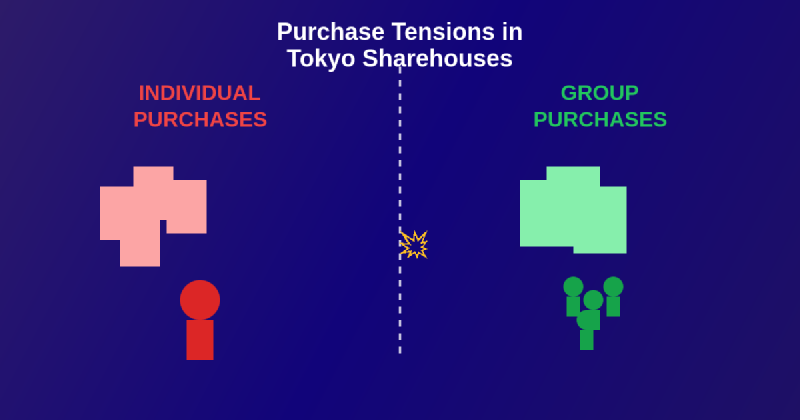
The decision between individual and group purchases represents one of the most persistent sources of friction in Tokyo sharehouses, creating underlying tensions that can escalate from minor disagreements into house-wide conflicts that fundamentally alter living dynamics and resident relationships. This seemingly simple choice between buying items personally or collectively touches upon deeper psychological, cultural, and financial factors that reflect individual values, economic circumstances, and social expectations in ways that many residents never anticipate when they first move into shared living spaces.
The complexity of purchase decisions in sharehouses extends far beyond basic cost considerations, encompassing issues of personal autonomy, financial transparency, quality preferences, consumption habits, and cultural attitudes toward sharing and ownership that vary dramatically among international residents from different backgrounds. Understanding how shared expense apps create new problems reveals how even technological solutions designed to simplify group purchases often introduce additional complications and sources of disagreement.
The Psychology Behind Purchase Decision Conflicts
Individual purchasing decisions in sharehouses often stem from fundamental psychological needs for control, autonomy, and personal preference expression that clash with the communal expectations and collective decision-making processes inherent in shared living arrangements. Residents who choose individual purchases frequently cite concerns about quality control, brand preferences, dietary restrictions, or simple desire for independence as primary motivating factors, while group-oriented residents may interpret these choices as antisocial behavior or attempts to avoid fair contribution to shared resources.
The psychological tension intensifies when residents perceive inequality in contribution levels, usage patterns, or benefit distribution from group purchases, leading to resentment and passive-aggressive behaviors that manifest in various ways throughout daily interactions. Some residents begin tracking and comparing individual consumption against collective contributions, creating mental scoreboards that poison the atmosphere and transform routine household activities into sources of stress and suspicion.
Cultural backgrounds significantly influence individual attitudes toward collective purchasing, with some nationalities emphasizing individual responsibility and self-sufficiency while others prioritize community harmony and shared resources. How cultural differences affect friendship building explores how these fundamental value differences create misunderstandings and conflicts that extend beyond simple purchase decisions into broader relationship dynamics.
Financial Inequalities and Economic Pressure Points
Economic disparities among sharehouse residents create particularly challenging dynamics around purchase decisions, as individuals with different income levels, spending habits, and financial priorities struggle to find mutually acceptable approaches to shared expenses and resource allocation. Residents with higher disposable incomes may prefer premium products and frequent group purchases, while budget-conscious residents feel pressured to participate in collective buying decisions that strain their financial resources or force them to compromise on essential personal expenses.
The timing of group purchases often creates additional financial stress, particularly when residents face irregular income, unexpected expenses, or cash flow challenges that make immediate contributions difficult or impossible. How shared shopping lists become complicated illustrates how seemingly simple coordination efforts can become sources of financial pressure and social anxiety when residents cannot meet group expectations or timeline requirements.
Quality expectations and brand preferences further complicate group purchase dynamics, as residents with different standards or specific requirements struggle to reach consensus on products that satisfy everyone’s needs and preferences. Some residents prefer organic, premium, or specialty items that significantly increase costs, while others prioritize basic functionality and low prices, creating ongoing negotiations and compromises that leave all parties partially dissatisfied with outcomes.
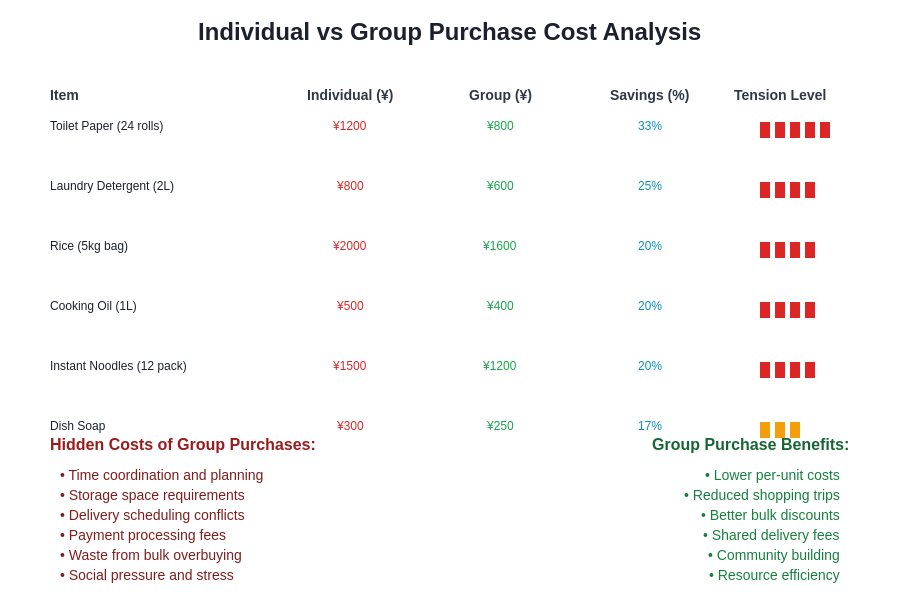
Hidden costs and unexpected expenses associated with group purchases often surprise residents who assume collective buying will automatically result in cost savings, when shipping fees, minimum quantity requirements, storage challenges, and coordination time actually increase the total expense and effort required compared to individual purchases.
Control Issues and Decision-Making Authority
The question of who makes purchasing decisions for shared items becomes a significant source of tension when residents have different opinions about necessity, priority, quality, and timing of various household needs and wants. Some residents naturally assume leadership roles in group purchasing, making unilateral decisions about products, suppliers, and spending that other residents may resent or disagree with, particularly when consultation processes are inadequate or rushed.
Democratic decision-making processes for group purchases often prove impractical in daily sharehouse operations, as gathering input from all residents, reaching consensus, and coordinating timing becomes time-consuming and frustrating for residents with busy schedules or conflicting priorities. How group buying power reduces individual costs examines the theoretical benefits of collective purchasing while acknowledging the practical challenges of implementation in real living situations.
Veto power and opt-out options create additional complications when some residents disagree with group purchase decisions but feel pressure to participate or risk social exclusion and house harmony disruption. The social dynamics around opting out of group purchases can create lasting resentment and division among residents who interpret individual choices as lack of cooperation or community spirit.
Storage and distribution responsibilities for group purchases often fall unevenly among residents, with some individuals bearing disproportionate burden for receiving, organizing, and allocating shared items while others benefit from collective purchases without contributing equivalent effort or taking responsibility for associated tasks and coordination requirements.
Communication Breakdowns and Assumption Gaps
Miscommunication about purchase intentions, needs assessment, and contribution expectations creates frequent misunderstandings that escalate into larger conflicts when residents make assumptions about others’ preferences, financial situations, or participation willingness without explicit discussion and agreement. Clear communication protocols for group purchases rarely exist in sharehouses, leading to ad-hoc decision-making processes that exclude some residents or fail to address important considerations and concerns.
Language barriers compound communication challenges around purchase decisions, particularly when residents with limited Japanese language skills struggle to participate in group shopping research, price comparison, or vendor communication that requires local knowledge and linguistic competence. How language barriers prevent deep friendships explores how communication limitations affect not only social relationships but practical household management and decision-making processes.
Timing coordination for group purchases becomes particularly challenging when residents have different schedules, work commitments, and availability for shopping trips, product research, or delivery coordination that requires presence and participation from multiple individuals. The logistics of group purchasing often require more advance planning and schedule coordination than individual purchases, creating additional complexity and potential failure points.
Follow-up communication about purchase outcomes, satisfaction levels, and future preferences rarely occurs systematically, leading to repeated mistakes and unresolved issues that compound over time and create patterns of dissatisfaction and conflict around household purchasing decisions and resource allocation.
Usage Monitoring and Consumption Disparities
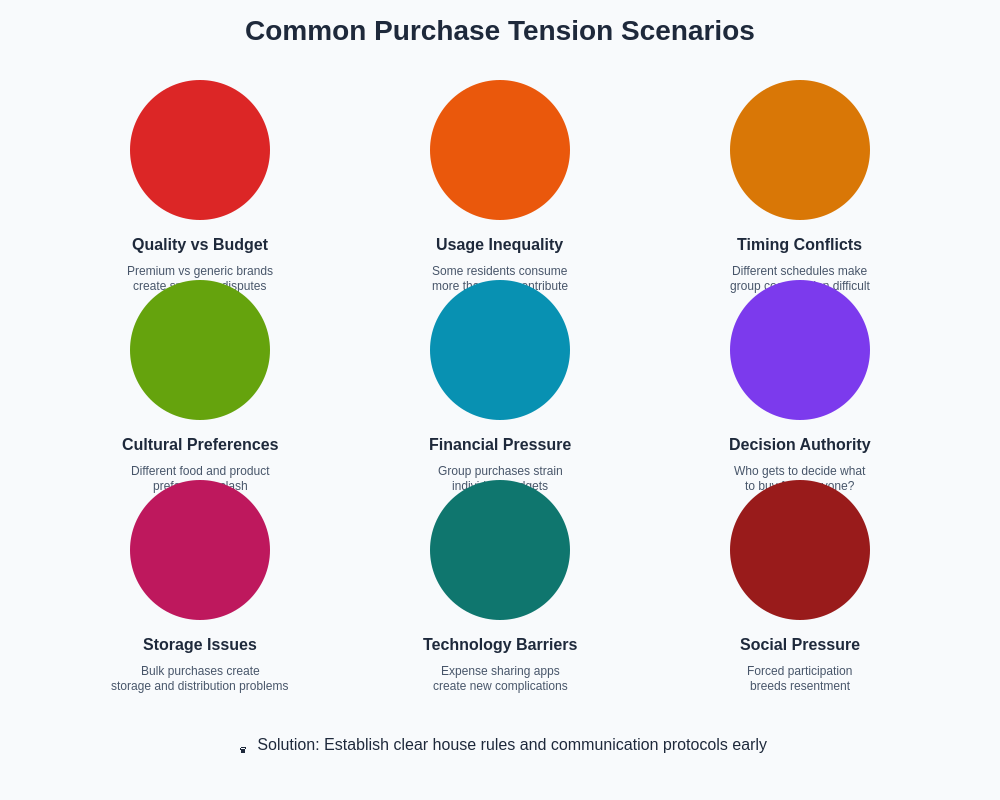
Perceived inequalities in consumption patterns create ongoing tension when some residents appear to use disproportionate amounts of collectively purchased items while others feel their contributions exceed their actual usage and benefit from group purchases. The psychological burden of monitoring and tracking usage creates an atmosphere of surveillance and suspicion that undermines trust and community feeling among residents.
Hoarding behaviors emerge when residents fear that popular items will disappear quickly or become unavailable when needed, leading to stockpiling and hidden storage that defeats the purpose of group purchases and creates additional conflict when discovered. Why some residents hoard bargain purchases examines the psychological and practical factors that drive these behaviors and their impact on house dynamics.
Guest consumption adds another layer of complexity when residents have visitors who consume shared resources without contributing to group purchases, creating questions about fair usage policies and guest responsibility that can generate significant resentment if not addressed proactively through clear house rules and expectations.
Waste and spoilage from group purchases often create guilt and blame dynamics when perishable items go unused or expire before consumption, particularly when expensive specialty items or bulk quantities exceeded actual household needs or consumption capacity.
Brand Loyalty and Quality Standards Conflicts
Individual preferences for specific brands, quality levels, or product characteristics often conflict with group consensus and majority preferences, forcing residents to choose between personal satisfaction and community participation in ways that create ongoing dissatisfaction and resentment. Premium product preferences versus budget considerations create particular tension when some residents value quality and others prioritize cost savings above all other considerations.
Dietary restrictions, allergies, and health considerations complicate group food purchases when residents have specific needs that require specialized products or exclude certain ingredients, making collective meal planning and bulk food purchases challenging or impossible. How dietary restrictions complicate meal planning explores these challenges in detail and their impact on house food culture and social eating.
Ethical consumption preferences create additional complications when residents have different values regarding organic products, fair trade sourcing, environmental impact, or animal welfare considerations that significantly affect product choices and pricing for group purchases. These value-based purchasing decisions often involve higher costs and limited options that not all residents support or prioritize.
Cultural product preferences and availability issues arise when international residents have specific needs for ingredients, household items, or personal care products that are expensive, difficult to source, or unfamiliar to other residents, making group purchasing coordination challenging and sometimes impossible.
Technology and Coordination Tool Challenges
Digital payment platforms and expense sharing applications introduce technical complications and learning curves that some residents struggle with, particularly older residents or those with limited smartphone experience or comfort with financial technology applications and digital coordination systems. Payment processing delays, app failures, and technical glitches can disrupt group purchase coordination and create timing problems that affect product availability and delivery schedules.
Privacy concerns about financial tracking and expense sharing applications make some residents uncomfortable with digital coordination tools that require bank account linking, transaction history sharing, or detailed spending pattern documentation that feels intrusive or potentially problematic for personal financial privacy.
Platform fees and transaction costs associated with digital coordination tools sometimes exceed the savings achieved through group purchases, particularly for smaller transactions or when multiple residents use different payment systems that require conversion or transfer fees.
Integration challenges arise when residents use different smartphones, banking systems, or payment preferences that are incompatible with chosen group coordination platforms, creating barriers to participation and additional complexity in purchase organization and financial settlement processes.
Social Hierarchy and Influence Dynamics
Informal leadership roles in group purchasing decisions often create social hierarchies and power imbalances that affect overall house dynamics, particularly when certain residents consistently make decisions or take initiative while others become passive participants who may resent their reduced influence or voice in household decisions.
Social pressure to participate in group purchases can make residents feel coerced or manipulated, particularly when majority decisions override individual preferences or financial constraints, creating resentment and feelings of powerlessness that affect broader relationship dynamics and house atmosphere.
Newcomer integration challenges arise when established residents have developed purchasing patterns and preferences that new residents feel excluded from or pressured to adopt without input or consideration for their different needs, preferences, or financial situations.
Personality conflicts and interpersonal tensions often manifest through purchase decision disagreements, with underlying relationship issues and communication problems expressing themselves through seemingly minor disputes about household items and spending priorities.
Resolution Strategies and Compromise Approaches
Hybrid purchasing systems that combine individual and group buying for different categories of items can help balance personal autonomy with collective efficiency, allowing residents to maintain control over personal preferences while benefiting from group coordination for appropriate shared resources and household necessities.
Clear house rules and purchasing policies established during initial move-in orientation can prevent many conflicts by setting expectations, defining processes, and creating framework for decision-making that all residents understand and agree to follow throughout their residency period.
Regular house meetings focused on purchasing coordination and satisfaction assessment provide opportunities for residents to address concerns, suggest improvements, and maintain open communication about household resource management and expense sharing that prevents small issues from escalating into major conflicts.
Flexible participation options that allow residents to opt in or out of specific group purchases without social penalty or exclusion help accommodate different financial situations, preferences, and needs while maintaining overall community spirit and cooperation in shared living arrangements.
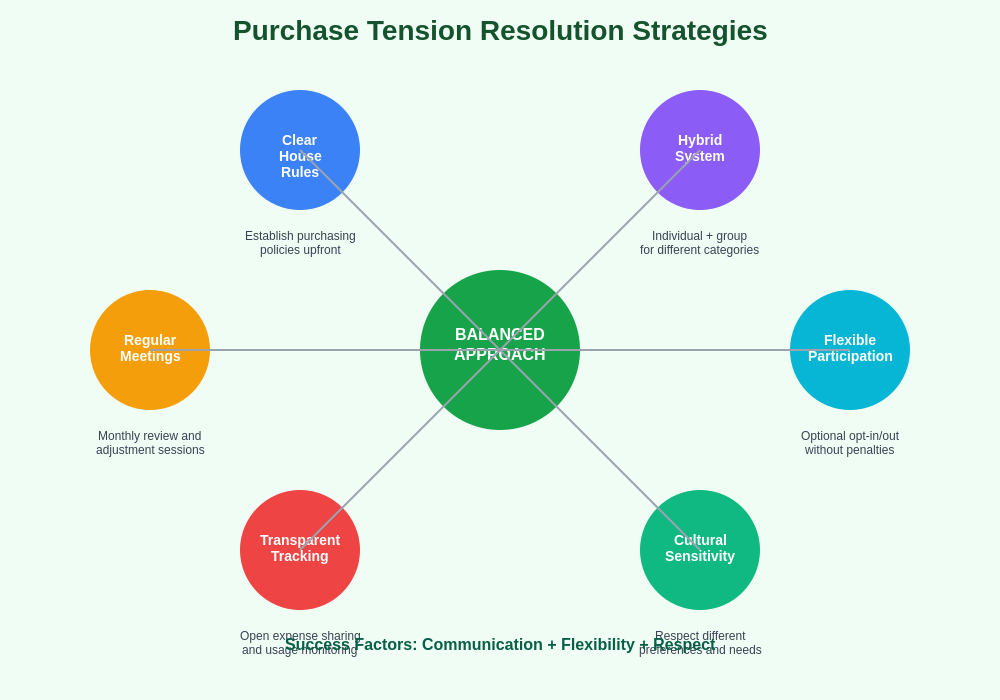
The ongoing challenge of balancing individual autonomy with collective benefit in sharehouse purchasing decisions requires continuous communication, flexibility, and mutual respect among residents who must navigate competing priorities and preferences while maintaining positive relationships and functional household operations that serve everyone’s needs and contribute to satisfactory living experiences.
Disclaimer
This article is for informational purposes only and reflects common experiences in sharehouse living situations. Individual circumstances may vary significantly, and residents should communicate openly about purchasing preferences and financial arrangements to prevent conflicts. The examples and situations described may not apply to all sharehouses or cultural contexts, and professional mediation may be necessary for serious ongoing conflicts.