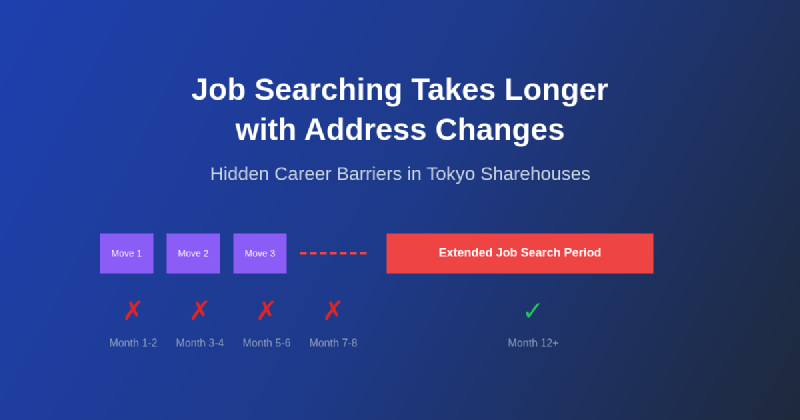
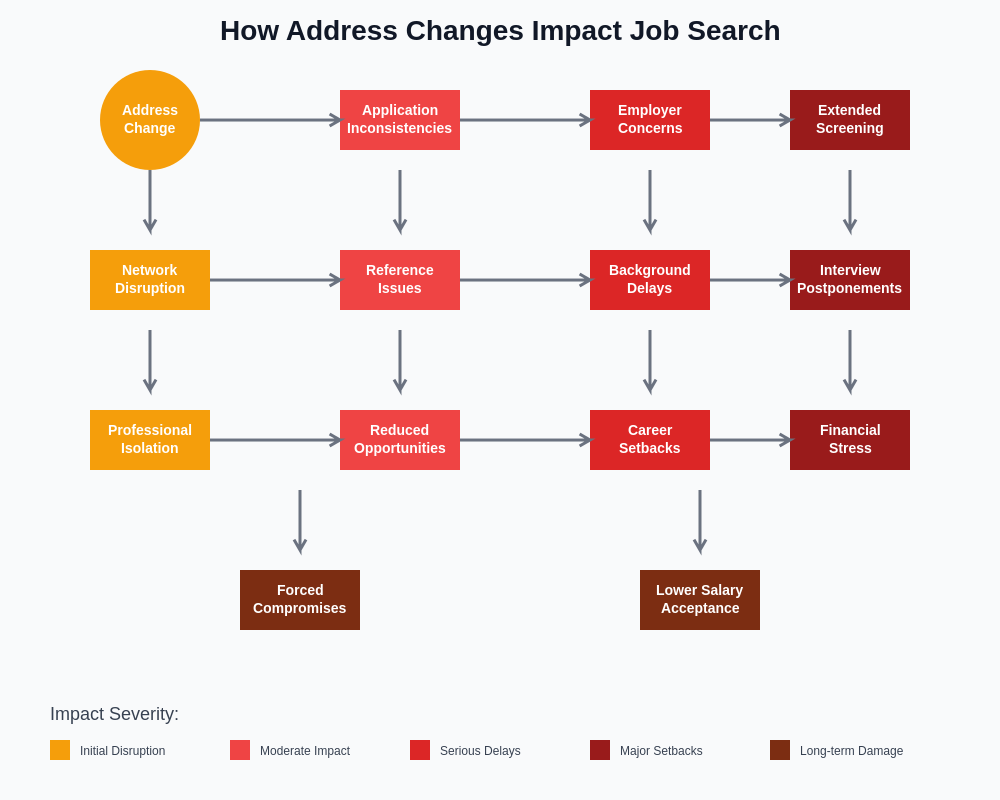
The hidden relationship between residential instability and employment challenges becomes devastatingly apparent for Tokyo sharehouse residents who discover that frequent address changes create cascading professional obstacles that extend far beyond simple inconvenience, fundamentally undermining their career advancement prospects in Japan’s relationship-driven business culture. International residents consistently underestimate how deeply Japanese employment systems rely on residential stability as a proxy for personal reliability, creating career barriers that compound over time as address changes accumulate throughout their Tokyo experience.
The psychological toll of extended job search periods caused by residential instability creates stress cycles that affect interview performance, professional confidence, and career decision-making abilities while simultaneously forcing residents into increasingly desperate housing situations that perpetuate the cycle of address changes and employment difficulties. Understanding why Japanese employers view residential instability so negatively requires examining cultural values, administrative systems, and legal frameworks that prioritize stability and predictability above the flexibility that international residents often consider normal and harmless.
The Cultural Foundation of Address Stability Expectations
Japanese employment culture places extraordinary emphasis on personal stability indicators that reflect an individual’s commitment to long-term relationships and social obligations, with residential stability serving as a primary marker of personal reliability that employers use to assess candidate suitability for positions requiring extended training investments and collaborative team integration. How work location should influence sharehouse choice demonstrates the importance of location planning, but the deeper cultural expectations around address stability extend far beyond commuting convenience to encompass fundamental character assessments that influence hiring decisions.
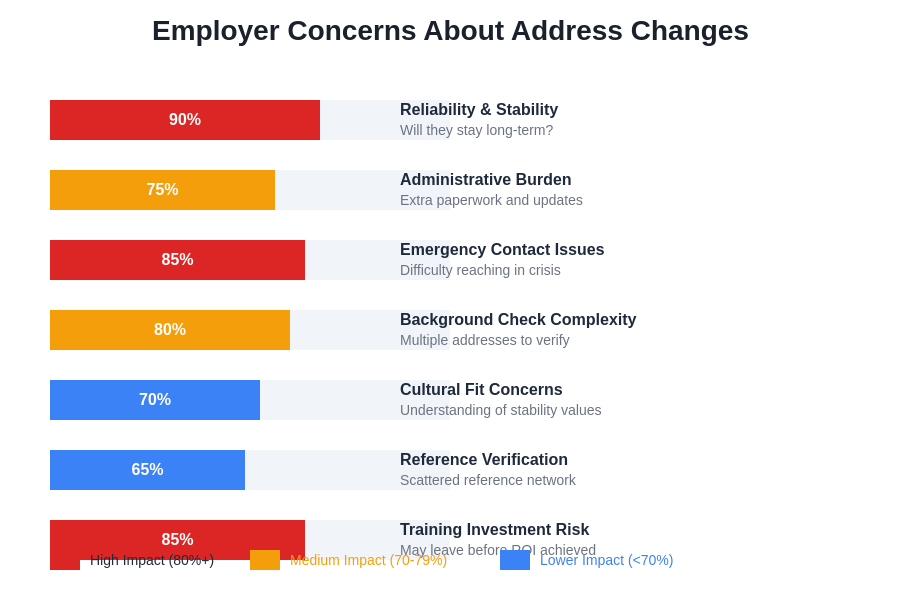
The concept of “ikigai” (life purpose) in Japanese culture assumes that individuals who have found their proper place in life will naturally seek residential stability that reflects their inner harmony and commitment to community integration, making frequent address changes appear as evidence of personal instability, lack of direction, or inability to form lasting relationships that are essential for workplace harmony. Employers interpret residential mobility as a potential indicator of employment flight risk, creating hiring hesitation that extends job search timelines while candidates remain unaware of the cultural biases working against them.
Traditional Japanese business relationships operate on trust-building processes that require extended time periods to develop fully, with residential stability serving as collateral for this trust investment that employers make in new hires through extensive training programs, mentor assignments, and gradual responsibility increases that characterize Japanese career development approaches. The perception that frequent movers lack the patience and commitment necessary for these relationship-building processes creates invisible barriers that international candidates cannot directly address through improved qualifications or interview performance.
Administrative convenience considerations also influence employer preferences for residential stability because Japanese business operations involve extensive documentation, emergency contact systems, and legal compliance requirements that become more complex and error-prone when dealing with employees who change addresses frequently. The additional administrative burden of tracking address changes, updating employee records, and maintaining accurate emergency contact information creates operational costs that employers prefer to avoid through hiring practices that favor residentially stable candidates.
Employment Application System Complications
Japanese job application systems require extensive personal information documentation that includes residential history verification, neighborhood character references, and emergency contact networks that become increasingly difficult to maintain and verify when applicants have frequent address changes throughout their Tokyo residence period. What documents you need for Tokyo sharehouse applications demonstrates document complexity for housing, but employment applications require even more comprehensive documentation that extends back several years of residential history.
Background check processes conducted by Japanese employers often involve neighborhood inquiries and community reputation assessments that become problematic when candidates have lived in multiple locations for short periods, creating verification gaps that employers interpret as potential red flags requiring additional investigation time or candidate elimination to avoid perceived risks. The interconnected nature of Japanese community systems means that shorter residence periods prevent the development of community relationships that serve as informal character references during employment background investigations.
Employment agency relationships that facilitate job placement for international residents require extensive candidate profiling that includes residential stability assessments, with frequent address changes creating profile complications that reduce agency willingness to invest placement efforts in candidates who appear to lack the stability that Japanese employers consistently request. The relationship-dependent nature of Japanese employment systems means that placement agencies prefer to maintain their employer relationships by presenting candidates who meet cultural expectations around personal stability and reliability indicators.
Legal compliance requirements for international employee hiring involve visa status verification, residential registration confirmation, and tax obligation assessments that become more complex and time-consuming when candidates have frequent address changes that create documentation gaps or administrative inconsistencies requiring resolution before employment offers can be finalized. The bureaucratic nature of Japanese employment systems creates administrative delays that extend hiring timelines while candidates remain unaware of the specific complications their residential history creates.
Professional Network Development Challenges
Career advancement in Japan relies heavily on “nemawashi” (relationship cultivation) processes that require sustained community presence and consistent professional networking activities that become disrupted when frequent address changes force professionals to repeatedly rebuild local networks and professional relationships from scratch in new neighborhoods and business districts. Making friends through Tokyo sharehouse communities explores community building, but professional networks require different relationship types that develop through consistent geographic presence and regular professional interactions.
Industry networking events and professional association activities typically organize around geographical clusters and local business communities that expect regular participation from established area professionals, with frequent address changes creating participation disruptions that prevent the relationship development necessary for career advancement opportunities that emerge through informal professional networks rather than formal application processes. The location-dependent nature of Japanese professional networking means that residential mobility creates professional isolation that compounds over time as networks in abandoned areas decay while new area networks require months or years to develop fully.
Mentor relationships that characterize Japanese career development require sustained personal interaction and trust development that becomes difficult to maintain when residential changes affect meeting locations, social availability, and community presence that senior professionals expect from junior colleagues seeking career guidance and advancement opportunities. The hierarchical nature of Japanese professional relationships assumes residential stability that enables consistent mentor access and relationship maintenance over extended periods necessary for meaningful career development.
Client relationship development for service-based professionals becomes complicated by address changes that create communication disruptions, reliability concerns, and professional image problems when clients cannot maintain consistent contact or when frequent moves suggest business instability that clients prefer to avoid through vendor selection processes that favor established, stable service providers with consistent location presence.
Interview and Hiring Process Extensions
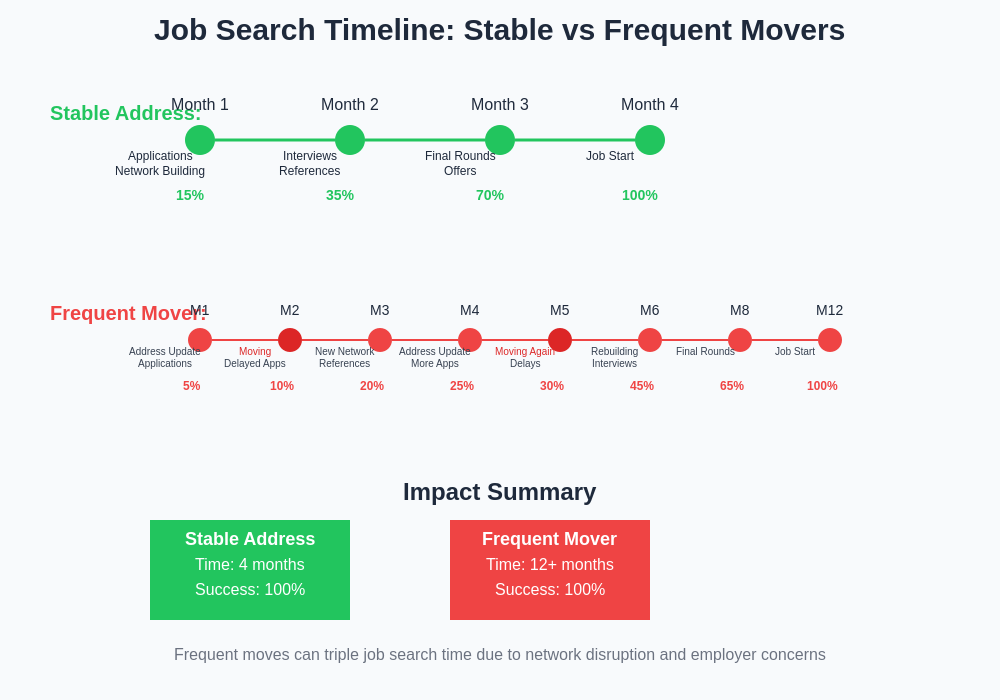
Employment interview processes in Japan often involve multiple rounds of meetings, facility tours, and team integration activities that require scheduling coordination and location planning that becomes more complex when candidates have uncertain housing situations or recent address changes that create scheduling complications and availability concerns for hiring managers attempting to coordinate multi-stage selection processes. How commute times impact work performance demonstrates location importance, but interview coordination requires stable scheduling bases that frequent movers cannot reliably provide.
Reference check procedures that employers conduct during hiring processes require contacting previous landlords, neighbors, and community contacts who can verify candidate character and reliability, with frequent address changes creating reference contact difficulties and verification gaps that extend background check timelines while raising questions about candidate stability and relationship maintenance capabilities that employers consider essential for workplace integration.
Employment start date negotiations become complicated when candidates face housing uncertainty or potential address changes that could affect commute reliability, availability for training programs, or participation in orientation activities that employers schedule around assumption of candidate residential stability during initial employment periods. The uncertainty created by housing instability often forces employers to delay start dates or seek alternative candidates who can provide more reliable availability commitments.
Drug testing and health examination requirements that many Japanese employers mandate for new hires require stable address information for results delivery, follow-up communications, and legal compliance documentation that becomes complicated when candidates have recent address changes or uncertain future housing plans that create administrative complications for human resources departments managing hiring compliance requirements.
Digital Application and Communication Barriers
Online job application systems used by Japanese companies often flag applications with frequent address changes as potential spam or fraudulent submissions, creating automated filtering problems that prevent legitimate applications from reaching human recruiters while candidates remain unaware that their residential history is triggering system-level rejections that bypass normal screening processes.
Professional email communication systems and business correspondence protocols in Japan assume stable contact information that enables consistent long-term communication throughout extended hiring processes, with address changes creating communication disruptions that can result in missed interview invitations, document delivery failures, or professional correspondence that reaches outdated addresses and creates impression of candidate unreliability or disorganization.
LinkedIn and professional social media profiles that international candidates use for networking and job searching become complicated by frequent address changes that create profile inconsistencies, location targeting problems, and networking recommendation algorithms that cannot effectively connect candidates with appropriate local opportunities when location information changes frequently.
Company application tracking systems often maintain candidate databases that include residential information used for geographic matching and local hiring preferences, with frequent address changes creating database conflicts and search algorithm problems that prevent candidates from appearing in relevant job searches conducted by recruiters seeking candidates in specific geographic areas or with stable local presence.
Financial Verification and Stability Assessment
Employment offer processes in Japan typically include financial background checks and stability assessments that examine candidates’ ability to maintain consistent housing payments and utility obligations, with frequent address changes creating credit history complications and financial stability concerns that employers interpret as potential indicators of payment reliability problems that could affect employment stability and workplace stress levels.
Salary negotiation discussions often include considerations of candidate living expenses and housing costs that employers use to assess appropriate compensation levels, with frequent address changes creating uncertainty about ongoing housing costs and stability that complicates salary determination and employment offer calculations while suggesting potential financial management problems that could affect workplace performance.
Bank account requirements for salary payments and direct deposit arrangements become complicated when candidates have frequent address changes that affect bank account registration, automatic payment systems, and financial institution relationships that employers expect to remain stable throughout employment periods to ensure reliable payroll processing and tax compliance.
Emergency contact system requirements that Japanese employers maintain for workplace safety and legal compliance purposes require stable contact networks and residential information that becomes unreliable when employees have frequent address changes that disrupt emergency communication systems and create workplace safety compliance problems for employers managing legal obligations to maintain current employee contact information.
Long-term Career Impact Assessment
Career progression tracking systems used by Japanese companies often include residential stability as a factor in promotion eligibility and leadership development program selection, with frequent address changes creating negative indicators that affect long-term career advancement opportunities and professional development investments that companies make based on employee stability indicators and retention likelihood assessments.
Professional reputation development that enables career advancement in Japan’s relationship-dependent business culture requires consistent community presence and local business network participation that frequent address changes disrupt through relationship building interruptions and community engagement gaps that prevent the reputation accumulation necessary for senior position consideration and industry leadership recognition.
Industry expertise development that characterizes Japanese career advancement relies on sustained involvement in local professional communities, industry associations, and business networks that operate through geographic clustering and regular in-person interactions that frequent residential mobility disrupts through participation inconsistencies and relationship development interruptions that limit professional growth opportunities.
Retirement planning and long-term employment benefits calculations that Japanese companies use for employee retention and compensation planning include assumptions about employee residential stability and community integration that frequent address changes contradict, creating concerns about employee commitment and long-term employment viability that influence hiring decisions and career advancement opportunities throughout employment periods.
Strategic Solutions for Address Change Management
Professional address management strategies that minimize employment impact require careful timing of residential moves to avoid disruption during active job search periods, interview processes, or probationary employment periods when residential stability appears most critical to employers making hiring and retention decisions about international candidates seeking career establishment in Japan’s competitive employment market.
Communication strategy development for addressing residential history during employment processes requires honest disclosure approaches that frame address changes positively while demonstrating commitment to stability and professional development that outweighs concerns about past residential mobility through evidence of career focus, skill development, and employment commitment that addresses employer concerns about candidate reliability and retention likelihood.
Professional network maintenance systems that preserve career development opportunities despite residential changes require digital relationship management, consistent professional branding, and strategic networking approaches that maintain professional connections across geographic boundaries while building new location-based networks that support continued career advancement despite residential mobility challenges.
Documentation organization strategies that streamline employment application processes despite complex residential histories require comprehensive record keeping, reference relationship maintenance, and legal compliance preparation that enables efficient response to employer verification requirements while minimizing administrative delays and documentation gaps that extend hiring timelines unnecessarily.
The relationship between residential instability and employment challenges in Tokyo creates career barriers that international residents must actively address through strategic housing decisions, professional network development, and communication approaches that acknowledge Japanese cultural expectations while demonstrating the stability and reliability that employers seek in their hiring decisions and long-term employee development investments.
Disclaimer
This article is for informational purposes only and does not constitute professional career or legal advice. Employment practices and requirements vary significantly between companies, industries, and individual circumstances. Readers should research specific employer requirements and consider consulting with career counselors or legal professionals familiar with Japanese employment law and practices. The challenges described may not apply to all job searches or employment situations in Tokyo.