The intersection of language learning aspirations and roommate selection represents one of the most critical yet overlooked factors in successful sharehouse living experiences across Tokyo. Your specific Japanese language goals fundamentally reshape how you evaluate potential living companions, influencing everything from daily conversation opportunities to cultural immersion depth and long-term linguistic progress. Understanding these dynamics enables strategic roommate selection that accelerates language acquisition while creating meaningful cross-cultural relationships that extend far beyond simple accommodation arrangements.
The strategic alignment of language learning objectives with roommate characteristics creates powerful synergies that can dramatically accelerate your Japanese proficiency while enriching your overall cultural experience in Japan. However, mismatched expectations or poorly considered language dynamics can equally create friction, missed opportunities, and frustrating communication barriers that impede both linguistic progress and harmonious living arrangements.
The Foundation of Language-Driven Roommate Selection
Language learning goals operate on multiple dimensions that directly influence roommate compatibility, ranging from immediate conversational practice needs to long-term cultural integration aspirations. Living with Japanese roommates in Tokyo sharehouses offers insights into how native speaker interactions shape daily living experiences and accelerate language acquisition through constant exposure and practical application.
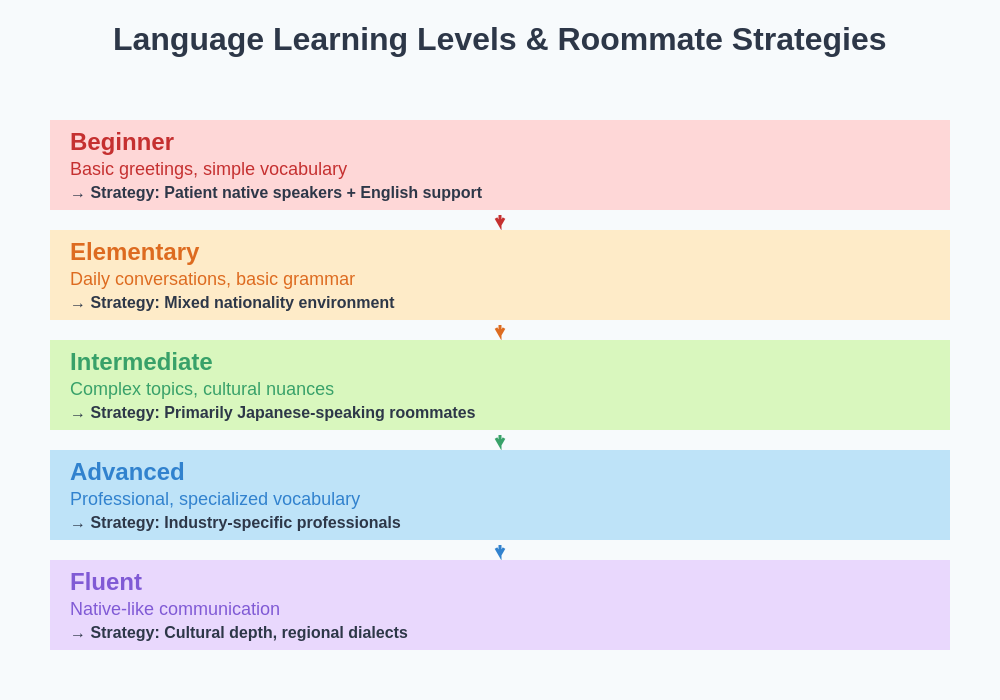
Beginning Japanese learners often prioritize roommates who can provide patient guidance, gentle correction, and simplified communication that builds confidence without overwhelming complexity. These learners typically benefit from mixed nationality environments where English serves as a bridge language while Japanese naturally emerges through daily interactions and shared activities that create low-pressure learning opportunities.
Intermediate learners frequently seek more challenging linguistic environments where Japanese becomes the primary communication medium, pushing them beyond comfort zones into situations requiring active vocabulary expansion and real-time grammar application. How cultural communication styles create misunderstandings explains how advancing learners navigate increasingly complex social and linguistic nuances that emerge in authentic Japanese communication contexts.
Advanced learners often focus on specialized vocabulary development, professional communication skills, or regional dialect acquisition that requires specific types of roommate expertise and linguistic exposure. These goals may prioritize roommates from particular regions, professional backgrounds, or age groups that provide access to specialized linguistic registers and cultural knowledge that supports specific learning objectives.
Balancing Native Speaker Exposure with Comfort Levels
The proportion of native Japanese speakers among your roommates creates profound impacts on language learning velocity, comfort levels, and overall living satisfaction that require careful consideration based on your current proficiency and personality characteristics. Living in entirely Japanese-speaking environments provides maximum immersion but can create overwhelming stress for beginners who lack sufficient foundational skills to navigate daily communication requirements effectively.
Mixed nationality sharehouses offer graduated exposure opportunities where learners can practice Japanese with native speakers while maintaining English-speaking support networks for complex discussions, emotional expression, and problem-solving scenarios that exceed current Japanese capabilities. How language barriers complicate legal documents illustrates how even intermediate learners benefit from multilingual support systems during challenging administrative situations.
The personality and teaching inclination of Japanese roommates significantly influences learning outcomes, with some individuals naturally gravitating toward language exchange relationships while others prefer maintaining separation between home life and educational interactions. Identifying roommates who enjoy cross-cultural communication and possess patience for language learning mistakes becomes essential for creating positive learning environments.
Professional Japanese roommates often provide valuable insights into business communication, formal language structures, and workplace cultural norms that benefit career-focused learners. However, these relationships may lack the casual conversational practice that builds fluency in everyday social situations and informal communication styles.
Cultural Integration Through Strategic Roommate Diversity
Language learning extends beyond vocabulary and grammar acquisition to encompass cultural competency, social awareness, and behavioral adaptation that requires diverse roommate interactions representing different aspects of Japanese society. How cultural differences affect friendship building explores how varied cultural perspectives within sharehouses create rich learning environments that develop comprehensive cultural understanding alongside linguistic skills.
Age diversity among Japanese roommates provides exposure to generational communication patterns, slang variations, and cultural references that span different eras of Japanese society. Younger roommates often introduce contemporary language trends, social media communication styles, and modern cultural phenomena, while older residents share traditional expressions, formal communication protocols, and historical cultural context.
Regional diversity offers opportunities to experience different dialects, local customs, and geographic cultural variations that enrich understanding of Japan’s linguistic and cultural complexity. Roommates from Kansai, Kyushu, or northern regions bring distinct communication styles and cultural practices that broaden learners’ appreciation for Japanese diversity beyond Tokyo-centric perspectives.
Professional diversity creates exposure to specialized vocabularies, industry-specific communication norms, and varied social contexts that support learners with specific career aspirations or interests. Living with teachers, healthcare workers, engineers, or artists provides domain-specific language exposure that textbooks and formal classes rarely address comprehensively.
Navigating Language Exchange Dynamics and Expectations
Formal and informal language exchange arrangements between roommates create structured learning opportunities while requiring clear boundary establishment to prevent exploitation or resentment from unbalanced educational relationships. How language exchange programs work in sharehouses provides frameworks for establishing mutually beneficial language learning partnerships that enhance rather than complicate living arrangements.
Time investment expectations vary significantly among roommates, with some individuals enthusiastic about extensive daily practice sessions while others prefer minimal educational interaction beyond natural conversation flow. Establishing clear communication about availability, correction preferences, and learning intensity prevents misunderstandings and maintains positive relationships throughout extended cohabitation periods.
The reciprocal nature of language exchange requires international residents to contribute meaningful English instruction or cultural insights that provide value to Japanese roommates seeking their own linguistic development. This balance ensures sustainable relationships where both parties benefit from the arrangement rather than creating one-sided teaching burdens that generate resentment.
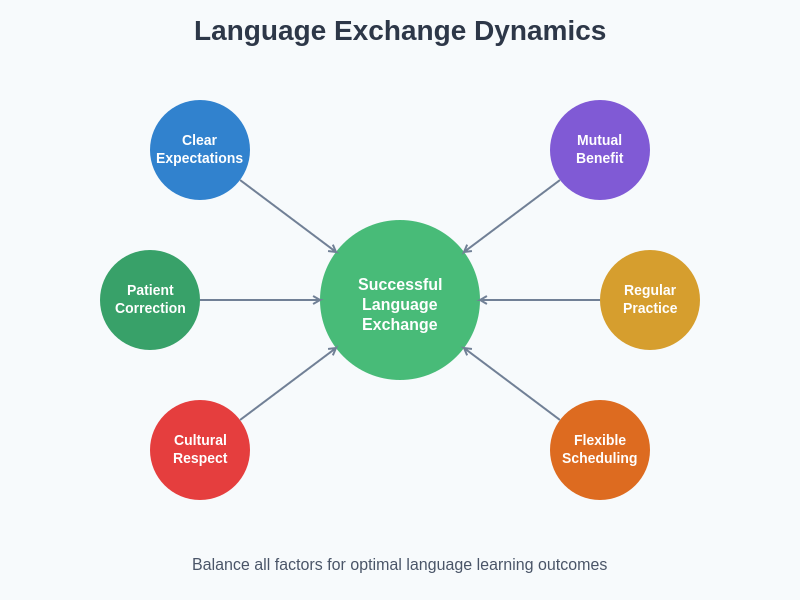
Correction styles and feedback approaches differ dramatically among individuals, ranging from gentle suggestion methods to direct error identification systems that may clash with learners’ sensitivity levels or preferred learning styles. How pronunciation mistakes create embarrassing situations highlights the importance of establishing comfortable correction protocols that encourage continued practice rather than creating anxiety around language use.
Professional Development and Specialized Language Goals
Career-oriented language learning objectives require roommate selection strategies that provide exposure to professional communication contexts, industry-specific terminology, and workplace cultural norms that support long-term professional success in Japanese business environments. Business-focused learners benefit from roommates working in target industries who can provide insights into company culture, meeting etiquette, and professional relationship building approaches.
Academic language goals necessitate roommates familiar with educational systems, research methodologies, and scholarly communication styles that support students pursuing degrees or conducting research in Japanese institutions. How academic networking happens in sharehouses explores how academic-focused living arrangements create valuable professional connections and learning opportunities.
Technical and specialized vocabulary acquisition requires roommates with relevant expertise who can provide authentic context for complex terminology usage and industry-specific communication patterns. Healthcare workers, engineers, legal professionals, and other specialists offer invaluable exposure to professional language registers that formal education rarely addresses comprehensively.
Creative and artistic language goals benefit from roommates involved in Japanese entertainment, media, or arts industries who provide exposure to creative expression, cultural trends, and artistic communication styles that enrich understanding of contemporary Japanese culture and language evolution.
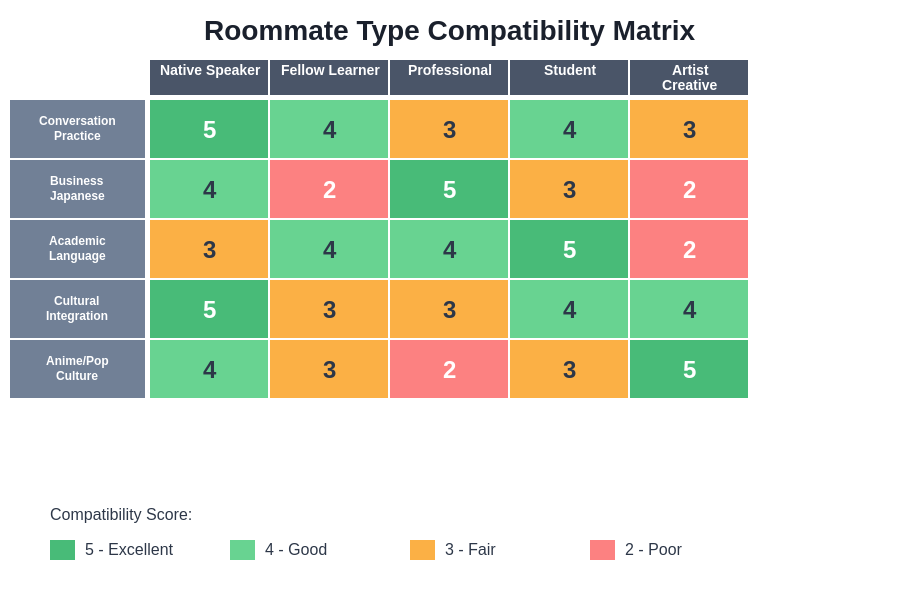
This compatibility matrix helps identify which roommate types best support different language learning objectives, enabling strategic selection based on your specific goals and current proficiency level.
Managing Linguistic Pressure and Performance Anxiety
The constant exposure to target language environments can create performance pressure and anxiety that impedes natural language acquisition, particularly when roommates maintain high expectations for rapid progress or frequent communication attempts. Balancing challenge with comfort requires careful consideration of personality types and stress tolerance levels that support sustainable learning rather than overwhelming pressure situations.
Rest and recovery from intensive language exposure becomes essential for processing new information and maintaining mental health during extended immersion experiences. How stress management techniques become necessary addresses strategies for managing linguistic overwhelm while maintaining positive learning momentum and roommate relationships.
Code-switching abilities between languages allow learners to maintain comfort while gradually expanding Japanese usage in appropriate contexts. Roommates who understand this natural progression and support flexible language use create more sustainable learning environments than those expecting immediate full Japanese communication.
Error tolerance and mistake acceptance among roommates significantly influences learners’ willingness to attempt challenging communication and take linguistic risks necessary for progress. Creating psychologically safe environments where mistakes become learning opportunities rather than sources of embarrassment supports continued language development and confident communication attempts.
Long-term Language Goals and Living Arrangement Evolution
Advanced proficiency aspirations require consideration of how roommate relationships will evolve as language skills improve and communication dynamics shift over extended cohabitation periods. Initial dependency relationships may transform into peer-level interactions that require different types of linguistic challenge and cultural engagement to maintain continued learning momentum.
How language learning progress slows down explains plateau phenomena that often occur during intermediate stages where familiar roommate interactions become insufficient for continued advancement. Strategic living arrangement modifications or roommate additions may become necessary to reinvigorate learning progress and access new linguistic challenges.
Professional transition goals may require gradual shifts toward more formal communication practice and business-oriented roommate relationships that prepare learners for workplace integration. These transitions necessitate careful timing and relationship management to maintain positive living environments while pursuing evolving language objectives.
Cultural integration depth often requires moving beyond surface-level interactions toward meaningful cultural participation that roommate selection can either facilitate or hinder based on individual cultural engagement levels and willingness to share deeper cultural experiences with international residents.
Practical Implementation Strategies for Language-Focused Selection
Roommate interview processes should incorporate language-related questions that assess compatibility, teaching willingness, patience levels, and communication preferences that align with specific learning goals and personality characteristics. Direct discussion about language learning expectations prevents future misunderstandings and establishes clear frameworks for linguistic interaction within the household.
Trial periods and gradual integration allow assessment of actual communication dynamics and learning opportunities before committing to long-term living arrangements that may not support language goals effectively. Making friends through Tokyo sharehouse communities provides insights into building relationships that naturally support language learning objectives.
Backup planning and alternative arrangement considerations acknowledge that language-focused roommate relationships may not develop as anticipated, requiring flexibility and alternative strategies for achieving linguistic goals through other channels or living arrangement modifications.
Community resources and external support systems supplement roommate-based language learning with structured classes, conversation groups, and cultural activities that provide additional practice opportunities and reduce pressure on household relationships to fulfill all language learning needs.
The strategic alignment of language learning goals with roommate selection represents a powerful approach to accelerating Japanese proficiency while building meaningful cross-cultural relationships in Tokyo’s vibrant international community. Success requires honest assessment of your language objectives, realistic expectations about roommate dynamics, and flexible approaches that prioritize both linguistic progress and harmonious living arrangements that enrich your overall experience in Japan.
Disclaimer
This article is for informational purposes only and does not constitute professional language learning or housing advice. Language learning progress varies significantly among individuals, and roommate dynamics depend on personal compatibility factors beyond linguistic considerations. Readers should evaluate their specific learning needs and personal preferences when making housing decisions. The effectiveness of language-focused roommate selection strategies may vary based on individual circumstances, cultural backgrounds, and learning styles.