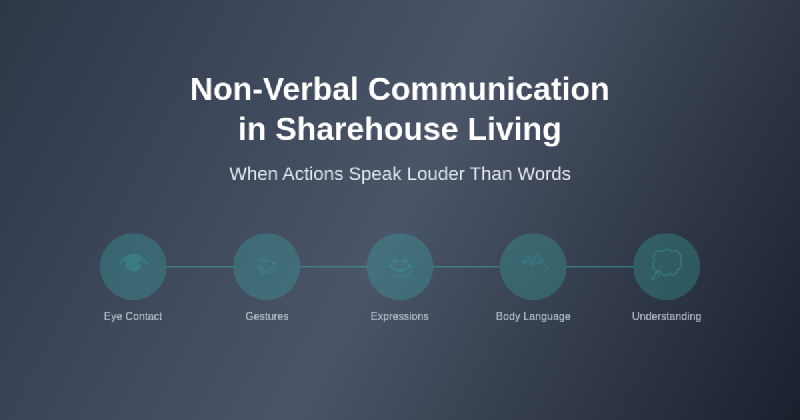
The significance of non-verbal communication reaches unprecedented levels within the intimate confines of sharehouse living, where residents from diverse cultural backgrounds must navigate daily interactions that transcend traditional language barriers. This silent language of gestures, expressions, and spatial awareness becomes the fundamental bridge connecting individuals who may lack fluency in common spoken languages yet must coexist harmoniously in shared living spaces that demand constant coordination and mutual understanding.
The multicultural nature of Tokyo sharehouses creates unique communication challenges that extend far beyond simple vocabulary limitations, encompassing cultural interpretation of personal space, eye contact norms, and gestural meanings that can dramatically influence relationship building and conflict resolution. Understanding these non-verbal dynamics becomes essential for creating positive living environments where residents feel respected, understood, and integrated into the community regardless of their linguistic abilities or cultural backgrounds.
The Foundation of Silent Understanding
The transition from verbal to non-verbal communication dominance occurs naturally within sharehouse environments where multiple languages converge and residents discover that actions truly speak louder than words in establishing trust and rapport. Living with Japanese roommates in Tokyo sharehouses demonstrates how cultural communication styles vary dramatically, making non-verbal cues increasingly valuable for bridging understanding gaps that words alone cannot address effectively.
Japanese communication culture particularly emphasizes reading between the lines and understanding unspoken messages, a concept known as “kuuki wo yomu” or reading the atmosphere, which becomes crucial for international residents seeking to integrate successfully into their living communities. This cultural emphasis on non-verbal awareness extends to recognizing subtle signs of discomfort, agreement, disagreement, or satisfaction that may never be explicitly verbalized but significantly impact household harmony and individual relationships.
The physical proximity inherent in sharehouse living amplifies the importance of body language awareness, as residents constantly encounter each other in shared spaces where every gesture, posture, and facial expression contributes to the overall communication landscape. How body language differs between cultures reveals the complexity of interpreting physical cues across different cultural contexts, making non-verbal literacy an essential skill for successful community integration.
The reduction of verbal communication complexity naturally occurs when residents recognize that elaborate explanations often create more confusion than simple, clear non-verbal demonstrations of intentions, needs, or boundaries that transcend language limitations while conveying essential information efficiently and accurately.
Cultural Interpretation Challenges and Solutions
The interpretation of non-verbal signals varies dramatically across cultural boundaries, creating potential for both beautiful understanding and significant misunderstandings that can affect entire household dynamics and individual relationship development. Eye contact patterns, for instance, carry different meanings across cultures, with some viewing direct eye contact as respectful engagement while others interpret it as confrontational or inappropriate depending on context and relationship hierarchy.
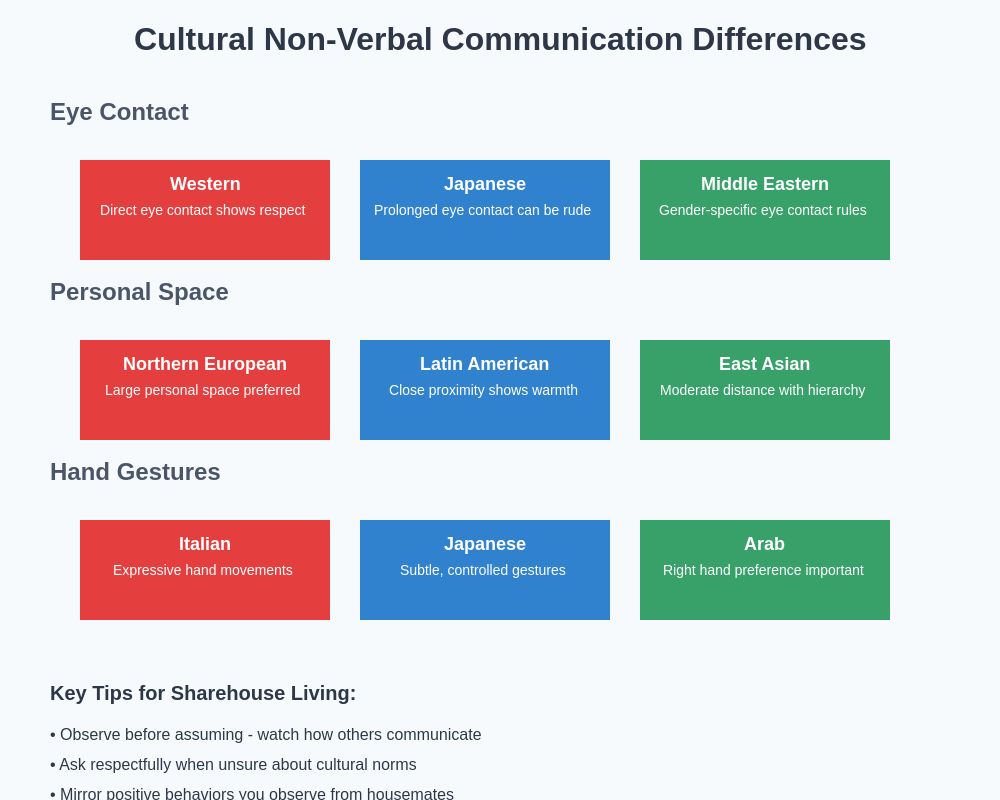
Personal space boundaries represent another critical area where non-verbal communication becomes essential, as different cultures maintain varying comfort levels regarding physical proximity during conversations, shared activities, and casual interactions that occur naturally within sharehouse environments. How personal space boundaries are constantly tested explores how residents learn to navigate these invisible boundaries through careful observation and gradual adjustment rather than explicit discussion.
Facial expressions that seem universal often carry subtle cultural nuances that can lead to misinterpretation of emotions, intentions, or responses to situations that require collective decision-making or conflict resolution within the household. Understanding that a smile might indicate embarrassment rather than happiness, or that silence might signify deep consideration rather than disagreement, becomes crucial for accurate social navigation and relationship building.
The temporal aspects of non-verbal communication also vary culturally, with some residents expecting immediate responses to gestures or expressions while others require processing time that might be misinterpreted as disinterest or confusion if cultural context is not considered during daily interactions and community activities.
Building Trust Through Silent Connections
The development of trust within sharehouse communities often occurs through consistent non-verbal behaviors that demonstrate reliability, respect, and consideration for others without requiring explicit verbal confirmation or discussion. Simple actions such as maintaining eye contact during conversations, respecting personal space preferences, and demonstrating attentiveness through body posture create foundations for deeper relationships that transcend language barriers.
Consistency in non-verbal behavior patterns helps residents predict and understand each other’s needs, preferences, and boundaries, creating a sense of security and mutual understanding that reduces anxiety and promotes comfortable coexistence in shared living environments. Making friends through Tokyo sharehouse communities highlights how non-verbal connection often precedes and facilitates deeper verbal communication and lasting friendships.
The reciprocal nature of non-verbal communication allows residents to establish mutual respect and understanding through mirroring positive behaviors, responding appropriately to others’ non-verbal cues, and demonstrating cultural sensitivity that creates welcoming environments for everyone regardless of their background or communication style preferences.
Small gestures of consideration, such as lowering voices in common areas when others appear to be concentrating, offering assistance through helpful actions rather than verbal offers, and demonstrating awareness of others’ comfort levels through spatial and behavioral adjustments, build cumulative trust that strengthens community bonds and individual relationships over time.
Conflict Resolution Through Non-Verbal Awareness
The resolution of conflicts within sharehouse environments often depends more heavily on non-verbal de-escalation techniques than on verbal discussion, particularly when language barriers prevent clear articulation of concerns or when cultural communication styles emphasize indirect rather than confrontational approaches to problem-solving. How to handle roommate conflicts without moving out demonstrates how non-verbal strategies can effectively address tensions before they escalate into serious disputes.
Reading stress signals, frustration indicators, and discomfort cues becomes essential for early conflict detection and prevention, allowing proactive residents to adjust their behavior or approach situations differently before misunderstandings develop into larger community issues that affect multiple residents and overall household harmony.
The ability to convey apology, understanding, and willingness to compromise through facial expressions, gestures, and behavioral changes often proves more effective than verbal explanations that might be misunderstood or inadequately expressed due to language limitations or cultural communication style differences that complicate direct verbal conflict resolution approaches.
Non-verbal communication also enables residents to signal when they need space, time to process, or assistance without having to verbally request help, creating more comfortable environments where individuals feel supported and understood even when they cannot clearly articulate their needs or concerns through spoken words.
Daily Coordination and Household Management
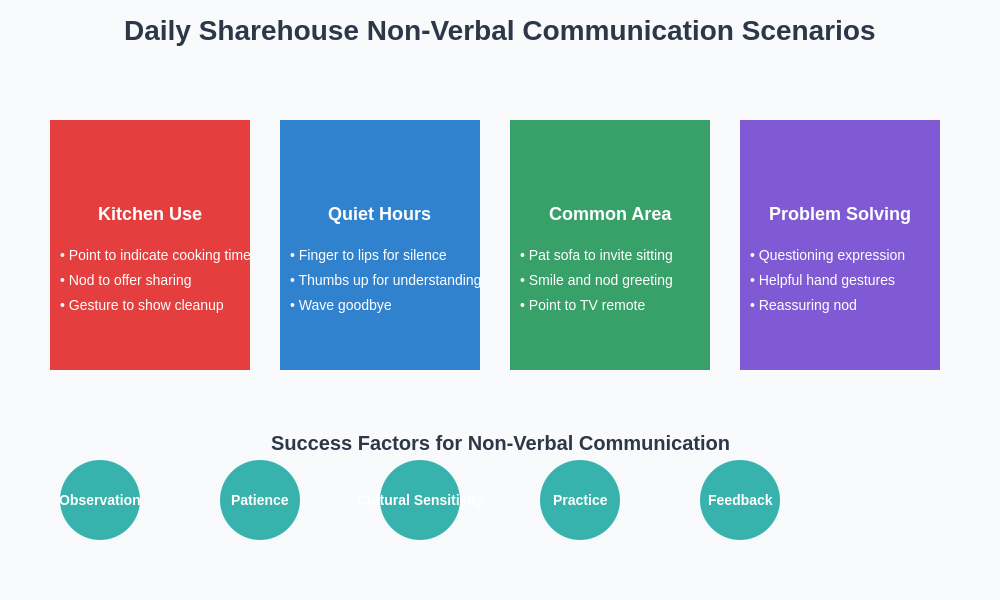
The practical aspects of sharehouse living require constant coordination around shared resources, schedules, and responsibilities that can be managed more efficiently through established non-verbal communication systems than through complex verbal discussions that may exclude residents with limited language abilities. Japanese sharehouse rules every foreigner should know often emphasize visual and behavioral expectations rather than complex verbal agreements.
Kitchen usage coordination naturally develops through non-verbal awareness of others’ cooking schedules, preparation needs, and cleanup preferences, allowing residents to share space efficiently without requiring detailed verbal negotiations or scheduling discussions that might create unnecessary complexity or exclude non-native speakers from full participation in household management.
Bathroom and laundry scheduling often relies on visual cues, timing awareness, and considerate behavior patterns that demonstrate respect for others’ needs and routines without requiring explicit verbal coordination that might be challenging for residents with varying language abilities or cultural communication preferences.
The establishment of visual communication systems, such as simple signs, symbols, or behavioral patterns for indicating availability, unavailability, or specific needs related to shared spaces and resources, creates inclusive environments where all residents can participate equally regardless of their verbal communication abilities or cultural backgrounds.
Professional and Social Skill Development
Living in multicultural sharehouse environments provides unique opportunities for developing non-verbal communication skills that prove valuable in professional settings, international business contexts, and diverse social situations that extend far beyond residential living experiences. How networking abilities improve through diverse contacts shows how these skills transfer to career advancement and relationship building.
The ability to read and respond appropriately to non-verbal cues becomes increasingly valuable in Tokyo’s international business environment, where understanding cultural nuances and demonstrating cross-cultural sensitivity through appropriate body language, spatial awareness, and behavioral adaptation can significantly impact professional success and relationship development.
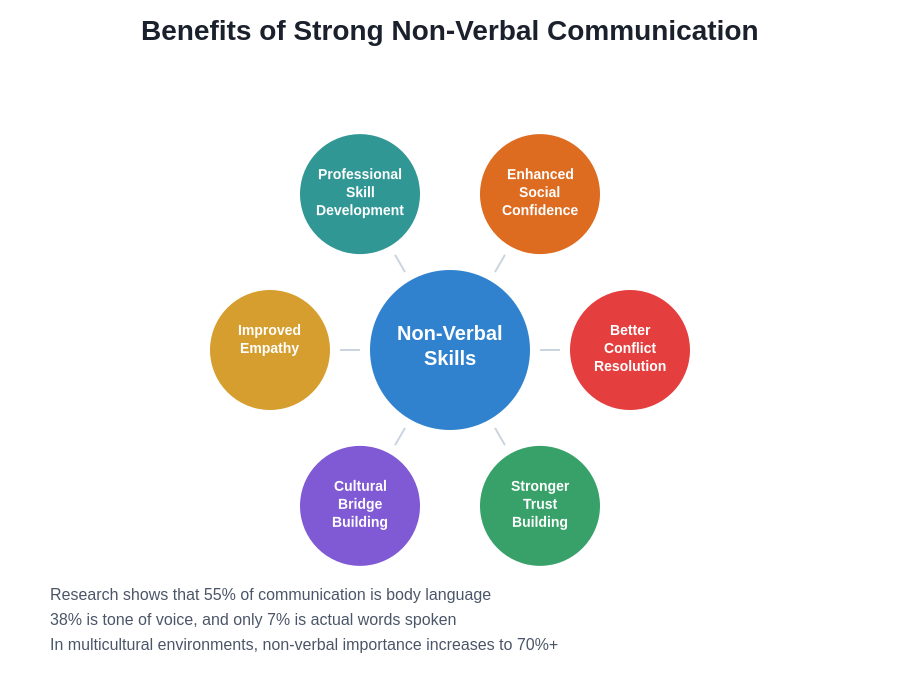
Social confidence develops naturally through successful non-verbal interactions that build understanding and connection across cultural boundaries, creating skills and experience that enhance personal relationships, professional networking, and community integration throughout residents’ broader Tokyo living experience and future international interactions.
The problem-solving skills developed through navigating non-verbal communication challenges in sharehouse environments translate directly to other multicultural settings where verbal communication may be limited but cooperation and understanding remain essential for achieving common goals and maintaining positive relationships.
Technology and Non-Verbal Communication Integration
Modern sharehouse living increasingly incorporates technology that supplements non-verbal communication, with translation apps, visual scheduling systems, and digital communication platforms that combine text, images, and symbols to bridge language gaps while maintaining the personal connection that non-verbal awareness provides in face-to-face interactions.
The balance between digital and in-person non-verbal communication becomes crucial for maintaining authentic relationships and community connections while leveraging technology to overcome specific communication barriers that might otherwise prevent full participation in household activities and decision-making processes.
Visual communication tools, such as shared digital calendars with symbols and images, messaging apps that support emoji and image sharing, and household management platforms that use icons and visual indicators, enhance rather than replace the fundamental non-verbal awareness skills that residents develop through daily interaction and community living.
How cultural sensitivity develops through daily interaction emphasizes how technology can support but never fully substitute for the nuanced understanding that develops through consistent non-verbal awareness and response in shared living environments.
Long-Term Benefits and Life Skills
The non-verbal communication skills developed through sharehouse living create lasting personal capabilities that enhance future relationships, professional interactions, and cultural adaptation experiences throughout residents’ lives and international experiences. The ability to read situations, understand unspoken needs, and communicate effectively without relying solely on verbal expression becomes increasingly valuable in our interconnected global society.
Emotional intelligence naturally develops through constant practice in reading and responding to non-verbal cues from residents representing diverse cultural backgrounds, creating enhanced empathy, understanding, and interpersonal skills that benefit all aspects of personal and professional relationship development throughout life.
The confidence gained through successful non-verbal communication experiences empowers residents to approach future multicultural situations with greater comfort and effectiveness, knowing they possess the skills to connect with others and navigate complex social environments regardless of language barriers or cultural differences that might initially seem challenging.
How sharehouse living prepares you for future challenges demonstrates how these communication skills contribute to overall personal development and adaptability that serves residents well beyond their Tokyo sharehouse experience, creating lifelong capabilities for cross-cultural understanding and effective relationship building.
The mastery of non-verbal communication within sharehouse environments represents far more than a practical accommodation to language barriers; it constitutes the development of fundamental human connection skills that transcend cultural boundaries and create the foundation for meaningful relationships built on understanding, respect, and mutual awareness that enriches the entire sharehouse experience and extends valuable capabilities throughout residents’ future personal and professional endeavors.
Disclaimer
This article is for informational purposes only and reflects general observations about non-verbal communication in multicultural living environments. Individual experiences may vary significantly based on personal backgrounds, cultural contexts, and specific sharehouse communities. Readers should approach cross-cultural communication with sensitivity and openness while being mindful that non-verbal cues can be misinterpreted. The effectiveness of non-verbal communication strategies may differ depending on individual circumstances and cultural dynamics within specific living situations.