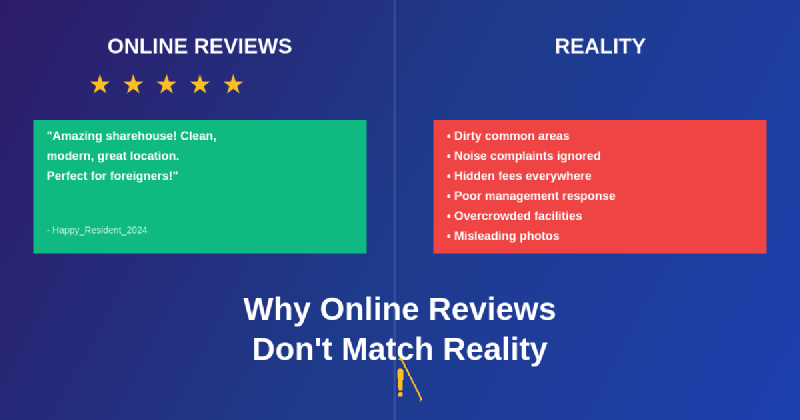
The digital age has fundamentally transformed how we research and select accommodation, with online reviews serving as the primary source of information for millions of potential sharehouse residents worldwide. However, the gap between what reviews promise and what residents actually experience has become increasingly pronounced, particularly in Tokyo’s competitive sharehouse market where marketing pressures and cultural factors create significant distortions in online feedback systems.
Understanding the mechanisms behind review manipulation, cultural biases in feedback systems, and the economic incentives that drive both positive and negative review patterns becomes essential for anyone serious about making informed accommodation decisions. The consequences of relying solely on online reviews without understanding their limitations can result in costly mistakes, disappointing living experiences, and months of regret in unsuitable housing situations.
The Psychology Behind Misleading Reviews
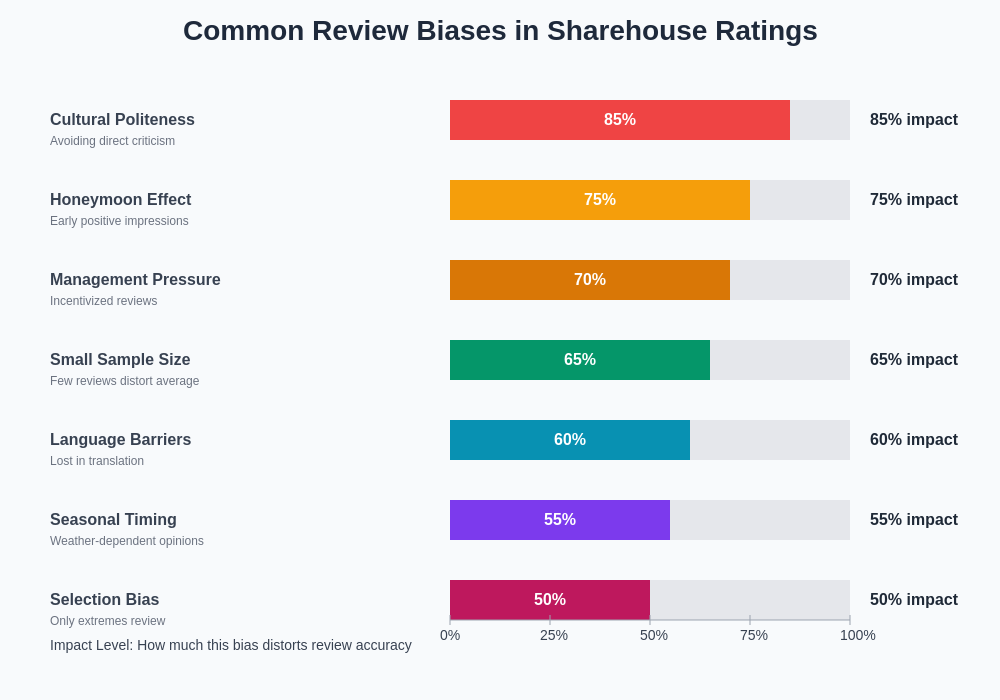
The human psychology governing online review behavior creates systematic biases that consistently distort the accuracy of accommodation feedback across all major platforms and operators. Real stories from Tokyo sharehouse residents often reveal significant discrepancies between initial online impressions and long-term living realities that residents discovered only after committing to lengthy lease agreements.
Cultural factors particularly influence review patterns in Japan, where direct criticism and confrontational feedback are culturally discouraged, leading to artificially inflated positive ratings that mask serious underlying issues. International residents may provide more candid feedback, but their reviews often get overshadowed by the volume of culturally moderated responses from Japanese residents who prioritize social harmony over honest assessment.
The timing of when reviews are written significantly affects their accuracy and relevance, with many positive reviews submitted during the initial honeymoon period of residency before long-term problems become apparent. Conversely, negative reviews often emerge during stressful departure periods when residents may exaggerate problems or focus disproportionately on recent negative experiences while forgetting earlier positive aspects of their stay.
Selection bias creates additional distortions as satisfied residents who remain in sharehouses for extended periods rarely feel motivated to update their initial reviews, while dissatisfied residents who move out quickly may be overrepresented in recent feedback. This creates a temporal skew where current reviews may not accurately reflect the experiences of long-term residents who could provide more balanced perspectives.
Economic Incentives and Review Manipulation
The financial stakes involved in sharehouse operations create powerful incentives for both direct and indirect review manipulation that can systematically mislead potential residents about actual living conditions and management quality. How to spot financial red flags in sharehouse contracts becomes crucial when operators with questionable practices actively work to maintain positive online reputations despite providing substandard services.
Large sharehouse operators often employ sophisticated reputation management strategies that include encouraging positive reviews from satisfied residents while minimizing the visibility and impact of negative feedback through various technical and procedural methods. These may include timing review requests during positive experiences, offering incentives for favorable reviews, or strategically responding to negative reviews in ways that cast doubt on their validity.
The competitive nature of Tokyo’s accommodation market intensifies these pressures, with operators understanding that review ratings directly impact occupancy rates and revenue potential. Properties with consistently high ratings can command premium prices and maintain waiting lists, while those with poor reviews struggle to fill vacancies and may resort to increasingly aggressive tactics to improve their online reputation.
Individual residents may also face subtle pressure to provide positive reviews through deposit return policies, reference requirements for future housing applications, or social pressure from management and other residents who benefit from maintaining the property’s positive reputation. Understanding these dynamics helps explain why review distributions often show suspicious clustering around high ratings with few moderate scores.
Platform-Specific Biases and Limitations
Different review platforms exhibit distinct systematic biases that affect the reliability and accuracy of sharehouse evaluations, with each platform’s user demographics, review policies, and algorithmic systems creating unique distortions in the feedback they display. How to find the perfect sharehouse in Tokyo requires understanding these platform-specific limitations to avoid making decisions based on incomplete or skewed information.
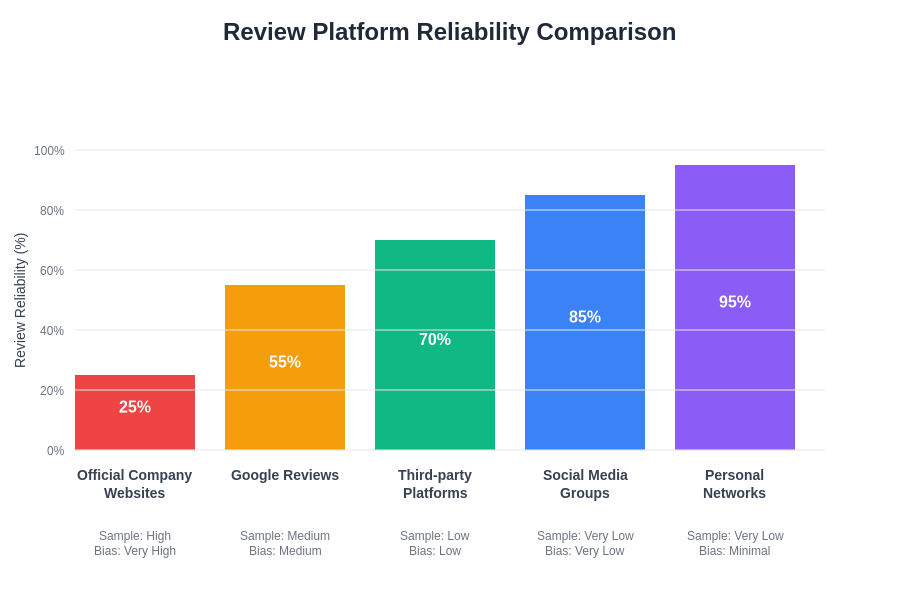
Major sharehouse operators’ proprietary platforms often show the most significant bias toward positive reviews, as these companies control both the review collection and display systems while having direct financial interests in maintaining high ratings. Independent review platforms may offer more balanced perspectives but often suffer from small sample sizes that make individual extreme reviews disproportionately influential.
Google Reviews and similar general-purpose platforms frequently lack the context and specificity needed for accurate sharehouse evaluation, with reviewers often focusing on easily visible factors like location and initial impressions while overlooking crucial long-term livability factors such as noise management, cleaning systems, and community dynamics that significantly impact daily satisfaction.
Social media platforms and messaging apps popular among international residents in Tokyo may provide more authentic feedback but often lack the structured format and searchability needed for systematic evaluation. The ephemeral nature of social media discussions also means that valuable insights may be difficult to find or verify when needed for decision-making.
Cultural and Language Barriers in Review Interpretation
The multicultural nature of Tokyo’s sharehouse market creates complex review interpretation challenges as cultural backgrounds significantly influence both what residents notice and how they express their experiences in online feedback. Living with Japanese roommates in Tokyo sharehouses highlights how cultural differences in living standards, communication styles, and conflict resolution can lead to dramatically different review experiences for the same property.
Language limitations affect both the creation and interpretation of reviews, with non-native speakers potentially missing nuances in negative feedback while struggling to express complex problems in clear, actionable terms. Machine translation systems often fail to capture the subtle implications and emotional context that make reviews valuable for decision-making, leading to misunderstandings about actual living conditions.
Different cultural expectations regarding privacy, cleanliness, noise levels, and social interaction create situations where the same sharehouse receives positive reviews from residents with lower expectations while receiving negative feedback from those with higher standards. Understanding the cultural background of reviewers becomes essential for interpreting whether their feedback aligns with your personal expectations and preferences.
The indirect communication style common in Japanese culture often results in reviews that minimize problems or express criticism in ways that may not be immediately apparent to international readers. Learning to recognize these subtle indicators of dissatisfaction requires cultural sensitivity and experience that many first-time sharehouse seekers lack.
Timing and Seasonality Effects on Review Accuracy
The timing of when reviews are written and read significantly affects their relevance and accuracy for current decision-making, with seasonal variations in sharehouse conditions and resident demographics creating temporal biases that can mislead prospective residents. Why seasonal demand affects sharehouse prices demonstrates how market conditions change throughout the year, making older reviews potentially irrelevant for current situations.
Summer reviews may disproportionately focus on air conditioning and humidity issues that seem less relevant during winter research periods, while winter feedback might emphasize heating costs and insulation problems that appear minor to someone reading reviews during warmer months. These seasonal perspectives can create false impressions about year-round livability and comfort levels.
Academic calendar influences create additional timing biases as student-heavy sharehouses experience dramatic demographic shifts between semesters, with review patterns reflecting these changes in ways that may not accurately represent the experience during different academic periods. Reviews written during exam periods, graduation seasons, or academic breaks may reflect temporary stress levels rather than typical living conditions.
The honeymoon effect particularly distorts early positive reviews as new residents often focus on novelty and excitement while overlooking problems that become apparent only after extended residence. Conversely, departure-related stress can intensify negative feelings and lead to disproportionately harsh final reviews that may not accurately reflect the overall living experience.
Hidden Factors That Reviews Miss
Many crucial aspects of sharehouse living rarely appear in online reviews despite significantly impacting daily satisfaction and long-term happiness, creating blind spots that can lead to poor accommodation decisions even when following conventional review analysis approaches. Japanese sharehouse rules every foreigner should know reveals how unwritten rules and cultural expectations often remain invisible in review systems while fundamentally shaping the living experience.
Building maintenance cycles and infrastructure problems often remain hidden from reviews because residents may not understand their significance or may assume these issues are temporary rather than systemic problems requiring management attention. Plumbing reliability, electrical capacity, internet infrastructure quality, and HVAC system effectiveness rarely receive detailed attention in reviews despite their crucial importance for daily comfort.
Management responsiveness and problem-resolution effectiveness typically only become apparent during crisis situations that may not have occurred during many reviewers’ residency periods. The quality of communication with management, their willingness to address legitimate concerns, and their approach to conflict resolution between residents significantly impact long-term satisfaction but rarely appear in review discussions.
Neighborhood dynamics and safety considerations change over time in ways that reviews cannot capture, with local development, transportation changes, crime patterns, and business establishments affecting the desirability and practicality of specific locations. Reviews written years ago may not reflect current neighborhood conditions that significantly impact daily life quality.
The Impact of Sample Size and Review Velocity
Statistical reliability issues plague many sharehouse review systems due to small sample sizes and uneven review distribution patterns that make individual extreme opinions disproportionately influential in overall rating calculations. Best sharehouses in Tokyo demonstrates how properties with few reviews can appear excellent or terrible based on limited feedback that may not represent typical resident experiences.
Newer sharehouses face particular challenges in review reliability as their limited operational history provides insufficient data for accurate assessment while early operational issues may create disproportionately negative first impressions that don’t reflect long-term management improvements. Conversely, established properties may have accumulated legacy reviews that no longer reflect current conditions after management changes or facility updates.
Review velocity patterns reveal important information about property stability and resident satisfaction that aggregate ratings alone cannot capture, with properties experiencing sudden increases in negative reviews potentially indicating recent management or condition deterioration. Analyzing review timing patterns helps identify properties undergoing positive or negative transitions that affect current desirability.
The mathematical impact of small sample sizes means that properties with fewer reviews show much greater rating volatility than those with extensive review histories, making it crucial to consider both the number and distribution of reviews when evaluating accommodation options. Properties with dozens of reviews provide more reliable statistical baselines than those with only a handful of feedback entries.
Strategies for Reading Between the Lines
Developing effective review analysis skills requires systematic approaches that account for known biases while extracting maximum useful information from available feedback sources across multiple platforms and time periods. How to handle roommate conflicts without moving out provides insights into relationship dynamics that often appear indirectly in reviews through mentions of house atmosphere and community satisfaction.
Identifying authentic reviews involves looking for specific details, balanced perspectives that mention both positive and negative aspects, and language patterns that suggest genuine personal experience rather than promotional content. Authentic reviews typically include concrete examples, mention specific locations within the property, and demonstrate familiarity with local context and cultural nuances.
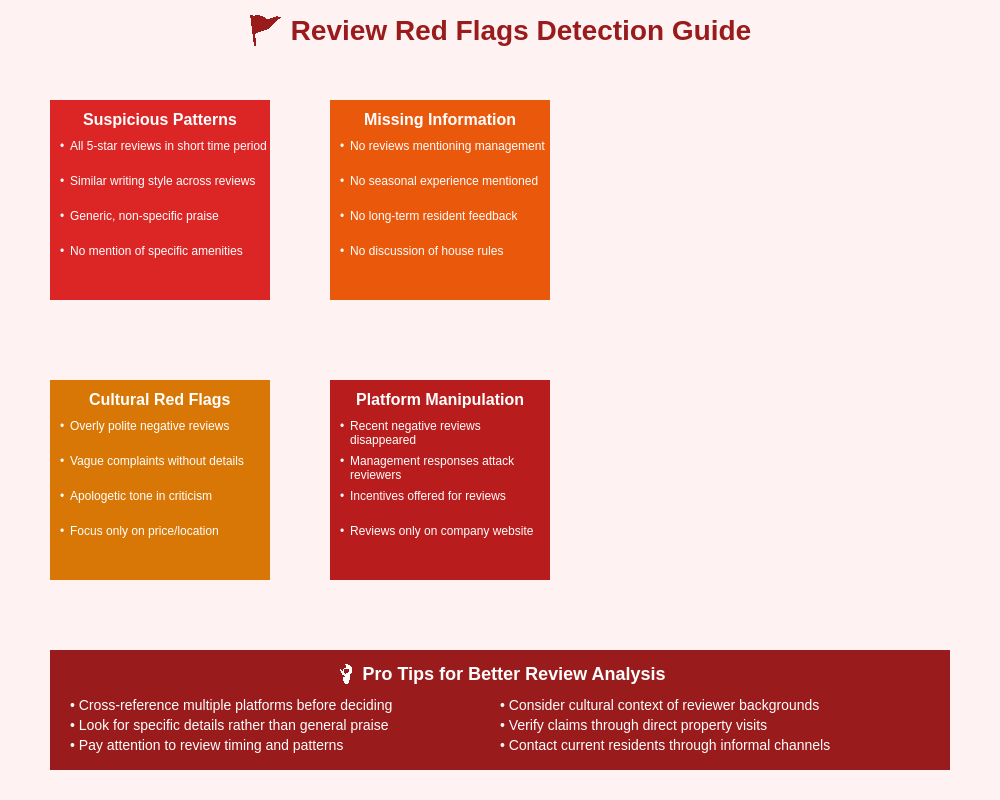
Cross-referencing information across multiple platforms helps identify consistent patterns while revealing platform-specific biases that might distort individual sources. Comparing official operator reviews with independent platform feedback and social media discussions provides a more comprehensive picture of actual living conditions and management quality.
Temporal analysis of review patterns reveals trends in property quality, management effectiveness, and resident satisfaction that single-point-in-time ratings cannot capture. Looking for changes in review themes over time helps identify properties that are improving or declining in ways that affect current desirability and future satisfaction potential.
Alternative Information Sources and Verification Methods
Supplementing online reviews with direct investigation methods provides more accurate and current information about sharehouse conditions while avoiding the limitations and biases inherent in review-based evaluation systems. Making friends through Tokyo sharehouse communities highlights how current residents can provide unfiltered insights when approached through informal channels rather than official review platforms.
Social media groups, messaging apps, and international resident forums often contain more candid discussions about specific properties and operators than formal review platforms, though this information requires more effort to locate and verify. Engaging with current or former residents through these informal channels can provide insights that never appear in official reviews due to cultural, economic, or platform limitations.
Direct observation during property visits reveals information that reviews cannot convey, including actual room sizes, natural light quality, noise levels from neighboring units and street traffic, and the general condition of common areas and building infrastructure. Professional building inspections or informal assessments by knowledgeable friends can identify structural or maintenance issues that residents might not recognize or report.
Verifying specific claims made in reviews through direct inquiry with management or current residents helps distinguish accurate information from exaggerated or outdated complaints. Testing internet speeds, examining actual utility bills, and measuring room dimensions provide objective data that supplements subjective review impressions with factual verification.
Building Your Own Evaluation Framework
Creating systematic evaluation criteria that prioritize factors important to your specific situation and lifestyle reduces dependence on potentially misleading review systems while ensuring comprehensive assessment of accommodation options. Living costs in Tokyo sharehouses explained provides frameworks for financial evaluation that complement quality-of-life assessments in comprehensive decision-making processes.
Developing weighted scoring systems that account for your personal priorities helps maintain objectivity when comparing properties with different strengths and weaknesses across multiple evaluation criteria. Assigning numerical values to factors such as location convenience, community atmosphere, facility quality, and management responsiveness creates quantitative comparisons that reduce emotional decision-making biases.
Creating standardized question lists for property visits and resident interviews ensures comprehensive information gathering while maintaining consistency across multiple property evaluations. These questions should address areas commonly missed by reviews, such as conflict resolution procedures, maintenance response times, and long-term resident satisfaction levels.
Establishing minimum acceptable standards for crucial factors prevents compromise on non-negotiable requirements regardless of positive reviews in other areas. Understanding your absolute deal-breakers helps maintain focus during property evaluation while avoiding emotional attachment to properties that fail to meet essential criteria despite positive overall impressions.
Long-term Perspective and Realistic Expectations
Maintaining realistic expectations about sharehouse living while understanding the inherent limitations of any shared accommodation situation prevents disappointment and helps evaluate reviews within appropriate context. Student sharehouses near top Tokyo universities demonstrates how different resident demographics create varying satisfaction levels that may not align with your personal preferences and lifestyle requirements.
Recognizing that perfect sharehouses rarely exist helps frame review analysis in terms of acceptable trade-offs rather than searching for properties without any negative feedback or potential drawbacks. Understanding common sharehouse challenges that affect most properties helps distinguish between universal issues and property-specific problems that warrant serious concern.
Long-term satisfaction often depends more on personal adaptability and cultural sensitivity than on perfect property conditions, making personality fit and communication skills more important than achieving ideal physical accommodations. Reviews that focus exclusively on physical amenities may miss crucial social and cultural factors that determine actual living satisfaction.
Planning for change and flexibility acknowledges that both personal needs and property conditions evolve over time, making initial review-based assessments just one factor in ongoing accommodation satisfaction. Building skills for addressing problems constructively and maintaining positive relationships becomes more valuable than finding properties with perfect initial reviews.
The gap between online reviews and sharehouse reality reflects broader challenges in digital information systems where economic incentives, cultural factors, and platform limitations combine to create systematic distortions in available information. Understanding these mechanisms empowers prospective residents to make more informed decisions while maintaining realistic expectations about the limitations of any accommodation research method, ultimately leading to better outcomes through more sophisticated evaluation approaches that account for the complexity of shared living experiences in Tokyo’s dynamic housing market.
Disclaimer
This article is for informational purposes only and does not constitute professional advice. Online review patterns and reliability may vary significantly between platforms and properties. Readers should conduct their own thorough research and consider multiple information sources when making housing decisions. The effectiveness of review analysis strategies may depend on individual circumstances and specific market conditions.