
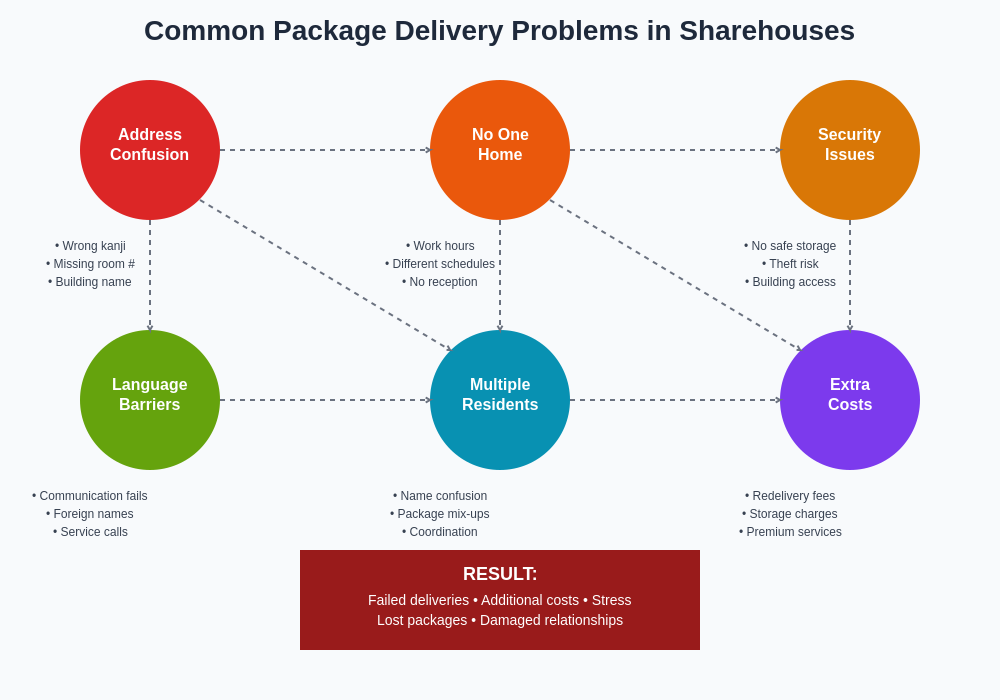
Package delivery in Tokyo sharehouses presents a labyrinth of complications that can transform simple online shopping into a frustrating exercise in logistics management and cultural navigation. The intersection of Japan’s unique address system, sharehouse operational structures, and the expectations of international residents creates a perfect storm of delivery challenges that often catch newcomers completely off guard. Understanding these complications becomes essential for anyone planning to live in shared accommodation while maintaining an active relationship with e-commerce and package delivery services.
The seemingly straightforward act of receiving a package becomes exponentially more complex when multiple residents share the same address but lack unified reception systems, proper identification protocols, or consistent availability schedules. These challenges extend beyond mere inconvenience, often resulting in lost packages, delivery delays, additional fees, and strained relationships between residents who must navigate shared responsibility for package management in an environment where individual accountability becomes blurred.
The Japanese Address System Challenge
Japan’s address system operates on fundamentally different principles compared to Western addressing conventions, creating immediate complications for both international residents and delivery personnel who must navigate this complexity within the context of sharehouse living. Living with Japanese roommates in Tokyo sharehouses often involves learning to communicate address information correctly, as mistakes can result in packages being delivered to wrong locations or returned to senders entirely.
The hierarchical structure of Japanese addresses proceeds from larger geographical areas to increasingly specific locations, but sharehouses often occupy buildings with multiple units, subletting arrangements, or converted spaces that don’t align neatly with official addressing systems. Room numbers, building names, and unit designations frequently lack standardization, making it difficult for delivery personnel to locate specific recipients even when they successfully navigate to the correct building.
International residents frequently struggle with the romanization versus Japanese character requirements for different delivery services, as some companies require addresses written in kanji while others accept romaji, and mistakes in either format can lead to delivery failures. Japanese sharehouse rules every foreigner should know includes understanding proper address formatting, but many residents discover these requirements only after experiencing delivery problems.
The integration of traditional Japanese addressing with modern GPS systems creates additional complications, as delivery drivers may rely on digital navigation that doesn’t account for building entrance locations, sharehouse-specific access procedures, or the physical reality of multi-unit conversions that characterize many shared living arrangements.
Sharehouse Reception and Security Systems
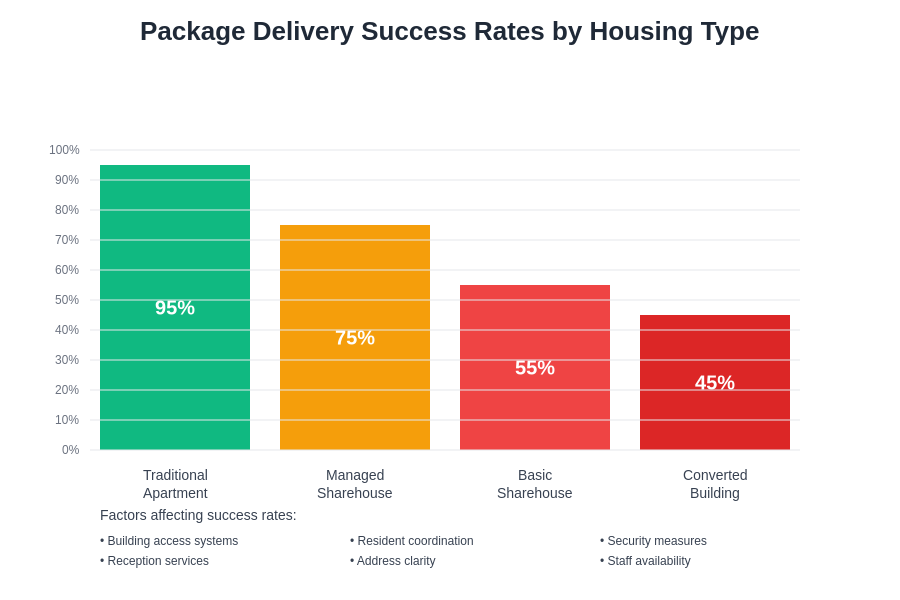
Most sharehouses lack dedicated reception services or professional mail management systems, creating immediate challenges for package acceptance when recipients are unavailable during delivery attempts. The absence of doormen, concierge services, or automated package lockers means that successful delivery depends entirely on resident availability or improvised arrangements that often prove unreliable over time.
Building access control systems in sharehouses frequently operate on different principles than those found in traditional apartment buildings, with shared entrance codes, intercom systems that don’t clearly identify individual residents, or security measures that prevent delivery personnel from accessing building interiors. How to find the perfect sharehouse in Tokyo should include evaluating package delivery infrastructure, but many residents don’t consider these practical implications until problems arise.
The lack of standardized package storage areas creates ongoing complications when residents are absent during delivery attempts, as drivers must either return packages to distribution centers or leave them in locations that may not provide adequate security or weather protection. Common areas designated for package storage often lack organization, identification systems, or security measures that prevent theft or misdelivery between residents.
Intercom and communication systems in many sharehouses provide limited functionality for coordinating with delivery personnel, particularly when language barriers prevent effective communication about specific delivery instructions, alternative timing arrangements, or location clarifications that could facilitate successful package receipt.
Multiple Resident Coordination Challenges
Coordinating package deliveries among multiple residents sharing the same address requires communication systems and organizational structures that many sharehouses lack, resulting in confusion, missed deliveries, and interpersonal conflicts over package management responsibilities. Making friends through Tokyo sharehouse communities becomes more complicated when package issues create tensions between residents who must navigate shared logistics without clear protocols.
Name recognition presents ongoing challenges when delivery personnel encounter unfamiliar foreign names that don’t match building records, lease agreements, or resident registration documentation, leading to delivery refusals or returned packages even when recipients are present and available. The romanization of foreign names creates additional complications when different delivery services use varying standards for name formatting and verification.
Package notification systems often fail to account for multiple residents at the same address, with delivery confirmations, timing updates, and redelivery instructions reaching only one person or getting lost in shared communication channels. Real stories from Tokyo sharehouse residents frequently include package delivery disasters that result from communication breakdowns between residents and delivery services.
The temporal coordination required for successful delivery becomes exponentially more complex when multiple residents have different schedules, work arrangements, and availability patterns, making it difficult to establish consistent delivery windows that accommodate shared building access and individual recipient preferences.
Cultural and Language Barriers
Communication difficulties between international residents and Japanese delivery personnel create ongoing complications that extend beyond simple language barriers to include cultural differences in service expectations, problem resolution approaches, and customer interaction protocols. English-speaking sharehouses in Tokyo for foreigners may provide some protection from these challenges, but delivery interactions with external services still require navigation of Japanese business culture and communication norms.
Japanese delivery services operate according to specific cultural expectations regarding customer availability, redelivery protocols, and service interaction that may not align with international residents’ experiences or assumptions about package delivery convenience and flexibility. The concept of customer responsibility in Japan places greater emphasis on recipient availability and cooperation than might be expected by residents accustomed to different delivery cultures.
Delivery timing expectations in Japan often emphasize precision and adherence to specified windows, but sharehouses with multiple residents struggle to coordinate these requirements effectively, leading to failed deliveries and frustrated delivery personnel who may become less cooperative over time. The cultural importance of avoiding inconvenience to others means that delivery problems can escalate into broader social issues that affect sharehouse community dynamics.
Documentation and verification requirements for package receipt may include procedures that international residents find unfamiliar or unnecessarily complex, such as signature requirements, identification verification, or payment confirmation processes that create additional barriers to successful delivery completion.
Technology and Infrastructure Limitations
Many sharehouses operate with outdated intercom systems, limited internet connectivity, or building infrastructure that doesn’t support modern package delivery technologies such as smart lockers, delivery notifications, or GPS coordination systems that could simplify the delivery process. How much Tokyo sharehouses really cost per month often excludes consideration of technology upgrades that could improve package delivery experiences.
Mobile phone integration with delivery services requires Japanese phone numbers, app downloads, and account verification processes that may present challenges for international residents who lack established local telecommunications relationships or struggle with Japanese-language app interfaces. The proliferation of delivery service apps creates additional complexity when different companies use different platforms, notification systems, and user interface designs.
Building Wi-Fi systems in sharehouses frequently lack the reliability or coverage needed to support consistent delivery tracking, real-time notifications, or communication with delivery personnel through app-based systems that increasingly dominate the Japanese logistics landscape. Poor connectivity can result in missed notifications, failed redelivery scheduling, or inability to provide delivery updates to building access systems.
The integration of traditional delivery methods with modern e-commerce platforms creates gaps in service that particularly affect international residents who may rely more heavily on online shopping but lack familiarity with Japanese delivery customs, company-specific procedures, or alternative pickup options available throughout Tokyo.
Security and Theft Concerns
Package security in sharehouses presents unique challenges that extend beyond traditional apartment building concerns to include issues related to shared access, multiple unknown residents, and the lack of professional security monitoring that characterizes most shared living arrangements. Why some residents always feel unsafe at night often includes concerns about package theft and building security that affect delivery arrangements.
The absence of secure storage areas means that packages left in common areas remain vulnerable to theft, accidental displacement, or damage from environmental factors that building owners may not have addressed adequately. Package theft between residents represents a particularly sensitive issue that can destroy community trust and create lasting interpersonal conflicts that affect overall sharehouse atmosphere.
Delivery personnel unfamiliar with sharehouse arrangements may leave packages in locations that appear secure but actually provide inadequate protection from weather, theft, or accidental damage by other residents who may not recognize package ownership or understand proper handling procedures. The lack of surveillance systems in many sharehouses means that package theft incidents often cannot be resolved definitively, creating ongoing suspicion and tension.
International packages or high-value deliveries require additional security considerations that many sharehouses cannot accommodate, forcing residents to arrange alternative delivery locations or accept increased risk of loss, damage, or theft that traditional apartment residents might not face.
Cost and Fee Complications
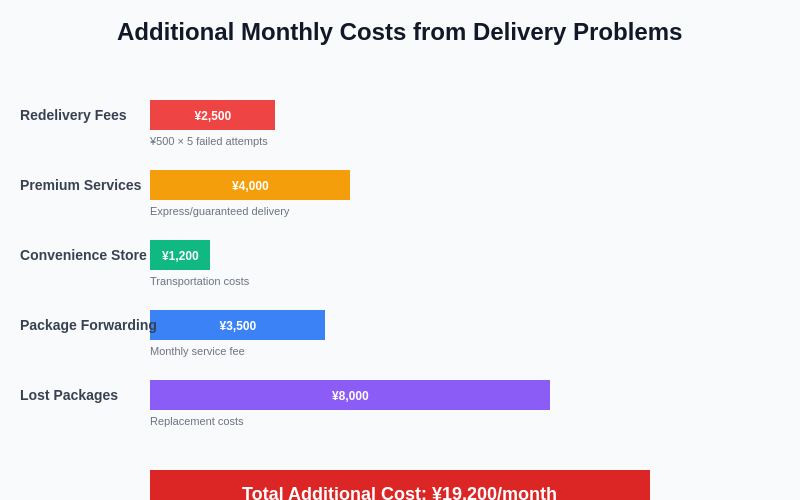
Package delivery costs can escalate unexpectedly when sharehouses lack proper reception facilities, forcing residents to pay additional fees for redelivery attempts, alternative pickup locations, or premium delivery services that accommodate building access limitations and coordination challenges. Living costs in Tokyo sharehouses explained should include realistic budgeting for delivery complications that add ongoing costs to online shopping activities.
International shipping complications multiply when sharehouses cannot provide reliable delivery coordination, resulting in packages being returned to origin countries, held in customs facilities, or requiring expensive retrieval procedures that can cost more than the original package value. The lack of consistent recipient availability can trigger automatic return policies that impose additional fees and shipping costs on residents.
Redelivery fees imposed by Japanese delivery companies accumulate quickly when residents cannot coordinate successful delivery timing, and some services limit the number of redelivery attempts before packages are returned or relocated to pickup facilities that may be inconveniently located relative to sharehouse neighborhoods.
Premium delivery services that promise to overcome coordination challenges often cost significantly more than standard delivery options, forcing residents to choose between convenience and budget considerations that may not align with their overall financial planning for sharehouse living.
Alternative Solutions and Workarounds
Many residents develop workaround strategies that include using workplace delivery addresses, nearby convenience stores with package acceptance services, or commercial mail forwarding services that provide more reliable delivery coordination than sharehouse arrangements can offer. How to handle roommate conflicts without moving out sometimes involves establishing house rules for package management that reduce delivery-related tensions.
Convenience store pickup services provide reliable alternatives for residents who can coordinate timing with store hours and location accessibility, though this approach requires additional time investment and transportation planning that may not suit all residents’ schedules or mobility options. The proliferation of pickup locations throughout Tokyo makes this option increasingly viable for many types of packages.
Package forwarding services operated by commercial companies can provide professional reception and coordination that sharehouses lack, but these services add ongoing costs and complexity to the delivery process while requiring residents to manage relationships with multiple service providers instead of direct delivery arrangements.
Shared delivery scheduling among residents can improve coordination success rates when houses establish communication systems and mutual responsibility agreements, but these arrangements require ongoing maintenance and cooperation that may not survive resident turnover or changing house dynamics over time.
Long-term Impact on Daily Life
Persistent package delivery complications create cumulative stress that affects residents’ relationship with online shopping, e-commerce convenience, and overall quality of life in ways that may not be immediately obvious when evaluating sharehouse living arrangements. The constant need to coordinate deliveries, manage failed attempts, and resolve delivery problems creates ongoing mental workload that detracts from other aspects of sharehouse community building and personal development.
Professional implications arise when delivery complications affect work-related packages, essential supplies, or time-sensitive deliveries that residents rely on for career activities, education requirements, or personal health needs. The inability to receive packages reliably can limit career opportunities, educational options, or lifestyle choices that depend on reliable delivery access.
Social implications develop when package delivery problems create ongoing friction between residents, building management, or delivery personnel that affects overall sharehouse atmosphere and community cohesion. Dating while living in Tokyo sharehouses becomes more complicated when delivery issues create stress and logistical challenges that affect daily routines and personal relationships.
The learning curve associated with mastering package delivery in sharehouse environments requires time investment and cultural adaptation that international residents must balance against other priorities while establishing themselves in Tokyo. Understanding these complications in advance allows residents to develop appropriate strategies and set realistic expectations for package delivery experiences throughout their sharehouse residency.
Package delivery complications in Tokyo sharehouses represent a microcosm of broader challenges that international residents face when navigating Japanese systems, cultural expectations, and shared living arrangements that require constant adaptation and problem-solving skills. While these challenges can be managed through preparation, communication, and alternative strategies, they highlight the importance of understanding practical daily life implications when choosing sharehouse living in Japan’s complex urban environment.
Disclaimer
This article is for informational purposes only and does not constitute professional advice about delivery services or sharehouse contracts. Package delivery experiences may vary significantly depending on specific sharehouses, delivery companies, and individual circumstances. Readers should research delivery options and building policies when evaluating sharehouse arrangements. The information provided reflects general challenges and may not apply to all situations or service providers.