The promise of pet-friendly accommodation in Tokyo sharehouses often attracts international residents who wish to maintain companionship with their beloved animals while navigating life in Japan’s capital. However, the stark reality of pet policies in sharehouses reveals a complex web of restrictions, hidden fees, and unwritten rules that can transform what initially appears to be welcoming pet accommodation into a frustrating maze of limitations and unexpected complications. Understanding these discrepancies between advertised policies and actual implementation becomes crucial for anyone considering sharehouse living with pets.
The gap between marketing promises and operational reality in pet policies reflects broader issues within Tokyo’s competitive sharehouse market, where operators often prioritize occupancy rates over transparent communication about living conditions. Pet owners frequently discover that the cheerful advertisements featuring happy residents with their animals bear little resemblance to the restrictive environment they encounter after signing lease agreements and moving into supposedly pet-friendly accommodations.
The Marketing Illusion of Pet-Friendly Sharehouses
Sharehouse operators consistently present pet-friendly policies through carefully curated marketing materials that emphasize community, companionship, and the joy of sharing living spaces with beloved animals. These promotional efforts typically feature attractive photographs of residents playing with dogs in spacious common areas, cats lounging comfortably in well-lit rooms, and testimonials from supposedly satisfied pet owners who describe their positive experiences in these accommodations.
The language used in pet policy descriptions often employs vague terms such as “pet-friendly environment,” “welcoming to small animals,” or “community-oriented pet policies” that create positive impressions without providing specific details about actual restrictions, fees, or enforcement mechanisms. How to find the perfect sharehouse in Tokyo discusses general search strategies, but pet owners require additional scrutiny of policy details that marketing materials deliberately obscure.
Marketing photographs and virtual tours rarely showcase the reality of pet ownership restrictions, instead focusing on idealized scenarios that may not reflect typical daily experiences. The carefully staged environments presented in promotional materials often exclude evidence of the monitoring systems, restricted areas, and community tensions that frequently characterize actual pet ownership in sharehouses.
Hidden Fees and Financial Surprises
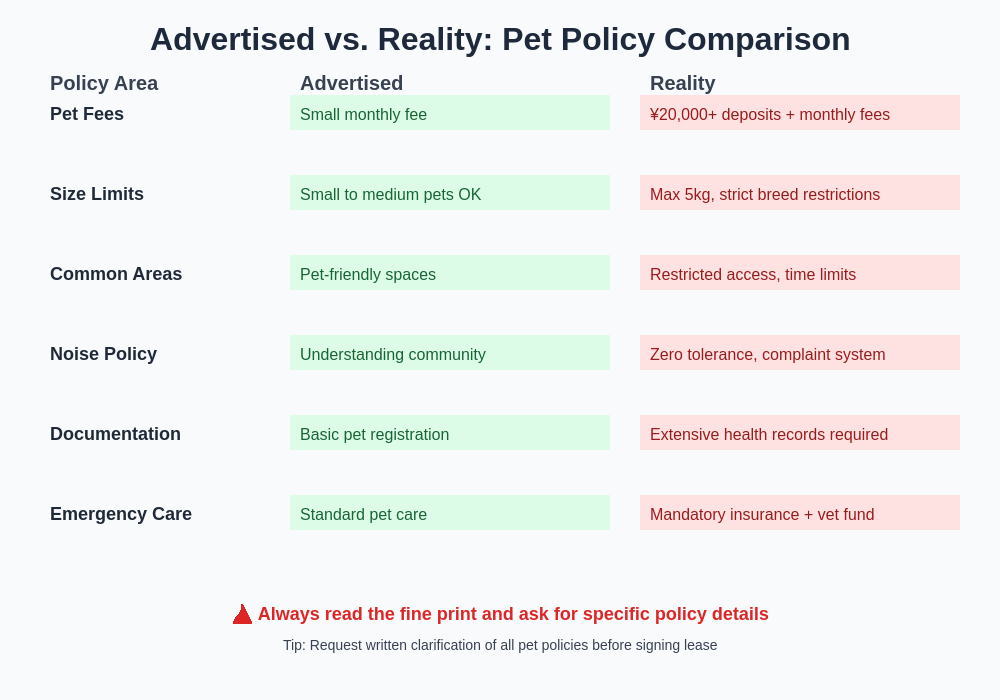
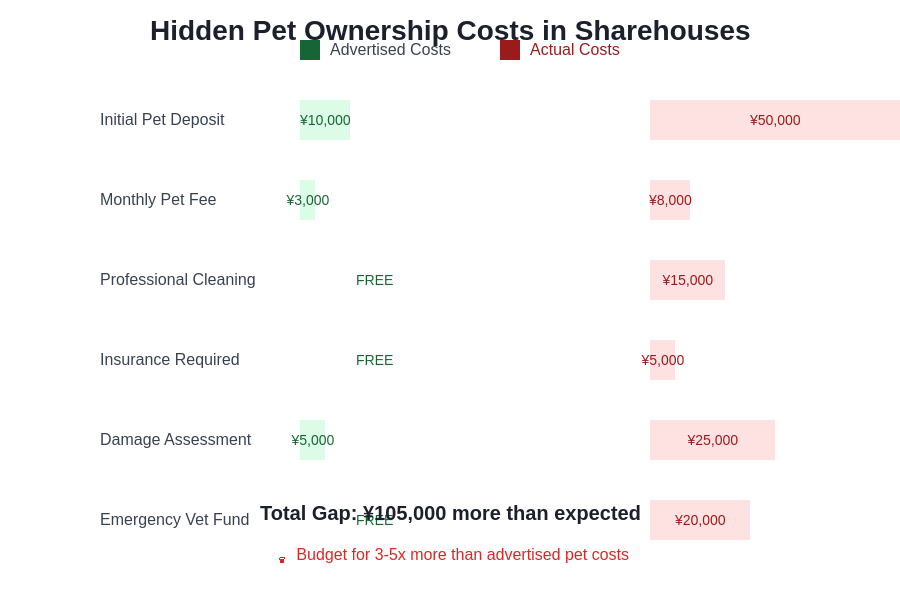
The financial reality of pet ownership in Tokyo sharehouses extends far beyond the basic monthly rent, involving numerous additional charges that are rarely disclosed prominently in initial marketing materials. Pet deposits typically range from one to three months of rent, but these amounts often fail to cover actual damages or cleaning requirements, leading to additional charges during lease termination that can significantly exceed original deposit amounts.
Monthly pet fees represent ongoing financial obligations that can add twenty to fifty percent to basic accommodation costs, transforming seemingly affordable housing options into expensive arrangements that strain budgets already challenged by Tokyo’s high cost of living. Living costs in Tokyo sharehouses explained provides general expense breakdowns, but pet owners face additional layers of financial complexity that standard budgeting guides rarely address adequately.
Professional cleaning requirements often mandate specialized services for pet-related maintenance that standard cleaning arrangements cannot handle, resulting in mandatory monthly or quarterly charges for deep cleaning, carpet treatment, and odor elimination services. These specialized cleaning requirements can double or triple standard maintenance fees, creating substantial ongoing financial obligations that were not apparent during initial lease negotiations.
Emergency veterinary requirements and pet insurance mandates add additional layers of financial complexity, particularly for international residents unfamiliar with Japanese veterinary systems and insurance structures. Many sharehouses require proof of comprehensive pet insurance and emergency veterinary fund availability, creating upfront financial barriers that can exclude otherwise qualified applicants from pet-friendly accommodations.
Size and Breed Restrictions Reality
Sharehouse pet policies consistently employ restrictive size and breed limitations that significantly narrow the range of acceptable animals far beyond what initial marketing materials suggest. Weight restrictions often set maximum limits at five to ten kilograms, effectively excluding most medium and large dog breeds while creating ambiguous enforcement scenarios for animals that gain weight after initial approval or during growth periods.
Breed-specific restrictions frequently target popular companion animals through blacklists that exclude entire categories of dogs, cats, and other pets based on perceived noise levels, space requirements, or insurance liability concerns. Japanese sharehouse rules every foreigner should know touches on general regulations, but pet breed restrictions often involve complex cultural and legal considerations that require specialized understanding.
Age restrictions for pets create additional complications, with many sharehouses refusing animals over certain ages due to health care concerns, while simultaneously excluding very young animals due to training and behavior unpredictability. These age-based restrictions often create narrow windows of pet acceptability that can change during residency periods, potentially forcing difficult decisions about pet ownership continuation.
Mixed breed animals face particular challenges in classification systems that rely on breed identification for policy enforcement, creating subjective evaluation processes that can result in inconsistent application of restrictions based on individual property manager interpretation rather than clear, objective criteria.
Noise and Behavior Monitoring Systems
The enforcement of pet behavior standards in Tokyo sharehouses involves sophisticated monitoring and complaint systems that create constant surveillance pressure on pet owners and their animals. Noise monitoring through both technological systems and resident reporting creates environments where pet owners face ongoing scrutiny of their animals’ behavior, vocalization patterns, and activity levels throughout all hours of daily life.
Complaint reporting mechanisms often favor non-pet residents in dispute resolution processes, creating power imbalances where single complaints can result in warnings, fines, or lease termination threats regardless of the validity or reasonableness of the reported concerns. How to handle roommate conflicts without moving out provides general conflict resolution strategies, but pet-related disputes often involve more complex dynamics and higher stakes outcomes.
Behavior training requirements and professional intervention mandates can force pet owners into expensive training programs or behavioral modification services when complaints arise, regardless of whether the reported behaviors represent normal animal activity or legitimate concerns. These mandatory interventions often require significant time and financial investments that were not disclosed during initial lease negotiations.
Documentation requirements for behavior incidents create bureaucratic burdens that require pet owners to maintain detailed logs of their animals’ activities, training efforts, and behavioral modifications in response to complaints or monitoring system alerts. This documentation burden can transform pet ownership into a stressful administrative responsibility that significantly reduces the joy and companionship benefits that motivated the decision to maintain pets during sharehouse residency.
Space Limitations and Access Restrictions
Physical space restrictions in pet-friendly sharehouses often prove more limiting than marketing materials suggest, with designated pet areas frequently smaller, less accessible, or more restrictive than promotional photographs indicate. Common area access limitations can confine pets to private rooms for extended periods, creating isolation and behavioral problems that contradict the community-oriented lifestyle that sharehouses typically promote.
Outdoor access restrictions present particular challenges in urban Tokyo environments where private outdoor space is scarce and building policies may prohibit pet access to balconies, rooftops, or exterior areas that residents assumed would be available for pet exercise and recreation. Best Tokyo neighborhoods for sharehouse living discusses general location considerations, but pet owners require additional evaluation of neighborhood amenities and outdoor access opportunities.
Elevator and stairway restrictions can create daily logistical challenges for pet owners, particularly in multi-story buildings where animals may be prohibited from using elevators during peak hours or restricted to specific transportation routes that extend the time and effort required for basic daily activities like walks or veterinary visits.
Storage limitations for pet supplies, equipment, and food create ongoing space management challenges that can overwhelm small sharehouse rooms while potentially violating occupancy regulations or fire safety requirements when pet-related items accumulate beyond intended storage capacity.
Community Dynamics and Social Tensions
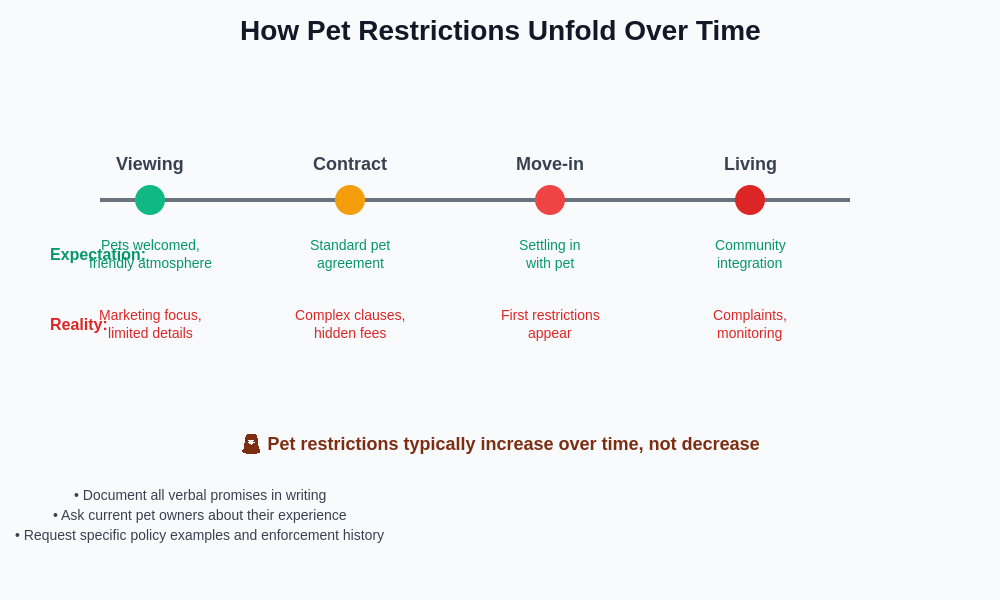
Pet ownership in sharehouses frequently creates complex social dynamics that can isolate pet owners from broader house communities while generating ongoing tensions with non-pet residents who may have different tolerance levels for animal-related sounds, odors, or space usage patterns. These social tensions often develop gradually over time, making them difficult to predict during initial viewing and selection processes.
Cultural differences in pet ownership attitudes can create particularly challenging dynamics in international sharehouses where residents from different countries bring varying expectations about appropriate pet care, training standards, and community integration approaches. Living with Japanese roommates in Tokyo sharehouses explores general cultural integration, but pet ownership adds additional layers of complexity to cross-cultural living arrangements.
Responsibility allocation for pet-related maintenance, damage, and community impact often becomes sources of ongoing dispute when multiple pet owners share spaces or when the cumulative impact of several animals exceeds individual responsibility boundaries. These collective responsibility challenges can create finger-pointing scenarios where individual pet owners face blame for problems caused by other residents’ animals.
Guest policies involving pets create additional complexity when residents wish to host visitors with animals or when pet owners travel and require pet-sitting arrangements that may conflict with visitor restrictions or temporary resident policies that were not clearly defined during initial lease negotiations.
Health and Safety Enforcement Challenges
Health and safety enforcement in pet-friendly sharehouses involves complex regulatory requirements that extend beyond basic animal care to encompass building safety, resident health protection, and emergency preparedness protocols that can significantly impact daily living routines. Vaccination requirements, health certification mandates, and regular veterinary documentation create ongoing administrative burdens that pet owners must maintain to satisfy sharehouse policy compliance.
Allergy accommodation requirements for non-pet residents can result in complex space allocation and air filtration mandates that pet owners may be required to fund or implement, creating unexpected responsibilities for environmental modifications that significantly exceed basic pet care obligations. How air quality problems develop in crowded spaces discusses general air quality concerns, but pet-related allergen management requires specialized approaches and ongoing vigilance.
Emergency evacuation procedures involving pets often reveal inadequate planning and preparation that can endanger both animals and residents during actual emergency situations. Many sharehouses lack comprehensive emergency protocols for pet evacuation, creating safety risks that become apparent only during crisis situations when effective response becomes critical for resident and animal welfare.
Waste management and sanitation requirements for pet-related materials can exceed standard building waste removal systems, requiring specialized disposal arrangements that pet owners must organize and fund independently while ensuring compliance with local municipal waste management regulations that may be unfamiliar to international residents.
Legal and Insurance Complications
The legal framework surrounding pet ownership in Japanese sharehouses involves complex liability structures that can expose pet owners to significant financial and legal risks that extend far beyond standard rental agreement obligations. Personal liability for pet-related damages, injuries, or disturbances can result in legal action that affects visa status, employment opportunities, and long-term residency prospects in ways that standard tenant insurance may not adequately cover.
Insurance requirements for pet owners often exceed standard rental insurance coverage, requiring specialized policies that can be expensive and difficult to obtain for international residents without established Japanese credit histories or long-term residence documentation. Why some employers discriminate against sharehouse addresses touches on address-related complications, but pet ownership can create additional professional and legal vulnerabilities.
Lease termination procedures involving pets can become legally complex when damage assessments, cleaning requirements, or policy violations create disputes between residents and property management companies. These legal complications can extend lease termination timelines, increase associated costs, and create documentation requirements that affect future housing applications and rental history evaluations.
Cross-border legal considerations for pet ownership become particularly complex for temporary residents whose visa status, travel requirements, or family circumstances may require pet relocation or temporary care arrangements that conflict with sharehouse policies or Japanese pet import/export regulations.
Alternative Solutions and Realistic Expectations
Understanding the reality of pet policies in Tokyo sharehouses enables potential residents to develop realistic expectations and explore alternative solutions that may better serve both pet ownership goals and practical living requirements. Pet-sitting networks, doggy daycare facilities, and professional pet care services can supplement sharehouse living arrangements while reducing the daily stress and policy compliance burdens that characterize many pet-friendly sharehouse experiences.
Research strategies for identifying genuinely pet-friendly accommodations require deeper investigation beyond marketing materials, including direct communication with current pet-owning residents, detailed policy document review, and site visits that specifically evaluate pet-related facilities and restrictions rather than relying on promotional representations. Real stories from Tokyo sharehouse residents provides authentic perspectives that can inform more realistic expectations about advertised versus actual living conditions.
Financial planning for pet ownership in sharehouses must account for the full range of potential costs, including hidden fees, emergency expenses, insurance requirements, and professional service needs that standard budget planning tools rarely address comprehensively. How to calculate your true living costs offers general budgeting guidance, but pet owners require specialized financial planning that accounts for the unique costs and risks associated with animal ownership in shared living environments.
Long-term planning considerations should evaluate whether sharehouse living represents a sustainable solution for pet ownership goals or whether alternative accommodation types might better serve both human and animal welfare needs throughout the intended residence period in Tokyo.
Moving Forward with Informed Decisions
The decision to pursue pet ownership in Tokyo sharehouses requires careful evaluation of personal priorities, financial resources, and lifestyle flexibility in light of the documented gaps between advertised policies and operational reality. Pet owners who proceed with sharehouse living must prepare for ongoing advocacy efforts, detailed documentation requirements, and potentially stressful conflict resolution processes that can significantly impact the quality of life for both humans and animals.
Preparation strategies for successful pet ownership in sharehouses include comprehensive policy research, financial planning for unexpected expenses, development of backup care arrangements, and cultivation of strong communication skills for navigating the complex social and administrative challenges that characterize pet ownership in shared living environments.
The broader implications of restrictive pet policies reflect systematic issues within Tokyo’s housing market that prioritize property protection and management convenience over resident welfare and authentic community building. Understanding these systemic limitations enables more informed decision-making while highlighting the need for more transparent and resident-friendly approaches to pet accommodation in shared living arrangements.
For many international residents, the dream of maintaining beloved pets while experiencing Tokyo’s vibrant culture and building international friendships through sharehouse living remains achievable, but only with realistic expectations, thorough preparation, and commitment to navigating the complex realities that lie beneath the attractive surface of pet-friendly marketing promises.
Disclaimer
This article is for informational purposes only and does not constitute professional legal or financial advice. Pet policies in Tokyo sharehouses vary significantly between operators and individual properties, and specific requirements, restrictions, and enforcement practices may change. Readers should conduct thorough research and consult with relevant professionals when making decisions about pet ownership in shared living arrangements. The experiences described may not reflect all sharehouse operations, and individual circumstances can significantly affect outcomes.