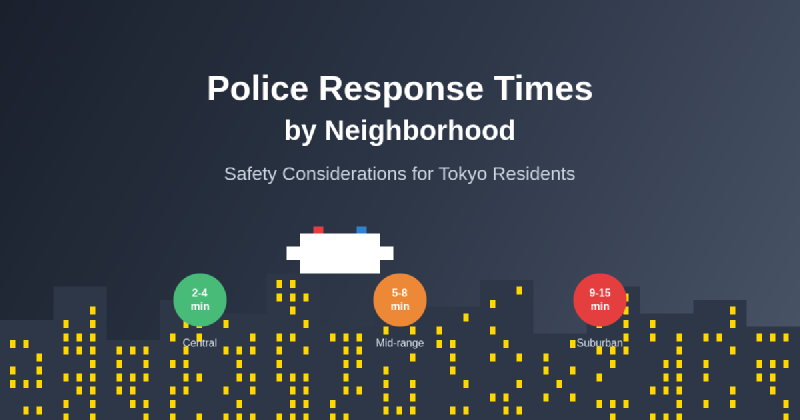
The variation in police response times across different neighborhoods in Tokyo represents a critical factor that sharehouse residents must understand when evaluating their living situation and personal safety considerations. These differences stem from complex interactions between geographical factors, resource allocation, population density, crime patterns, and infrastructural limitations that collectively shape emergency service delivery across Japan’s vast metropolitan area.
For international residents living in sharehouses, understanding these response time variations becomes particularly important as it directly impacts personal security planning, emergency preparedness strategies, and informed decision-making about neighborhood selection. The disparities in emergency service access can significantly influence daily safety considerations and long-term residential satisfaction throughout your stay in Tokyo.
Geographic and Infrastructure Factors
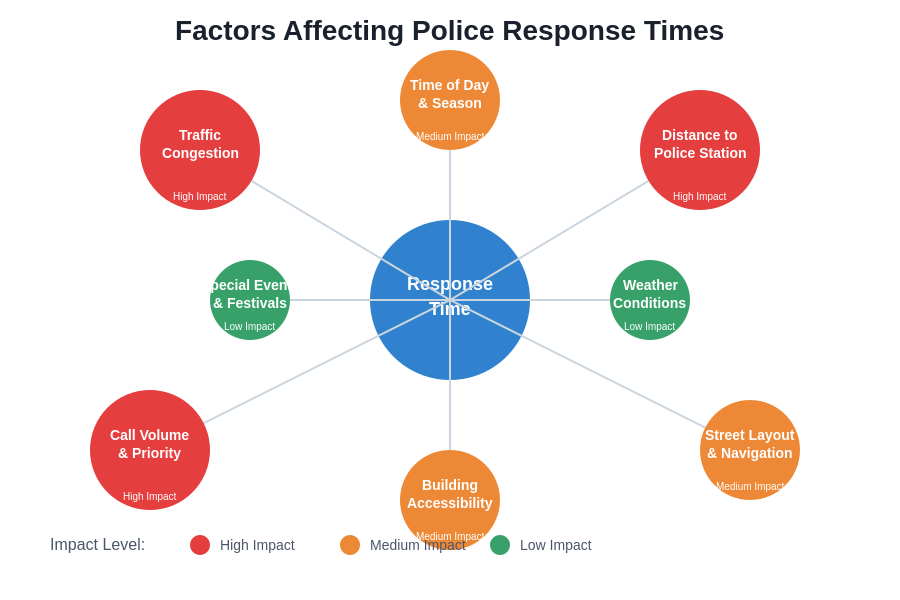
Tokyo’s complex urban geography creates substantial challenges for emergency service delivery, with narrow streets, dense building configurations, and varied terrain contributing to significant response time differences between neighborhoods. The city’s historical development patterns have resulted in areas with vastly different street layouts, accessibility features, and infrastructure quality that directly impact police vehicle navigation and response efficiency.
How to find the perfect sharehouse in Tokyo becomes more complex when factoring in emergency service accessibility, as seemingly attractive neighborhoods may have hidden disadvantages related to emergency response capabilities. Central areas often benefit from wider streets and better planned road networks, while older residential districts may present navigation challenges that extend response times during critical situations.
The elevation changes across Tokyo’s landscape create additional complexity, with hillside neighborhoods and areas with significant topographical variation presenting unique challenges for emergency vehicle access. Bridge crossings, tunnel systems, and elevated highway networks can create bottlenecks that significantly impact response times depending on traffic conditions and time of day.
Transportation infrastructure quality varies dramatically between established central districts and rapidly developed suburban areas, with newer developments often lacking the comprehensive road networks necessary for optimal emergency service delivery. The integration of older neighborhood structures with modern urban planning creates patchwork accessibility that can trap emergency vehicles in traffic or force longer routing decisions.
Police Station Distribution and Resource Allocation
The strategic placement of police stations across Tokyo reflects decades of urban planning decisions, population growth patterns, and resource allocation priorities that may not align with current demographic distributions or crime patterns. Why some areas have higher crime rates often correlates with police station proximity and resource availability, creating feedback loops that can perpetuate service disparities.
Historical police station establishment followed population centers and administrative boundaries that have evolved significantly over time, leaving some areas underserved relative to their current density and security needs. The bureaucratic complexity of expanding or relocating police facilities means that resource distribution often lags behind neighborhood development and changing security requirements.
Staffing levels and resource allocation decisions depend on multiple factors including crime statistics, population density, commercial activity levels, and political considerations that may not reflect the actual emergency service needs of diverse neighborhoods. Areas with higher property values or political influence may receive disproportionate resource allocation compared to working-class neighborhoods or areas with high international resident populations.
Equipment availability and specialized response capabilities vary between stations, with some facilities maintaining advanced emergency response resources while others operate with basic capabilities that may require backup from distant specialized units during complex emergencies.
Population Density and Call Volume Impact
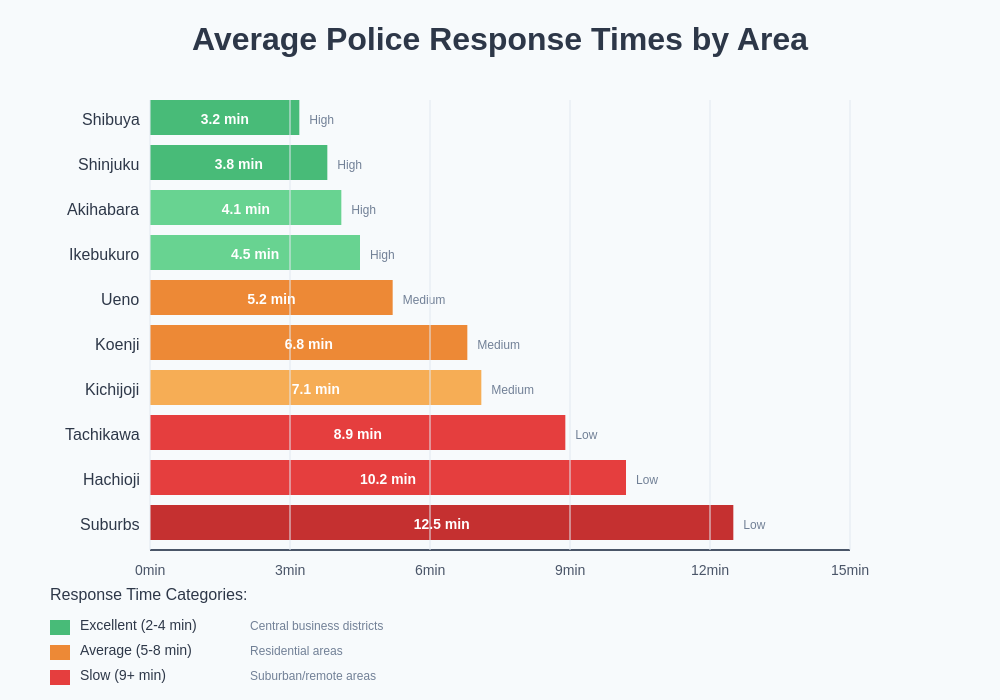
High population density areas experience dramatically different emergency service dynamics compared to suburban neighborhoods, with call volume concentrations creating both advantages and disadvantages for individual response times. Living costs in Tokyo sharehouses explained often correlates with neighborhood density, which directly impacts emergency service demand and availability.
Dense urban areas typically maintain higher police presence due to increased incident frequency, but this advantage can be offset by simultaneous call volume that stretches available resources during peak demand periods. The concentration of entertainment districts, commercial areas, and residential complexes creates complex demand patterns that can overwhelm local emergency services during specific time periods.
Tourist areas and international business districts receive enhanced police attention due to their economic importance and visibility, potentially creating resource imbalances that affect neighboring residential areas where many sharehouses are located. English-speaking sharehouses in Tokyo for foreigners are often situated in these transitional zones between high-priority commercial areas and lower-priority residential districts.
The clustering of universities, language schools, and international businesses creates unique demand patterns that may not align with traditional Japanese residential emergency service models, potentially leaving international residents with different expectations about response times and service quality.
Traffic Patterns and Accessibility Challenges
Tokyo’s notorious traffic congestion patterns create predictable but significant variations in emergency response times throughout different periods of the day, week, and year. Rush hour periods can double or triple response times in congested areas, while late-night periods may offer faster response but with reduced staffing levels and resource availability.
How commute times impact your quality of life extends beyond personal transportation to emergency service accessibility, as areas with poor traffic flow often experience delayed emergency response during critical periods. The interaction between public transportation schedules, commercial delivery patterns, and emergency vehicle routing creates complex accessibility dynamics that vary significantly by location.
Major event scheduling, construction projects, and seasonal celebrations can temporarily but dramatically alter traffic patterns and emergency access routes, creating unpredictable variations in response times that affect routine emergency planning. Areas near major venues, shopping districts, or transportation hubs may experience periodic service disruptions that don’t reflect normal emergency response capabilities.
The interaction between pedestrian traffic, bicycle usage, and vehicle congestion in mixed-use neighborhoods creates unique navigation challenges for emergency vehicles that may not be apparent to residents making housing decisions based on other factors.
Crime Pattern Variations and Resource Prioritization
Different neighborhoods experience distinct crime patterns that influence police resource allocation and response prioritization strategies, creating systematic variations in emergency service quality and response times. Why some residents feel unsafe at night often reflects these underlying security resource disparities rather than actual crime statistics.
Commercial districts with high-value assets and significant economic activity typically receive enhanced police presence and faster response times due to their importance to Tokyo’s overall economic ecosystem. Areas with frequent tourist activity benefit from specialized police units and enhanced response protocols that may not extend to nearby residential neighborhoods where sharehouses are commonly located.
Neighborhoods with established international communities may experience different policing approaches and resource allocation compared to traditional Japanese residential areas, potentially affecting emergency service delivery quality and cultural sensitivity. Language barriers, cultural misunderstandings, and differing expectations about police services can complicate emergency response effectiveness in internationally diverse areas.
The prioritization of certain types of incidents over others means that emergency calls from sharehouse residents may receive different response urgency depending on the nature of the incident, location characteristics, and competing demands for police attention throughout the broader metropolitan area.
Economic Factors and Service Quality Disparities
Neighborhood economic characteristics significantly influence police service quality and response times through both direct resource allocation decisions and indirect factors that affect service delivery efficiency. Cheaper sharehouse options in Tokyo suburbs often correlate with areas that receive lower police service priority and longer response times.
Property tax revenue and local economic activity levels influence municipal resource allocation decisions that affect police station funding, staffing levels, and equipment availability. Wealthier areas generate more tax revenue and political influence that can translate into enhanced emergency service capabilities and faster response times.
The concentration of businesses, financial institutions, and high-value properties in certain areas creates economic incentives for enhanced police protection that may draw resources away from residential neighborhoods with lower economic profiles. This dynamic particularly affects areas with high concentrations of international students and temporary residents who lack political influence.
Infrastructure maintenance quality, including road conditions, street lighting, and building numbering systems, often reflects neighborhood economic status and directly impacts emergency service delivery efficiency. Areas with poor infrastructure may experience delayed response times due to navigation difficulties and accessibility challenges.
Technological Integration and Communication Systems
Modern emergency response systems rely heavily on technological integration that varies significantly in quality and implementation across different neighborhoods and police jurisdictions. GPS systems, communication networks, and dispatch efficiency can create substantial differences in response coordination and arrival times.
How smart home features change daily routines includes security systems that may integrate differently with local emergency services depending on neighborhood infrastructure and police technological capabilities. Advanced security systems may provide faster emergency notification in well-connected areas while offering minimal benefit in neighborhoods with outdated emergency response infrastructure.
Language support capabilities in emergency dispatch systems vary across different areas, potentially affecting response times for international residents who may struggle with Japanese-language emergency communication. Living with Japanese roommates in Tokyo sharehouses can provide language assistance during emergencies, but this dependency highlights service accessibility issues for international residents.
The integration of modern communication technologies with traditional emergency response protocols creates inconsistent service quality across different neighborhoods, with some areas benefiting from cutting-edge response systems while others rely on outdated communication and coordination methods.
Seasonal and Temporal Response Variations
Emergency response times fluctuate significantly throughout different seasons, times of day, and special event periods, creating predictable patterns that residents can anticipate and plan around. Summer festivals, winter weather conditions, and holiday periods all create distinct emergency service demand patterns that affect response capabilities.
Why golden week creates housing market changes reflects broader social patterns that also affect emergency service availability during major holiday periods when staffing levels may be reduced and call volume patterns change dramatically.
Weekend versus weekday response time differences can be substantial, particularly in entertainment districts and areas with high concentrations of bars, restaurants, and nightlife venues. Areas near universities and schools may experience different emergency service demands during academic periods compared to vacation times.
Weather conditions significantly impact emergency response capabilities, with rain, snow, and extreme heat creating transportation challenges and increased call volume that can overwhelm emergency services in certain neighborhoods more than others.
Building Types and Access Considerations
The architectural characteristics of different neighborhoods create substantial variations in emergency service accessibility and response efficiency. Traditional low-rise residential areas offer easier access for emergency vehicles but may lack modern address systems and building identification that facilitate rapid response.
High-rise apartment complexes and modern sharehouse facilities typically provide better address systems and emergency vehicle access but may present challenges related to building navigation, elevator access, and crowd management during emergency situations. How security cameras affect privacy expectations includes emergency service considerations, as building security systems can either facilitate or complicate emergency response depending on their design and integration.
Mixed-use buildings that combine commercial and residential spaces create unique emergency response challenges that require specialized training and equipment, potentially affecting response times in neighborhoods with high concentrations of such developments.
The age and condition of buildings significantly impact emergency service delivery, with older structures potentially lacking modern emergency access features while newer developments may incorporate emergency response considerations into their design and accessibility features.
International Resident Considerations and Cultural Factors
International residents face unique challenges related to emergency service access that may not be immediately apparent when selecting sharehouse neighborhoods. Language barriers, cultural differences in emergency service expectations, and unfamiliarity with Japanese emergency procedures can effectively extend response times even when police arrive quickly.
Japanese sharehouse rules every foreigner should know should include emergency procedures and police interaction protocols that help international residents effectively access emergency services when needed.
Cultural differences in police interaction styles, emergency service protocols, and resident responsibilities can create confusion during emergency situations that delays effective problem resolution even after police arrival. Understanding these cultural factors becomes essential for international residents to effectively utilize emergency services.
The concentration of international residents in certain neighborhoods may strain local police resources that lack language capabilities or cultural training necessary for effective emergency service delivery to diverse communities.
Implications for Sharehouse Selection and Safety Planning
Understanding police response time variations should influence sharehouse selection decisions, personal safety planning, and emergency preparedness strategies for international residents throughout Tokyo. Areas with faster response times may justify higher housing costs when personal safety is a primary concern.
Real stories from Tokyo sharehouse residents often include emergency service experiences that illustrate the practical impact of response time variations on daily life and personal security considerations.
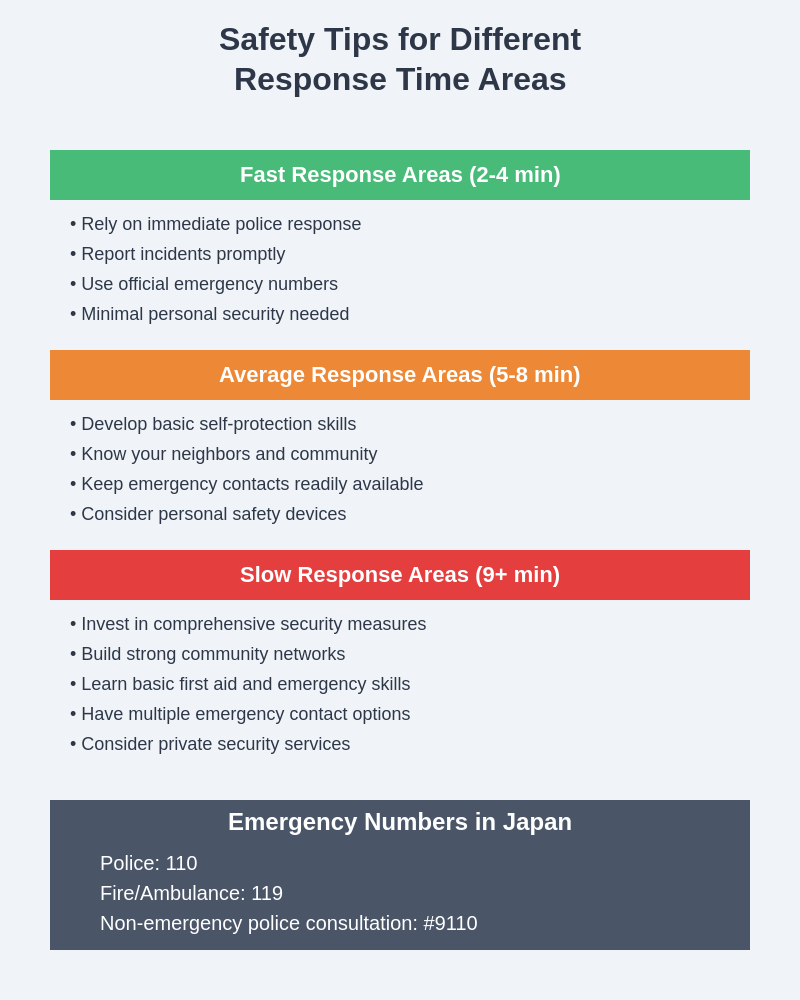
Developing neighborhood-specific emergency plans, building relationships with local police officers, and understanding alternative security resources becomes essential for residents in areas with longer response times or service limitations.
The integration of personal security measures, community safety networks, and emergency service accessibility creates comprehensive security strategies that account for local emergency service capabilities and limitations while maintaining realistic expectations about police response in different neighborhoods.
Effective emergency preparedness requires understanding not just response time statistics but also the quality of service, cultural competency, and resource availability that characterizes police services in specific neighborhoods throughout Tokyo’s diverse metropolitan landscape.
Disclaimer
This article is for informational purposes only and does not constitute professional security or legal advice. Police response times and service quality can vary significantly based on numerous factors and may change over time. Readers should conduct their own research, consult with local authorities, and develop personalized safety plans appropriate for their specific circumstances and neighborhood conditions.