
The stark reality of professional security services pricing creates an impossible financial burden for most sharehouse residents and property managers in Tokyo, forcing communities to rely on basic safety measures that often prove inadequate when genuine security threats emerge. This economic barrier between comprehensive protection and affordable housing represents one of the most frustrating aspects of shared living arrangements, where the desire for safety clashes directly with the practical constraints of budget-conscious communal living.
The disparity between security needs and available resources becomes particularly evident when examining the actual costs involved in professional security implementation versus the typical budgets available within sharehouse communities. Understanding these financial realities helps residents and property managers make informed decisions about security investments while recognizing the limitations imposed by economic constraints that affect nearly every aspect of shared living arrangements.
The Hidden Economics of Professional Security
Professional security services in Tokyo operate under cost structures that fundamentally conflict with the economic principles underlying sharehouse living arrangements. The minimum viable deployment for professional security typically requires investments that exceed the entire monthly rent collected from multiple residents, creating an immediate financial impossibility for most shared living situations.
Monthly monitoring fees alone can range from 50,000 to 150,000 yen per property, before considering installation costs, equipment maintenance, and additional service charges that quickly multiply the total financial commitment. Understanding how much Tokyo sharehouses really cost per month reveals that these security costs would represent 30-50% increases in resident fees, pricing out the very demographics that rely on sharehouses for affordable accommodation.
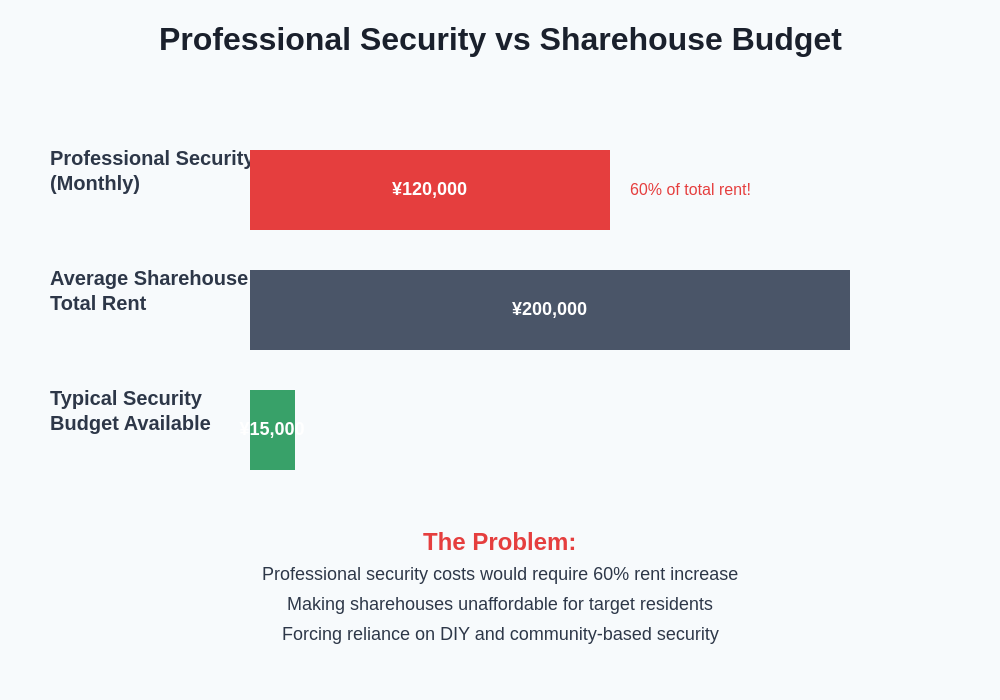
The equipment requirements for comprehensive professional security create additional financial barriers that compound over time. Professional-grade cameras, sensors, alarm systems, and communication devices require substantial initial investments followed by ongoing maintenance contracts that can cost more annually than many sharehouses generate in monthly profit margins.
Insurance requirements and liability coverage associated with professional security services add another layer of expense that many property managers cannot justify within their operational budgets. The legal obligations and professional standards required for security service providers create overhead costs that ultimately get passed to clients at rates that make services inaccessible for residential shared living environments.
Labor Costs and Human Resource Challenges
The human resource component of professional security represents the largest cost factor in service pricing, driven by Japan’s strict employment regulations, training requirements, and liability insurance obligations that security companies must maintain for their personnel. Licensed security guards command salaries that reflect their specialized training and legal responsibilities, creating hourly costs that exceed what most sharehouses can sustain even for limited coverage periods.
24-hour monitoring services require multiple shifts of trained personnel, each requiring competitive compensation packages that include benefits, training costs, and professional development expenses. Why some sharehouses require japanese guarantors demonstrates how legal and administrative complexities increase operational costs across all aspects of sharehouse management, with security services facing particularly stringent regulatory requirements.
The specialization required for modern security work demands ongoing education and certification maintenance that security companies must fund for their employees. These training costs, combined with high employee turnover rates in the security industry, create constant recruitment and development expenses that get incorporated into service pricing structures.
Professional liability coverage for security personnel represents another significant cost factor, as companies must maintain comprehensive insurance policies that protect against potential legal claims arising from security incidents, property damage, or personal injury situations that may occur during security operations.

Technology Infrastructure and Maintenance Expenses
Modern professional security systems rely on sophisticated technology platforms that require substantial initial investments and ongoing maintenance commitments that far exceed the technical budgets available within typical sharehouse operations. The integration of multiple security components including cameras, sensors, communication systems, and monitoring platforms creates complex technical environments that demand specialized expertise for proper installation and ongoing support.
Cloud-based monitoring services and data storage requirements generate monthly recurring costs that scale with the number of cameras, sensors, and monitoring points required for comprehensive coverage. How smart locks change sharehouse security illustrates how even basic security technology improvements can create unexpected ongoing expenses that accumulate significantly over time.
Professional security systems require regular software updates, hardware maintenance, and technical support services that create ongoing financial obligations beyond the initial installation costs. These maintenance contracts often include minimum service levels and response time guarantees that increase pricing structures to account for the technical resources required to meet professional standards.
The redundancy and backup systems required for reliable professional security create additional infrastructure costs including backup power supplies, redundant communication paths, and fail-safe mechanisms that ensure continuous operation even during technical failures or power outages.
Regulatory Compliance and Legal Requirements
Japan’s regulatory framework for professional security services imposes strict compliance requirements that create substantial administrative and operational costs for security companies, ultimately reflected in pricing structures that make services prohibitively expensive for residential applications. Licensed security providers must maintain detailed documentation, reporting systems, and audit trails that require dedicated administrative resources and sophisticated record-keeping systems.
The legal liability exposure associated with professional security services requires comprehensive insurance coverage and legal compliance measures that add significant overhead costs to service delivery. How legal disputes get resolved in sharehouses reveals the complexity of legal frameworks affecting shared living arrangements, with security services facing even more stringent regulatory oversight.
Professional security companies must maintain licenses, certifications, and regulatory compliance across multiple jurisdictions and regulatory bodies, each with specific requirements for personnel qualifications, equipment standards, and operational procedures that create ongoing administrative expenses.
The documentation and reporting requirements for professional security services include incident reporting, maintenance logs, personnel training records, and compliance audits that require dedicated administrative staff and sophisticated record management systems that contribute significantly to operational costs.
Market Positioning and Profit Margins
Professional security companies typically focus on commercial and high-value residential clients who can afford premium pricing structures, creating market positioning strategies that inherently exclude affordable housing segments like sharehouses from their target customer base. The economies of scale required for profitable security operations favor larger installations with higher monthly values, making small residential properties economically unattractive for professional providers.
The profit margins required to sustain professional security operations include overhead costs for business development, marketing, administrative support, and management structures that must be distributed across their client base. How sharehouse rent pricing works in japan demonstrates how cost distribution affects pricing in residential markets, with security services facing similar pressures to maintain profitable operations.
Competitive pressures within the professional security industry drive companies to focus on high-margin clients and premium service offerings that provide better returns on investment than the lower-margin residential market represented by sharehouses and similar communal living arrangements.
The sales and marketing costs associated with acquiring and retaining professional security clients require substantial investments in business development activities that cannot be justified for smaller residential accounts with limited revenue potential and higher service requirements relative to their economic value.
Insurance and Liability Considerations
Professional security services carry significant insurance and liability obligations that create substantial cost burdens ultimately passed to clients through pricing structures that exceed what most sharehouses can reasonably afford within their operational budgets. The comprehensive coverage required for professional security operations includes general liability, professional indemnity, equipment coverage, and cyber liability insurance that collectively represent major ongoing expenses.
The legal responsibility assumed by professional security providers for property protection and incident response creates liability exposure that requires substantial insurance coverage and legal protections that add significant costs to service delivery. How security deposits dont cover actual damages illustrates how financial protection mechanisms often fall short of covering actual costs, with security services facing similar challenges in managing liability exposure.
Workers compensation and employment liability insurance for security personnel create additional cost factors that security companies must incorporate into their pricing structures, as the physical nature of security work and potential exposure to dangerous situations require comprehensive coverage for employee protection.
Professional indemnity insurance protects security companies against claims arising from failures in service delivery, response times, or security breaches that occur despite professional monitoring, creating another layer of insurance costs that must be factored into service pricing.
Alternative Security Approaches and Cost-Effective Solutions
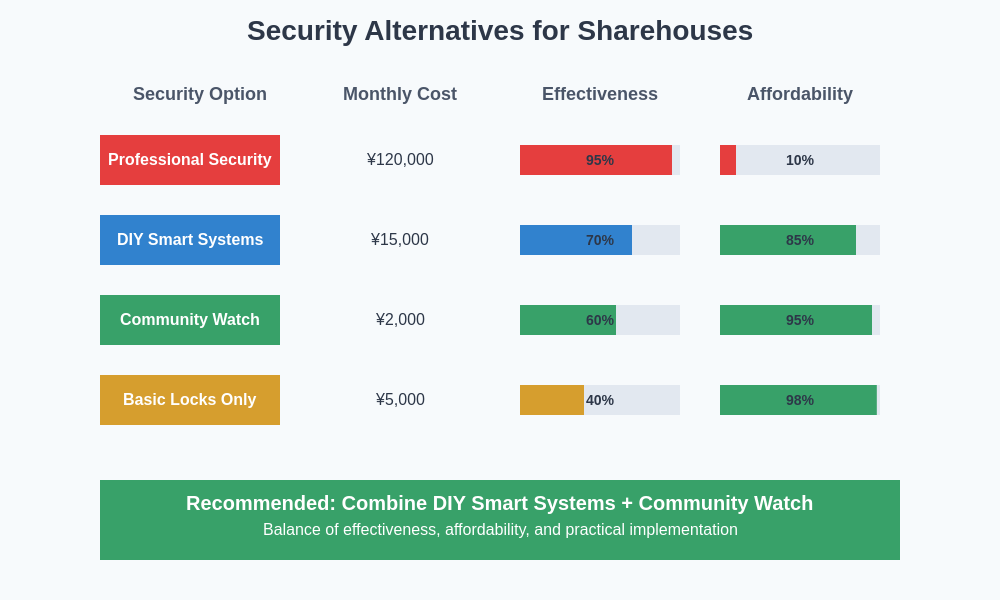
The economic reality of professional security costs has driven innovation in alternative security approaches that provide meaningful protection within budgets accessible to sharehouse communities. DIY security systems, resident-managed monitoring protocols, and community-based safety initiatives offer practical alternatives that balance security needs with financial constraints.
Modern consumer security technology provides increasingly sophisticated capabilities at price points that make comprehensive security coverage achievable for shared living environments. How smart thermostats reduce utility conflicts demonstrates how smart home technology can address practical challenges in shared living, with security applications offering similar benefits at accessible costs.
Community-based security approaches leverage the natural advantages of multiple residents living in close proximity, creating informal monitoring systems and mutual protection networks that provide security benefits without the costs associated with professional services. Making friends through tokyo sharehouse communities shows how strong community relationships contribute to overall safety and security within shared living environments.
Hybrid approaches combining consumer technology with community protocols can provide security coverage that addresses the most common threats while remaining within realistic budget constraints for sharehouse residents and property managers.
The Impact on Sharehouse Selection and Safety
The prohibitive cost of professional security services significantly influences sharehouse selection criteria and safety planning for international residents who must balance security concerns with budget limitations and housing availability. How to find perfect sharehouse tokyo requires consideration of security factors that may not include professional services due to cost constraints.
Many residents must accept higher personal risk levels or invest in individual security measures rather than benefiting from comprehensive property-wide professional protection that would provide better overall security outcomes. This individual burden for security planning creates unequal protection levels within shared living environments and places responsibility on residents who may lack security expertise.
The absence of professional security services can affect property insurance rates, liability exposure, and overall property values, creating long-term financial implications that extend beyond the immediate cost considerations of security service implementation.
Property managers face difficult decisions between maintaining affordable rent levels and investing in security improvements that could price out their target residents while potentially improving safety outcomes and property desirability.
Long-term Market Implications and Future Trends
The ongoing disconnect between professional security costs and sharehouse budgets suggests market opportunities for specialized security providers who could develop service models specifically designed for affordable housing segments. Why sharehouses are better than apartments in tokyo highlights advantages of shared living that could include economies of scale for security services if providers adapted their business models.
Technology advancement may eventually bridge the cost gap through automated monitoring systems, artificial intelligence applications, and reduced hardware costs that make professional-level security accessible at price points compatible with sharehouse budgets.
The growing sharehouse market in Tokyo may eventually reach sufficient scale to attract security providers willing to develop specialized offerings for shared living environments, potentially creating new market segments with appropriately scaled pricing structures.
Regulatory changes or government initiatives supporting affordable housing security could potentially subsidize or incentivize security improvements that make professional services more accessible to sharehouse communities and similar residential arrangements.
Practical Recommendations for Residents and Managers
Given the current economic realities surrounding professional security services, sharehouse residents and property managers must focus on practical security approaches that provide meaningful protection within available budgets. Prioritizing high-impact, low-cost security improvements offers the best return on investment for limited security resources.
Building strong community relationships and communication protocols creates natural security networks that complement technological solutions while fostering the social connections that enhance overall safety and quality of life in shared living environments. How to handle roommate conflicts without moving out demonstrates the importance of communication skills that also contribute to community-based security approaches.
Investing in quality door locks, window security, and basic alarm systems provides foundational security improvements that address the most common threats at costs that remain accessible for most sharehouse budgets and resident contributions.
Regular security assessments and community discussions about safety concerns help identify vulnerabilities and develop collaborative approaches to security improvement that leverage the collective resources and awareness of all residents within the shared living environment.
The economic barrier created by professional security service costs represents a significant challenge for sharehouse communities seeking comprehensive protection while maintaining affordability for residents who choose shared living specifically for its cost advantages. Understanding these economic realities enables informed decision-making about security investments and alternative approaches that balance safety needs with financial constraints inherent in affordable communal living arrangements.
Disclaimer
This article is for informational purposes only and does not constitute professional security or financial advice. Security needs vary significantly based on location, property characteristics, and individual circumstances. Readers should conduct their own research and consult with relevant professionals when making security decisions. The effectiveness of alternative security approaches may vary, and residents should carefully evaluate their specific security requirements and risk tolerance when choosing protection methods.