The dream of working remotely from a Tokyo sharehouse quickly transforms into a nightmare of constant interruptions, technical failures, and professional embarrassment as the realities of shared living collide with the demanding requirements of modern remote work environments. International residents who arrive with optimistic expectations about combining affordable accommodation with flexible work arrangements discover that sharehouses present fundamental incompatibilities with professional productivity that no amount of adaptation or compromise can overcome.
The systematic challenges that plague remote work attempts in sharehouse environments extend far beyond simple inconvenience to encompass career-threatening professional reputation damage, client relationship destruction, and income loss that can jeopardize residents’ ability to maintain their Tokyo living arrangements. Understanding why these failures occur requires examining the fundamental misalignment between sharehouse design principles and remote work requirements that create impossible working conditions for residents who depend on professional home office capabilities.
Internet Infrastructure Limitations and Reliability Issues
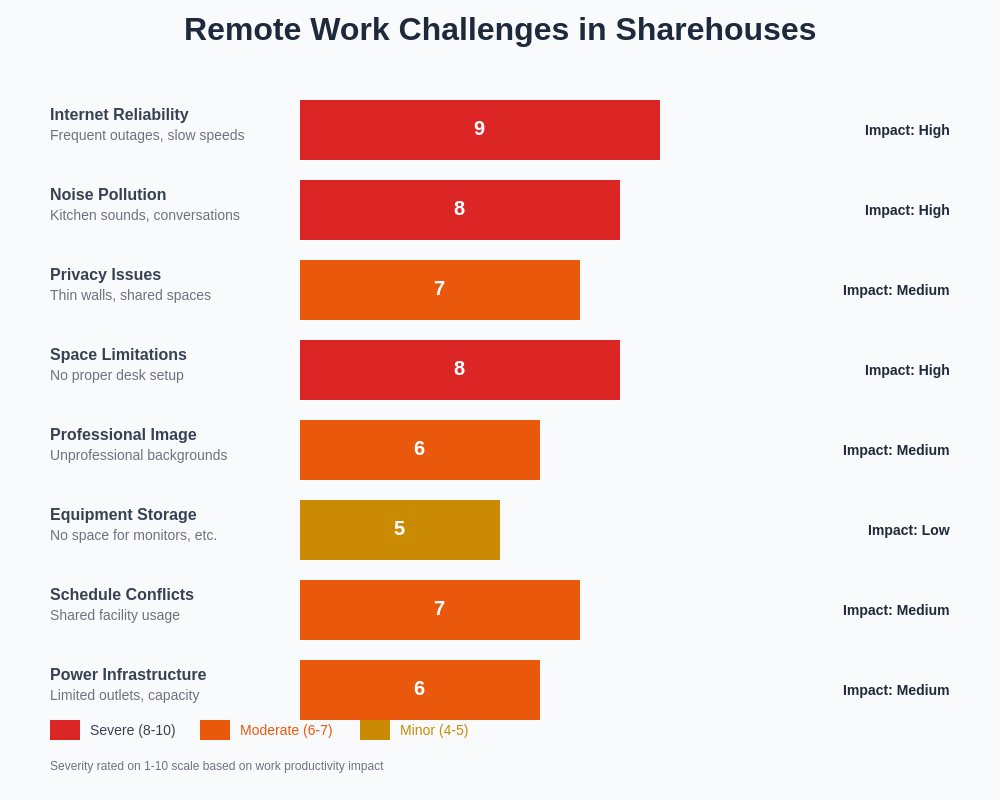
The shared internet infrastructure in Tokyo sharehouses consistently fails to meet the bandwidth, stability, and reliability requirements of professional remote work, particularly during peak usage periods when multiple residents simultaneously demand high-speed connections for work, entertainment, and communication needs. How internet data limits affect your monthly usage reveals additional constraints that compound basic connectivity problems, creating impossible working conditions for residents who require consistent high-speed internet access throughout business hours.
Bandwidth throttling during peak usage periods effectively eliminates remote work possibilities for residents whose professional responsibilities require video conferencing, large file transfers, or real-time collaborative applications that demand consistent high-speed connectivity. The shared nature of sharehouse internet connections means that residents cannot control or predict their available bandwidth, making it impossible to schedule important calls, meetings, or project deadlines that depend on reliable internet performance.
Network security vulnerabilities in shared internet environments create professional liability issues for remote workers handling sensitive client data, proprietary information, or regulated financial transactions that require secure network environments unavailable in typical sharehouse settings. The inability to implement proper network security measures exposes remote workers to professional negligence claims and regulatory violations that can destroy careers and create legal liabilities extending far beyond housing concerns.
Service interruption frequency in budget-focused sharehouses often exceeds acceptable professional standards, creating situations where remote workers face regular connectivity losses during critical business periods that damage client relationships and threaten employment stability. The lack of redundant internet connections or backup solutions means that service interruptions create complete work stoppages that professional remote work arrangements cannot tolerate.
Noise Pollution and Acoustic Privacy Challenges
The constant noise generated by multiple residents living in close proximity creates impossible working conditions for remote workers who require quiet environments for professional calls, concentrated work sessions, and client interactions that demand professional acoustic standards unavailable in typical sharehouse environments. How noise complaints happen even in quiet sharehouses demonstrates the pervasive nature of noise issues that make professional work impossible regardless of house rules or resident cooperation efforts.
Kitchen activities throughout the day generate cooking sounds, appliance noise, and social conversations that penetrate thin walls and inadequate sound insulation, creating constant background noise that interferes with professional calls and concentrated work requiring mental focus. The unpredictable timing of kitchen usage means that remote workers cannot schedule quiet periods for important professional activities, making it impossible to maintain consistent work schedules or guarantee professional call quality.
Common area socializing creates conversation noise, television sounds, and group activities that extend throughout evening and weekend periods when many remote workers need to accommodate international clients or complete project work outside standard business hours. The inability to control noise levels in shared living spaces makes it impossible for remote workers to extend their professional availability beyond daytime periods when household noise levels might be manageable.
Construction and maintenance activities in older sharehouse buildings generate power tool noise, drilling sounds, and worker conversations that can interrupt professional calls without warning, creating embarrassing professional situations that damage client relationships and project credibility. The inability to predict or control maintenance scheduling means that remote workers cannot guarantee uninterrupted professional time periods for critical business activities.
Space Constraints and Professional Environment Requirements
Private room sizes in typical Tokyo sharehouses cannot accommodate the furniture, equipment, and spatial arrangements required for effective remote work setups, forcing residents to attempt professional work in cramped conditions that negatively impact productivity, health, and professional presentation during video calls and client interactions. How limited storage forces you to live minimally explains space restrictions that make proper office equipment storage and setup impossible in most sharehouse rooms.
Ergonomic workspace requirements for healthy long-term computer use cannot be met in small sharehouse rooms that lack proper desk space, chair storage, and equipment positioning necessary to prevent repetitive stress injuries and maintain professional productivity standards throughout extended work periods. The health implications of poor workspace ergonomics compound over time, creating physical problems that affect work performance and require expensive medical treatment.
Professional background requirements for video calls and client presentations cannot be achieved in cramped personal rooms with beds, personal belongings, and inadequate lighting visible during professional interactions that damage credibility and create unprofessional impressions with clients and colleagues. The inability to create professional visual presentations during video calls limits career advancement opportunities and client relationship development.
Equipment storage challenges prevent remote workers from maintaining the multiple monitors, specialized hardware, and professional accessories required for efficient work performance, forcing them to compromise productivity and professional capabilities to fit within space constraints that prioritize accommodation over professional functionality. The cost of external storage solutions for professional equipment often exceeds the affordability benefits that originally motivated sharehouse living choices.
Privacy and Confidentiality Concerns
Professional confidentiality requirements for client calls, sensitive projects, and proprietary information cannot be maintained in shared living environments where thin walls, common areas, and multiple residents create impossible conditions for securing confidential professional communications and protecting sensitive client data from unauthorized access or inadvertent disclosure. How personal information gets compromised reveals security vulnerabilities that extend to professional data protection requirements.
Client privacy expectations for professional consultations, financial discussions, and strategic planning conversations cannot be met in sharehouse environments where other residents can overhear sensitive business communications that require complete privacy protection for legal, ethical, and professional relationship maintenance. The inability to guarantee conversation privacy eliminates many types of professional remote work that depend on confidential client interactions.
Document security requirements for professional files, client records, and proprietary project materials cannot be maintained in shared living spaces where common area usage, cleaning access, and multiple key holders create security vulnerabilities that expose sensitive professional materials to unauthorized access and potential misuse. Professional liability insurance may not cover security breaches that occur in inadequate security environments.
Regulatory compliance requirements for industries handling regulated data, financial information, or protected client records cannot be maintained in shared internet environments and inadequate physical security conditions that violate professional standards and regulatory requirements for data protection and privacy maintenance. The legal implications of regulatory violations can destroy professional careers and create personal liability extending far beyond housing concerns.
Schedule Conflicts and Availability Challenges
Shared facility usage conflicts prevent remote workers from accessing kitchen facilities, common areas, and utility services during professional work periods when other residents require the same spaces for personal activities, creating impossible scheduling conflicts that interfere with professional productivity and work-life balance maintenance. How meal timing affects kitchen access demonstrates scheduling conflicts that extend beyond simple inconvenience to professional productivity impacts.
International client scheduling requirements that span multiple time zones often require remote workers to maintain availability during non-standard hours when sharehouse activities reach peak levels, creating direct conflicts between professional requirements and shared living realities that make international remote work impossible to sustain effectively. The inability to control household activity timing prevents remote workers from accommodating global client needs.
Emergency work requirements that demand immediate professional availability cannot be accommodated in sharehouse environments where residents cannot guarantee immediate access to quiet spaces, reliable internet, and uninterrupted work conditions necessary for responding to urgent professional demands. The unpredictability of sharehouse environments makes emergency professional response impossible to guarantee.
Meeting scheduling limitations prevent remote workers from committing to specific professional appointment times when household activities, maintenance schedules, and other residents’ needs can create unpredictable interruptions that damage professional credibility and client relationship maintenance. The inability to guarantee specific appointment availability limits professional opportunities and client service capabilities.
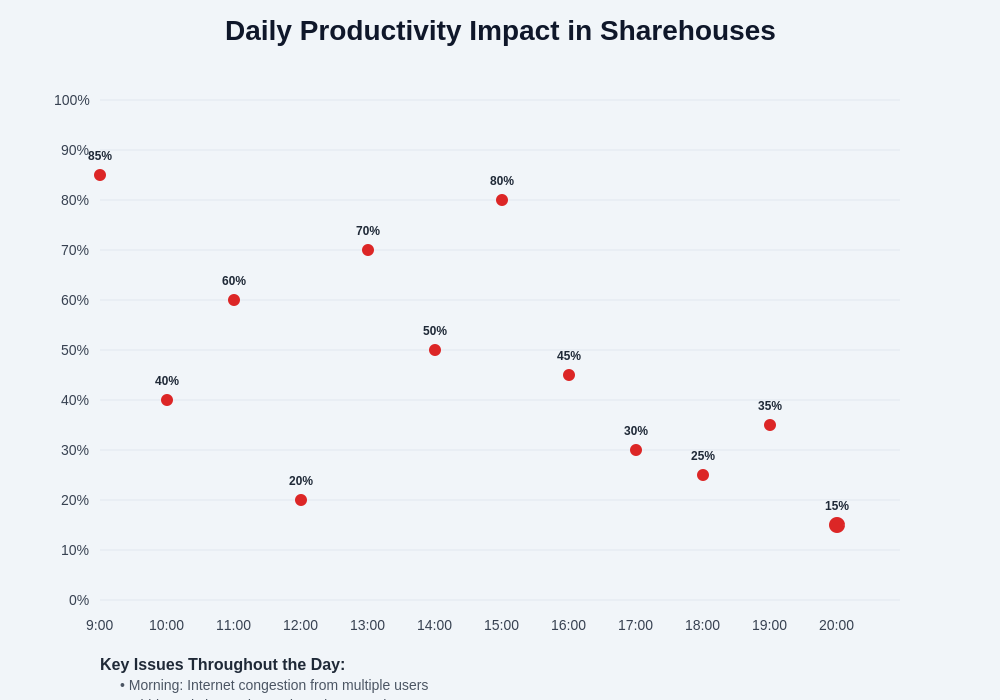
This productivity timeline reveals the harsh reality of attempting remote work in sharehouses, where professional effectiveness plummets during peak household activity periods, making consistent work performance virtually impossible.
Technical Equipment and Power Infrastructure Issues
Electrical capacity limitations in older sharehouse buildings cannot support the power requirements of professional remote work setups that include multiple monitors, high-performance computers, specialized equipment, and backup power systems necessary for maintaining professional productivity and preventing work disruption during power fluctuations common in aging building infrastructure. How smart home features change daily routines reveals technical infrastructure limitations that affect professional equipment operation.
Power outlet availability and positioning in small sharehouse rooms cannot accommodate the electrical requirements of professional work setups, forcing remote workers to use extension cords, power strips, and inadequate electrical arrangements that create safety hazards and equipment damage risks while failing to provide stable power for sensitive professional equipment. The electrical infrastructure in most sharehouses prioritizes basic residential needs over professional equipment requirements.
Heating and cooling systems in shared buildings cannot provide the climate control precision required for optimal computer performance and professional comfort during extended work periods, creating equipment overheating risks and uncomfortable working conditions that reduce productivity and damage expensive professional equipment over time. The inability to control individual room climate affects both equipment performance and worker productivity.
Lighting quality in sharehouse rooms typically proves inadequate for professional video calls, detailed work tasks, and extended computer use, creating eye strain, poor professional presentation, and health issues that compound over time while making quality professional work impossible to maintain consistently. The cost of upgrading lighting systems often exceeds budget constraints while requiring landlord approval that may not be granted.
Professional Image and Career Impact
Client perception damage from poor audio quality, background noise, and unprofessional environment visibility during video calls creates lasting negative impressions that affect client relationships, project opportunities, and professional reputation development in ways that compound over time and limit career advancement possibilities. The inability to control professional presentation quality during client interactions systematically damages career prospects and business development opportunities.
Colleague relationship impacts from missed meetings, interrupted calls, and inconsistent availability create professional reliability issues that affect team dynamics, project participation, and career advancement opportunities within organizations that depend on consistent professional availability and reliable communication capabilities. The reputation damage from remote work failures extends beyond individual projects to overall professional credibility.
Industry networking limitations prevent remote workers from participating in professional video conferences, industry events, and career development opportunities that require high-quality audio-visual presentation and uninterrupted participation impossible to guarantee from sharehouse environments. The isolation from professional networking opportunities limits career growth and industry engagement essential for professional development.
Employment stability risks increase when remote work performance suffers due to sharehouse limitations, creating situations where professional productivity decline, client dissatisfaction, and missed opportunities can lead to job loss or career setbacks that eliminate the income necessary to maintain Tokyo living arrangements. The career risks associated with inadequate remote work environments can create downward spirals that affect overall life stability.
Alternative Solutions and Workspace Options
Co-working space requirements for professional remote work create additional monthly expenses that can double housing-related costs while requiring daily commuting that eliminates many of the convenience and cost benefits that originally motivated sharehouse living choices, making the overall living arrangement financially inefficient compared to traditional apartment living with adequate home office capabilities. How commute times impact work performance explains additional productivity impacts of external workspace dependencies.
Café work limitations include unreliable internet, noise issues, seating availability problems, and purchase pressure that make sustained professional work impossible while creating additional daily expenses and scheduling complications that interfere with professional productivity and client service capabilities. The limitations of public workspace options cannot replace adequate home office functionality for serious remote work requirements.
Library workspace restrictions regarding computer use, phone calls, and equipment setup prevent most types of professional remote work while limiting availability during peak professional hours and restricting access during holidays and maintenance periods that coincide with critical business periods. The institutional limitations of public libraries cannot accommodate professional remote work requirements.
Hotel workspace costs for occasional professional needs create expensive temporary solutions that become financially prohibitive for regular remote work requirements while failing to provide the consistent, reliable professional environment necessary for sustained remote work success and career development. The expense and inconvenience of temporary professional workspace solutions highlight the fundamental incompatibility between sharehouse living and remote work requirements.
Financial Impact and Cost-Benefit Analysis
Additional workspace costs required to compensate for sharehouse inadequacies often exceed the savings achieved through shared living arrangements, creating situations where residents pay more overall for inferior professional capabilities compared to traditional apartment living that includes adequate home office space and professional work infrastructure. How to calculate your true living costs demonstrates hidden costs that eliminate apparent affordability benefits.
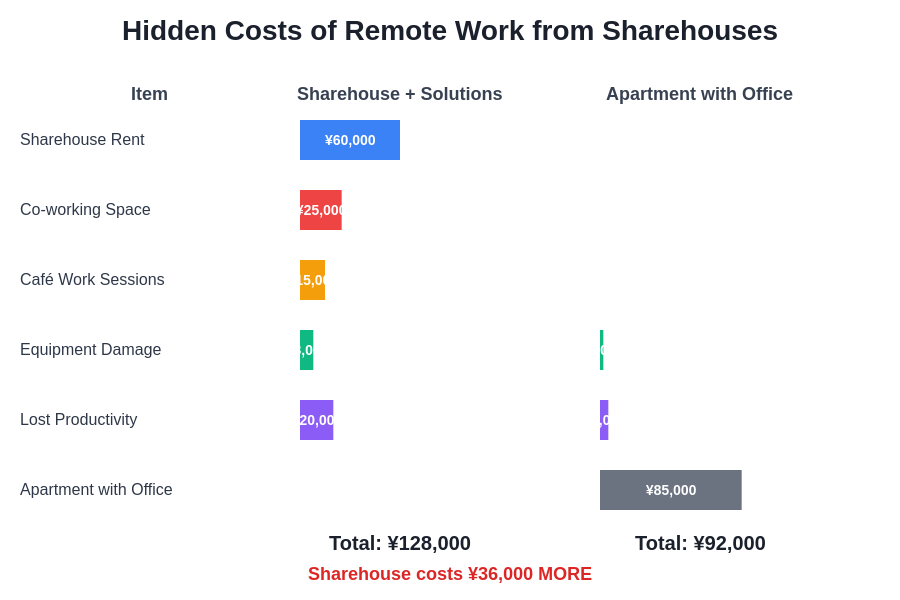
Lost income opportunities from missed client calls, project delays, and professional limitation impacts can significantly exceed any housing cost savings achieved through sharehouse living, creating negative financial outcomes that make sharehouse living economically counterproductive for professionals who depend on remote work income. The opportunity costs of inadequate professional infrastructure compound over time and affect long-term earning potential.
Equipment damage costs from inadequate electrical infrastructure, climate control problems, and security vulnerabilities can result in expensive professional equipment replacement requirements that eliminate sharehouse affordability benefits while creating disruptions to professional productivity that affect income generation capabilities. The total cost of ownership for professional equipment increases significantly in inadequate infrastructure environments.
Career advancement limitations from poor professional presentation, missed opportunities, and inadequate professional capabilities create long-term financial impacts that extend far beyond immediate housing costs to affect lifetime earning potential and professional development opportunities. The career costs of inadequate professional infrastructure cannot be calculated in simple monthly budget comparisons but affect overall financial success and professional achievement.
The fundamental incompatibility between sharehouse living conditions and professional remote work requirements creates impossible choices for international residents who discover that combining affordable accommodation with serious remote work aspirations requires compromises that ultimately prove financially and professionally counterproductive. Understanding these limitations before committing to sharehouse arrangements enables better housing decisions that align with professional goals and career development requirements rather than creating obstacles to professional success and financial stability in Tokyo’s competitive market environment.
Disclaimer
This article is for informational purposes only and does not constitute professional career or financial advice. Remote work requirements and sharehouse conditions vary significantly based on specific properties, work types, and individual circumstances. Readers should carefully evaluate their professional needs and housing requirements before making accommodation decisions. The challenges described may not apply to all sharehouses or remote work situations in Tokyo.