The phenomenon of bargain hoarding among sharehouse residents represents one of the most common yet misunderstood behaviors in shared living environments throughout Tokyo and Japan. This compulsive accumulation of discounted items creates complex dynamics that affect not only individual residents but entire house communities, leading to storage conflicts, relationship tensions, and fundamental questions about consumption patterns in constrained living spaces.
Understanding the psychological drivers behind bargain hoarding reveals deeper insights into how financial stress, cultural adaptation, and social isolation manifest in shared living environments. The behavior transcends simple financial motivation, encompassing emotional security needs, cultural identity preservation, and complex social dynamics that emerge when individuals from diverse backgrounds navigate shared resources and limited personal space.
The Psychology Behind Bargain Accumulation
The compulsive acquisition of discounted items in sharehouse settings stems from multiple psychological factors that intersect in unique ways within shared living environments. Financial insecurity represents the most obvious driver, particularly among international residents who face uncertain income streams, fluctuating exchange rates, and limited access to traditional financial support systems available to local residents.
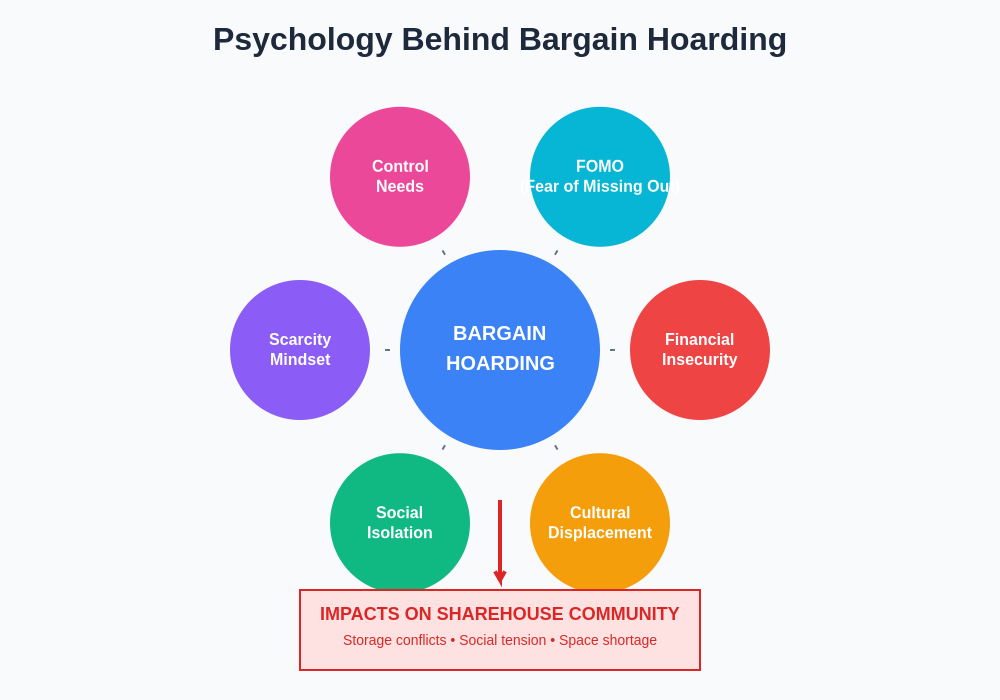
The scarcity mindset that develops from living in expensive cities like Tokyo often triggers hoarding behaviors as residents attempt to create personal security through material accumulation. Living costs in Tokyo sharehouses explained demonstrates how financial pressures can influence resident behavior patterns, creating psychological responses that prioritize acquisition over practical utility.
Cultural displacement adds another layer of complexity to bargain hoarding behaviors, as residents often attempt to recreate familiar consumption patterns from their home countries while adapting to Japanese retail environments. The abundance of discount stores, seasonal sales, and unique promotional systems in Japan can overwhelm newcomers who lack established shopping routines and decision-making frameworks for evaluating necessity versus opportunity.
Social isolation within sharehouse communities can amplify hoarding tendencies as residents seek comfort and control through material acquisition when interpersonal relationships remain superficial or stressful. The act of finding and purchasing bargains provides temporary emotional satisfaction and a sense of accomplishment that may be lacking in other aspects of shared living experiences.
Storage Limitations and Space Conflicts
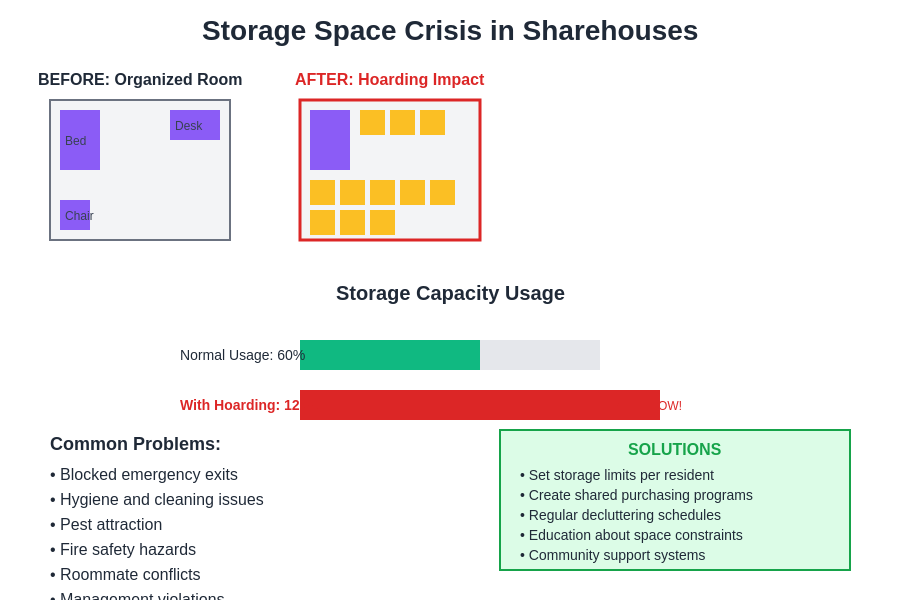
The inherent storage constraints in Tokyo sharehouses create immediate practical problems when residents accumulate excessive quantities of discounted items. Personal room sizes typically range from six to twelve square meters, providing minimal space for essential belongings, let alone additional storage for bulk purchases and speculative acquisitions that may never be used.
Common area storage becomes contested territory when multiple residents begin accumulating bargain purchases that exceed personal storage capacity. Japanese sharehouse rules every foreigner should know highlights how storage violations often become sources of conflict that escalate beyond simple space management issues.
The vertical living culture in Japan encourages efficient space utilization, but bargain hoarders often struggle to implement effective organization systems that accommodate both daily necessities and accumulated discount purchases. This leads to cluttered living spaces that affect not only personal comfort but also house cleanliness standards and emergency evacuation procedures.
Shared storage areas such as kitchen pantries, bathroom cabinets, and entry areas become overwhelmed when residents treat these spaces as extensions of personal storage, creating accessibility problems and hygiene concerns that affect entire house communities. The gradual encroachment of personal items into shared spaces often occurs incrementally, making it difficult to address until problems become severe.
Financial Rationalization and Budget Distortion
Bargain hoarding often develops from well-intentioned attempts to reduce living expenses through strategic purchasing, but these behaviors frequently result in increased overall spending as residents lose track of actual consumption patterns and storage capacity limitations. The psychological satisfaction of securing discounted prices can override practical considerations about necessity, storage requirements, and realistic usage timelines.
How to budget realistically for sharehouse living emphasizes the importance of distinguishing between actual savings and perceived savings, particularly when storage costs, opportunity costs, and relationship maintenance costs are factored into purchasing decisions.
The accumulation of discount purchases often creates false economies where residents spend money on items they don’t immediately need while potentially lacking funds for essential expenses or emergency situations. This distorted spending pattern can affect rent payment stability, utility bill contributions, and participation in house activities that require financial contributions.
Bulk purchasing behaviors that make sense in larger living situations become problematic in sharehouse environments where storage space, consumption patterns, and lifestyle stability differ significantly from traditional household arrangements. Residents may continue purchasing habits developed in different living situations without adapting to current spatial and social constraints.
Cultural Differences in Consumption Patterns
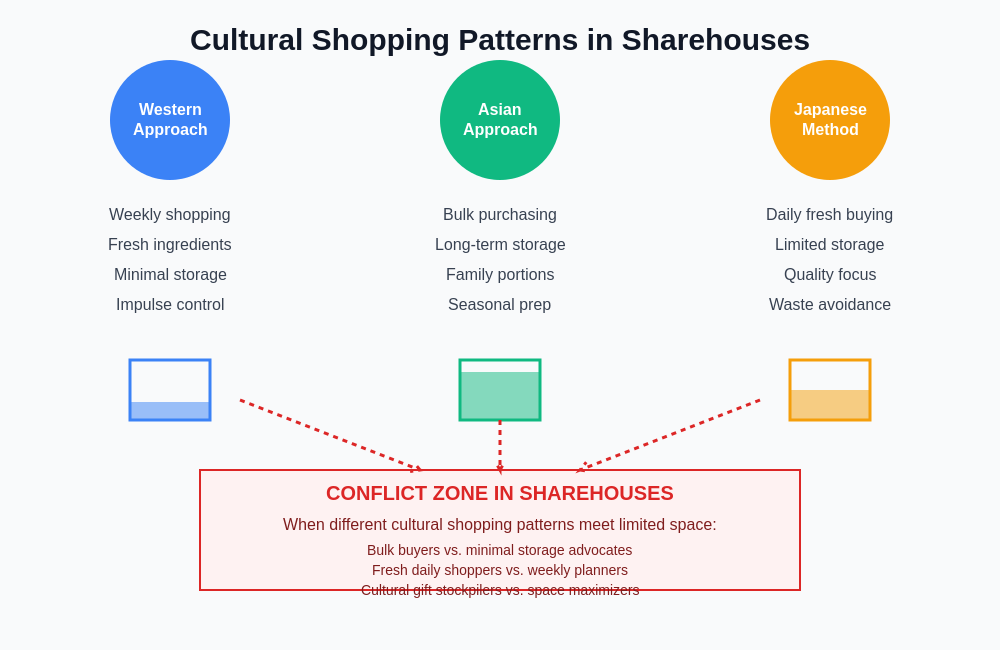
International residents bring diverse consumption philosophies and shopping behaviors to sharehouse environments, creating situations where bargain hoarding reflects cultural adaptation challenges rather than simple financial or psychological issues. Some cultures emphasize bulk purchasing and long-term storage as prudent household management, while others prioritize minimal possession and frequent shopping for immediate needs.
Living with Japanese roommates in Tokyo sharehouses explores how different cultural approaches to consumption and storage can create misunderstandings and conflicts when residents don’t recognize or respect varying cultural norms around material accumulation.
The Japanese retail environment, with its emphasis on seasonal products, limited-time offers, and frequent promotional campaigns, can trigger acquisition behaviors in residents who come from cultures with more stable pricing and product availability. This unfamiliar retail landscape can cause residents to over-purchase when familiar items become available at perceived bargain prices.
Gift-giving cultures may drive residents to accumulate discounted items for future gift-giving occasions, but storage limitations and uncertain social relationships in sharehouses make this strategy problematic. Residents may hoard items with good intentions that become burdensome when social situations don’t develop as anticipated.
Social Dynamics and Relationship Impact
Bargain hoarding behaviors significantly impact house social dynamics, creating hierarchies and tensions based on resource access, space utilization, and perceived fairness in shared living arrangements. Residents who accumulate excessive discount purchases may be viewed as selfish or inconsiderate by housemates who struggle to find adequate storage for essential items.
The visibility of bargain hoarding creates social pressure and comparison behaviors that can influence other residents to either adopt similar accumulation patterns or develop resentment toward perceived unfairness in resource distribution. This social contagion effect can escalate storage problems and create house-wide conflicts over space allocation and usage policies.
Making friends through Tokyo sharehouse communities demonstrates how material behaviors affect relationship development and community cohesion within shared living environments, showing that consumption patterns can either facilitate or hinder social integration.
Generosity expectations around accumulated bargain purchases create complex social negotiations where residents must balance personal security needs with community sharing norms. Hoarders may feel obligated to share their bargain finds while simultaneously wanting to maintain their personal stockpiles, creating internal conflicts and inconsistent social behaviors.
Economic Pressures and Survival Strategies
The high cost of living in Tokyo creates legitimate economic pressures that drive residents toward bargain-seeking behaviors as survival strategies, particularly for international residents who face additional expenses related to visa maintenance, currency exchange, and limited access to local financial services and support networks.
How much Tokyo sharehouses really cost per month reveals the true financial pressures that residents face, explaining why discount acquisition behaviors develop as coping mechanisms for economic uncertainty and limited disposable income.
Employment instability, particularly common among international residents working in temporary or seasonal positions, creates financial anxiety that manifests in hoarding behaviors designed to create personal security through material accumulation. Residents may purchase discounted non-perishable items as insurance against future financial difficulties.
The psychological comfort provided by having stocked supplies can reduce daily stress levels for residents who worry about job security, visa renewal, or unexpected expenses. This emotional benefit may justify storage inconvenience and social friction from the individual’s perspective, even when these behaviors negatively affect house community dynamics.
Seasonal and Promotional Shopping Patterns
Japan’s distinct retail calendar, with its emphasis on seasonal products, year-end sales, and limited-time promotional events, creates purchasing pressure that can trigger excessive acquisition behaviors among residents who fear missing opportunities for significant savings on items they may need throughout the year.
The psychological pressure created by limited-time offers and seasonal availability can override rational decision-making processes, leading residents to purchase items they don’t immediately need simply because favorable pricing may not be available again for extended periods. This fear-driven purchasing often results in accumulation of items that expire or become irrelevant before they’re used.
End-of-season clearance sales on clothing, household items, and seasonal foods create particularly strong temptations for bargain accumulation, as residents attempt to prepare for future seasonal needs at current discount prices. However, storage limitations and changing personal circumstances often make these forward-thinking purchases impractical in sharehouse environments.
Impact on House Management and Operations
Excessive bargain accumulation by residents creates operational challenges for sharehouse management companies and resident communities that must balance individual freedoms with collective living standards and safety requirements. Storage violations and space conflicts require intervention resources that could be directed toward improving house amenities and services.
Real stories from Tokyo sharehouse residents includes accounts of how hoarding behaviors affect house operations and create management challenges that impact all residents through policy changes and increased oversight measures.
Fire safety and emergency evacuation concerns arise when residents accumulate items that block emergency exits, overload electrical systems, or create fire hazards through improper storage of flammable materials. These safety issues require management intervention and may result in policy changes that affect all residents.
Pest attraction and hygiene problems can develop when accumulated items include food products or create hiding places for insects and rodents. These problems affect entire houses and require expensive professional interventions that may be charged back to residents through increased fees or deposit deductions.
Psychological Intervention and Behavior Modification
Addressing bargain hoarding behaviors requires understanding the underlying psychological needs that drive these behaviors rather than simply implementing stricter storage policies or punitive measures that may increase resident stress and defensive responses without solving the fundamental issues.
Educational approaches that help residents understand the true costs of bargain hoarding, including storage opportunity costs, social relationship impacts, and stress-related consequences, can be more effective than restrictive policies that treat symptoms rather than causes of excessive accumulation behaviors.
How to handle roommate conflicts without moving out provides strategies for addressing behavioral conflicts through communication and compromise rather than confrontation, which can be particularly important when dealing with psychologically-driven behaviors like bargain hoarding.
Support systems that address underlying anxiety, financial stress, and social isolation may reduce the emotional drivers behind bargain hoarding more effectively than direct behavioral restrictions. Creating opportunities for residents to feel secure and socially connected can reduce the need for material accumulation as psychological comfort.
Prevention Strategies and Community Solutions
Proactive approaches to preventing bargain hoarding include establishing clear storage guidelines, creating shared purchasing programs that allow residents to benefit from bulk buying without individual accumulation, and developing house cultures that emphasize sharing and community resource management.
House orientation programs that educate new residents about storage limitations, shopping strategies appropriate for sharehouse living, and community expectations around material accumulation can prevent hoarding behaviors from developing rather than trying to address them after problems emerge.
Best Tokyo neighborhoods for sharehouse living considers proximity to shopping resources as a factor in location selection, recognizing that easy access to stores can reduce the psychological pressure to stockpile items when residents know they can easily purchase necessities as needed.
Group purchasing initiatives that allow residents to share bulk buying benefits while distributing storage responsibilities can satisfy the economic motivations behind bargain hoarding while preventing individual accumulation problems. These collaborative approaches can strengthen community bonds while addressing practical economic needs.
The phenomenon of bargain hoarding in sharehouse environments reflects complex interactions between individual psychology, cultural adaptation, economic pressures, and social dynamics that require nuanced understanding and multifaceted intervention strategies. Successful management of these behaviors benefits from recognizing the legitimate needs underlying hoarding tendencies while developing community solutions that address both individual security concerns and collective living requirements.
Effective approaches emphasize education, support, and collaborative problem-solving rather than restrictive policies that may increase stress and defensive behaviors without addressing the root causes of excessive accumulation. By understanding the psychological and practical drivers behind bargain hoarding, sharehouse communities can develop more supportive and sustainable living environments that accommodate diverse resident needs while maintaining functional shared spaces and positive social dynamics.
Disclaimer
This article is for informational purposes only and does not constitute professional psychological or financial advice. Hoarding behaviors can vary significantly in severity and underlying causes. Residents experiencing persistent accumulation behaviors that interfere with daily functioning or relationships should consider consulting with mental health professionals. The information presented reflects general observations about sharehouse living and may not apply to all situations or cultural contexts.