The discovery of unexpected cleaning fees has become one of the most frustrating experiences for international residents living in Tokyo sharehouses, often appearing as unwelcome surprises during move-out procedures when tenants are least prepared to handle additional financial burdens. These charges, which can range from modest amounts to substantial sums exceeding monthly rent payments, represent a complex intersection of business practices, cultural expectations, and legal gray areas that many residents fail to understand until it directly impacts their financial situation.
Understanding the underlying mechanisms behind these charges requires examining the economic incentives, operational challenges, and regulatory environment that shape how sharehouse operators manage cleaning responsibilities and cost allocation. The prevalence of hidden cleaning fees reflects broader issues within Tokyo’s rental market, where information asymmetries and cultural barriers often disadvantage international residents who lack comprehensive knowledge of local business practices and legal protections.
The Economics Behind Cleaning Fee Structures
Sharehouse operators face significant operational costs related to maintaining cleanliness standards that meet diverse resident expectations while managing properties with high turnover rates and varying levels of individual responsibility among tenants. Understanding utility bills in Japanese sharehouses provides context for how operators structure various fees and charges that residents encounter throughout their tenancy periods.
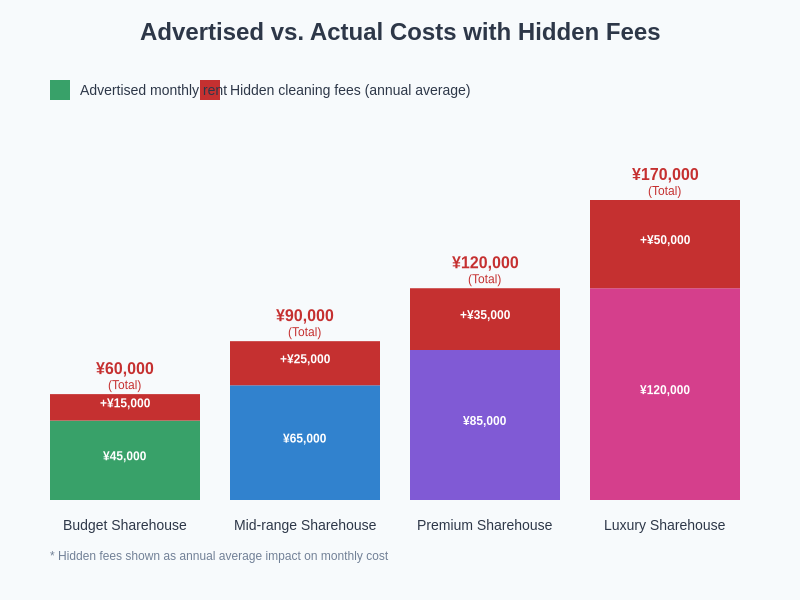
The financial pressures of property management create strong incentives for operators to externalize cleaning costs through fees rather than incorporating these expenses into base rent structures that might make their properties less competitive in the crowded Tokyo market. This approach allows operators to advertise lower monthly rates while recovering actual operational costs through charges that many prospective residents fail to factor into their total living expense calculations.
Market competition intensifies these dynamics, as operators compete primarily on advertised monthly rent amounts rather than total cost of occupancy, creating systematic incentives to minimize visible costs while maximizing recoverable charges through various fee structures. How much Tokyo sharehouses really cost per month explores how these hidden costs contribute to significant differences between advertised prices and actual living expenses.
Common Types of Hidden Cleaning Charges
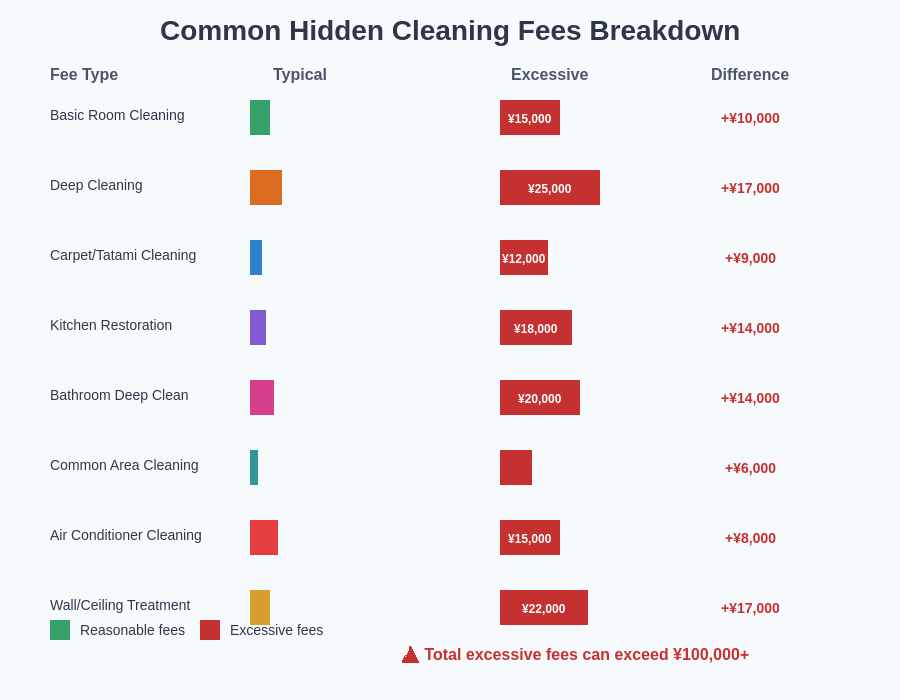
The variety of cleaning-related charges that can appear in sharehouse agreements reflects the creative approaches operators use to allocate maintenance costs while maintaining competitive base pricing structures. Standard cleaning fees typically cover basic room cleaning between tenants, but operators frequently introduce additional charges for specialized cleaning services, deep cleaning procedures, and restoration of common areas to baseline conditions.
Monthly maintenance fees often include cleaning components that residents may not immediately recognize as separate charges, particularly when these fees are bundled with utilities, internet access, and other services under generic maintenance categories. Living costs in Tokyo sharehouses explained breaks down how these bundled fees contribute to overall housing expenses in ways that are not immediately apparent to new residents.
Move-out cleaning charges represent the most controversial category, as they can include everything from basic room cleaning to comprehensive restoration work that extends far beyond normal wear and tear expectations. These charges often surprise departing residents who assumed that their security deposits would cover any necessary cleaning costs, leading to disputes about what constitutes reasonable cleaning requirements versus excessive charges for normal occupancy impacts.
Specialized cleaning fees may apply to specific situations such as pest treatment, mold remediation, or odor elimination that operators attribute to individual resident behavior rather than general property maintenance responsibilities. The subjective nature of these assessments creates opportunities for operators to impose charges that residents may find difficult to dispute effectively.
Legal and Contractual Frameworks
The legal environment surrounding cleaning fees in Japanese rental agreements creates significant advantages for property operators while providing limited protection for tenants who may face unexpected charges during their residency or move-out periods. How to spot financial red flags in sharehouse contracts offers guidance on identifying potentially problematic fee structures before signing rental agreements.
Japanese rental law establishes broad frameworks for what constitutes reasonable maintenance charges, but the specific application of these principles to sharehouse environments often favors operators who can demonstrate that charges relate to property restoration rather than normal maintenance activities. The burden of proof typically falls on tenants to demonstrate that charges are excessive or unreasonable, creating practical challenges for residents who lack detailed knowledge of local legal standards and procedures.
Contract language regarding cleaning responsibilities and associated fees frequently includes vague terms that allow operators considerable discretion in determining when charges apply and how amounts are calculated. Contract terms that are more important than advertised prices emphasizes how seemingly minor contractual provisions can have significant financial implications for residents.
International residents face additional challenges in understanding and challenging cleaning fees due to language barriers, cultural differences in business practices, and limited access to legal resources that could help them navigate disputes with operators. The time-sensitive nature of move-out procedures often prevents thorough evaluation of cleaning charges, forcing residents to accept fees they might otherwise question or challenge.
Operational Realities of Sharehouse Maintenance
The practical challenges of maintaining cleanliness standards in shared living environments create legitimate operational costs that operators must address through some combination of resident responsibility requirements and professional cleaning services. Japanese sharehouse rules every foreigner should know explains how cultural expectations around cleanliness can create conflicts and additional maintenance requirements.
High resident turnover rates in many sharehouses create continuous cycles of cleaning and preparation that extend beyond basic maintenance to include comprehensive room preparation, common area restoration, and property presentation for prospective residents. These activities require professional services that operators must fund through some combination of rent revenues, security deposits, and specific cleaning fees.
The diversity of cleanliness standards and practices among international residents can create situations where some individuals impact shared spaces in ways that require professional intervention beyond routine maintenance activities. Operators argue that allocating these costs to specific residents rather than socializing them across all tenants creates fairer cost distribution and incentives for responsible behavior.
Cultural differences in cleaning expectations and practices can exacerbate these challenges, as residents from different backgrounds may have varying interpretations of adequate cleanliness levels and personal responsibility for shared space maintenance. Living with Japanese roommates in Tokyo sharehouses provides insights into how these cultural differences manifest in daily living situations.
Profit Maximization Through Fee Structures
The business model implications of cleaning fee structures reveal how operators use these charges as profit centers rather than simple cost recovery mechanisms, creating incentives to maximize fee revenues through aggressive charging policies and broad interpretations of cleaning requirements. Market analysis suggests that cleaning fees can contribute significant revenues that enhance overall property profitability beyond what would be possible through rent increases alone.
Competitive dynamics in the sharehouse market encourage operators to maintain low advertised rents while maximizing ancillary revenues through fees that many prospective residents fail to properly evaluate during their housing search processes. This creates systematic advantages for operators who can attract residents with competitive base pricing while recovering higher margins through charges that become apparent only after residents have committed to specific properties.
The timing of cleaning fee disclosure often coincides with periods when residents have limited alternatives or negotiating power, such as during move-out procedures when departure schedules create pressure to accept charges rather than engage in extended disputes. How to actually get your deposit back provides strategies for residents to protect themselves from excessive cleaning charges.
Professional cleaning service relationships between operators and service providers can create additional profit opportunities through markup arrangements that benefit operators while increasing costs for residents who ultimately pay for these services through various fee structures. The lack of transparency in these arrangements prevents residents from understanding the true cost basis for charges they encounter.
Impact on International Residents
International residents face disproportionate impacts from hidden cleaning fees due to their limited understanding of local business practices, language barriers that prevent effective negotiation, and cultural differences in expectations around rental arrangements and tenant rights. English-speaking sharehouses in Tokyo for foreigners discusses how language barriers can create vulnerabilities in rental relationships.
The financial impact of unexpected cleaning fees can be particularly severe for international residents who often operate with limited financial reserves and may lack access to local support networks that could help them navigate disputes or find alternative housing quickly. Currency exchange considerations and international money transfer costs can amplify the financial burden of these charges.
Cultural expectations around confrontation and dispute resolution can prevent international residents from effectively challenging cleaning fees that they believe are unreasonable, as many individuals lack familiarity with appropriate channels for addressing these concerns or fear potential consequences from engaging in conflicts with operators.
The educational and professional disruption that can result from housing-related financial disputes creates additional pressure for international residents to accept charges rather than risk complications that could affect their visa status, academic progress, or employment situation. How career changes affect sharehouse eligibility explores how housing disputes can cascade into broader life impacts.
Identification and Prevention Strategies
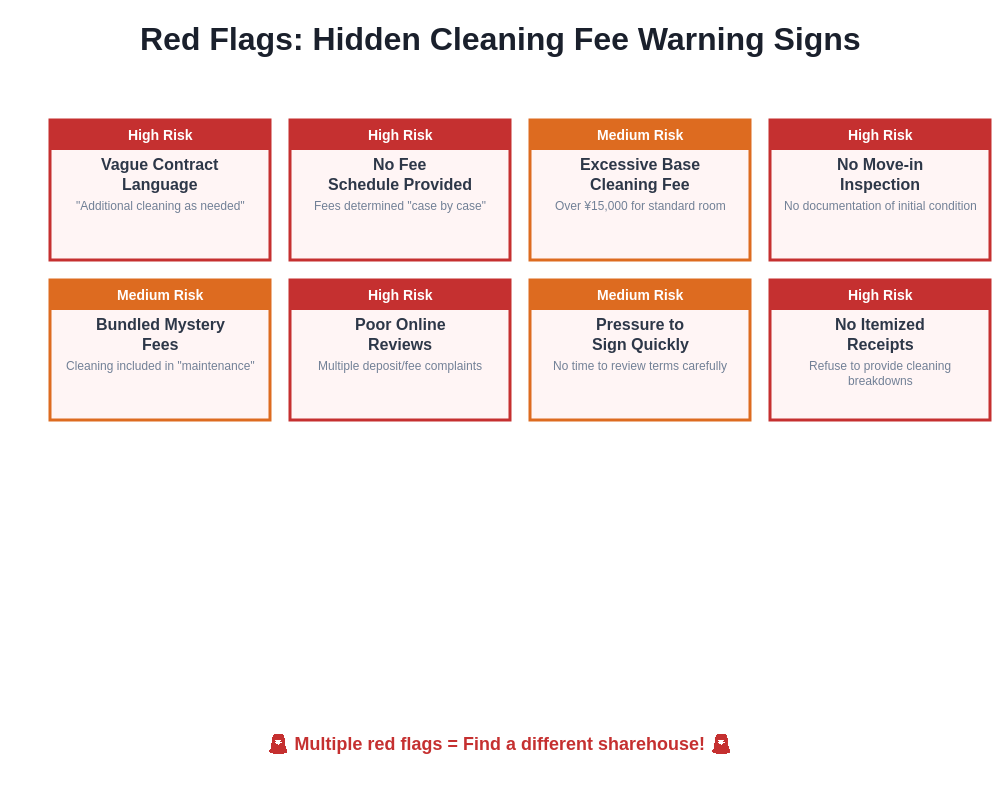
Effective identification of potentially problematic cleaning fee structures requires systematic evaluation of contract terms, operator practices, and property conditions before making housing commitments that could expose residents to unexpected charges. What documents you need for Tokyo sharehouse applications includes guidance on document review that can help identify potential fee issues.
Pre-tenancy property inspection and documentation practices can provide protection against excessive cleaning charges by establishing baseline conditions and identifying existing issues that should not be attributed to incoming residents. Photographic documentation of room and common area conditions at move-in provides valuable evidence for disputing unreasonable charges during move-out procedures.
Communication with current and former residents can reveal patterns of cleaning charges and operator practices that may not be apparent from contracts or marketing materials alone. Real stories from Tokyo sharehouse residents provides examples of how resident experiences can inform housing decisions and risk assessment.
Professional consultation with legal or housing advocacy resources can provide valuable guidance for residents who want to understand their rights and obligations regarding cleaning fees before signing rental agreements. The investment in professional advice can prevent much larger financial losses from unexpected charges or disputes.
Industry Standards and Best Practices
Legitimate operators in Tokyo’s sharehouse market typically implement transparent fee structures that clearly communicate cleaning responsibilities and associated costs to prospective residents before rental agreements are finalized. These best practices include detailed breakdowns of all potential charges, clear definitions of cleaning standards, and reasonable procedures for assessing and communicating fees to residents.
Professional property management approaches often include regular maintenance schedules that minimize the need for extensive cleaning between residents, reducing both costs and disputes while maintaining higher overall property standards. Why some sharehouses require japanese guarantors explains how professional operators manage risk and maintain standards.
Industry associations and regulatory bodies provide guidance on reasonable fee structures and best practices that responsible operators follow to maintain positive resident relationships and avoid regulatory scrutiny. Understanding these standards can help residents identify operators who prioritize fair practices over maximum revenue extraction.
The emergence of resident review platforms and social media networks has created additional pressure for operators to maintain reasonable fee practices, as negative experiences with cleaning charges can significantly impact their ability to attract new residents and maintain occupancy rates.
Long-term Market Implications
The prevalence of hidden cleaning fees in Tokyo’s sharehouse market reflects broader issues with transparency and consumer protection that may require regulatory intervention or industry self-regulation to address effectively. Market evolution toward greater transparency could benefit both residents and responsible operators who compete on total value rather than artificially low base prices.
Consumer education and advocacy efforts are gradually improving resident awareness of these issues, creating market pressure for operators to adopt more transparent practices or face competitive disadvantages as informed consumers make housing decisions based on total cost of occupancy rather than advertised rents alone.
The international nature of Tokyo’s sharehouse market creates reputational risks for operators who engage in aggressive fee practices, as negative experiences can impact Japan’s broader reputation as a destination for international students, workers, and residents. Tokyo vs osaka sharehouses for international students discusses how market reputation affects housing choices.
Technological solutions including transparent pricing platforms and resident review systems may eventually create more efficient markets where operators compete primarily on total value and resident satisfaction rather than complex fee structures that obscure true costs and create adversarial relationships between operators and residents.
The ongoing evolution of Tokyo’s sharehouse market will likely require continued vigilance from residents, advocacy from consumer protection organizations, and potentially regulatory intervention to ensure that cleaning fee practices serve legitimate operational needs rather than exploiting information asymmetries and power imbalances that disadvantage international residents seeking quality housing in Japan’s capital city.
Disclaimer
This article is for informational purposes only and does not constitute legal advice. Cleaning fee practices and regulations may vary by operator and can change over time. Readers should carefully review all contract terms and consider consulting with legal professionals when facing disputes over cleaning charges. Individual experiences may vary, and this article should not be used as the sole basis for housing decisions or legal actions.